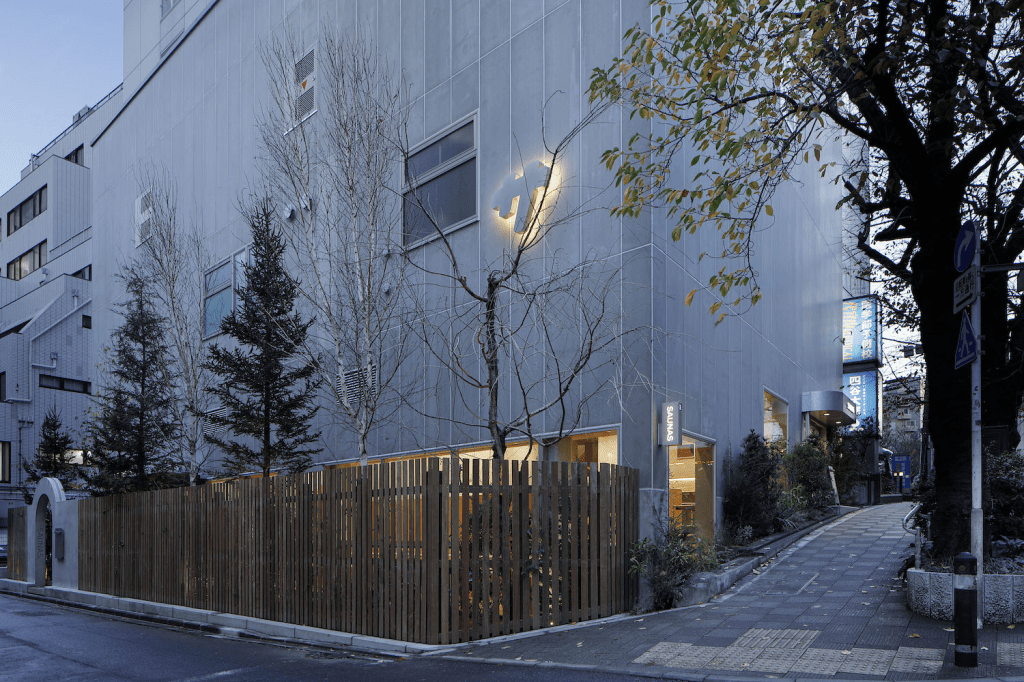
TTNE: Design Spotlight

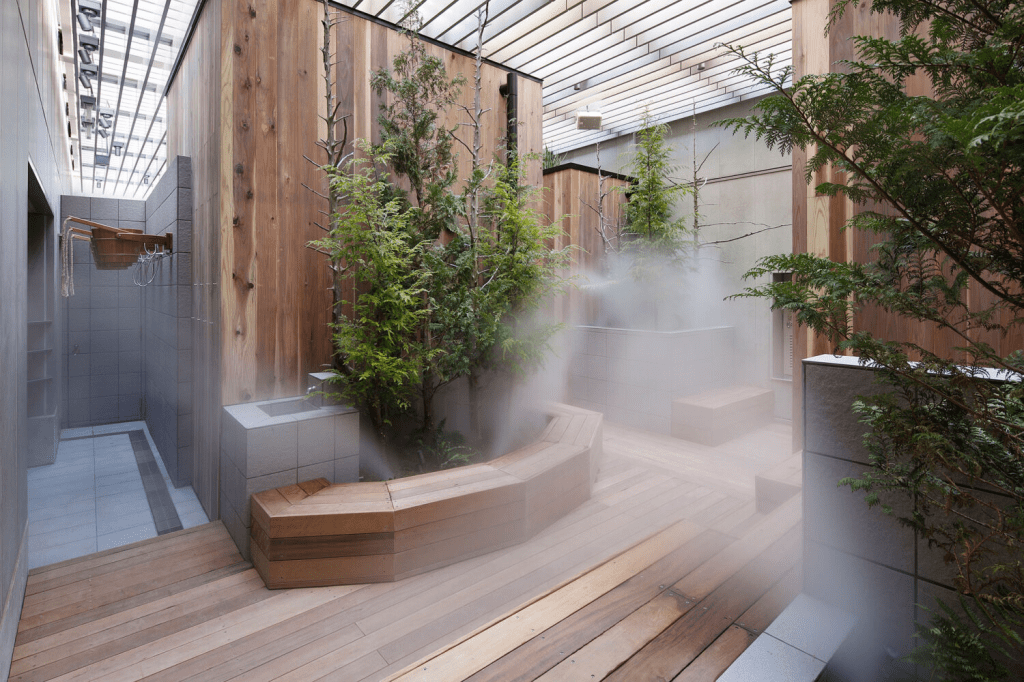
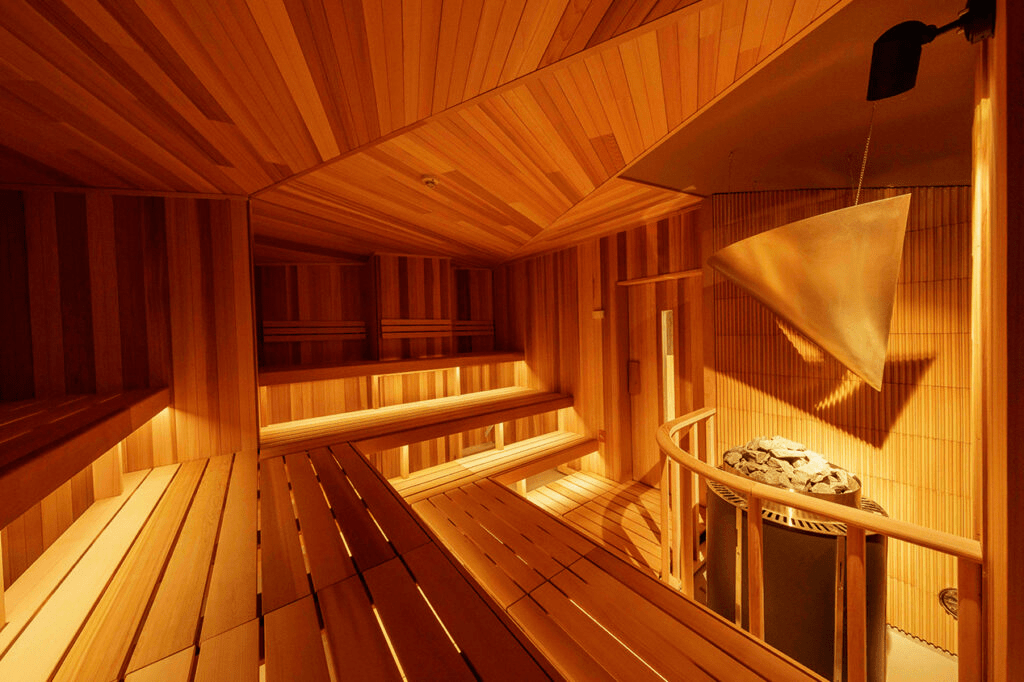
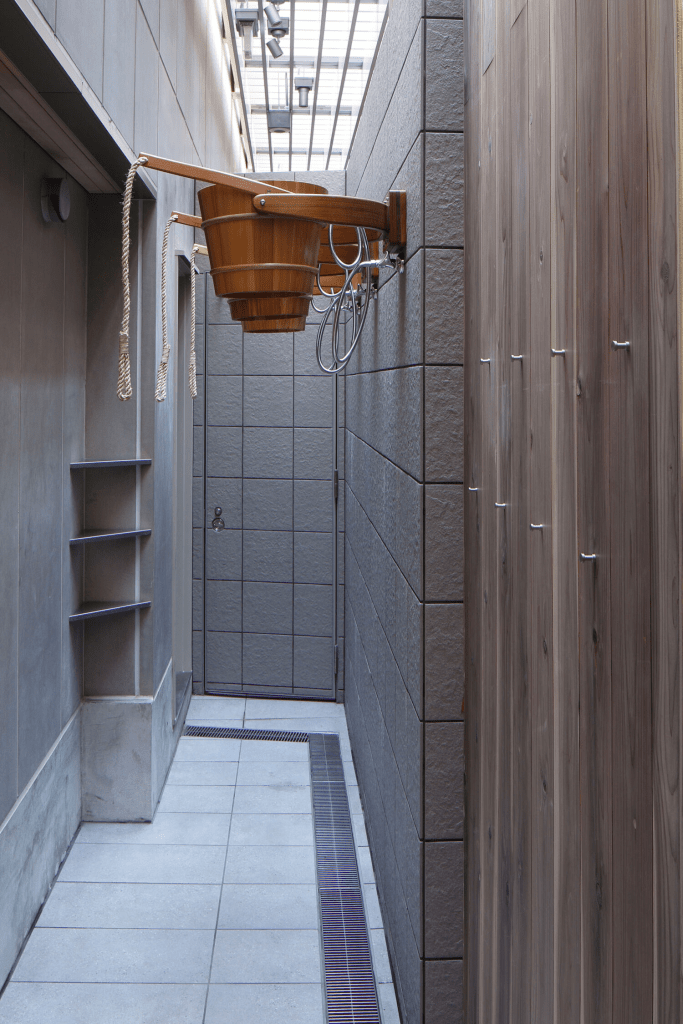
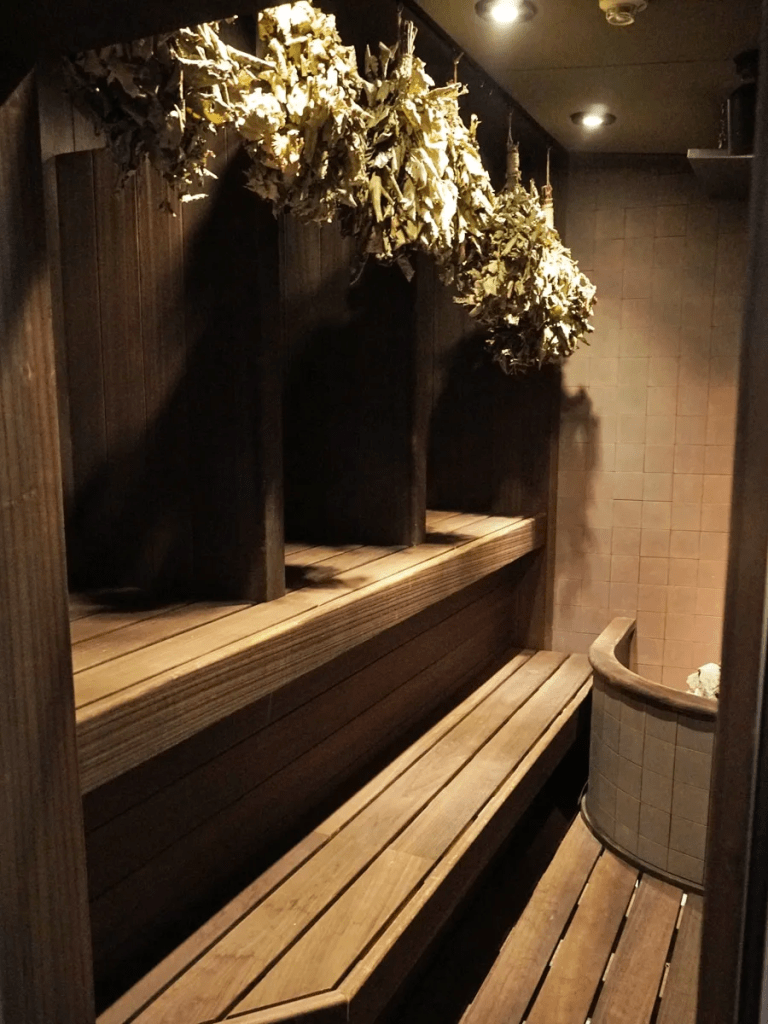
One of the largest names in the Japanese sauna space, TTNE has their hand in seemingly everything cool and sauna related in Japan.

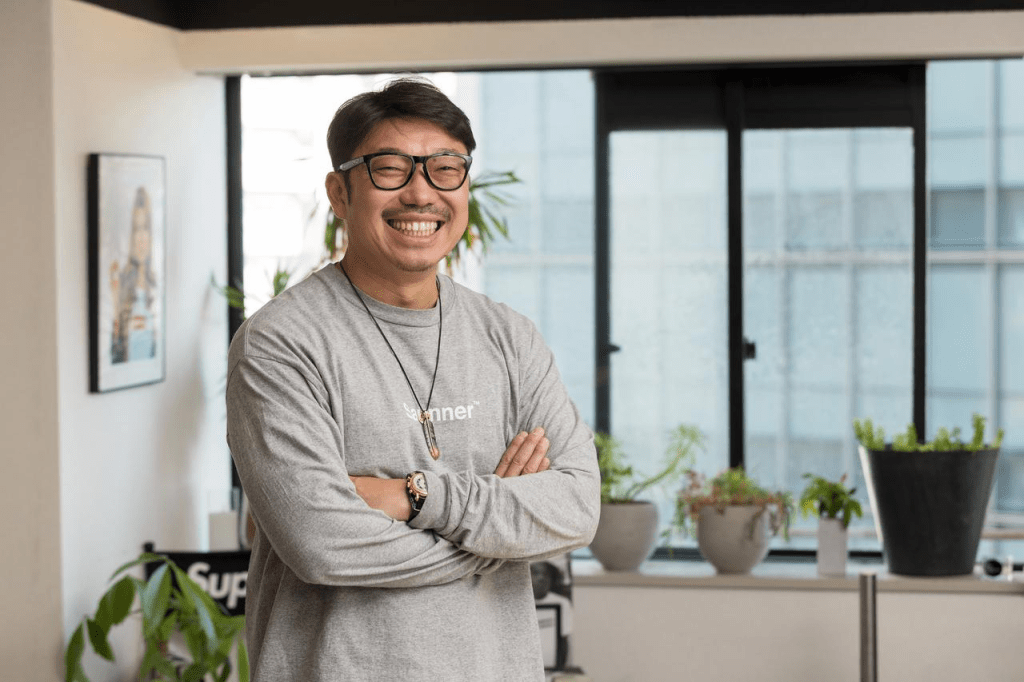
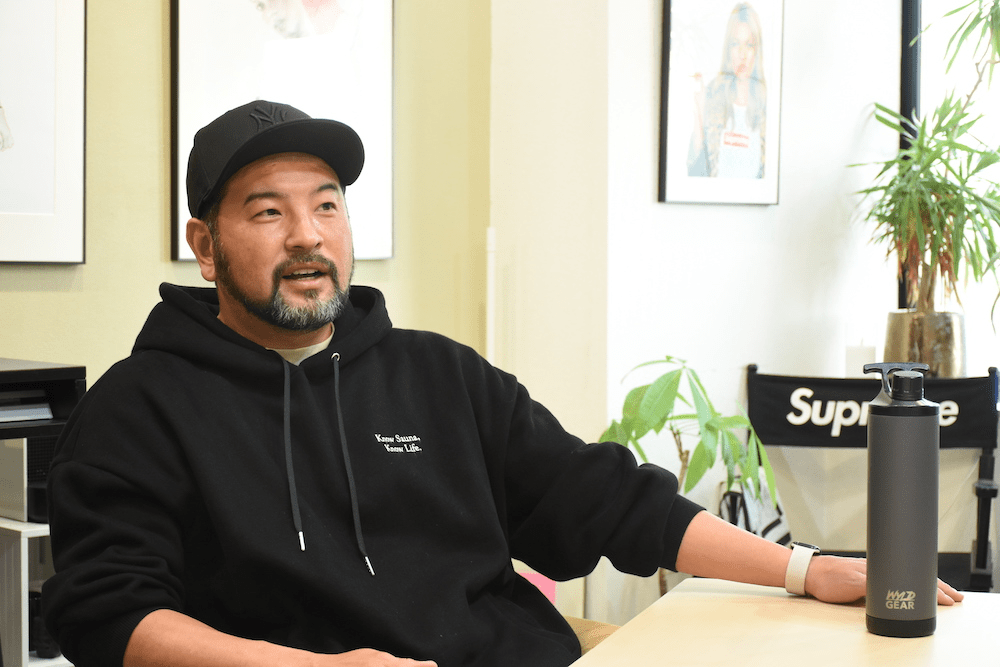
With projects as diverse as fashion lines, neighborhood bath houses, and even their Michelin inspired award “Saunachelin”, their tagline of being a “sauna creative team” is truly the best way to describe their work. With passionate saunners Dai Matsuo (known by his alias Totonoe Kata, which loosely translates to Mater of the Sauna High) and Daisuke Akiyama (known as Sauna Shisho, which loosely translates to Sauna Master/Teacher) at the helm, there’s no predicting what’s brewing at TTNE at any given time.

Background:

TTNE:

Founded by duo Dai Matsuo and Daisuke Akiyama, TTNE describes themselves as a Sauna Creative Team with a mission to “Positively rebrand Japanese Sauna. [Getting] people [to] come from all over the world to visit saunas in Japan. That’s the future we are aiming to create”.

The company promotes sauna cultural events, act as sauna consultants, and exchange sauna culture between Japan and other countries. With a mission of improving sauna culture around the world and ensuring a “future where people can be happier and healthier through saunas. TTNE’s projects expand into all sorts of domains previously untouched by saunas. Ranging from streetwear collaborations, YouTube videos, book launches, and even helping organizations like The Sauna Society of Japan get off the ground, no one does things quite like TTNE.

Dai Matsuo/松尾 : “Totonoe Oyakata ととのえ親方

Originally from Hokkaido, Dai Matsuo, had a background in the business world before entering the sauna scene. However, he has been getting his sauna on since he was a child, frequenting sauna and sento in Sapporo during his school days.

With various experiences in construction and business, Matsuo’s entrepreneurial nature led him to be a charismatic figure in both Tokyo and Sapporo. From business ventures ranging from night clubs, fitness facilities, and beverage importing and exporting, Matsuo has had his hand in seemingly everything! This eventually led to Matsuo showing celebrities around Sapporo, often to local saunas. Overtime, this led him to pursue sauna full time. Today, he leads TTNE with his business partner, Daisuke Akiyama.

Selected Quote: “I want to give back to saunas by increasing the number of happy sauna users.

Daisuke Akiyama: Sauna Shisho: サウナ師匠 [秋山 大輔]

First introduced to sauna in his twenties, Akiyama’s background in fashion and event production, including the Tokyo Girls Collection (a fashion festival based out of Tokyo) gave him unique skills and perspective to help rebrand sauna with his mentor, Dai Matsuo.

Akiyama eventually became known as the “sauna master of Kanto” after teaching his friends the ways of the sauna. One day, he heard of a legendary saunner in Hokkaido, referred to as “Totonoe Oyakata”. Meeting in Finland on a sauna trip for the first time, the two hit it off, and went on to start TTNE.

Akiyama brings his perspective from fashion and event planning into the sauna world, with his insights on fashion in particular helping positively rebrand sauna culture. His event planning background has helped in organizing various TTNE projects, such as SAUNAFES, RoofTop37, and Corona Winter Sauna.

Selected Quote:

(on how to make sauna popular)

Step 1 is to link it to fashion. Fashion is not just about style, it also has the function of showing identity. For example, surfers show that they are surfers by wearing surf brands. In the same way, if you wear a sauna brand, you can [show people] that you like saunas. Then, it will create an opportunity for conversation, like “Actually, I like saunas too.

Works:

In an effort to contribute to the development of sauna culture, TTNE advises the creation of concept-based sauna around Japan. Below are a few highlights from the sort of projects they work on.

Totopa:

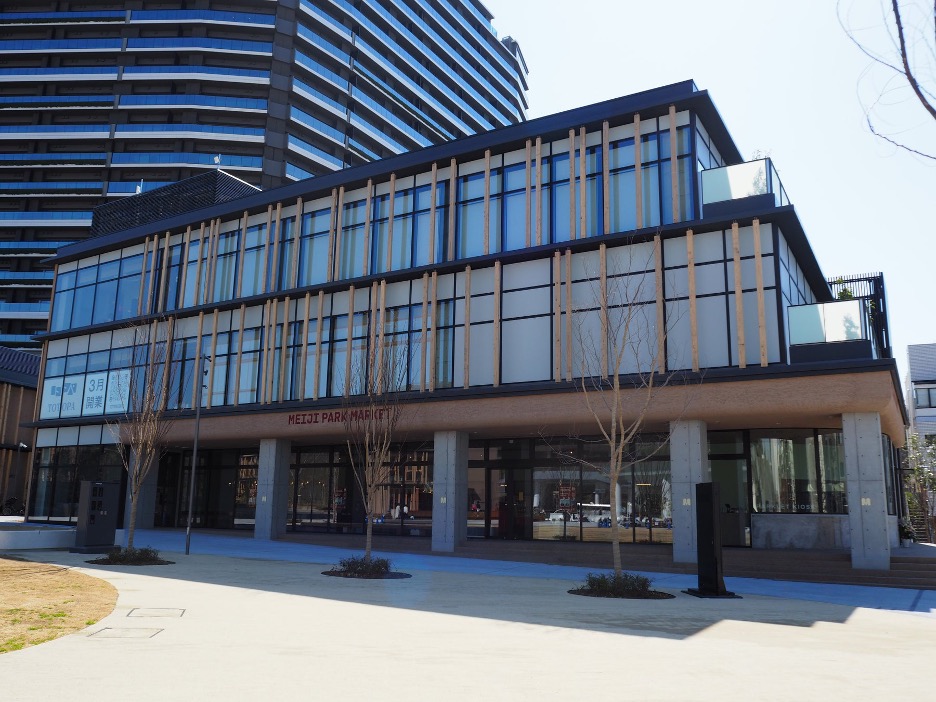
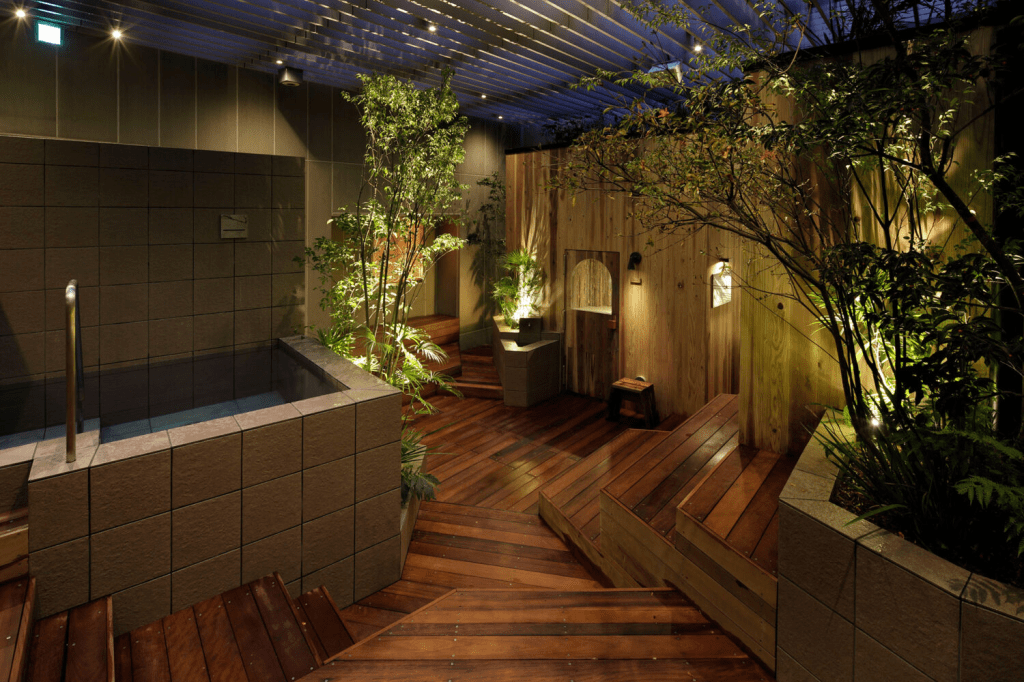
Located in Shinjuku’s Meiji Park, Totopa is based around the motif of “left and right brain saunas”, with separate sauna rooms distinctly designed with the aesthetics of the left and right brain in mind. First conceived when Matsuo was talking with famous arti director Gugi Akiyama, Totopa is a prime example the unique, distinct visions TTNE has for saunas that aren’t seen anywhere else.

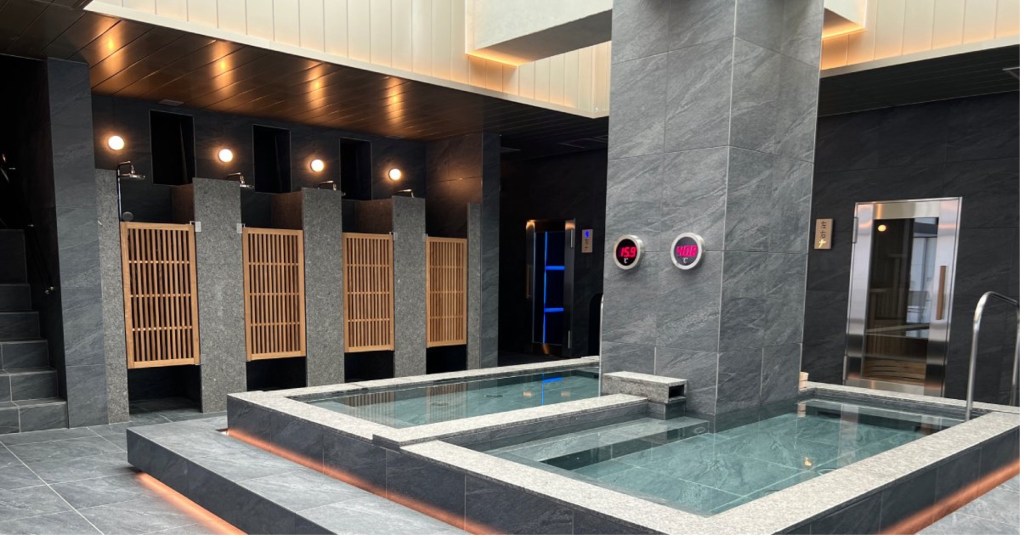
Additionally, Totopa has an emphasis on extensive totonou experimentation, with a motif of “3 x 3 x 2” (3 saunas, 3 rest areas, 2 cold plunges) providing the user with ample opportunities to refine their sauna routine.

For a more detailed rundown of Totopa, see my review here.
Sana Mane Sazae (Naoshima, Japan):

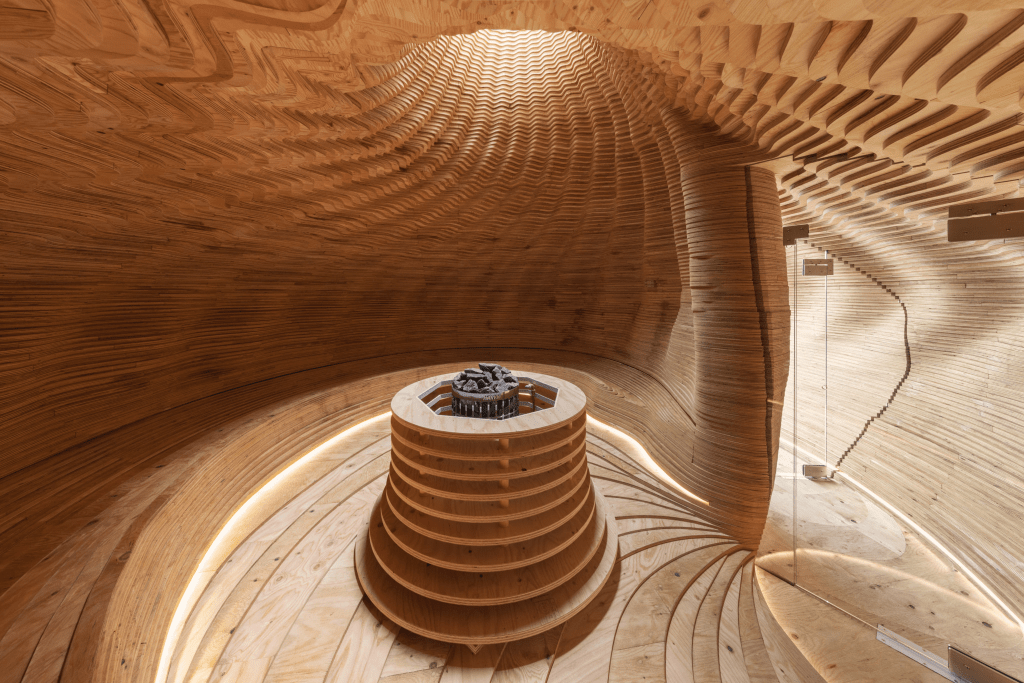
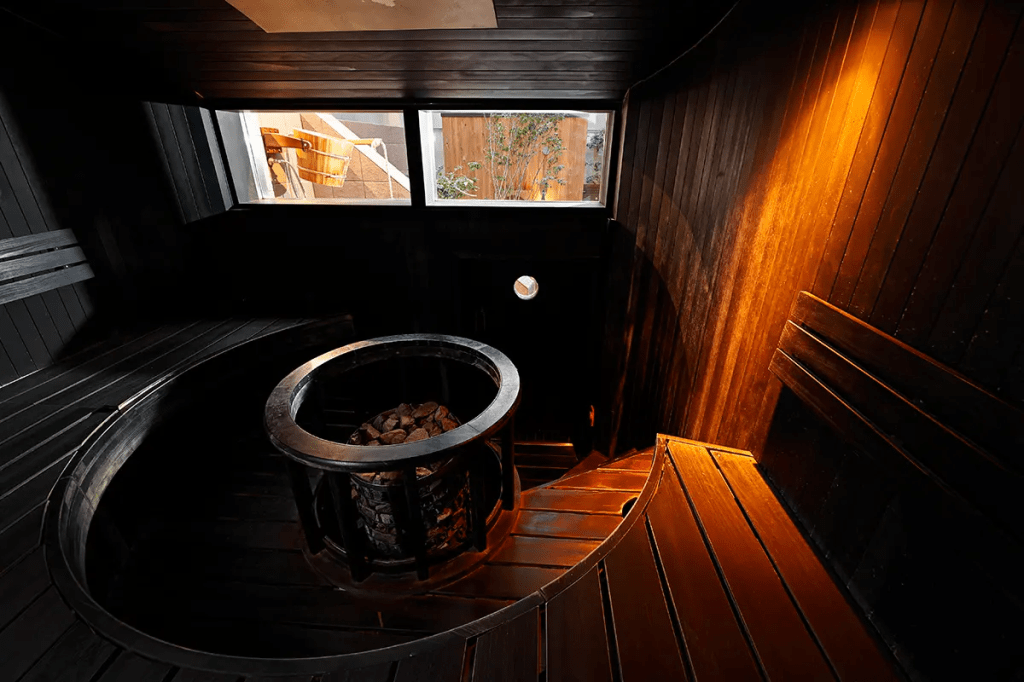
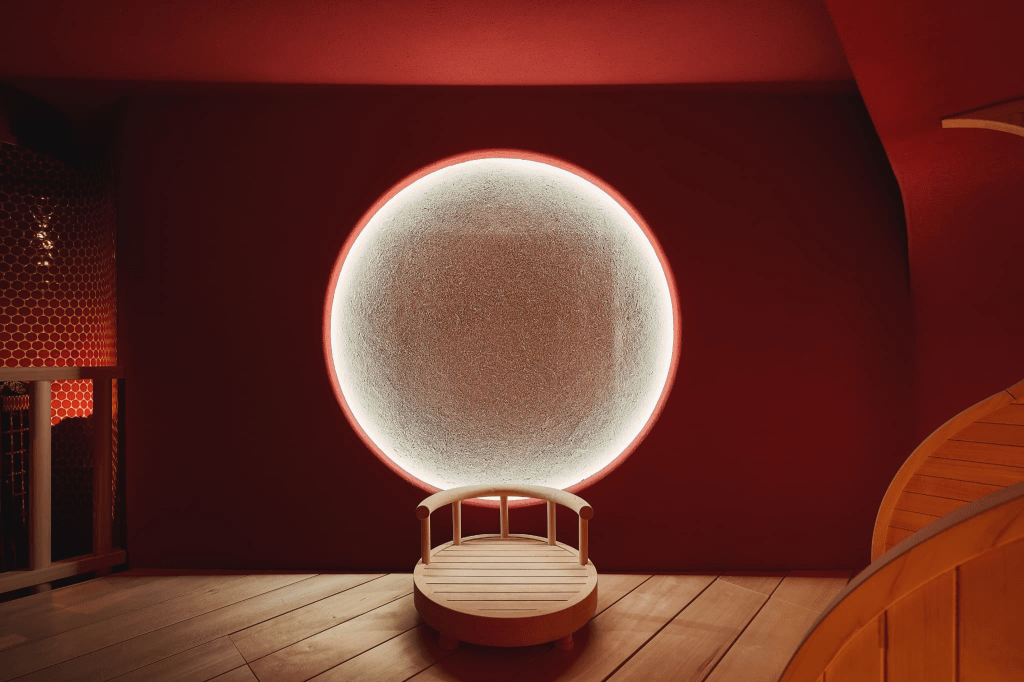
Located on Naoshima Island, TTNE collaborated with Tachi Kuma of the renowned architectural firm Kuma Kengo and Associates for this eye-catching, spiral designed sauna. For those unfamiliar, Kuma Kengo and his firm are known for buildings such as Japan National Station, the Nezu Museum, and Shibuya Scramble Square. He is considered one of the most famous architects both within Japan and around the world.

Naoshima Island is renowned for its nature, contemporary art installations, and architecture, with each of these bringing in visitors from across Japan. Internationally, the island is recognizable from the James Bond film “You Only Live Twice”, which was partially filmed on the island. The sauna was designed to bridge the gap between tourists and locals, blending “nature, art, and resort.

The designers put the concept behind Sana Mane Sazae best:

“People can visit here being attracted to the shape of this sauna. But I also hope they discover the richness of nature once they arrive here. That’s the real purpose of this sauna- to savor nature.

Matsuo expanded on this concept in an interview with THULE :

“If there are many interesting saunas all over the country, Japanese people will be happy, and people from overseas will be able to enjoy the fact that such saunas exist. For example, even if you create an art museum in a rural area, most people only go there once or twice a year. If it’s a sauna, some people might come every day. I feel that it would be nice to create a place where local people can relax because they can go to the sauna every day, and I would like to increase the number of saunas like that.”

The old proverb of the fisherman comes to mind here: Give a man a fish, and you feed him for a day; teach a man to fish and you feed him for a lifetime.  

Sana Mane Sazae encapsulates this idea near perfectly, offering a high quality and uniquely rich experience for locals and visitors alike.

RoofTop 37

A limited opening during the pandemic, RoofTop 37 took the concept of speakeasies and brought them into sauna form. The event, one of the first of its kind in Japan, was a smash hit, and reservations filled up quickly upon announcement.

Rooftop37 is an excellent example of the groundbreaking work that TTNE does: integrating creativity and innovation into the sauna experience to help reinvent the culture. By taking sauna, something that had been associated with the older generations in Japan, and bringing in hidden bars as a motif, it infused intrigue into the developing sauna culture of Japan. With such a cool theme, it’s hard not to see why it was such a hit. Projects like this and Corona Winter Sauna pop-up event (a collaboration with Corona Beer, not to be confused with COVID-19) helped build hype for sauna in the early years of the Japanese Sauna Boom, which is ongoing today.
Culture:

Saunachelin:

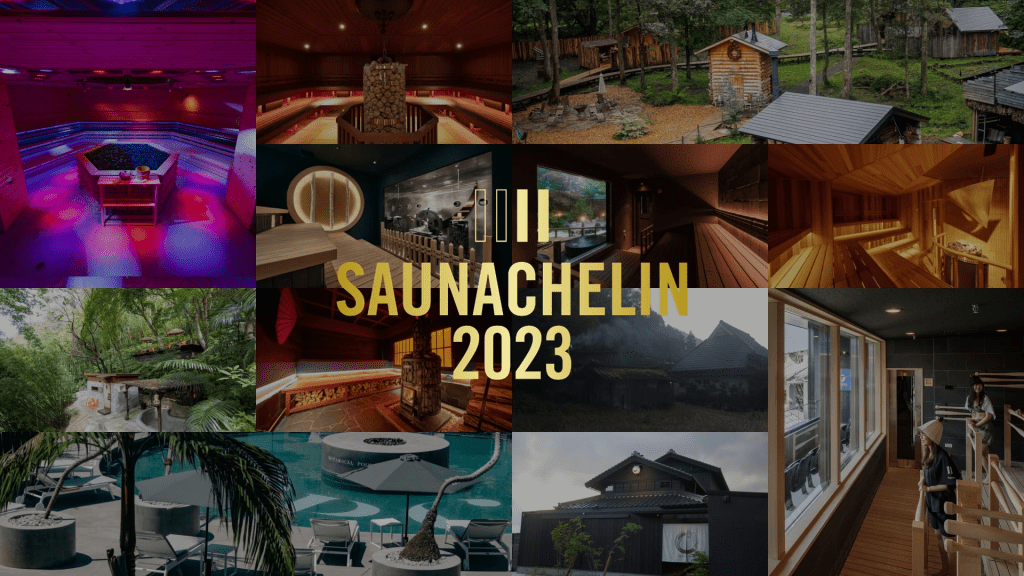
Aside from its establishments, TTNE also sponsor Saunachelin, an annual celebration of the best new saunas around Japan. Saunachelin not only recognizes facilities, but also outstanding contributors to sauna culture across the country. Brilliant name aside, Saunachelin is an excellent celebration of Japanese sauna culture, and also helps bring attention to new sauna and sauna-adjacent businesses getting their feet off the ground.  

Pro tip, it’s also a great place to start if you’re not sure which sauna to go to in Japan. It’s hard to go wrong with any Saunachelin entry.

For more info, read here.
Best Sauna 37:

Launched in 2024, Best Sauna 37 took Saunachelin’s approach to an international level. Highlighting 37 sauna facilities internationally that promoted exceptional/significant art and cultural experience through sauna, the list brings the potential of what sauna could be to an international audience. It even has little extra educational bits on sauna culture around the world!

The list is incredibly useful for adding destinations to visit when traveling! Each entry offers something completely different, and I am curious to see how it continues to grow overtime. With the second list now released for 2025, it is amazing to see the 72 different saunas featured around the world, and how sauna is growing as a global artistic and cultural phenomenon.
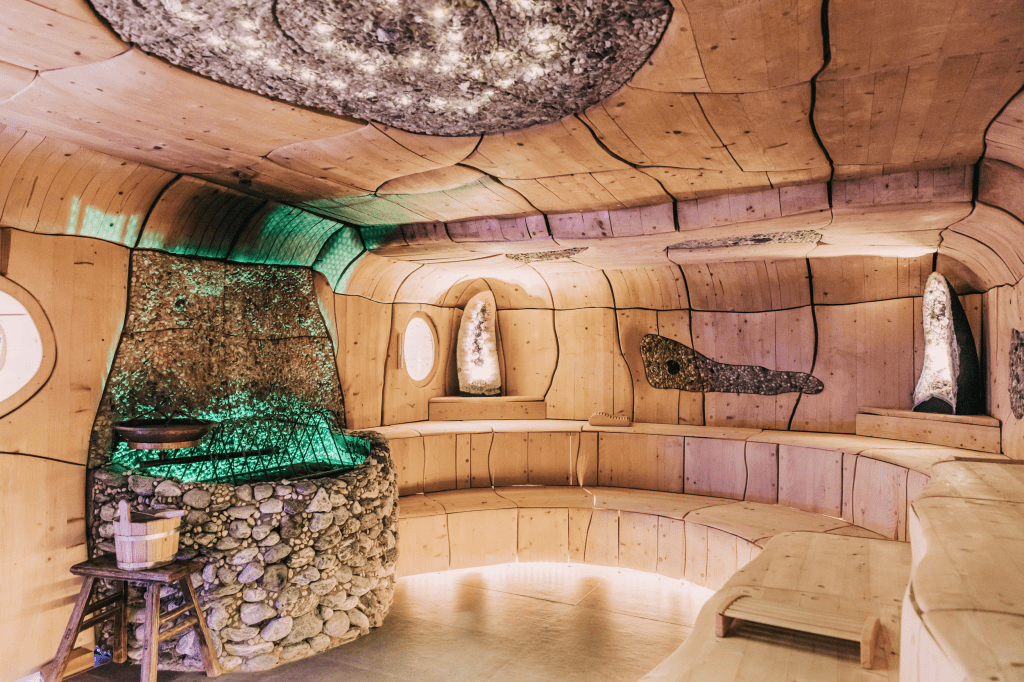
One of the many incredible sauna facilities showcased (Hotel Klosterbräu, Austria)

Philosophy

Positively Rebranding Japanese Sauna

TTNE focuses on introducing people and cultures that haven’t had much contact with sauna before. With Matsuo and Akiyama’s diverse backgrounds in the business and fashion worlds, they see a lot of potential for sauna to reach people outside of what has historically been its demographic in Japan: middle aged businessmen.

Drawing inspiration from subcultures as diverse as surfing, architecture, and fashion, TTNE has succeeded in completely rebranding sauna in Japan, to the point where it’s often hard to pin down a single demographic at many sauna facilities.

Akiyama insisted on using fashion as an entry point, serving as a completely different demographic than middle aged men. Focusing ads on young, fashion-savvy women, TTNE has successfully brought in a new crowd into sauna culture without crowding out older sauna fans.

Building on this approach, Matuso himself started wearing shirts with “SAUNNER” written on the front, in order to spark intrigue among people he met in everyday life.
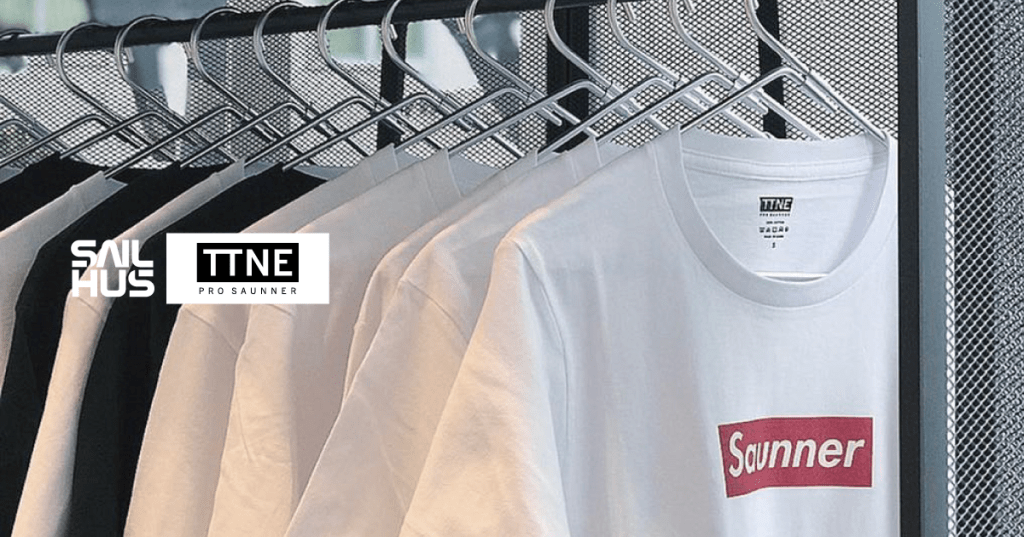
Just using the word “saunner” invites a lot of questions. “What is that?”. “Is this a trend?” “I didn’t know this was a culture?’. This is an ingenious approach- effectively birthing a culture that TTNE wanted to create.

Today, sauna is as popular among older men as it is younger women. Influencers like Misato Shizumu and “& Sauna” are among the top sauna influencers in Japan, and both instrumental in promoting sauna among women.
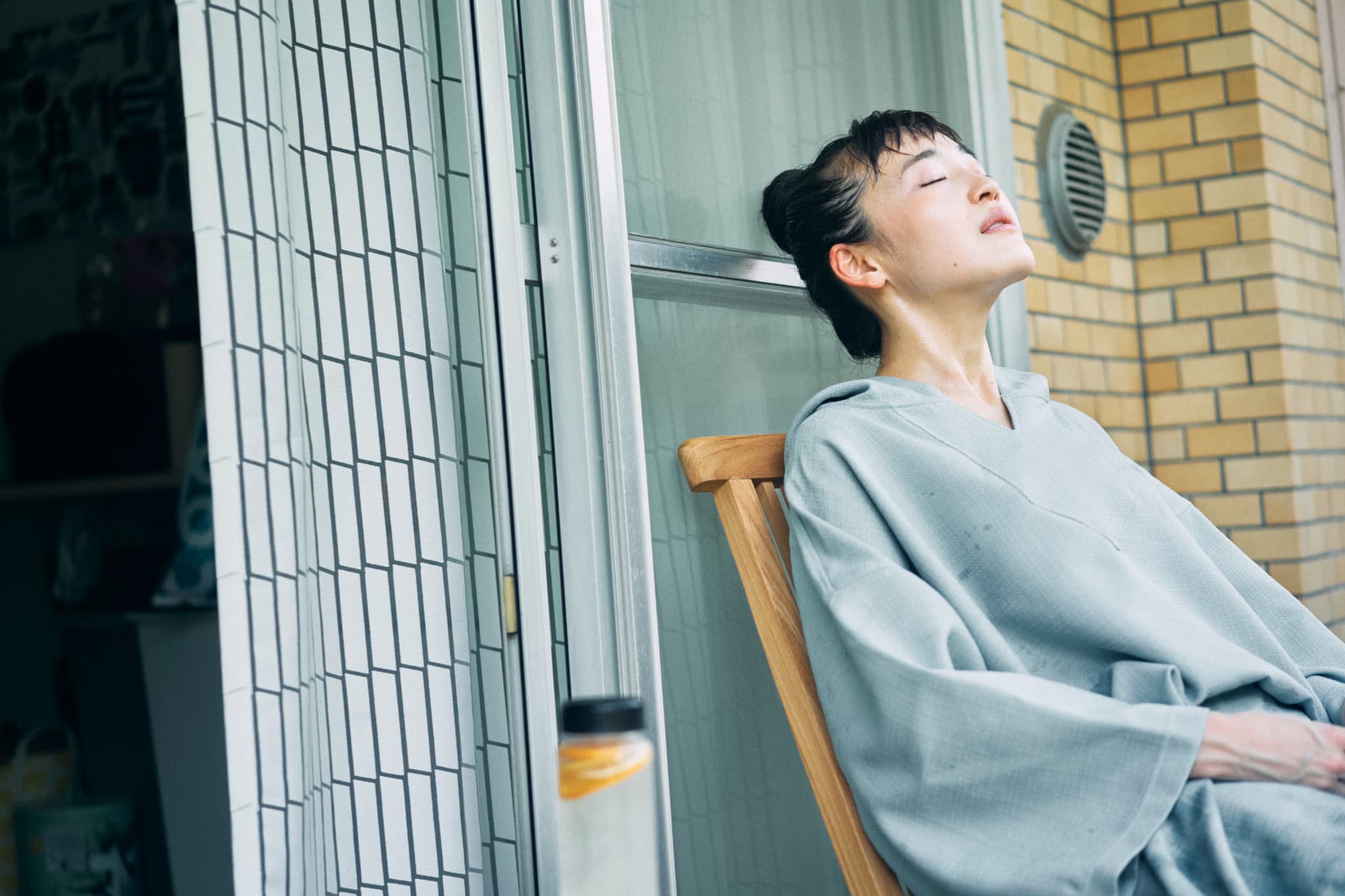
totonoü×清水みさと】”自宅サウナ”でととのう日常を表現したWEB CM & サウナライフギャラリー - #casa
Mizato Shizumu (清水みさと), “The Sauna Princess of Japan”, one of the most famous figures in the Japanese Sauna scene, is a great example of marketing sauna successfully to demographics not traditionally affiliated with sauna use in Japan.

“That’s the most important point. Until now, there have been surfing, running, and yoga brands in sports, but famous fashion media has always looked at the origins of brands derived from various cultures. If we, as a sauna brand, had appealed to travel magazines or hot spring facilities, this boom would never have happened. It’s good to start from a completely different place.

We often do polar opposites, and because the image of saunas is of older men, we appealed to the opposite gender, beautiful model women, and young women. Also, saunas have the image of unfashionable older men, so we went for the more traditional side of fashion. There had never been a collaboration between saunas and architectural designers before, so we tried putting saunas in an architectural magazine. Or saunas and YouTubers. In short, we linked unfashionable saunas with the demographic that people admire.

Rather than going too far into the mainstream, I think about what punk and hip-hop were like in the heyday of rock and roll, as seen by rock and roll people at the time. Otherwise, you’ll never be able to create something new. Even if you do something in rock, it will end up being just rock. What was interesting was that we were able to create that with saunas, or appeal to them.”

-Dai Matsuo, interview with High Flyers

Connecting Japan and the World through Sauna

“To put it another way, I had never been able to put “totono” into words. In short, “totono” is the result of putting into words the feeling you get in a sauna, which could also be expressed as “euphoria,” “restart,” or “reboot.” I feel that putting all of these into words as “totono” has changed the way saunas are communicated. Now I think that the “totono” feeling of saunas can be beneficial to society.”

-Dai Matsuo, interview with Thule

TTNE’s international outreach, through projects like Best Sauna 37, connects the world to Japan via sauna. In the process, ideas like “totonou” or “four seasons” (四季) are integrated in sauna, and by proxy, shared with the world. Hopefully, this sort of rebranding of sauna in Japan can spread in a similar, but distinct fashion in countries outside of Japan.

Personally, I would love to see a similar rebranding happen in Western countries. In recent years, sauna’s burst in popularity has mostly been isolated to podcast bros and high-end wellness circles. Japan illustrates how much sauna has to offer when it covers a much wider tent.

I really hope to see sauna culture in other countries take off in a similar direction.
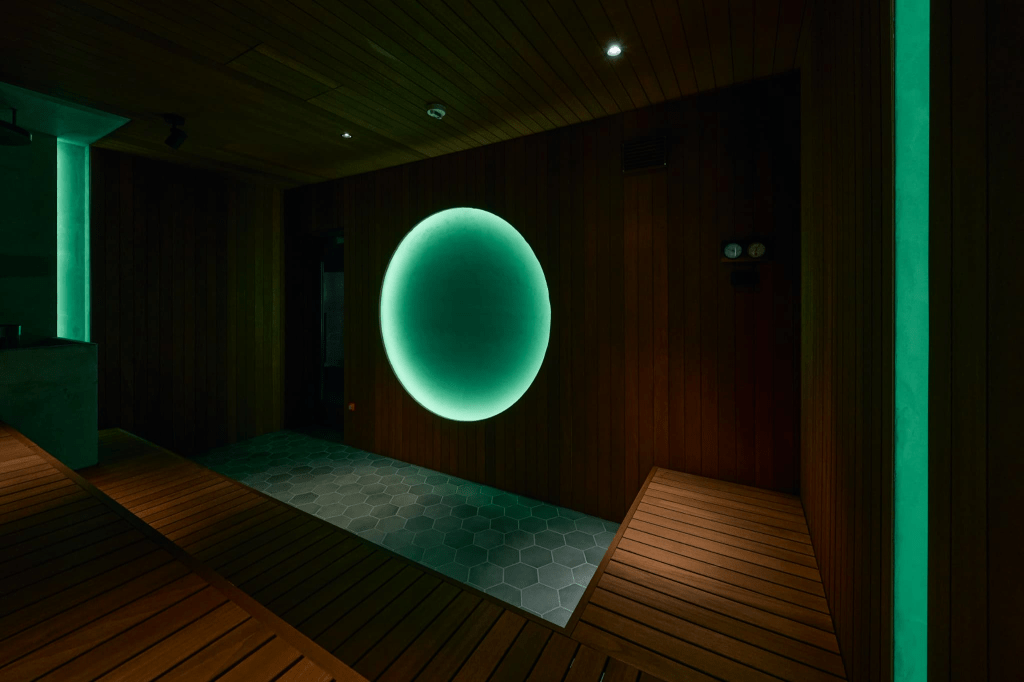
RR Conditioning and Spa, Okoyama, Japan

Conclusion

TTNE is at the forefront of Japanese sauna culture. Along with Sado and Imai Kentaro, they have some of the widest reaching impacts on the contemporary Japanese sauna scene. If you are curious in the slightest in Japanese sauna culture, TTNE has something for you.

I will leave you with a quote from Matsuo that really gets to the “why” of sauna in a way that really captures the core essence of what sauna is about.

“Even if you don’t have money, you can go together and just talk, and be naked—return to being an animal. Sometimes, when I look at the sauna stove, it feels like humans are gathering around a bonfire. It’s like humans get to return to their true roots as animals for a while. And since you’re not wearing anything, you can’t show off. It’s pointless to try to act important when you’re naked. Even if you say, “I’ve got a Ferrari,” there’s no key to show. Or if you say, “I’ve got a Richard Mille watch,” you can’t bring it into the sauna. The best thing you can brag about is a sauna hat that costs 2,000 or 3,000 yen. So in the sauna, everyone is on the same level. There’s no such thing as being good or bad at sauna—inside, everyone is truly equal. There are no superiors or inferiors. That’s why saunas are so great. They’re the best.”

-Dai Matsuo, interview with High Flyers.

Thank you for reading, more exciting projects are coming in the near future, so stay tuned!
TOTOPA

Sleek, creative, experimental.

This one has been in my queue to write about for quite some time now. Since this is a recent TTNE opening with a lot of hype surrounding its launch, I went within the first week or so of opening. After ranking Number 1 (!) in 2024’s Saunachelin, now felt like a good time to give it a review!

Tattoos Okay? Yes.
Price? $$$
Best for? Those looking for an aesthetic sauna experience. Those looking for sauna focused Japanese experience close to Shinjuku. Those looking for a facility to refine their sauna and totonou tactics.

Nearest Station: Sendagaya Station (JR Line) 14-minute walk

Background:

At Totopa, the focus is on exploration.. Created by TTNE, the brilliant sauna team behind other projects around Japan, including “Hottayu”, “Spa Metsa Otaka”, and “Sana Mane Sazae”. Likely inspired by recent success, they took this on as one of their more ambitious projects. Located in Shinjuku’s Meiji Park, this sleek new sauna pairs well with the surrounding new mixed use urban development, located underneath the (relatively) new Olympic Stadium nearby.

Concept: Exploration.

“3 x 3 x 2. 3 saunas. 2 cold plunges. 3 totonou areas. 18 experiences.”

The name “Totopa” is play on words that might not be obvious at first glance. ‘Totonou’, a Japanese word for sauna high, and ‘utopia’, the English word, merge well here to give Totopa an image as a “sauna paradise” of sorts. The name fits Totopa’s theme of exploration well- a utopia for saunners of sorts, with endless options for totonou.

There are several paths for exploration at Totopa. On its own, this isn’t extraordinary, but Totopa’s commitment to offering drastically different experiences put Totopa in a class beyond its competitors. 

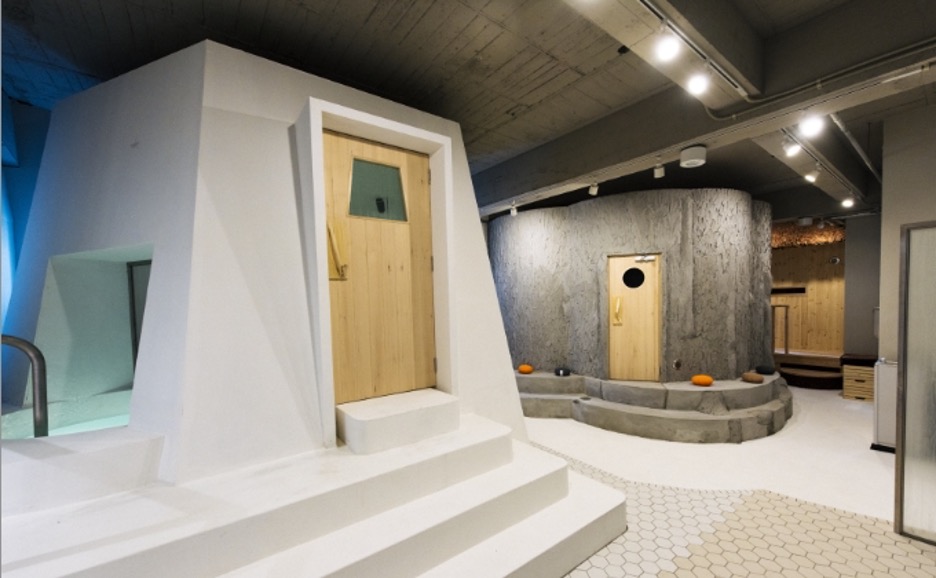
On the men’s side, there are three saunas. The aptly named “left and right saunas” (located on these sides of the facility respectively) aim to stimulate “the left brain”, associated with analytical thought, and “the right brain”, associated with creative and emotional thinking respectively.

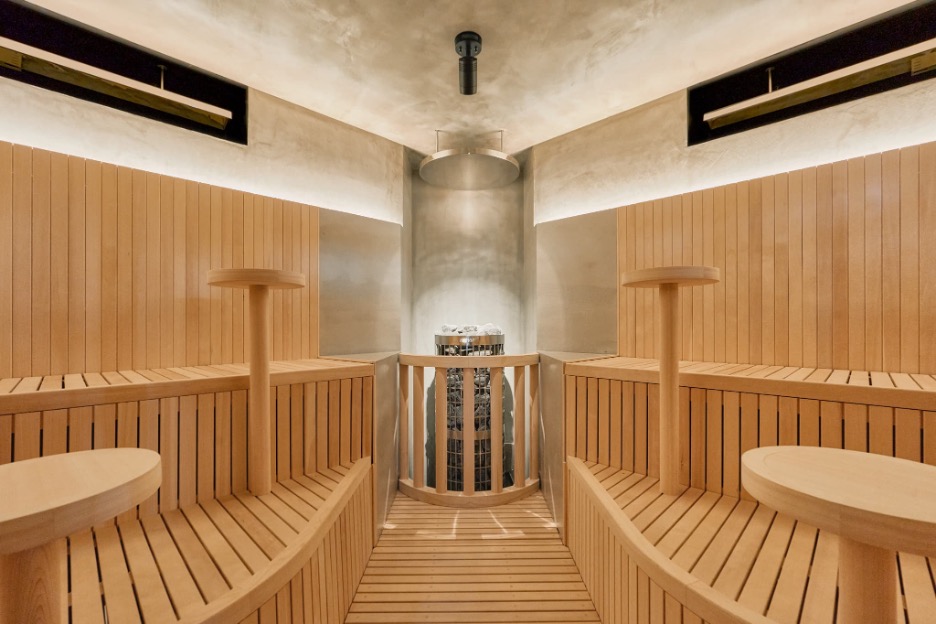
In the center is a relatively mellow sauna, focused on relaxing, and permits conversation (a rarity in the Japanese sauna world). There are even tables for you to brink drinks in from the refreshment bar and chat with others!

Functional differences aside, the commitment to three separate aesthetic experiences invite guests to mix and match the saunas to their liking. This is done so subtly; you likely won’t even notice that you’re doing it until your second or third visit. This intersection between architecture and experience is a great example of Totopa’s commitment to exploration in action.

Each of these saunas are not only visually distinct, but offer different levels of heat and humidity, providing three entirely different styles of sauna to choose from. Combined with the two cold plunge options: including a deep cold plunge set at a bone chilling temperature of around 10 degrees (just under 50 Fahrenheit) and a more mellow, sitting bath set at a more relaxed cool down temperature of around 18 degrees (around 64 Fahrenheit), the two cold plunge pools offer two alternate paths to cooling off, both with distinctively separate results after each sauna.

Combined with the 3 resting areas (outdoor, indoor, and the lounge), you can walk out of Totopa with 18 distinct experiences. This number (the one listed on the official website) doesn’t account for the warm baths, which I would argue can completely alter the experience, which add a dizzying total of 36 different experiences!

In this utopia (Totopa), the choice is yours. What kind of experience you want to forge is entirely up to you, just as the folks at TTNE intended.

Facilities and Aesthetics:

Left Brain Sauna

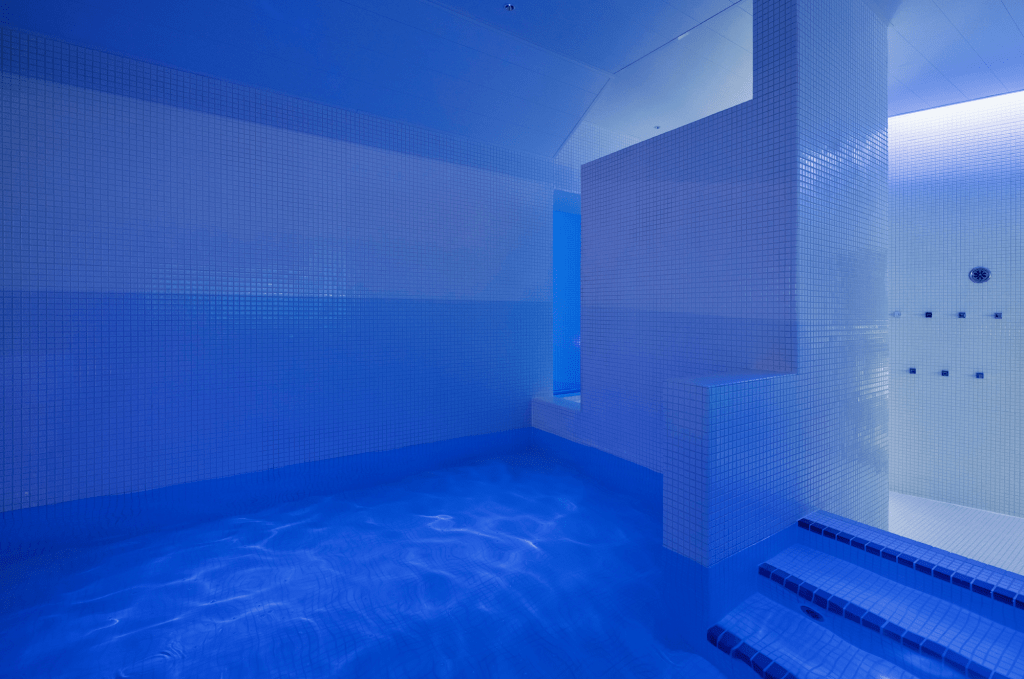
“Tron Sauna”

The moment you enter the door, you’re transported to a different world.

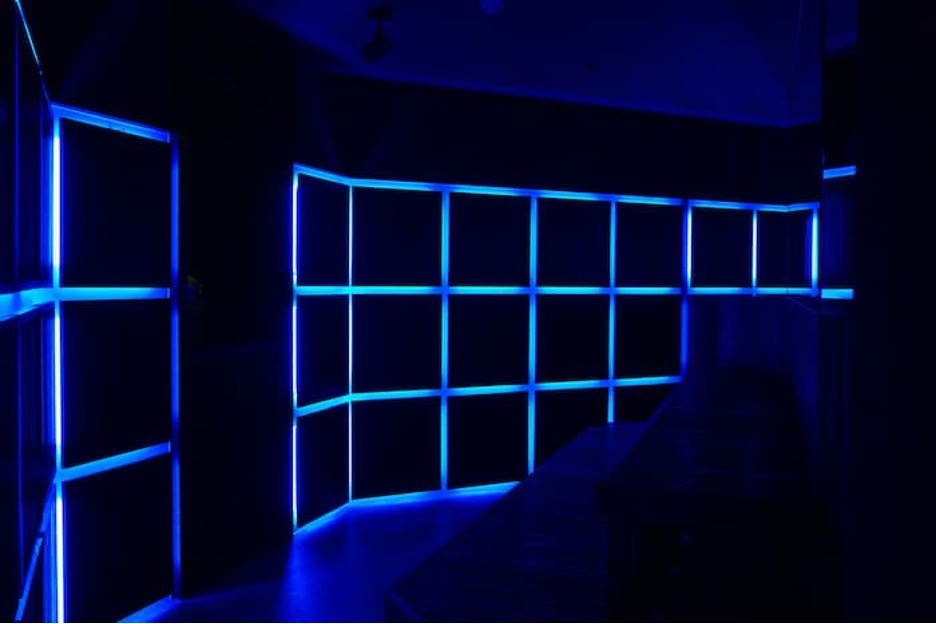
The striking yet mellow blue grid lighting contrasts with the high temperatures of the left-brain sauna. While the aesthetics help you settle into the high heat, it doesn’t take long for you to envelop in an intense wall of sweat. With frequent auto-loyly from the sauna centerpiece, this sauna is no joke.

With aesthetics right out of the classic cyberpunk film “Tron” (or Tron: Legacy, if you prefer), I refer to this as the “Tron Sauna”. Unfortunately, no light cycles included….

Not included at Totopa…

According to Totopa’s official website,  “geometric lines and cool blue tones stimulate the left brain in this sauna” The left brain is generally associated with analytical, logical thought. The sharp, ordered blue lines paired with the always-timely auto-loyly embody this type of thinking well and make for a seamless, left-brain inspired sauna experience.

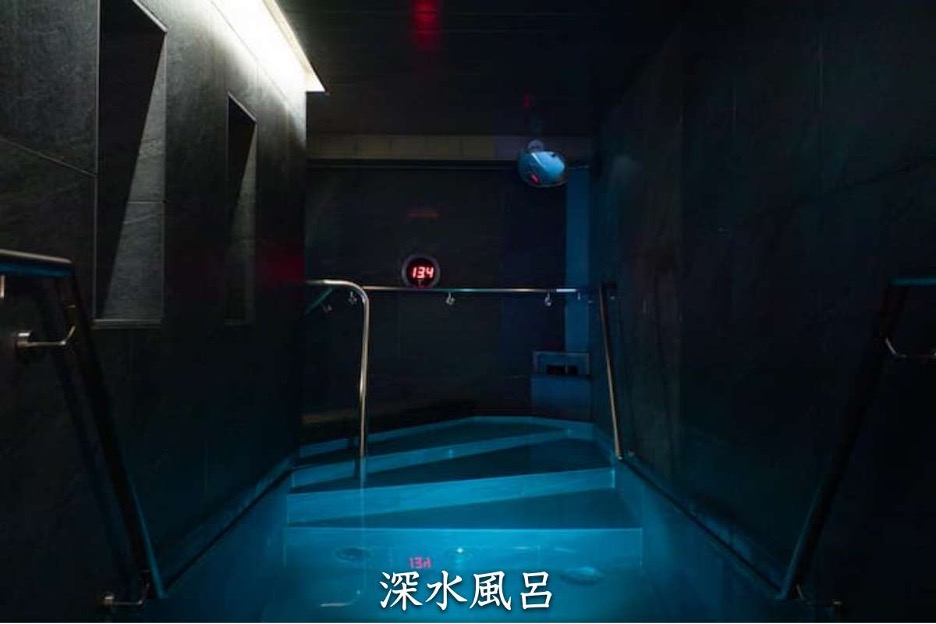
I found it pairs well with the deep cold plunge. The high temperatures are well complemented by the low temperature (11 degrees) and awe-inspiring depth (165 cm I think). If you’re up for it.*

*Note: there is absolutely no shame if this is too intense. Do what works for you and start slow.

Right Brain Sauna

“Dune Sauna”

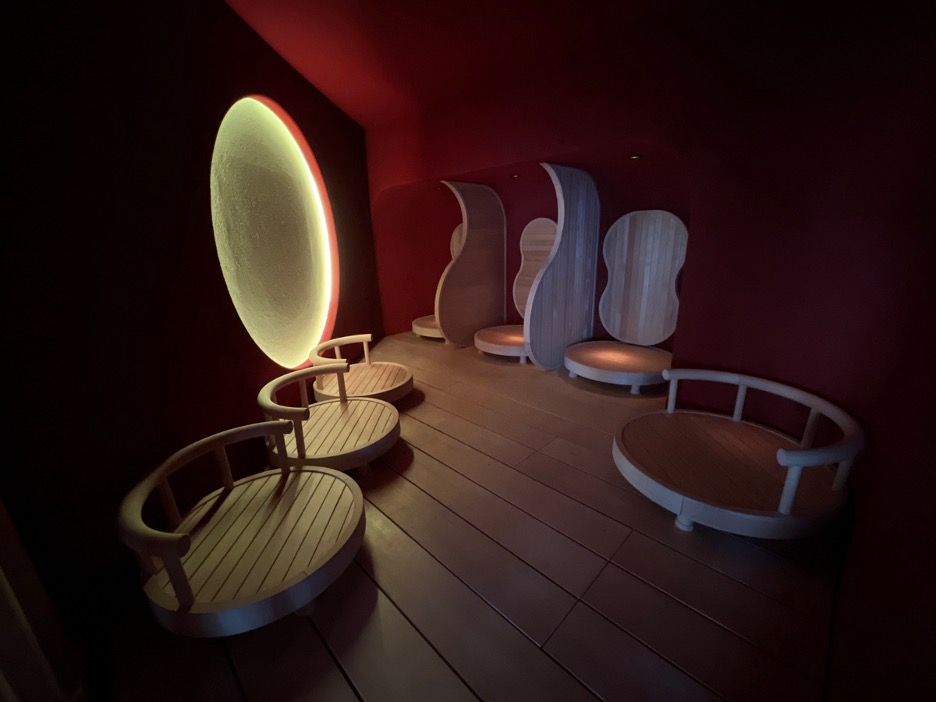
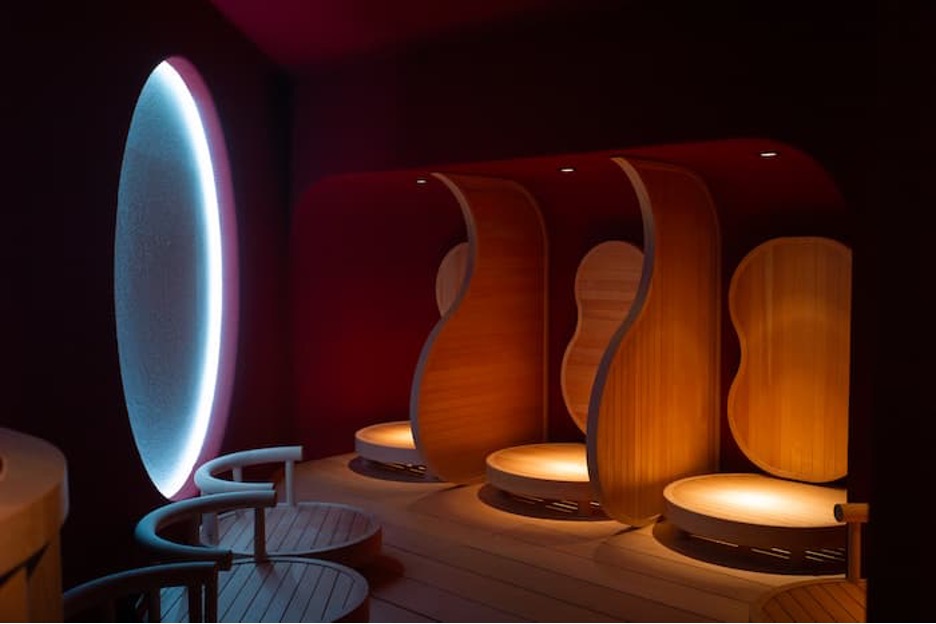
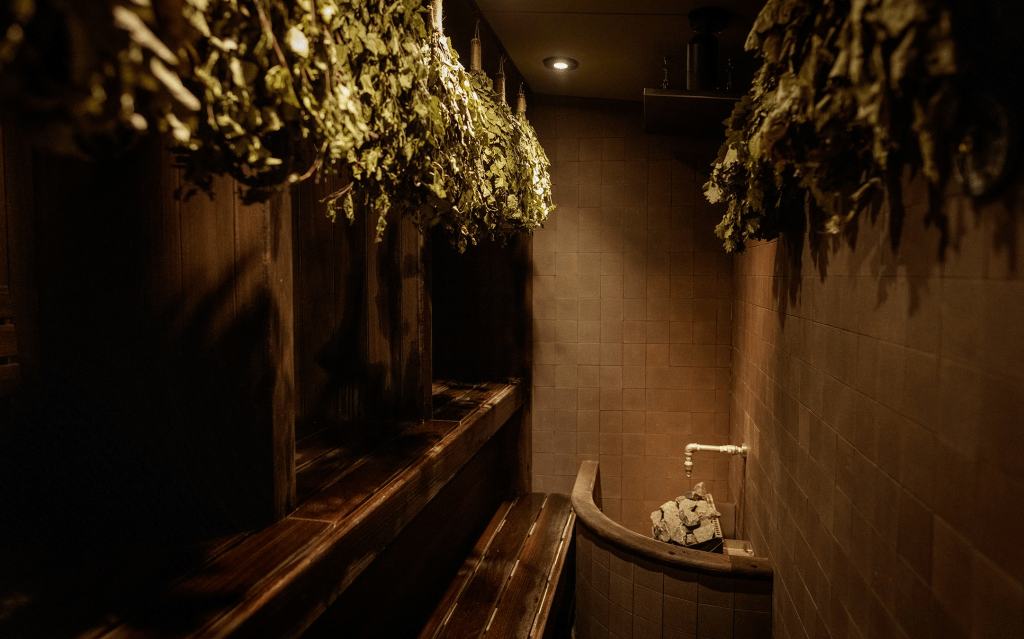
In contrast with the left-brain sauna, the right Brain Sauna is simultaneously energizing and more relaxed. The warm orange, red and brown color palate suit the lower temperatures of the sauna, providing a nice, slow release of sweat throughout your session in a relaxed yet striking environment.

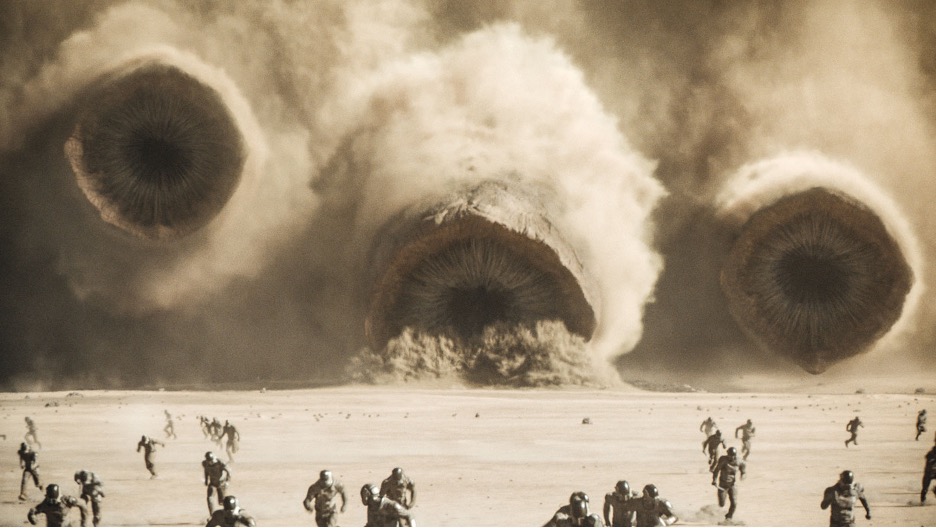
In concurrence with the movie derived sauna nicknames, I refer to this as the “Dune Sauna” for its striking resemblance to the landscape of the recent Dune films. Fortunately, no sandworms are present at Totopa…

Much like the storms of the dry desert landscape of Arrakis, there is no escaping the auto-loyly of the right brain/Dune sauna. In between loyly, the cozy seating areas and warm colors invite you to unwind into this aesthetically soothing room with a relaxed, yet intentional vibe.

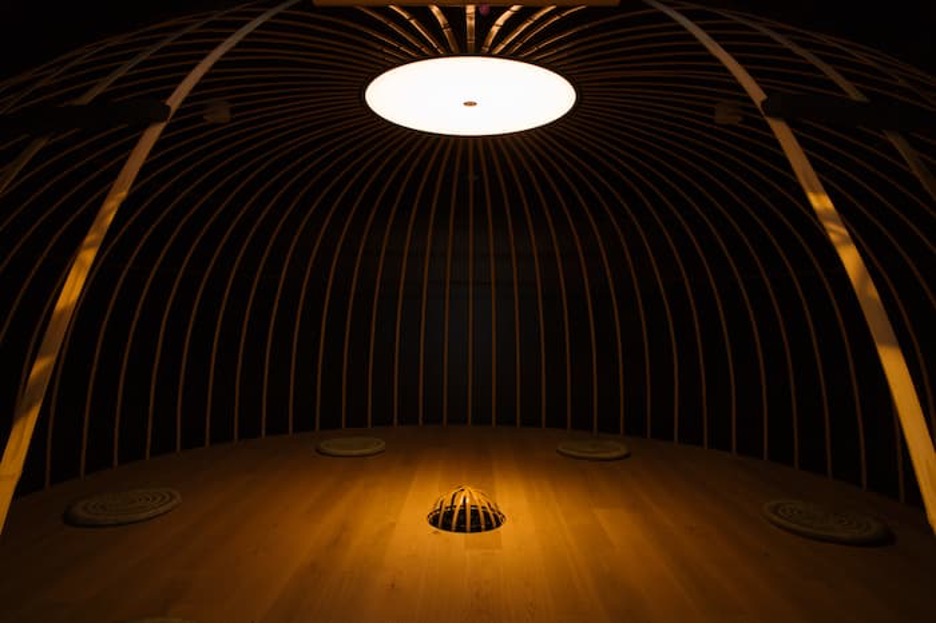
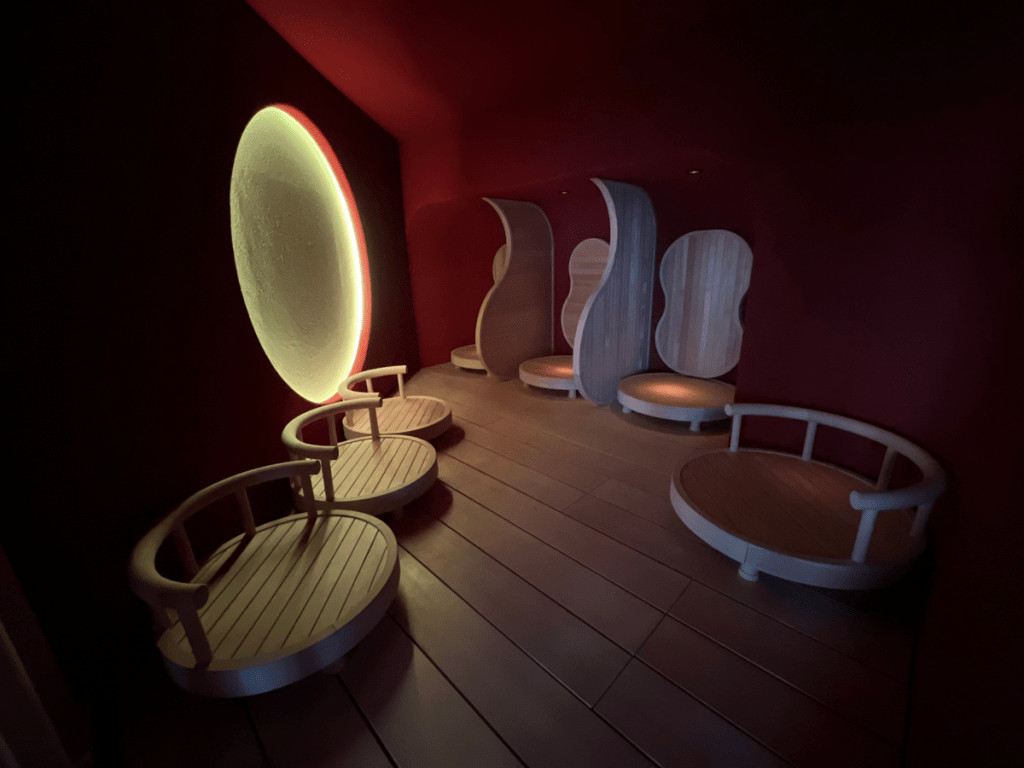
As described on Totopa’s website, the right sauna features “soft curves, warm colors, and individual seating which is sure to activate your right brain”. Whether it’s the rounded wooden seating pads or the color-changing, sphere-shaped enclave cut into the wall, I can see why this sauna is designed around the creative, emotional, and intuitive thought patterns associated with the right brain.

I found this sauna pairs well with the shallow cold plunge. The lower temperatures of the sauna make for a long and slow release in the comparatively warmer, bathtub shaped cold plunge.

Relaxed Sauna

Social sauna.

Several features of this centrally located sauna differentiate it from its two neighbors. Perhaps the most distinct is that it encourages socializing in the sauna. They even have small tables for you to relax and put drinks on!  I had no idea that’s what they were for until I researched for the review… In addition, the relaxed sauna allows for self-loyly, in contrast with the auto-loyly in the other saunas, giving it more of a communal feel than its counterparts.

To contribute to the social vibe, this sauna also plays music! The songs range from Japanese city pop (Masayoshi Tanaka’s “Seven Rainbow Goblins” made an appearance on my first visit) to American pop music.

In my experience, this was a fun relaxed sauna, but didn’t quite deliver as intended. The other guests seemed confused about the presence of the tables (myself included), and exactly “how” social the sauna is supposed to be. On the latter point, I think there are two factors at play here:

  1. Japan doesn’t in general* have a social sauna/bathing culture. Preexisting norms are more likely to take precedent over the social intent of this particular sauna.
  2. Combined Japan’s strong collective culture and emphasis on “reading the air”, this makes creating a social sauna practically difficult, as guests are more likely to be concerned about disturbing others when talking amongst themselves, and especially to strangers (from what I understand Finnish sauna culture is like this too). Contrast this with visiting a sauna in the United States and the entire room will be in a group conversation and know each other’s birthdays within five minutes.**

*Generally, the women’s side of sento are more social than the male side. Additionally, men over 60 seemingly flip a switch and suddenly use sento hour as social hour (which I always really enjoy)!

**While I have come to appreciate the silence of a Japanese style sauna, I do really enjoy this aspect of more talkative sauna cultures, and have made several friendships from “sauna talk”.

Social aspect aside, I found this is a great sauna to “reset” in a relatively standard but well-built sauna. I personally enjoyed both cold plunges after the social sauna, and entering one of the warm baths directly afterward plunging. I think the relatively plain sauna makes it feel “safer” to pair with a warm bath option afterwards, not requiring a full “totonou” cycle to reset.

Cold plunges.

Deep Cold Plunge:

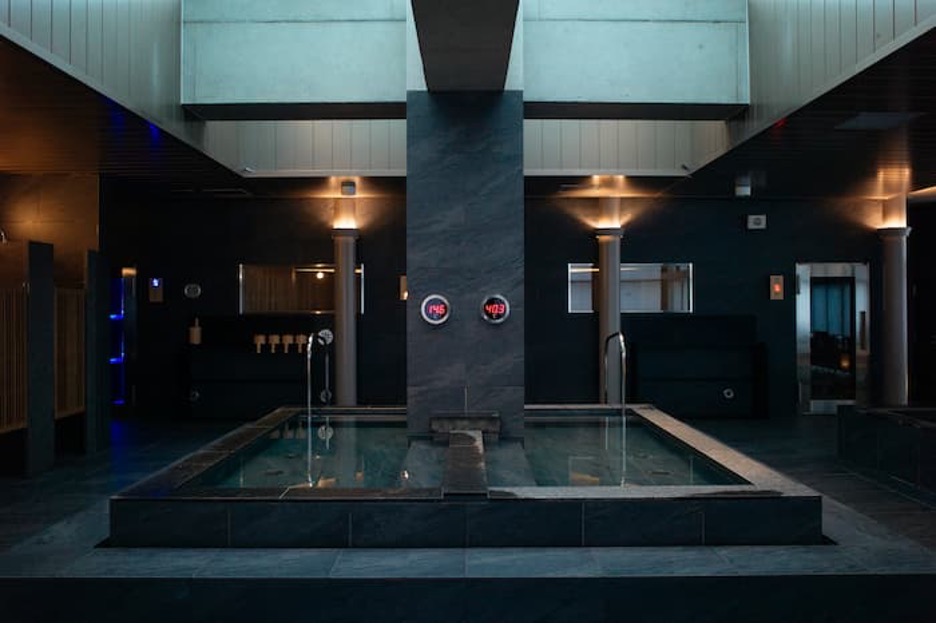
This one is intense! It’s quite deep (165 centimeters to be exact). This one is particularly handy after the Tron sauna’s intense temperature and frequent rounds of auto loyly. In particular, I enjoyed the gradual staircase descent into the cold plunge, allowing for an adjustable experience with various options for depth. It also has a pleasant cutaway with a view of the rest of the facility from above- a nice touch!

Shallow Cold Plunge:

A more relaxed option. I like this one best for long, slow releases. Bonus tip, going directly from this pool to the neighboring warm bath is a great option to explore. This sequence was suggested to me during the Baum Event (scroll below for more info) and I’ve adopted it in my subsequent trips to Totopa. While not as immediately intense as its deeper counterpart, don’t dismiss this option as inferior just because it’s smaller!  When combined with the lower temperature sauna/baths in particular, this can be a preferred option for optimal totonou!

Warm Baths:

While not as much to report, the two warm baths are great additions to the facility. Pairing particularly well after cold plunge trips and for one last activity before heading out, they add yet another aspect of experimentation into the Totopa experience.

Other Amenities

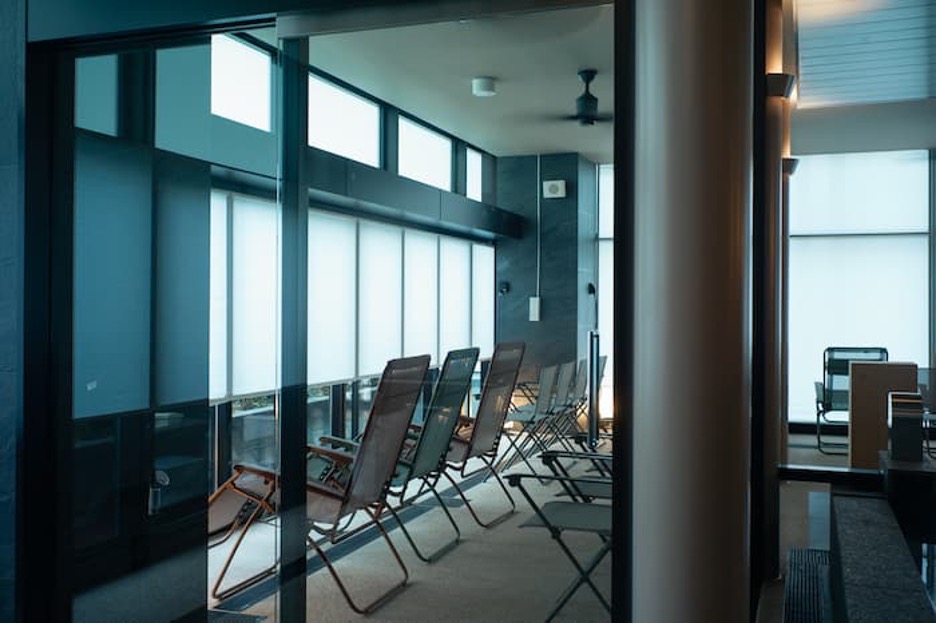
There are two (and a half) primary rest/totonou areas to reset in between rounds. My personal favorite is the open-air lounge. Portioned off by a glass screen, this lounge has windows ever so slightly tilted open to give a refreshing breeze that grounds you back to reality. Combined the light breeze of surrounding ceiling fans, this option is paradesical, simply put.

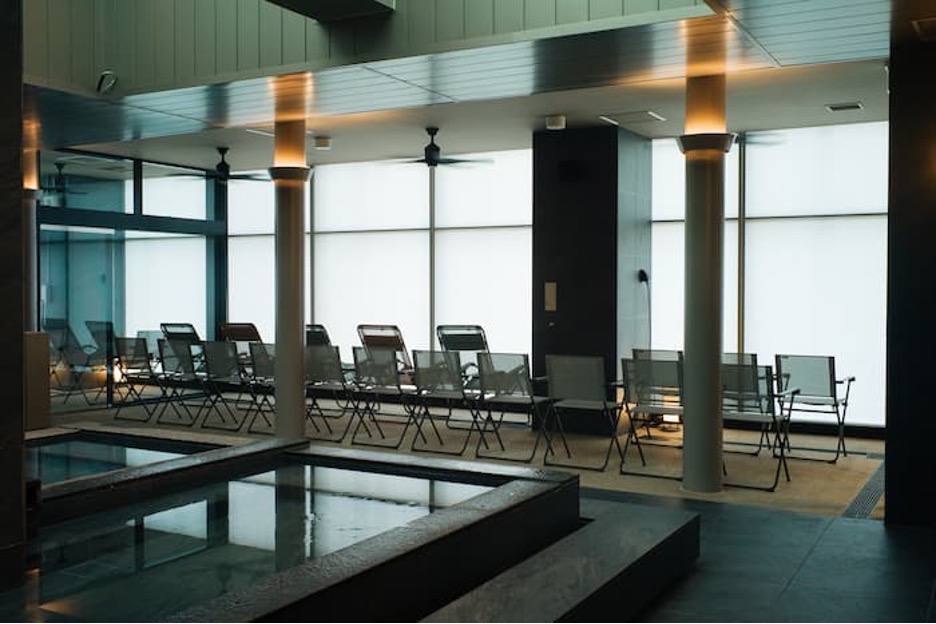
The other primary option is the “refresh lounge”, as it is characterized on the Totopa website. I hesitate to call this a lounge, as it is mostly just chairs scattered around the bathing space. This isn’t inherently a bad thing (it’s quite convenient, actually), I just wouldn’t consider it a lounge. Anyways, I’m nitpicking here. The refresh lounge is categorized as one area, but I would argue its two.  

On the right-hand side of the bathing area are about fifteen to twenty chairs. Conveniently located close to the pools, this is a no-frills place to rest between rounds. While not as immersive as the open-air lounge, I appreciated having an option so close, especially if I’m trying to experiment and get a lot of rounds in (particularly on a weekend when I have nothing else going that day).

Located in the left corner next to the right-brain/Dune sauna are a few reclining lawn chairs. Across from the bathing area, this section is a nice in-between the refresh lounge and the open-air lounge, with just enough seclusion to relax, but with the controlled temperature of the refresh lounge. It’s only a few chairs, so I can understand why it wasn’t incorporated as an officially designated third totonou area, but I felt it was distinct enough to note here.

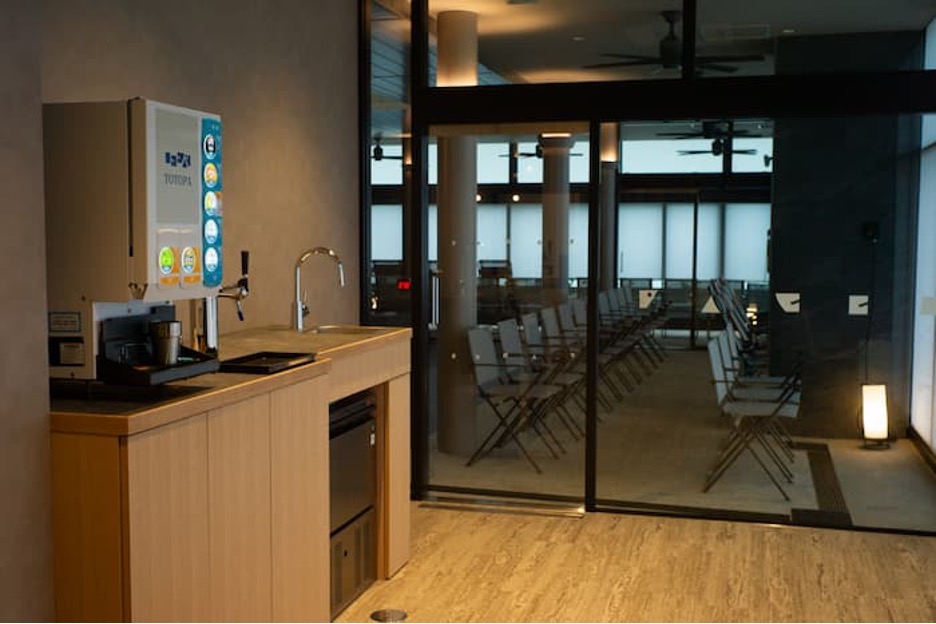
Between the locker room and the bathing area is a cozy refreshment area reminiscent of something in between a nice hotel lobby and a premium gym chain (think a nicer Gold’s Gym or an Athletic Club). With generous drink options (including non-alcoholic beer!), it’s convenient location between the locker room and the bathing area makes it easy to pop in and out to take full advantage.

You will likely notice one contraption that stands out among the rest: the Peloton bike. Standing in the corner next to a (fortunately) frosted-over glass window, I appreciate the thought but… just can’t see myself using it.

I mean, to each their own, but I just don’t think I want to pump out 20 minutes on the Peloton in my birthday suit.  Not to mention the chafing…

Peloton aside, this is a nice little area that’s worth a stop during your time at Totopa.

Authors Note: The women’s facilities appear to be completely different form the men’s side! Thankfully, they appear to be of an equal caliber to the men’s albeit with a different focus. At the present moment, I can’t speak for the facilities for the women’s side. In the future, I hope to bring on a guest to be able to report back on these!

Women’s only: “Breathing Area”

Limitations/shortcomings:

The bathing area/lobby looks a bit bland. For how incredible the saunas are aesthetically, I was disappointed with the center area being a relatively dull grey. The facilities are top notch, but the color scheme combined with the amount of space make things feel a tad sterile. Changing this would bring Totopa up to another level. It gives the venue a bit of a “house that’s too nice to actually use” sort of a vibe.

Additionally, while the facilities and experience are top notch, I found the price to be quite high. This is currently the most expensive non-private sauna I have been to in Tokyo. Totopa charges by the hour and the rate for 3 hours is nearly 5000 yen (!). While I am happy to pay this on occasion, this keeps it out of the absolute top tier for me, as there are a few venues that offer more for around 2000 yen cheaper.

Also, while I love the emphasis on experimentation. I would love to see this stated a bit more overtly. I didn’t think to mention this until my second trip, where a card was handed out with recommended routes to use the facilities for a special event.

When I previously worked at a sauna, I would often give my recommended order, as well as another popular sequence if people were curious. As many places have these on their wall, I think having a guide available on how to experiment would greatly enhance the experience. Personally, once I started to view “Totopa” as a lab to workshop my totonou experience rather than a typical sauna space, I grew a fonder appreciation for it.

Also, using the facilities requires registration via LINE. This is mostly a personal gripe, as I appreciate the convenience of being able to walk in with no frills or technology, especially in a cash-based society like Japan. Thankfully, the staff has been incredibly helpful with any issues with Line that I have had. I haven’t been with any non-residents of Japan who don’t have a Line account, but I can imagine this would be a barrier to entry if you’re visiting temporarily. 

I normally don’t comment on the English interface because I don’t find it appropriate (this is Japan, after all). That said, I know TTNE in particular does a lot of great work to make English/international accessibility a priority, as the company wants to reach an international audience. I think adding either cash-based options or other non-LINE alternatives would be a great way to bridge the international gap.

Speaking of this, Totopa is card only, so be prepared to have a working debit/credit card on you.  

While the criticism is a bit long here, I put these because they are actionable and that can be implemented! I love Totopa, and feel strongly that it has the potential to go from great to legendary. TTNE puts so much love and care into all of their facilities, these notes are all relatively minor things that don’t really put a significant damper on the experience.

Best Moment:

Finding the sauna/cold plunge/rest and bathing combination that hits the spot just right.For me, that was “Dune Sauna, shallow cold plunge, and shallow warm bath, followed by outdoor totonou area.

Also, the Dune sauna is one of the most visually striking saunas I have ever been in.

Unbelievably cool…

A note on the Baum Special Event

Back in September, I visited Totopa for a collaboration event with Skincare brand “BAUM”, featuring samples of their products to be used in conjunction with Totopa’s facilities.

Two aspects of the event stood out to me in particular.

  1. Totonou guide
  2. Plants.

These were two changes made for the event that I would love to see as permanent additions to Totopa!

Upon entry, you were given a guide on what order to use the facilities in, designed with the BAUM skincare samples in mind. The totonou guide was brilliant, and provided an excellent framework to start taking full advantage of Totopa’s facilities. I would love to see this guide (or similar ones) made available.

To match with the theme and aesthetic of BAUM, plants were brought in to decorate the facility. It brought Totopa, particularly the central bathing area to life. In what otherwise feels a bit empty and sparse, the greenery brought a sense of balance to everything. I was disappointed to see that these didn’t stick around after the event. It tied the facility together in a way I would love to see brought back.

Verdict:

Totopa’s unique sauna concepts combined with its emphasis on experimentation make Totopa another excellent work from TTNE. In my personal opinion, Totopa has incredible potential. As it stands, it is an excellent sauna facility. With a few changes, it could easily rise to one of the greats and even among the best in Japan.

If you’re okay with a heftier price tag and want an immersive sauna experience with a focus on experimentation tailored towards tinkering with your sauna routine, I’d highly recommend Totopa.

Food pairing: Meiji Park

Frankly speaking, Sendagaya is not a major dining destination. Dwarfed by nearby Shinjuku and Omotesando, the area’s dining options are scarce compared to its neighbors (I’m sure the several stadiums nearby contribute to this as well).

However, the newly built nearby “Meiji Park” has an aesthetically pleasing market area with several dining options. For immediate convenience, this is likely your best bet! If you want a more involved meal, you have easy train access to Shinjuku and Shibuya (which is what I have done on all of my trips).

Thanks for reading! I hope you find totonou in you future….  

Design Spotlight: Yukitaka Yoneda: “The Sauna Godfather” 米田行孝

After watching Sado (see my last article) for the first time, I enjoyed nearly every episode. However, one stood out among the rest: “With the Sauna Godfather” (ゴッドファーザーと共にととのう). References to the 1972 film aside, I was drawn in by Yukitaka Yoneda, the larger-than-life character who popularized Finnish style sauna in Japan.

BACKGROUND:

Yukitaka Yoneda (米田行孝) was born in Nagoya to a sauna family- with his father and grandfather operating saunas across the Kansai region of Western Japan.

His grandfather  opened Kobe Sauna and Spa just after World War II- when sauna was far from popular, or even known by the public. What was he thinking?  He anticipated that as post-war reconstruction progressed, more Japanese people would seek out leisure activities. His prediction was correct, and led to Kobe Sauna’s success (which endures today).

A man surrounded in lore and legend, he reportedly kept a baby elephant in his garden, and potentially lions and tigers (!).

Fast forward to today, Kobe Sauna and Spa is still operating, with Yoneda’s cousin Atushi Yoneda serving as President-talk about a sauna family!  

While Yukitaka Yoneda’s passion for saunas is now known across Japan, this wasn’t always the case. While his family ran saunas, they were at that time, as he describes it, rooted in the male-dominated ethos of the Showa era*. This image endured in Japanese sauna culture until very recently.

*Note: Showa refers to the Imperial Era between 1945 and 1989, when Emperor Showa ruled, particularly referring to his rule after World War II. He is often referred to as “Emperor Hirohito” in English. This is due to Japanese emperors receiving new names when they die. In this case, “Hirohito” was his name while he was alive, and his posthumous name is “Showa”. Since we don’t have this concept anywhere in the English-speaking world, “Hirohito” is still used in English Contrastingly, in Japan, “showa” is used to refer to both the emperor and the era in which he ruled. It is often shorthand for “retro” in a positive sense and “outdated” in a negative one.

The style of sauna of that time didn’t resonate with Yoneda. With the culture revolving around old salarymen saying “Let’s do our best tomorrow!” (明日もがんばるぞ) and watching TV in an itchy, dry, electric sauna wasn’t for him (who could blame him?). His future sauna ambitions were to remain dormant for now.

As Yoneda himself put it:

“I was a carefree rich kid. I had no interest in the family business, let alone saunas. Even when I was about to graduate from university, I didn’t feel any sense of crisis about my future. In fact, I didn’t even bother to look for a job.”

A few years after graduating university in 1993, he gained experience sauna consulting in China.  At the request of his father, partially concerned about Yoneda’s lack of ambition, had him work in his sauna business in Nagoya, and eventually help a business acquaintance’s first Japanese-style urban sauna in China get off the ground.

During his time in China, his father passed away, leaving his sauna business in Japan (and its debts) with him. Straddled with debt and overwhelmed by the death of his father, Yoneda’s inner world became quite somber.  At the height of personal anguish, Yoneda embarked on a trip to Finland. Feeling pushed to the limit by the trials of life, one smoke sauna session in the woods on a spur-of-the-moment trip Finland changed everything.

“That’s when I suddenly realized: ‘I should really think [more] about  saunas.’ For the next 10 years, my goal wasn’t to pay off my debts, but to think about what I could do for the world with saunas

After the experience, Yoneda wanted to not only spread Finnish style sauna to Japan, but also explore what Finnish sauna could look like in a Japanese context.

Doubling down on his efforts, Wellbe and eventually, Sauna Lab, became legendary in the Japanese sauna world.

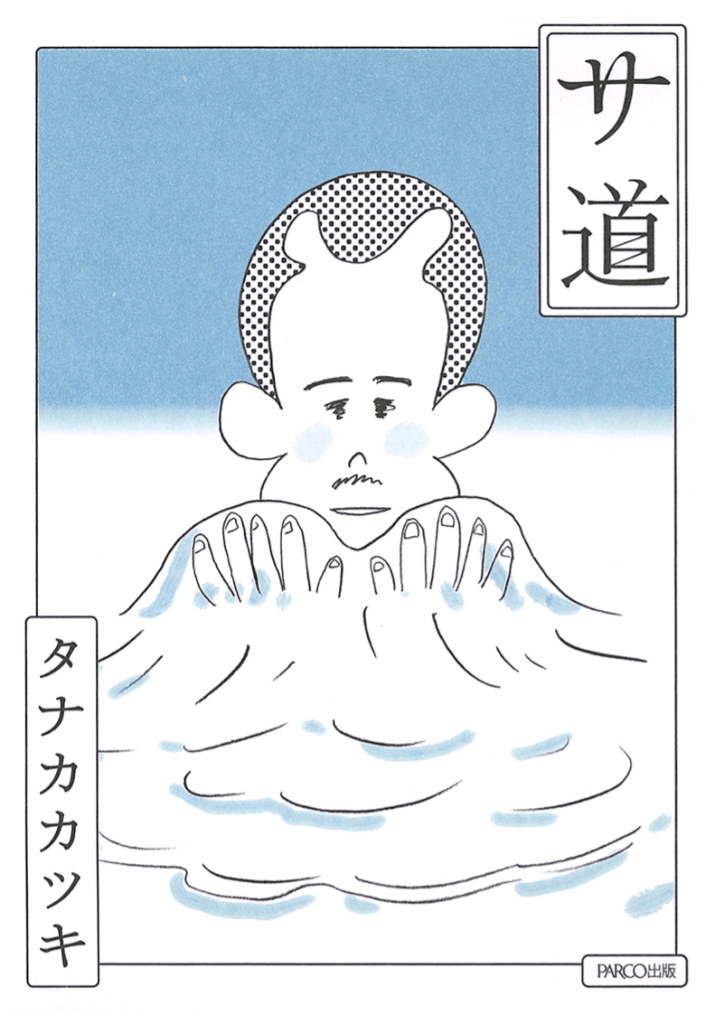
Later on, he cited Katsuki Tanaka’s groundbreaking “Sado” (サ道)as a contributor to his clarity on the role of Saunas in Japan.

‘It was only after I discovered Sado that I was able to clearly articulate that saunas are truly necessary in today’s society. From then on, I focused on ‘how to increase the number of people who enjoy saunas, rather than just doing it for the money,’ and as a result, the business of my company started to run smoothly.

Today, his sauna facilities rank as some of the top throughout Japan, and with his passion for saunas, it’s not difficult to see why.

WORKS:

Wellbe:

Wellbe is Yoneda’s original storefront that he inherited from his father. Since he took over, it has transformed into a pioneer of the contemporary Japanese sauna boom.

Located in Nagoya, this Saunachelin  Hall of Famer is famous for being one of the first authentic Finnish style saunas in Japan. Established well before the start of the sauna boom, Wellbe managed to attract regular customers, despite it being a niche hobby at time. This is especially impressive being in Nagoya, since Tokyo and Osaka are the go-to destinations for anything international and experimental in Japan.

Wellbe is known for its authentic Finnish style saunas, top quality aufguss, and its cold “Lapland” room, meant to emulate the cold winters of Northern Finland while providing a place to cool down.

Today, Wellbe (men’s only) has a women’s only section (Forest House) and a Fukuoka location.

Sauna Lab:

Designed as an oasis in the city to help urbanites find peace and clarity in the midst of their busy lives, Sauna Lab uses Finnish design principles with Japanese influences to create an unparalleled experience.

Inspired by an increased interest in Sauna from women who were unable to visit the (then) men-only Wellbe Sauna, Sauna Lab was born. Inspired by his holistic view of sauna as a path to alleviating human suffering, SaunaLab broadened access to sauna beyond his work at Wellbe, focusing more on the communal aspects of sauna.

Today are Sauna Lab locations in Nagoya, Tokyo (near Kanda Station), and Fukuoka.

Yoneda’s vision for sauna lab.  

PHILOSOPHY:

Reduce suffering through sauna

After his own transformative experience in Finland, Yoneda recognized sauna’s potential to alter human behavior and enhance the wellbeing of mankind. While this might sound a bit dramatic, Yoneda articulates his vision well, both implicitly through his saunas and explicitly in numerous interviews.

On nature making the urban experience more manageable.Yoneda says

“Living in a city, there is an invisible barrier that says. ” This is the human zone.” But I sometimes wonder if a smooth, polished world is really comfortable for people.

I don’t have the answer, but if we could find a compromise between the natural and the artificial, we might be able to feel a little more comfortable. That’s what we want to explore at Sauna Lab.”

Upon my own visit to Sauna Lab, the amount of greenery, herbs, and wood throughout the building stood out as one of Sauna Lab’s most striking components.  Despite the Kanda location being a short walk from Akihabara, a poster child for a technology dominated “human zone”, Sauna Lab manages to take you away from it all and feel a bit of fresh air and the Finnish woods in the center of Tokyo.

Expanding on this, Yoneda credits our separation from nature to the hubris of the modern man: 

“I think the idea that humans are above nature is arrogant. The idea that humans are stronger than nature, that nature can be controlled, that kind of idea can be easily overturned. We have a lot of experiences like that, don’t we?”

“As I said before, it’s not about giving up urban life and
going back to nature. I think life would be easier if we got closer to nature and had a more humble attitude.”

Buddhist influence in sauna…?

If any of this sounds familiar, Yoneda’s philosophy has a lot overlap with Buddhism, as some have pointed out. On an archived version of the Sauna Lab website, you can find a distilled example of this

“The world in which nature is being lost and digitization is becoming more and more convenient is a wonderful place, but it is also bringing with it an increasing number of unique hardships. It is precisely because of these times that we created SaunaLab using natural wood in a building, as if we were planting trees in the city.”

He adds that

“I’m constantly asking myself what is needed to alleviate the suffering in the world right now, and that’s what I’m building these saunas with [in mind]”

The integration of nature (in particular, acknowledging that separateness between man and nature is artificial and that we are all part of one great existence) is as much a component in Yoneda’s work as the core acknowledgement of suffering, the latter which is found at the core of Buddhist theology.

Anyone who has experience ととのう (sauna enlightenment) can attest to the feeling of oneness and presence found in sauna. The importance of aesthetic spaces, such as Yoneda’s, in aiding the process are crucial to this feeling of oneness and presence found in both in Buddhist thought and the sauna experience.

Self-discovery through sauna

Cell phones have increasingly disconnected us from ourselves. The sauna survives as one of the last bastions to not only unplug, but reestablish self-reflection. As Yoneda puts it:

“I feel like there is a slight connection between
when saunas started to become popular and when smartphones started to become widespread. I think the reason saunas are becoming so popular worldwide is that people want to reset themselves from all that brain-intensive activity by going to the sauna.

In other words, the sauna gives your brain a rest.”

Yoneda emphasizes sauna as a remedy against the hyperconnected lifestyle of the modern age, suggesting that:


“If you spend all day on your computer or smartphone, I’d like you to try resetting yourself in a sauna, even if it’s just once a week. Sometimes, when you’re alone and you find yourself thinking endlessly, going into a sauna can actually help ease your mind.”

The combination of being without your phone and forced to focus on the body does wonders for one’s mental health. In the modern world where nearly everywhere is invaded by phones, saunas have held out when even strongholds like airplanes and schools have succumbed.

Throughout history, creatives, spiritual leaders, and innovators have relied on silence and stillness to prompt insights and “a-ha “moments. In a world of constant distractions, we have sanitized and scrubbed out nearly all opportunities for these sorts of insights.

In his own words:

“If the people of Tokyo could come to this sauna, reflect on themselves, rediscover themselves, and unleash their true potential, I believe Japan would become a better country. No, it’s not that saunas themselves will change the world. But if we can make the people in the town more and more energetic by creating saunas like this, then maybe we can indirectly change the world. I really believe that. ”

More than anything, this is why this blog exists. Frankly, I’ve wrestled back and forth if it’s appropriate to draw attention to a country facing massive overtourism issues and a low amount of English infrastructure to support it.

What unceasingly compels me to keep writing is the kindness shown Japanese sauna community, and how sauna continues to show up in my own life and the lives of others as a force for good in the world. The absence of phones and rare presence of a social space that draws us into our bodies is a potent tool in a world fraught by social isolation, division, and uncertainty.

Yoneda’s vision is the kind that inspires me to write about and share both his works and saunas across both Japan and the world.  

Influence:

Yoneda’s influence is easy to find within the Japanese sauna community.

Outside of the success of Wellbe and Sauna Lab, he has continued to be an active part of the sauna boom. In the first season of Sado, Yoneda even makes an appearance at Wellbe. Cued with the titular “Godfather Theme” to fit his nickname, the show did a great job of presenting him as a towering, yet unassuming figure in the Japanese sauna community. 

His influence extends beyond his nationwide reach (with saunas in Nagoya, Fukuoka, and Tokyo at the moment), representing Japan abroad as well.  Outside of Japan, Yoneda is a part of the International Sauna Association, and is listed as a supporting member on their website. This has helped Japan get on stage at events such as the International Sauna Congress (yes, really).

Final Thoughts:

Like most who find themselves in the global sauna community, Yoneda is an eccentric, one of a kind visionary. Both his material and philosophical visions are distinctive and unprecedented.

As he puts it:

“I truly believe that saunas will save the world”

I hope that, in time, the world will follow suit.

Thank you for reading. Wishing you happy sauna sessions and for ととのうin your future…


Sado: The Genesis of the Japanese Sauna Boom

Sado: The Genesis of the Japanese Sauna Boom

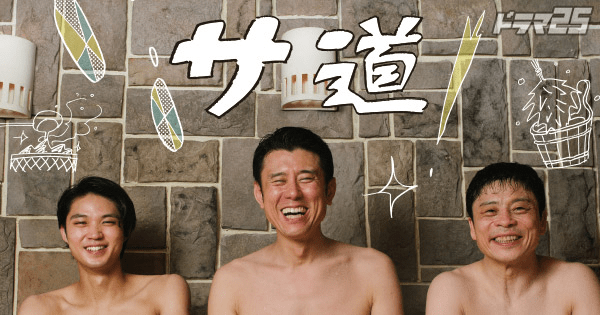
The meteoric rise of sauna in Japan can be attributed to several factors: COVID, a preexisting bath culture, a general interest in health and longevity. But perhaps no single factor was as powerful as “Sado” (サ道), a sauna manga (Japanese style comic) released in 2016. By 2019, Sado received an adaptation as a television drama, catapulting saunas into superstar status in Japan. 

Sado: A Chronology: 

Origins (2011):

In 2011, Katsuki Tanaka (stylized as タナカカツキ in Japanese) published his original novel “サ道” or “Sado”. This translates into English as “Way of the Sauna”, using the サ katakana character used in サウナ (phonetically-SA-U-NA), followed by the character 道, which in this context, translates to “way” or “path” (in other cases, it can mean road, route, or street). While I have not (yet) read the original novel, summaries in Japanese describe the author’s path to sauna addiction and his discoveries about the essence of sauna along the way. Prior to Sado’s publication, saunas conjured an image of older men relaxing (see the first Japanese sauna boom), leaving the younger generations in Japan anything but enchanted with saunas. The initial publication effectively introduced sauna to a younger generation of Japan, changing the trajectory of Japanese saunas entirely. Now, saunas are as trendy as it gets, a far cry from their decrepit image just a few decades prior.

Manga (2016):

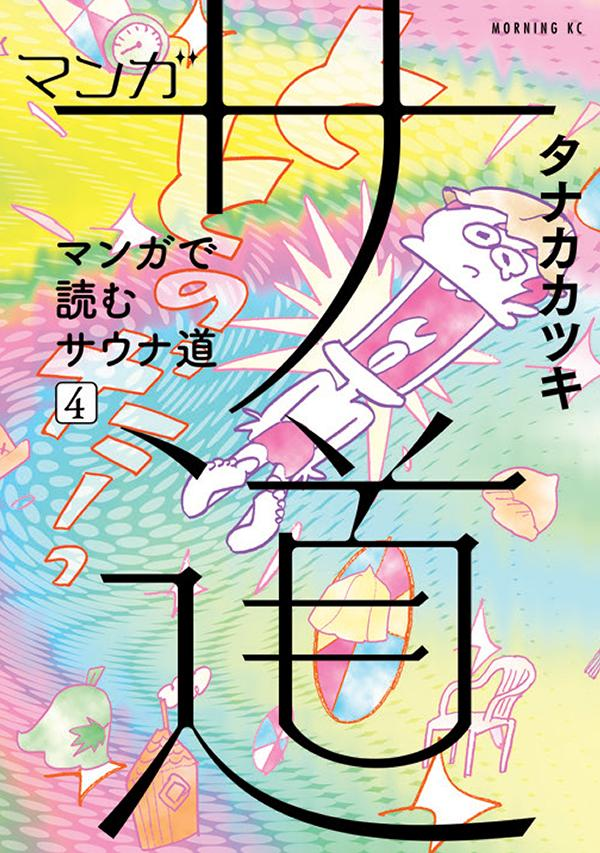
The original work accrued enough of a following for Mr. Tanaka to expand on it by creating a manga based on his original novel. Already an experienced manga artist, Tanaka was able to hit the ground running with Sado. Shortly after its release in 2016, Sado was a major hit.  

With the manga release of Sado coinciding with rise of social media in Japan, many sento (public baths) received requests vis SNS Message and X/Twitter to add a sauna. Many of these came from excited Sado fans, newly converted to regular sauna use.  Today, it’s nearly impossible to find a sento without a sauna!

In 2017, Sauna Ikitai (literally “I want to go to the sauna”), a sauna database launched (see my article for more information), compiling sauna knowledge in Japan to one easy-to-find place. Far from a rarity, now saunners could search the top-rated saunas in their area with ease.

At the moment, Sado is one of my primary forms of reading practice in Japanese! While I have not yet finished the series, there are currently six volumes of Sado, and I look forward to reading them all in the near future! 

Television Drama (2019):

In 2019, Sado received an adaptation as a television drama. At this point, sauna had accrued a fairly large degree of popularity in Japan. 

What makes the drama stand out (having watched it myself), is each episode’s inclusion of various sauna from all across Japan (often Tokyo, but not always). I have discovered saunas through Sado, and their choices never disappoint!  For instance, the “home sauna” of the show’s protagonists is a real sauna in Ueno: Sauna and Capsule Hotel Hokuo. Visiting was a blast, and having watched the show drastically enhanced my experience. Sado aside, the facilities are nothing to scoff at either. A great outdoor bath (露天風呂) and top notch Aufguss make it an excellent choice for the show.

Several arcs of the show involve characters taking trips outside of their native Tokyo to other parts of Japan, including Kansai (Osaka, Kyoto, and Kobe) and Kyushu (Japan’s southernmost island), typically for sauna related purposes. 

If you get the chance to visit saunas featured in Sado, the owners often hang up memorabilia from the episode (signed posters, for example), which makes it extra fun to visit the venues selected for the show. 

The show continues today, with an hour-long special most recently being released in December, 2023.

The three main characters at Sauna and Capsule Hotel Hokuo in Ueno.

Sado: Plot and Reading Experience:

Manga:

As mentioned above, I have been working my way through the Sado manga myself. I recently finished the first volume and was a huge fan! The chapters typically cover aspects of the sauna experience, Japanese sauna culture, or both. Chapter titles include: “ Sauna High” (サウナトランス)、”The Correct Way to Sauna” (正しいサウナの入り方), and “Tattoos Not Allowed” (刺青お断り). Generally, the plots revolve around the main character, Nakagawa Tatsuya, and his journey into Japanese sauna culture. Along the way, he typically experiences a mix of comedic and heartwarming interactions. These include interactions with saunners from outside Japan (Finland, the United States, etc.), making new friends, and debates around differing sauna cultures. One of my favorites is an entire chapter “The Sauna-room TV Problem” (サウナ室テレビ問題)  dedicated to the topic of TV’s in the sauna. Generally, Japanese saunners prefer to watch TV in the sauna, where the Finnish treat the sauna as a silent sanctuary at all costs. 

Stretching this out over an entire chapter must have been hard to write, but Tanaka delivers in a manner showcasing both his skills as a mangaka (author of manga, 漫画家 in Japanese) and as an astute observer of sauna culture.

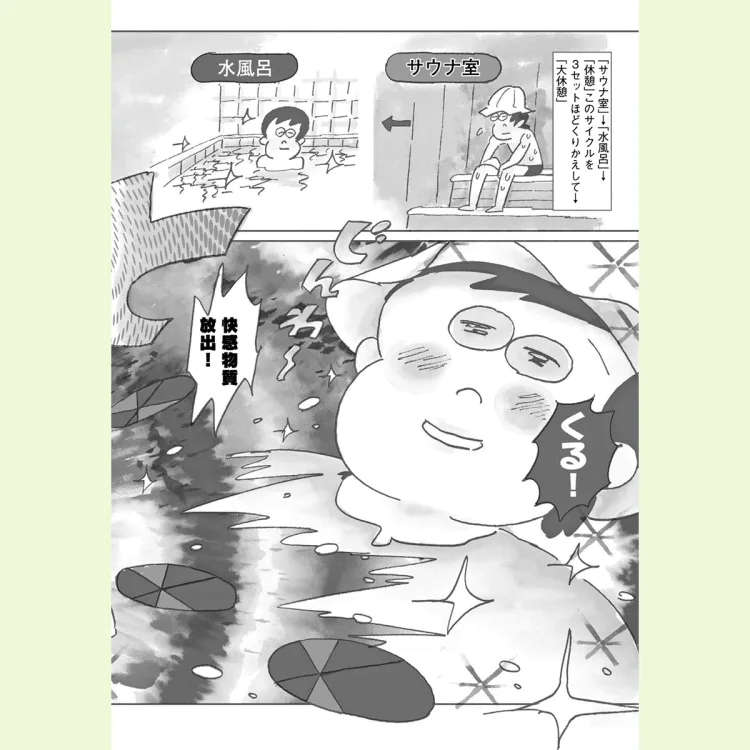
Additionally, I find the art style to be distinct from other manga, especially from action-oriented manga that are most popular outside of Japan (Dragon Ball, One Piece, Naruto, etc.). Many of the shots are atmospheric, and capture the sauna experience incredibly well. From the budding friendships that form, to the one-of-a-kind high that only sauna can produce, it’s easy to tell that this love letter to sauna comes straight from the author’s heart.

The manga is currently not available in English, but for those who can read Japanese and want a light read, I highly recommend Sado! Even if you can’t read Japanese, the pictures alone are fun to look at, and may still be worth a purchase (you can typically get the first volume for around 300 yen, or $2.00 USD).

Sauna -> Cold bath -> Totonou/ととのう

Drama: 

The drama centers around three characters, Mr. Tanaka (タナカ), Mr. Coincidence (偶然さん), and Mr. Handsome (イケメンさん) and their sauna escapades. Perhaps the most interesting part of the show are the saunas featured around Japan (as mentioned above). This aspect of the show is particularly fun if you live in or have visited Japan. I have found many of the best sauna spots in Tokyo through Sado, including (but not limited to): Marushin Spa, Times Spa Resta, and Sauna Lab. Sado does a great job of showcasing saunas in a way that makes them look enticing to visit, particularly for those located outside of Tokyo (many that are now on my list when I travel around Japan).

Amazing saunas aside, the antics of the gang range from quirks particular to Japanese humor to funny gags any saunner can relate to. Some of my favorites include: a Godfather parody to introduce the “sauna Godfather” (サウナゴッドファザー) (a real person who helped popularize sauna in Nagoya,), a truck driver who frequents a love hotel for the sole purpose of using their sauna, and nearly getting caught trying to work from home at the sauna cafe. 

The show is goofy, and has a bit of an ‘off-Broadway’ feel, but has an endearing charm at its core, and writes a wonderful love letter to both sauna and the Japanese sauna community.

The show is available on Netflix in Japan only, but can be accessed by using a VPN. While the show is currently only in Japanese, I still think the watching the show still has value, even without full or limited comprehension of Japanese. Many of the scenes transcend the dialogue, and the facilities shown and the sauna highs induced go beyond subtitles. 

Final Thoughts: 

Sado is the kind of phenomenon that’s hard to believe exists. “Sauna comic book” and “Sauna television drama” both sound like they could only conceivably exist in Finland, and even then, it sounds a bit absurd. However, after reading and watching the series, it makes sense why it’s been such a hit and one of the driving forces behind the ongoing  sauna boom. Behind its charming drawings and TV adaption, Sado effectively distills the distinct and idiosyncratic nature of both the sauna experience and Japanese sauna culture. The time away from screens and the outside world, the one-of-a-kind friendships that stem from sauna, and the unique sauna high that doesn’t have any real equivalent…. 

…for those who have experienced any of these, give Sado a try. 

Thanks so much for reading! I hope you enjoyed it. Keep your sauna on as fall arrives in Japan, and I hope you find some ととのう in your near future…

Sauna Methods: Various Paths to Sauna Enlightenment

When talking to prospective new saunners, I am often met with enthusiasm, followed by “…but I feel like I’m doing it wrong…”

So long as you are staying hydrated, not pushing too hard, and listening to your body, there’s not a wrong way to sauna.

That said, many facilities (both in and outside Japan) have developed methods that promise the best sauna high, skin cleanse, or what have you. In Japanese, this is known as 整え方, translating to “how to totonou/ achieve a sauna high”.  I have found saunas will increasingly list their suggestions for how to attain totonou (ととのう). I don’t believe in a singular bulletproof method that works all the time for everyone. That said, I think that:

  1. So many individual factors play into the experience, including what you ate, how you slept, how hydrated you are, that even the same method can give you drastically different results on a given day. This makes a blanket prescription for how to achieve totonou short of ever being bulletproof. It can be a great guide, but you will have to try different tactics overtime to more consistently get the most out of your sauna experience (leading to my next point)
  2. Ultimately, you will need to experiment with what works best for you. Once you start building a sauna practice, you will start experimenting, listening to how your body feels after trying a given method. Mixing and matching methods, understanding what works best relative to certain temperatures and different facilities, and other considerations are paramount to building your sauna routine.

For those who are in Japan, and aren’t sure where to start, here is my default recommendation. *

*Note. I am not a doctor. If you are concerned about any underlying health conditions that would potentially interfere with your experience, please consult a medical professional.

My suggestion:

  • Start with a warm bath.
  • Sauna
  • Cold plunge
  • Relax (5-10 minutes)

Repeat as many times as desired.

I typically go for 2-3 on a standard outing, and extend if I have extra time/want a more intense sauna high. That said, more does NOT necessarily equal better, and I wouldn’t describe it as such. If you are just getting into sauna, one or two rounds will likely be more than enough.

Beginner Guidelines:

  • (Sauna) When in doubt, get out. You are likely still learning how listen to your body. In the modern world where we are increasingly out of touch with our kinetic instincts, you may needlessly push yourself beyond what is optimal (more on this below). More does not always equal better. Start slow, and you can build up over time in needed. I find five minutes on the lowest bench is often a great place to start, but if you can’t do this to start, there is nothing to be worried about!
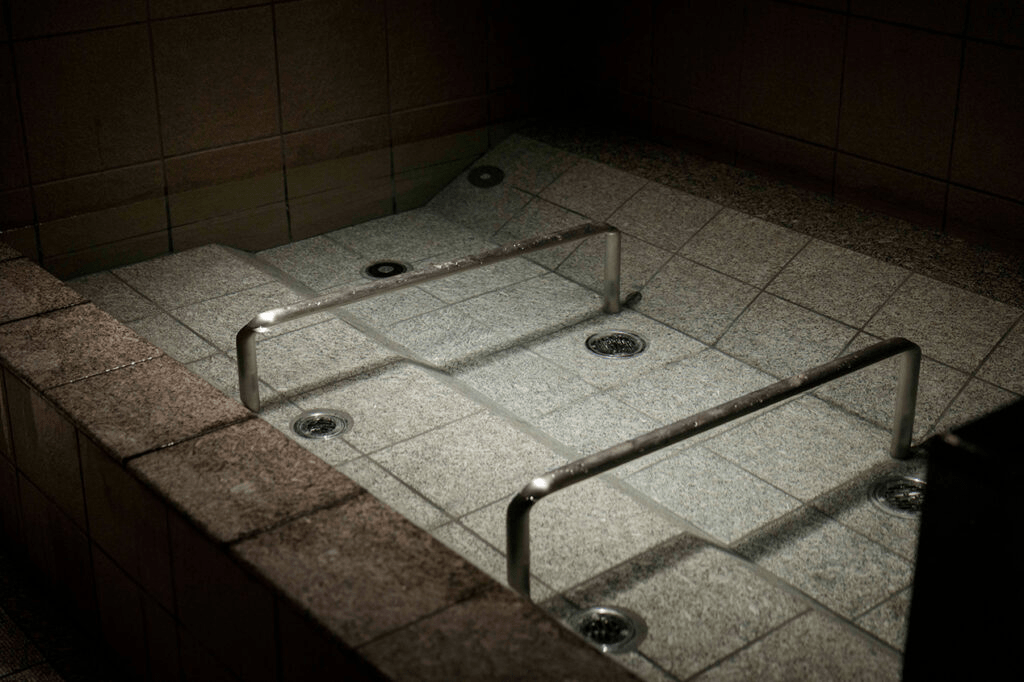
  • Cold Plunge. Use the water ladle (picture below) to wash off. Start with the outer extremities of your body (hands, feet), and gradually pour inwards. As a beginner, I often suggest avoiding full submersion into the cold plunge. Start with the ladle, and if you feel ready, dip your feet in. At most, I would suggest slowly entering the cold plunge, and getting out once submerged. Just this will, for most people, be invigorating and foreign.
    • Pay particular attention to the temperature of the cold plunge here. Cold pools (水風呂) 20 degrees or higher will be a better entry point than anything 15 degrees or below. As a beginner, 10 degrees or lower will likely be excruciating, and I would avoid it until you feel ready. This part of the experience is the most extreme. As such, exercise the most caution when using the cold pool.
  • R E L A X. Most guides suggest you find a chair (plentiful in nearly any facility), pat dry off, and sit for 5-10 minutes. This will allow your body temperature
  • IF you feel up for it, go for another round. A rule of thumb that I like to use so I’m not glued to the clock, is that once your legs are naturally dry (assuming you pat dried with your face towel), your skin will feel refreshed and ready for another round.  
  • I always consider my first round a warm up round. Starting with the bath especially, my core temperature will be a bit higher, and I won’t be in the full swing of things. It’s completely okay to start lighter.

Side Note:

There is a tendency I hear, particularly with men, to view how long they can spend in the sauna as a point of pride, and even an extension of their character, and masculinity in the case of men.

Recently, I was traveling outside Japan and overheard the following conversation in a gym sauna:

“Yeah, it’s supposed to hurt. It’s supposed to be pain. You’re not supposed to enjoy it. Come on, stay in longer”.

I couldn’t think of a less true statement. For several reasons.

  1. Sauna injuries are real. Full stop. While incredibly rare, they are near either the domain of people needlessly pushing themselves beyond reason, or people touching parts of the sauna that shouldn’t be touched (it happens more than you’d think…). I’ve seen people pass out, shivering for hours afterwards, and burn skin  (all of these have been outside of Japan, in places with less established sauna and bathing cultures). None of these are remotely normal, and all of these cases were 100% preventable if the individuals had applied (repeat after me) common sense and basic safety protocols. Listen. To. Your. Body.
    1. Anecdotally, the presence of alcohol is a commonality between around half of the injuries I see. If you’ve been drinking, save the sauna for another day. It’s simply not worth it.
  2. How you feel in the sauna is variable on so many different things, including: what you ate that day, hydration that day, sleep, exercise, mood, the weather. Like how this will affect your sauna tactics, it should also inform when to take it easy. The race against your ego is a race to nowhere. True in life and in sauna.
  3. More is NOT always better. A common example for me. If I sauna in the morning, I have to be careful not to do too many rounds or push my limits, or I will end up too tired and relaxed for the rest of the day.
    1. See below for my recommendation on a lighter, morning circuit!
    1. If you aren’t hydrated, or ate a lot of food beforehand, or were out in the sun all day and walk in with a high core temperature, more can be disastrous. A lighter session can be just what your body needs in some cases (if sauna is appropriate in the given circumstances).

That being said, on a weekend where I have the time, if I feel up for it, adding an extra round or two more than normal can help me feel deeper sensations, help me sleep and relax, and unwind for the week. It’s all about context and knowing what you need. Different tools for different situations. Having different sauna tactics and routines is about having a toolbox to get the job done in a variety of circumstances. Overtime, you will develop an array of tactics that will become second nature to you, naturally integrating into your sauna experience. With that in mind, here are a few places to get started for those curious about building off of a beginner’s routine.

SAUNA GUIDES: 整え方

Note: These aren’t hard and fast. Experiment with these as you like. There are plenty of ways to sauna- here are just to get started.

“Adopt what is useful. Discard what is useless”– Bruce Lee.

With that in mind, enjoy!

That feel when you find your right routine… (image from the Way of the Sauna manga)

Russian Style: (Intermediate)

  • Warm up (shower, warm bath/hot tub, etc.)
  • Sauna
  • Cold Plunge
  • Repeat sanua and cold cycle 2-3 times (in immediate succession)
  • Relax (as long as needed)

Repeat as needed.

Notably absent: vodka. I do NOT recommend adding this to your routine…

Russian banya (literally “bath” in Russian), is characterized by its parilka (Russian style sauna), which looks like a wood-fired pizza oven, opposed to a Finnish style sauna heater/stove. The focus is generally on a lower humidity and higher heat (between 80 and 100 degrees Celsius, or 175-215 Farenheit, with 15-25% humidity) than a Finnish style sauna (80-90 degrees Celsius/ with about 20-40% humidity, depending on the loyly). That said, this is just an average, and temperatures can vary between locations. The lower humidity allows the heat to be a bit higher while remaining tolerable. Due to the higher heat, I have found the cold pools tend to be a bit more extreme than a lot of Finnish style locations (however, I imagine this isn’t the case in Finland, since going into an actual lake is most common there).

In terms of sauna habits, this tends to result in a more fast paced, hot-cold-hot-cold back and forth. It’s certainly not for the inexperienced, but once you’ve built up to it and can try it safely, it’s a thrill!

Going directly from hot to cold can be incredibly exhilarating! But it can also be a shock to the heart if you have underlying conditions or a lack of experience, so I wouldn’t recommend this unless you are both an experienced saunner and don’t have any underlying heart conditions.

Morning Circuit:

  • Keep it around an hour, hour and a half. No more than two.
  • Two rounds recommended. I would discourage more than 3 unless you want to be really tired for the rest of the day.
  • Go lighter on the sauna, focus on the cold.
  • End on the cold plunge. It’s not necessarily intuitive (especially in the winter), but I find it keeps you energized and awake, rather than too sleepy to take on the rest of the day.

I love this one, and its taken me some experimentation to dial it in. I tend to go into my day more grounded, carrying a more centered inner peace after this routine. My hope is that it gives you the same.

Carbonated Baths: (炭酸泉)

The carbonated bath is a staple of many sento around Japan. It took me a while to really take full advantage of it. Here is a summary of the few tips I have seen.

  • It takes a bit for bubbles to form on your skin. Don’t move around too much and be patient
  • I would suggest staying in for ten to fifteen minutes. Based on the guides I have seen in Japanese, there isn’t really a benefit to staying in longer than 15 minutes. More does not equal better here.
  • I really enjoy using this bath at the end, particularly before bed. It really knocks me out and gets me ready for a good night’s sleep!

Venue Specific Recommendations:

Here are a few found at specific saunas I have visited. I may update with more in the future, but here are a few to get started for now!

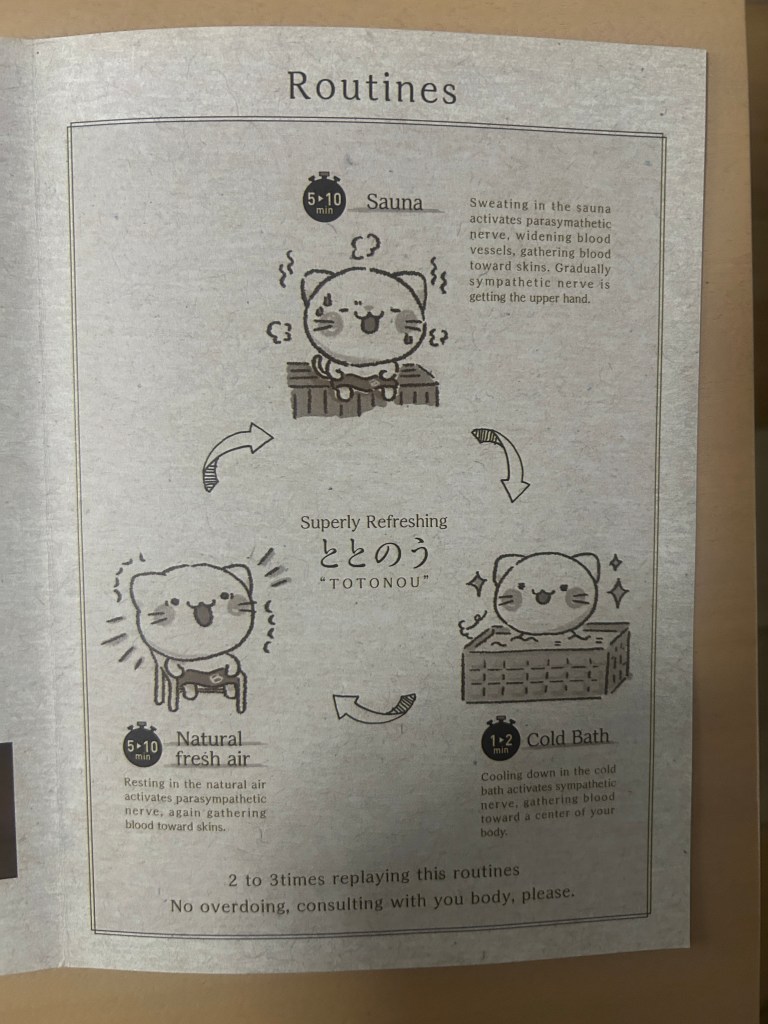
Corridor no yu: (with the cute picture guide pamphlet)

I came across this one while visiting Ginza Granbell Square’s Hotel Sauna. This pamphlet was avaliable at the front desk and I loved it enough to hold on to it!

The English isn’t perfect, but it gets the point across!

Sauna Dojo Guide (on the wall in Japanese):

  1. Dry off before entering sauna
  2. Enter the sauna. 5-10 minutes.
  3. Wash off your body.
  4. Cold plunge
  5. Relax.
  6. Repeat.

SkySpa Yokohama Guide:

For those looking for a bit more of a detailed explanation of the standard Japanese 整え方 (Totonou Method)

Conclusion:

My aim is to provide tools to help navigate your sauna journey. While there are lots of options, my goal is not to overwhelm, but to help guide. There are lots of effective sauna tactics, just keep in mind the following as you experiment:

  1. Use common sense
  2. Listen to your body
  3. Stay hydrated
  4. Keep experimenting and tweaking routines overtime to best suit your needs.

I may continue to add to this guide/write a follow up overtime if this is helpful to readers.

I hope you find some totonou in your week and in your life…. More articles to come soon. Take care and I hope you find a 整え方 that works for you!

Sauna in the Summer- why it might be the best time of the year to get your sauna on!

Summer has come and almost left in the Northern Hemisphere, and in Tokyo, it’s still in full swing. At the time I started writing this post, temperatures were at or exceeding 40 degrees with full humidity (97 degrees Fahrenheit, real feel with humidity is between 106-107 degrees). Typhoons have come and gone.

And through it all, I have been…. visiting the sauna more than ever! No, I’m not crazy (well, maybe I am for other reasons, but that’s a different story). Summer time is possibly my favorite time of year to sauna! Here are a few reasons why:

Author’s Note: Tokyo is preparing for an unusually hot September at the time of this writing. If you are going to enter a sauna, PLEASE HYDRATE ACCORDINGLY. Heat stroke is a very real risk, and not taking the proper precautions to sauna safely can be disastrous.

You’re already gross and sweaty…

If you’re anything like me, spending any more than 5-10 minutes outside in the summer (particularly in Tokyo) is all it takes for me to break a sweat. After a full day of work, sightseeing, or exercise, you are likely to benefit from a shower. That’s where the sauna comes in. You do a quick shower, a few rounds of sauna and cold plunge, wrap it up with a longer shower and clean up, and voila!  You’re refreshed, clean, and (if you did it right), extra hydrated! Which leads me to my next point.

Motivates you to hydrate

There’s certainly no shortage of opportunities here in Japan…

I aim to drink two liters of water for every sauna session I do (start to finish, not per round). I typically buy a two-liter water bottle from a convenience store before I arrive at the sauna. While hydration goals may vary, I also make sure to hydrate appropriately thorough the day in order to get the most out of my sauna experience. I find on a hot day where I have sauna plans, it’s a great extra motivator to drink the proper amount of water during the day to ensure I can sauna safely and avoid dehydration.

Shorter Lines:

Here in Tokyo, sauna lines are increasingly common, and with sauna’s increasing popularity here in Japan, they are only getting longer. I’ve found this to be the case outside of Japan as well.

When it’s cold out, people naturally flock to a heated sauna. Logically, it makes sense. This means the inverse is true as well. When it’s hot out, very few people think going into a hot, sweaty room has any sort of appeal. However, I think this is an issue of perspective and poor marketing. The focus just shifts (more on this later) to a cold-plunge centered experience!

Lucky for you, most people don’t know this, and you’ll get to skip the long lines.  I’ve regularly seen upwards of two hours during peak hours in the winter at some of the most popular venues (and waited in them myself), so getting to forego the lines and get straight to the action is a huge plus.

Leads to… tighter knit community:

In my experience, the people going to the sauna in the summer understand the value of sauna in the summer. Shorter rounds, more cold plunge time, and lots of hanging out and chit-chatting with fellow sauna-folk. Those in the know about this are typically the enthusiasts! I find since the saunas are less crowded, those who are at the sauna in the summer months are generally dedicated saunners, and are eager to bring you into the inner circle. In Japan (a notably quieter sauna culture than say Russia or the United States), I’ve noticed a rise in special events during the summer, such as DJ parties or sento collaborating in local summertime festivals. As a result, some of my best sauna experiences in Japan have been in the summertime months, which was not something I saw coming!

If you’re interested in learning more about the numerous sauna communities in Japan, the summer months could be a great opportunity to start!

COLD PLUNGE

The REAL secret here…. It’s not about spending as much time in the sauna as you can in the summer… it’s about the sweet relief of the cold plunge! This is what it’s really all about. After a hot day of walking around, nothing sounds more appealing than jumping into a cold pool.

 Here is the little mental comparison that I do for my summer sauna sessions:

 Sauna in the summer is akin to cleaning a dirty sponge. You’re already gross and kind of wet and stinky. To clean off, you need to wash off, add a bit of water (a cleansing shower and quick sweat in the sauna should do the trick) and jump in the cold plunge (soak the sponge in water) to get clean and get refreshed. After this, a second sauna round will feel like squeezing the sponge in the sink- getting the last little bit of dirt out of your system. Add a second cold plunge in and you’ll feel completely clean and refreshed. Add a bit of totonou/sit down time (letting the sponge dry), you’ll feel good as new!

And if you finish walking into a warm summer night, with a nice Pocari Sweat or Oropo (オロぽ) in hand, there’s nothing better…

Oropo (オロポ), a mixture of Pocari Swear and Oramin C that is great after a sauna!

Safety Tips:

Here are a few tips to ensure you stay safe

  • Hydrate throughout the day
    • If you know you’re going to sauna, plan your day around hydrating accordingly.
    • DON’T ENTER THE SAUNA DEHYDRATED. It’s common sense, but seriously, it’s not worth it. This is doubly true if participating in an intense sauna event like Aufguss.
  • Cut your sauna rounds down
    • If you sauna regularly, your heat tolerance is likely going to be much lower than normal during the dog days of summer. That’s okay- don’t let your ego get in the way here. Just get warm enough to want to get in the cold plunge- it won’t take long. Personally, I’ve been cutting my sauna rounds in half, and taking my time in the cold plunge. It’s been nothing short of fantastic.
  • Leave your ego at the door
    • You might not be able to sauna quite as long if you’ve been in the heat all day and your body is going through water faster than normal. That’s entirely okay. Remember, sauna isn’t a contest to last longer than your friend, or hit a certain time. It’s about a plethora of other things, including relaxing, appreciating sauna as art, and chasing that elusive sauna high: ととのう

Conclusion:

With that in mind,  I wish you the best in your summer sauna endeavors! I hope you all find some ととのう in the coming months, whether in or outside of Japan.

I went to an all-night Sauna event in Shibuya!

Rooftop DJ in the Heart of Shibuya. Food from the menu of a Michelin Chef. German wellness rituals using high class essential oils. While this may sound like a page out of a Tokyo elite’s diary entry, this was my experience at Shibuya Saunas’ all-night event that I attended this month!

I went into the deep end of Tokyo’s sauna scene for an immersive, one-of-a-kind experience. Much like any trip to Shibuya Saunas, it did not disappoint. The following is my attempt to put such a profoundly unique, inexplicable experience into words, and convey the scene as best as I can.

11:45: Lining Up

Making sure to get there plenty early, I arrived 15 minutes prior to the start of the event. At this point, there were already 15+ people ahead of me in line. I could hear the DJ sound system warming up from outside the building. Just before midnight, the line wrapped around the block, with about 40-50 people snaking around the building in line.

I can feel the excitement building, and maybe even a bit of nerves for what this event could possibly be like.

12:00

Promptly at midnight, a staff member comes out and welcomes everyone to the event. He explains that two individuals will be called at a time, and to please wait patiently. The process feels like waiting to get into the new hottest nightclub in town, or a midnight movie release.

12:05: Entry Process

When it is finally my turn, I enter the building and am asked for my name. Once I am checked off the sheet, I am ushered to a desk, reminiscent of one you would see to check in at a conference, or workshop sort of event. Several wristbands with times on them are out on the table, indicating entry times for the various Aufguss sessions. I chose the 2:00 AM session in the Musta sauna, timing it for around an hour after my complimentary meal.

Limited Edition file and sticker for the event. Very goofy and fun.

I am given complimentary loungewear for the evening, as well as a limited-edition paper file and sticker commemorating the event. After, I am given an instructional sheet, and explained the rules and events for the evening. Once I am briefed, I head to my assigned locker to start the event.

12:30: Gearing up to Sauna

I take a minute to view my surroundings. So many saunas to choose from… I decide to head upstairs, curious about the DJ for the event.

Entering the garden, I am instantly surrounded by 30+ men in sauna hats surrounding the DJ booth outside the Tuuli sauna on the far end of the roof. The DJ, adorning a sauna hat, a towel around his neck, and swim trunks, looks over as I enter. I later find out that he will be giving an Aufguss session at the event, with another DJ taking over for the remainder of the night. I can already tell this event will be anything but normal…

Once I adjust to the DJ in the middle of the sauna complex, I head to the warm, cabin-like Teeta sauna. Packed to the brim, I suddenly remember that it’s well past midnight. Yet I’m in a sauna in the heart of Shibuya! After a few minutes and a nice loyly, I head for my first cold plunge of the night. Refreshing as always, I sit down and soak in the ethereal DJ mixes playing around me (many coming from DJ Chee Shimizu).

Imagine this with a DJ in a sauna hat to your right…

As I meander, I notice that the doorway is open to the other side of the facility, which is normally separated and assigned to men and women separately. Since this is a men’s only event, attendees had access to all nine (!) sauna’s the facility has to offer. I walk back and forth a few times to relish in the novelty. After some sauna sessions downstairs, I start to get a little hungry…

1:00: Complimentary Meal

Looking at the time card for my meal voucher, I decide to head downstairs. Enough food to tide me over, but I leave enough space that I won’t feel to heavy during the Aufguss session in an hour. The complimentary meal includes a cold noodle dish with a fruit mix on top. Nice, light, and tasty, it serves as an excellent mid sauna meal. Rejuvinated, I head back up to make it in time for one quick sauna cycle before Aufguss.

Author’s Note: Because I misread my time card, I unfortunately missed the “Intro to Whisking” (see here) event. This event looked fantastic, and I hope to attend next year to report on it!

2:00: Aufguss

MUSTA SAUNA (venue for the Aufguss session)

As I head from the Vihta sauna to head to Aufguss (hoping to get one last dip in the cold plunge), I am ushered to the Musta sauna (I did not end up cold plunging in between…). Along with five to seven others, we are greeted by the Aufgussmeister (practitioner of Aufguss). Applying the first scented loyly to the water, the practitioner gives each of us essential oils into our cupped hands, explaining to apply it to our chest and neck.

From the opposite side of the sauna, the practitioner pulls out a towel suspended by two poles, much like a banner. Waving it around the room, the fragrance immediately makes itself known, and the heat intensifies. Just when it causes me to break a sweat, two metallic funnels appear with a handheld switch mechanism. The Aufgussmeister loads them up with water, and asks me to lean forward. Cool, refreshing water is poured across my feet, head, and back. I feel rejuvenated, ready for more.

A second loyly ensues, along with more towel waving. Another use of the funnels, but this time, it is with lukewarm, essential oil infused water. More essential oils for our chest and neck are passed out. Afterwards, we are given an ice cube, and instructed to place it in our mouth. After a few moments, I taste a bit of a surprise- it’s infused with mint! Between the heat, essential oils, and cooling mint taste, my senses are fully occupied.

After one last towel wave, we applaud and head for the cold plunge. It feels like pure relief, as I stay in for what feels like several minutes.

3:00: Totonou

I emerge from the cold plunge and sit down. I close my eyes. I feel an overwhelming sense of euphoria. This goes possibly beyond totonou (ととのう) and transcends into what might have been considered an out of body experience. My whole body feels like it’s smiling. I am fully present in the moment, not wanting to be anywhere else but here. I sit in presence for what felt like around ten minutes.

I opened my eyes and felt jolted back to reality. The people surrounding me have changed, I suddenly notice. I felt almost as if I was waking up, despite having lots of energy after my experience. I slowly enjoy another sauna session or two, taking it easy after such an intense Aufguss session.

3:30: More Food

After such an intense sauna high, I suddenly notice that I’m hungry. I change and head downstairs. After some contemplation, I settle on some Oropo (Pocari Sweat and Oramin C beverage) (オロぽ) and vegetable curry.

The man next to me is editing some sauna photos on his computer. Some patrons at the table across from me are enjoying a beer, chatting with one another.

Before I head back up, I go to the front desk to buy a shirt. I wanted something to commemorate the experience, so it felt appropriate. After asking his recommendations, I purchase the shirt and bring it up to my locker.

4:00: A Second Wind, and the gift of Midnight Loyly

After four hours of on-and-off sauna , I thought I would be done for the night. Oh how wrong I was. More energized than when I started, I head back upstairs for a final stretch of sauna glory. I start just wandering around a bit. As I bask in the growing morning sunlight on the rooftop deck, I meander over towards the Kelo sauna. Joined by one other patron, one of the Aufguss practitioners (also the first DJ of the night) asks us if we would to use the remainder of the scented water for the loyly?

We make eye contact and both nod in agreement. The practitioner comments how hot it is in the sauna, and teases us for accepting the loyly in the heat (just under 100 degrees, 212 in Farenheit).

The loyly is a mix of oak and flower, お花. He claims that the floral notes make it optimal for use right before bed, for the last aufguss of the night. The elusive ミドナイトロウリュ, midnight loyly. He isn’t mistaken. The scent is heavenly, and I savor every minute of it before going in for one last cold plunge round.

At this point, I feel invincible, enlightened, and emboldened. The sauna euphoria and the all-nighter second wind leave me feeling unstoppable. I lie down on the nearby bench and just smile and look at the now bright sky. Five minutes pass by. Then another five. As the time rolls by, I head downatairs to sneak in one last sauna round for the night.

5:00: Wrapping it up

Lying in the bed sauna for a last round for a few minutes, the staff goes to each sauna and informs us it is time to start exiting the sauna. I promptly head to the showers, tidy up, and change.

As I am heading downstairs, patrons are engaging with the staff, snapping a few photos, and a few even seem to have made new friends. That’s the power of sauna. I proceed to check out and thank the staff for hosting such a wonderful event. On the way out, we are each handed a complimentary non-alcoholic beer (Asahi) for the road. I save it for when I get home and head towards the dawn-lit Shibuya station. Nearly empty (a rarity for the world’s second busiest subway station), I grab a quick snack and head home (trying desperately not to fall asleep on the train.

Strange seeing so few people in the heart of Shibuya…

Final Thoughts

Overall, the event was fantastic! Shibuya Saunas did an excellent job of hosting, and I hope similar events catch on at other sauna’s around Japan (and hopefully worldwide!). I wasn’t sure how a DJ, all-nighter, and sauna were going to mix, but it all blended seamlessly.

Thank you for reading! I hope you enjoyed reading about something a bit different than my usual reviews and informative pieces. More articles are in the works for the coming weeks, so stay tuned…

Miyano-yu: A sento cafe in the heart of Nezu, Tokyo.

This past weekend, I checked out a sento-related venue that’s been on my list for some time now. However, there was no bathing or sweating involved on this trip. At Miyano-yu, they’ve swapped the baths for coffee! While I decided to visit on a bit of a whim, Miyano-yu has been on my radar for quite some time.  Naturally, I couldn’t help but be curious about a sento café.

After a quick look at Miyano-yu’s official website, one can see their commitment and understanding of communal bathing’s power to connect others, and its relevance in contemporary society.The description on Miyano-yu’s history page of their official website sums this up nicely:

“Overcoming the rough and tumble of the early postwar years, this place has continued to keep people connected as a place of communication in the community.

[…] in 2008, the 57-year history of the public bathhouse came to an end once and for all, but in 2021 MIYANO-YU opened as a new community place. We will take over the name of MIYANO-YU and recreate the role that public bathhouses once played as the center of the local community in the modern age.

Through various creators and events, we aim to become a new symbol of the city and a place for transmitting new culture that transcends the boundaries between “age and generation,” “locals and tourists,” and “Japan and the rest of the world.”

Personally, I found the transition between bathing and coffee to be brilliant. While public baths in Japan were born out of a necessity (keeping the public clean) they gradually evolved into an extension of the public sphere, similar to coffee houses in Enlightenment-era England. Even today, coffee-shops are still great places to catch up with old friends, go on a date, or just unwind. Linking two historic public spheres at Miyano-yu is a stroke of genius that taps in to what makes communal bathing (and sauna) so special.

At the helm is Emi Osato, the manager and general point-person for Miyano-yu, and she takes coffee very seriously. With a background at Sensing Touch of Earth coffee in nearby Asakusa, Osato brings her experience in the coffee world to match the impressive aesthetics of Miyano-yu.

Kenchiku Saikou Kikaku (建築最高企画)carried out the restoration of the building and oversaw the transformation into a coffee shop. The architectural firm, literally translating to Best Plan Architecture, specializes in restoring vacant, historic buildings with an emphasis on preserving their heritage and identity (such buildings are common in a country with a rapidly declining population). A project like Miyano-yu is seemingly right up their alley.

From the firm’s outline for the project on their website:

“The building owner, Suzuwa Jisho, requested us to change the use of the building from a public bath to a complex facility. The architectural reconstruction project was based on [the building owner] Suzuwa Jisho’s vision of “making the public bath a place that people can enjoy for a long time”. We valued this and limited the improvements to the facility to the bare minimum necessary for the change of use, providing the necessary hardware support to make this vision a reality.”

After visiting in person, I can testify to the integrity of the sento feeling intact at Miyano-yu. The dedication to preservation and innovation is impressive, making the results all the more enjoyable to experience.

My Experience:

In the quiet yet trendy Nezu neighborhood, the home of the famous Nezu Shrine, lined with ample trendy coffee shops around the corner hosts one coffee house that stands out among the rest. Sitting next a giant tower with “SENTO” written in English across the length of the structure, you might expect to see a public bath. This isn’t entirely inaccurate…. but fails to tell the entire story.

Just like its neighoring storefronts, Miyano-yu specializes in coffee, while maintaining the core structure of the old bath house. Miyano-yu preserves the aesthetic and role of the bath as a community space, while bringing it into the 21st century in perhaps the best way to attract 20-30 something customers and travelers: high end coffee and Instagram-able Japanese aesthetics.

Entering the store, the storefront is strikingly modern, with nothing loudly screaming “public bath” upon first glance (considering this is where food and drinks are handled, this is probably a good thing). However, upon further investigation, a repurposed shoe locker (ubiquitous of old school sento) next to a front desk-sized counter appears, revealing traces of the old bathhouse.Upon ordering your coffee, your table number will be held with the wooden sento shoe-locker blocks that seal and secure the locker doors.

Entrance of Miyano-yu

The majority of the main café is inside what used to be the main bathing area. The tiles, windows, and even some of the washing stations are left intact. Instead of warm baths and naked patrons, you will find chatting customers (both locals and international guests) and lush greenery in this hip coffee shop.

The natural lighting of the sento turns out to be a great fit for a coffee shop. The expansive windows typical of old school sento (to let the humidity circulate) make for a great coffee shop atmosphere. Who would have thought!

Taking in your surroundings, relaxing background music that would fit in a Playstation 1 or Nintendo 64 game’s menu screen plays in the background.  All of this merges in an eclectic yet cohesive and immersive, laid-back experience.

Oh, did I mention that the coffee is amazing? I honestly wasn’t thinking much about beverage quality when I walked into the shop. Frankly, I was overjoyed that a sento coffee shop existed, and would be happy with anything. That said, I was pleasantly surprised, bordering on shocked with the high quality of the coffee.  

Matcha Latte (will try on my next visit…)

While I am not as much of a coffee enthusiast as I am with sauna/sento, I do know a bit about coffee (thanks to some friends more familiar with the craft), and visit roasters and shops around Tokyo every so often.

I went with a simple iced late (hard to mess up), and it really hit the spot. Visiting with a friend, they had an espresso and left just as satisfied as I did. While I didn’t try on my visit, Miyano-yu is known for its’ matcha latte. Upon my next visit, I am eager to give the drink a try. The matcha is sourced from the Shizuoka region of Japan, and is a testament to the attention to detail at Miyano-yu.

The open lighting, lush greenery, and sento mural mesh so naturally in the shop.

Located in Bunkyo ward, it’s about a 20 minute walk from Ueno Station, and only a 2 minute walk from Nezu Station. For the sento enthusiasts, coffee lovers, and curious Tokyo explorers, I can wholeheartedly recommend a trip to Miyano-yu!

Thanks for reading! Stay tuned for my next article.

Design Spotlight: Kentaro Imai

I was first introduced to Mr. Imai’s work through a Time Out Tokyo article I stumbled upon, which focused on his vision of reinventing public bathing for a new generation of Japanese bathers. Discovering that sauna and bathing wasn’t merely something that felt good, but had culture significance and encouraged creative expression absolutely blew my mind. Sold on his vision, I felt determined to one day visit Mr. Imai’s new “designer sento”.

In the nearly seven years since I read Imai’s feature in Time Out Tokyo, sauna and sento have flourished as a creative medium throughout Japan. Sauna books, magazines, TV shows, breweries and entire fashion lines have spawned, often fusing elements of Japanese and Finnish culture in a truly unique way. Imai’s vision of a public bath revival is being embraced by the new generation of Japanese bathers/Saunners, further establishing his expertise and position in the community. It goes without saying that the man synonymous with “designer sento” has a lot ideas worth exploring.

BACKGROUND:

Sakae-yu

Mr. Imai has a background in architecture, and while he focuses on sento, his firm has also worked on residential and commercial buildings. Even in non-bathing facility projects, his distinct intentional minimalism and “evolution, not revolution” principle is visible, which can be seen on his portfolio.

Born in Shizuoka Prefecture about two and a half hours from Tokyo, he went on to pursue interior design in university. Initially planning to focus on industrial design, an initial exposure to Antoni Gaudi’s* architecture helped him change course. In his own words :

“When it comes to architecture, there are many other elements that come into play apart from pure design . However, when you look at Gaudi’s architecture*, that concept completely disappears. Citizens see art in their daily lives and live inside that art. It’s not just [about] logic, it’s the sense of necessity between the creator and the user, and I think it’s amazing. I really liked how it felt like it was used on a daily basis, like Park Güell [in Barcelona], a church, or an apartment complex . A space outside of books and museums as public art. Now that I think about it, I feel that it is surprisingly connected to public baths.” (translated from Google and edited for clarity)

*Catalan architect, best known as the original for the ongoing Sagrada Familia in Barcelona.

Sagrada Familia (interior) (Gaudi’s magnum opus)

Retrospectively, Imai also cites the famous manga “Thermae Romae”, the story of an ancient Roman architect transported to modern Japan and experiences Japanese public bathing, as an influence. Jokingly, he refers to himself as something of a “reverse Thermae Romae“, looking at ancient Roman architecture to help design some of his baths.

Going on to graduate from Musahino Art University with a masters in design in 1992, he went on to work for several architecture firms before establishing Kentaro Imai Architectural Office in 1998. While Imai is known for his work on public bathhouses, it wasn’t in his initial plans to focus on sento. After visiting a sento in Tokyo’s Kitasenju neighborhood, a regular customer suggested he try his hand at public baths. As a regular sento patron himself, he found the idea interesting and pursued it. Unlike other fields of architecture, public bathing design lacked any books covering design, floor plans, or anything specific to building and remodeling sento. Imai found his niche. As a result, Imai conducted independent research to break into the public bath design world. Looking back on an early remodeling experience:

“I am truly grateful to the owner of “Ohirayu” in Adachi Ward, as the first [connection] in the public bath industry is very important. Thinking back on it now, I feel that they allowed newcomers to work in this closed industry.”

Today, having worked on 28 bathing/sauna facilities (including one outside of Japan in Taiwan), Imai’s firm is at the forefront of the sauna boom, and is a pivotal force in the accompanying sento revival.

PHILOSOPHY

Matsuno-yu

Evolution, not revolution

At the core of Imai’s design philosophy, he combines “nostalgia with newness” in his own words.

“Another primary vision I value when designing a bathroom [bathhouse] is to create a space that combines a sense of nostalgia with newness. Traditionally, Japanese people enjoy a variety of forms and styles of bath, such as steam baths, hot springs, public bathhouses, super sento, home baths, spas, and saunas. In other words, bathing is a part of the traditional culture essential to Japanese. I believe tradition should be passed down from generation to generation while integrating conservational elements with evolution. As a representative space, it is reasonable to create a bathing space design that offers a sense of nostalgia and newness at the same time. Newness and nostalgia are defined as simplicity, which may lead to the idea for the space.”

A hallmark of his style, Imai masterfully strikes the balance of preserving the local character of a sento and adding new elements that make his projects’ distinctly modern. The result? A modern reimagining of historic bath houses that bring out their full potential. Succinctly put, this style is about “evolution, not revolution

Further expanding on this design philosophy in a Time Out Tokyo article:

“In order to make sure that this tradition lives on into the future, I try to leave the original style and details of bathhouses intact while adding new elements that make the experience more pleasant. Ideally, the result feels both new and familiar.”

Imai’s adamance towards preserving the integrity of a venue, while being able to use a remodel to bring that character out is inspiring, and the dedication to the craft comes through in every one of his projects. To provide a few highlighted examples from his website, his results are striking:

Fukuno-yu exterior
Okura-yu exterior
Yukko Morioka interior

While the buildings are almost unrecognizable, a careful look reveals subtle nods to the original design and the character of the surrounding neighborhood. Mr Imai’s commitment to designing baths with a specific concept, or motif in mind, is what makes these projects stand out the most.

Concept

Emphasizing the uniqueness of each bathhouse is fundamental to This is perhaps my favorite aspect of Imai. His dedication to each project’s concept and motif is unparalleled. While I have been a long time sauna/bathing fan, it was his work that showed me sauna and bathing exists as form of creative expression rather than exclusively recreation.

To give a few examples:

Kairyou-yu:

Cultural Crossing

“Our final purpose is to contribute to the reactivation of the Sento which have declined in the present age, so our challenge in this project was to show a new state of Sento with an urban function and a spatial image in a big city like Shibuya. The concept of this project was based on “cultural crossing” due to the location. To realize this concept, a practical plan and a spatial image were incorporated into the design. The idea of “cultural crossing” is used because a variety of events, workshops, and exhibitions can be held there, and both the exterior and interior walls have space to display artwork by new artists. These art-walls symbolize the cultural exchange which this space hopes to foster. Now the art-wall has became a hot spot for Instagram, and the combination of Sento, Shibuya, event space was well received to be fresh & exciting. KAIRYO-YU has gathered many people after the renovation and has became a hot topic as one of the stories of a reviving Sento. It will spark a new beginning for Sento by appealing to the younger generation. We believe the success of this project will bring a huge merit to the preservation of Japanese traditional culture and the healthy-beauty lifestyle of city dwellers in Japan.”

Mikoku-yu

Edo Style Sento in the Present Era

“MIKOKU-YU is standing near the birthplace of Hokusai Katsushika*, that has an atmosphere of deep down town of Tokyo. It’s located in the center of the spots which have become the face of Edo/Tokyo such as Asakusa, Ryogoku and Honjo-Azumabashi along with the “Sky tree”. The design concept was set as “Edo style Sento in the present era” and the design was developed based on uncolored wood usage and colors reminiscent of Edo.”

*Hokusai Katsushika is the renowned ukiyo-e artist of the world renowned “Great Wave off Kanagawa”painting.

Both bathhouses have incredibly different, yet focused themes that they are based around. I chose to highlight these two due to their vastly different themes. On one hand, Kairyou-yu looks to the modern, cutting edge neighborhood of Shibuya as a creative muse. On the other, Mikoku-yu looks to the historic past of downtown Tokyo to find inspiration. Despite their radically different designs, but commit to a unique and cohesive theme that give both spaces an individuality to them. As a bather, this is precisely what makes Imai’s projects such a treat. Much like a skilled film director, each work has its own identity, but his portfolio as a whole can be identified by his design principles and style.

FINAL THOUGHTS

Corridor-no-Yu

Mr. Imai’s work has touched what seems like every corner of Tokyo, with outposts extending outside of the city. His works are an absolute delight to experience, and greatly enrich my day with every location I visit. The world would be a much better place with more architecture like his in it. For anyone interested in the forefront sento revival in Tokyo, any of Imai’s projects are a great place to start.

Selected Quote

“There’s another thing I care about when it comes to architectural design. I would like to make sure that each bathhouse [that I design] has a unique space. For this reason, when I design each bathhouse, I decide on the initial concept before starting on the design. For me, each bathhouse has a distinctive character that makes it unique. It could be the bathhouse’s tradition or local history.”

-Kentaro Imai [excerpt from “Mikokuyu, Sauna Channel Interview]

Goshiki-yu

Author’s Note:

This article is the start of a new series, “Design Spotlight”, which will cover a pivotal figure or group in the Japanese sauna and sento scene. Together, we will go over the individual/group’s top contributions, as well as their high philosophy on sauna and bathing. To kick things off, I could think of no better chocie than the designer that introduced me to Japan’s bathing culture, and one of my personal favorites in the Japanese bathing and sauna scene.

I hope you enjoyed this first entry. Thank you for giving it a read! I look forward to writing more in the near future…

Shibuya Saunas

Innovative. Ground-breaking. Cultural crossing.

Tattoos Okay? Yes
Sauna? Lots!
Price? $$
Should I bring toiletries? No
Best for? Anyone seeking out a premium sauna focused experience. Anyone with tattoos or dietary needs. Sauna junkies.

This review is going to work a bit differently. An aspect of Shibuya Saunas that makes it so special is that it essentially two separate sauna facilities with an overarching style. Each respective side alternates every other day between men and women, giving both genders the chance to experience everything Shibuya Saunas has to offer. For the Pokemon fans reading this, think of this like a release of a new generation of Pokemon games (Fire Red and Leaf Green, Sword and Shield, etc.). While both games have a lot in common, certain Pokemon are only available in one game, so both are required to get the whole experience.

The bulk of the review will walk you through what a session at each of both the WOODS and LAMPI portions of Shibuya Saunas are like.

WOODS

(Contains 3 upstairs saunas, two downstairs)

VIHTA SAUNA

I walk into a dark grey hallway. After showering off the worries of the day, I smell fresh birch leaves and hear birds chirping. Looking to my left, I see a closed off, yet inviting wooden door. I enter the door, only to be greeted by the increasingly audible bird sounds and pleasant scent of birch leaves (Vihta in Finnish). Sitting down, I am transported to the countryside. My worries of the day quickly start to dissolve as the world starts to simplify, both internally and externally. I gradually settle into a steady comfortable sweat until suddenly, I feel the call to slowly transition out.

MATALA

Spotting a nearby body length cold bath, I wash my sweat off and dip in to the bath to cool off. A slight shock, followed by acceptance of the cold, ends with the urge to sit down. Briefly rested and recharged, several unfamiliar faces start entering a large door. Curious, I follow behind and join them.

HAARMA SAUNA

Notably more intense than the last sauna, the auto-loyly steadily increases the humidity as needed. More fellow saunners start to trickle in and join me. By the time I am ready to move on, there is a line to enter the neighboring Vihta sauna. Another cold bath trip ensues…

Settling into my sauna routine, I see a lit staircase down the hall. Feeling adventurous, I ascend to see what lies in store.

Lush, serene, and quiet, who would guess that you’re only a number of blocks away the world’s second-largest subway station? Certainly not me…

With three saunas to choose from, I head towards the largest, most inviting of my options.

TUULI SAUNA

As I enter, I am greeted with a sign indicating the aroma for the day. Diffused in the water used for self-loyly, the room carries a refreshing, yuzu/citrusy* scent that immediately puts you at ease. Looking out the expansive window and into the immaculate outdoor garden, it’s hard not to feel both at peace and overjoyed all at once. Ready for a cool down, I wash off and head for the walk in cold plunge.

*The aroma is switched out daily. I have been lucky enough to enjoy a range of essential oil blends on my visits.

SYVA

Deep and cold, this sensation makes the downstairs cold bath pale in comparison. I feel icy and relieved all at once, particularly when I stand under the cold waterfall flowing down onto the bath. Nearing the limit of my cold tolerance, I head to one of the ledge benches.

In Japanese cooking, much attention is given to all five senses, or 五感 being satisfied. I can’t help but feel that same attention present in the outdoor garden. Clean, quiet, pleasant smelling, and comfortable, I feel exhilarated and at peace. That’s the paradox of sauna. Peace and excitement. Existing at the same time. A sign of maturation is realizing that two seemingly conflicting feelings can coexist. As helpful as philosophy and introspection has been in coming to this universal truth, perhaps nothing has taught me this more than my time spent at the sauna.

These are the kinds of thoughts that pass through me as time flows by in seemingly an instant. At once, I feel ready to explore my surroundings a bit more. Eager to try the Kelo sauna, now without a line, I cram into the four seat, hut-style sauna.

KELO SAUNA

Set at a lower heat and with fewer seats, this Kelo sauna gives a more intimate feeling than the expansive, grand nature of the TUULI sauna. Just me and three other individuals enjoying the slow yet inevitable heat that increases over time. Across the bench, a fellow saunner looks around the room to seek approval to add more water to the rocks. We all nod in agreement. While the heat will inevitably increase, it is the added humidity that comes right away, along with the wonderful, calming sound that only comes from loyly. I feel comforted by both the easy heat and the soothing scent of the Kelo wood, safe even. A few faces come and go in the Kelo sauna until I feel the call to leave. Earning a steady sweat overtime, my body carries a rewarding kind of exhaustion without feeling attacked by the heat, as a lesser sauna can unfortunately do.

After an invigorating cold plunge, I spot a corner of the room with one last sauna to try.

TEETA SAUNA

After crawling into what feels like a door from the Shire, I walk up the steps to enter the TEETA sauna. The room feels worn in, in a comfortable sort of way. The self-loyly set up further contributes to a DIY vibe. The room transports me to a cabin on a nice day, an escape with nothing but you, perhaps a few friends or family members, and nature. Unpretentious and no-nonsense, the TEETA sauna delivers a high heat that snuck up on me. Before I knew it, the sun seemed to be setting on me. The day slipping away as thoughts pass me by, like the beads of sweat that suddenly drip down from everywhere on my body. With limited stamina, I decide to depart.

Emerging out of the hobbit door, the day has passed me by, and the outdoor garden has revealed a new face. Beautifully lit, the atmosphere, or 雰囲気, completely changes. Awe-struck, I rush into the cold plunge and take it all in. The endorphins. The rush. The greenery. The pause of my thoughts as I slip into a oneness with the moment. My legs carry my conscious mind to the closest bench. I am one with the moment. This is totonou….

My time to depart has come. I descend down the stairs from which I came to rinse off, and return to reality. Away from the WOODS, away from the sauna.

For now…

LAMPI

(Contains 2 upstairs, 2 downstairs sauna) [translates to “Pond” from Finnish]

Choosing to start my day with a sauna, I find myself in a naturally lit, grey hallway. With several potential routes to chose from, the bright wood door with only a small window beckons to me the most.

BED SAUNA

After crawling up to the wooden beds, the cozy setup along with the intensity heat get me to ease into this ingenious sauna in no time at all. The warm temperature seems to tuck me in like a warm blanket on a cold day. I can’t imagine ever wanting to leave. Comfortable, safe, and warm, the day is off to a great start. Outside of the two strangers beside me, I feel siphoned off from the rest of the world, but like I could hop back in at any moment I want. I decide not to for another ten minutes…. as long as my body can take. Afterwards, I feel the call to explore, and take on the rest of the LAMPI.

Bot not before a trip into the body length cold bath (just like the one found in the WOODS)…

Across the hall lies a larger, more inviting door with what seems to be a room with a grey interior.

MUSTA SAUNA

With a window running along the top bench, the MUSTA Sauna already gives a more inviting presence than the cozy bed sauna. The expansive yet inviting grey wood seating gives the room an accommodating feeling. I take the invitation to (after seeking consensus from the room) pour some water on the rocks. Self loyly: the ultimate invitation. While it’s noticeably a bit hotter than the bed sauna, the heat is welcome and un-abrasive. My pores already opened up from the bed sauna, I can lean into the heat a bit more. I can feel myself waking up, especially after my first cold plunge earlier. The time comes for another one.

After a slightly longer dip in the cold bath, I take a seat and sip on some herbal water. Restorative, it aids my search for inner peace staring at the tinted window, glowing white. After a repose, I feel energized. Time to go upstairs.

Plants, mist, water. Like a forest on a dew-filled morning, mist ushers out underneath the numerous trees on the crisp rooftop deck. Awe-struck, I stand and soak in the view. Distracted, I almost forgot why I came upstairs in the first place: to sauna.

An inviting sign advertises the essential oils in the loyly water: yuzu. Enticed, I follow the sign into the sauna.

SOUND SAUNA

A wall of sound hits me upon entry- my gaze quickly turns towards the source of the sound. A spherical floating triangle is at the corner of the room, commanding presence throughout the sauna. The ethereal sounds make me feel like I’m in a science fiction movie (albiet, one with a scene inexplicably taking place in a sauna). The essential oil-infused self loyly set up add more sensory immersion to the experience. Through the window facing the garden, I can see the mist accumulating, slowly hiding the base of the surrounding plants. Once again, I get the sense that while I logically know I am only a matter of blocks from Shibuya Station, I couldn’t feel further from it.

At my heat limit, I head outside. I cut through the mist and venture to the walk-in cold plunge. Even on my third sauna round, the cold comes as a shock. The sheer depth of the cold plunge pool puts it on a different level than its counterpart downstairs. I finally start to settle into the cold. The initial shock is gone, and I feel relief from the heat. Suspended above the rooftop deck, I take in the beauty of my surrounding plants, mist, and wood; all while in an elevated cold-induced trance. This now transitions from a trance to the base instinct to exit, before the cold starts to become frigid once again.

Taking a minute, I grab a seat on the bench and close my eyes. Although I am in the heart of Shibuya, I feel at one with nature. A much needed break in the early part of my day. It’s easy to forget how much the worries of life can burden your mind over time. Especially if you don’t take time to tend to them and breathe. When you start to accept this, it can initially be stressful, even scary at times. But with time, checking in with yourself makes the journey that much easier. More peaceful. More steady. That’s what my time in the sauna provides me with- a chance to go into my body, and check in with myself. Those are some thoughts that pass through my head anyway…

KELO SAUNA

I have one more sauna to explore. Right across from the Sound Sauna, the Kelo sauna rears its head. Familiar from my walk in the WOODS, its value remains undiminished on a return trip. Its timeless, steady and low heat, aided by the self-loyly puts me at ease. This Kelo sauna is a great balance to the energy-giving sound sauna, serving as an energetic cooldown to the session. I feel safe and happy. The camaraderie of three random strangers bonded over a high quality heat and silence. As the comfort reaches its end and turns into overheating, I find my way to the door.

I poke my head around the corner and spot a bucket with a lever. Pulling it summons a powerful splash of cold water to the top of my head. Like a layer of primer on a painted wall, the cold splash is like a cold dip priming me for the more intense plunge to come.I feel less caught off guard by the cold this round. It only serves as relief…

I take a moment to sit down for one last time. Taking a good, long look at the misted plants on the rooftop deck. The serenity of the moment. The peace and good feelings that come from a quality sauna session. The feeling is shortly followed by the nudge of “it’s time”. I take one last look before I head down the stairs, and return to the ordered chaos of Shibuya station…

Shortcomings:

Two and a half hours is a bit short on the time limit. However, this only applies on the men’s side, as the women’s is three hours. Additionally, you can pay for extra time at a reasonable rate, so it’s not a huge deal.

Best Moment:

WOODS
Going into the Vhita sauna for a last session before checking out gives a sense of peace and relaxation. It’s hard to walk out of and feel anything but absolutely refreshed and content with the world.

LAMPI
Really hard choice. I’ll narrowly give it to the bed sauna on originality. Set at a perfect temperature to settle into the heat and walk out with a satisfying layer of sweat. That said, the sound sauna comes very close….

Overall
The rooftop garden on both sides never ceases to amaze me.

Just narrowly missing out in the LAMPI section is the incredible Sound Sauna upstairs, complemented by the plants regularly covered in mist every 10-15 minute that you can see through the sauna window.

Bonus Note:
The staff here is exceptionally kind! The bar is high for customer service in Japan, but every time I have been here, every team member has been exceptionally helpful and friendly (and patient with my Japanese). Please return the favor and be a good customer. The staff and team here puts a ton of effort into making this place as great as it is, so remember to be a considerate guest!

Conclusion

Shibuya Saunas is an absolute joy to visit. The two sides is a novel idea that gives the venue ample reason to revisit. This currently sits as one of my top sauna recommendations in all of Japan. Not only is it incredible, but also accessible for first time visitors to Japan.

I can’t recommend it highly enough. If you want to try Japanese sauna, if you are looking for a tattoo-friendly venue, or are even just looking to unwind while sightseeing in Shibuya/West Tokyo, give Shibuya Saunas a visit.

Food Pairing:

In-House Restaurant

This has actually been on my list every time I have been here, but I still haven’t made it in (it’s either been busy with a long wait, or I have had plans afterwards). With a Michelin-star chef at the helm of the all-vegan kitchen, I (although not a vegan) am eager to try the cafe!

I plan to update this with a first hand account next time I am in, but the reviews are good for the in-house dining option!

Shibuya Station

Shibuya Saunas is located just a few minute walk from the world’s second largest subway station, Shibuya Station. The famous “Shibuya Scramble” needs no explanation. Nearby, there are so many restaurants, I would recommend walking around until something catches your eye! There is something here for every budget and flavor palette.