An Introduction to Aufguss: A German Sauna ritual finding new life in Japan

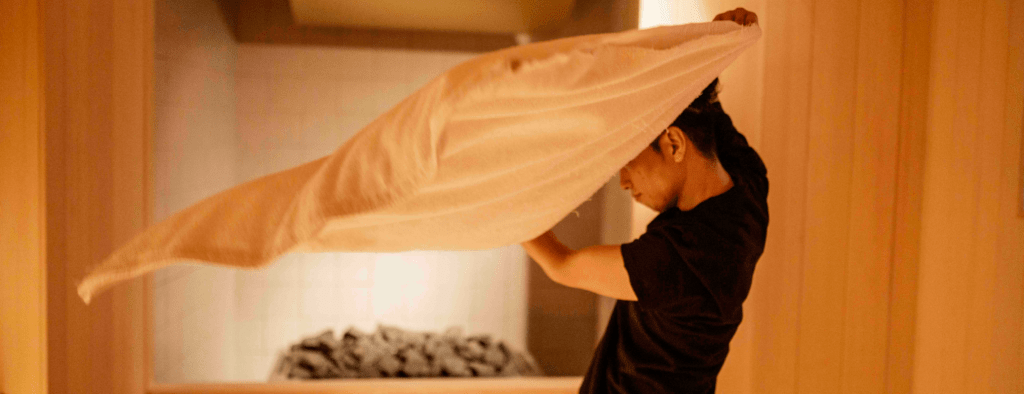
Imagine. One moment, you are sitting in the sauna, quietly enjoying your session. All of a sudden, the heat intensifies. You look up and see flashing lights, a moving towel diffusing essential oils throughout the sauna, and all of this is done in sync to awe inspiring music. Only half-sure of what I was getting myself into, little did I know that I would soon become obsessed with this small ritual within the already specific niche Japanese sauna culture. This is Aufguss.

What is Aufguss?

If I were to sum up Aufguss, I would describe it as such:

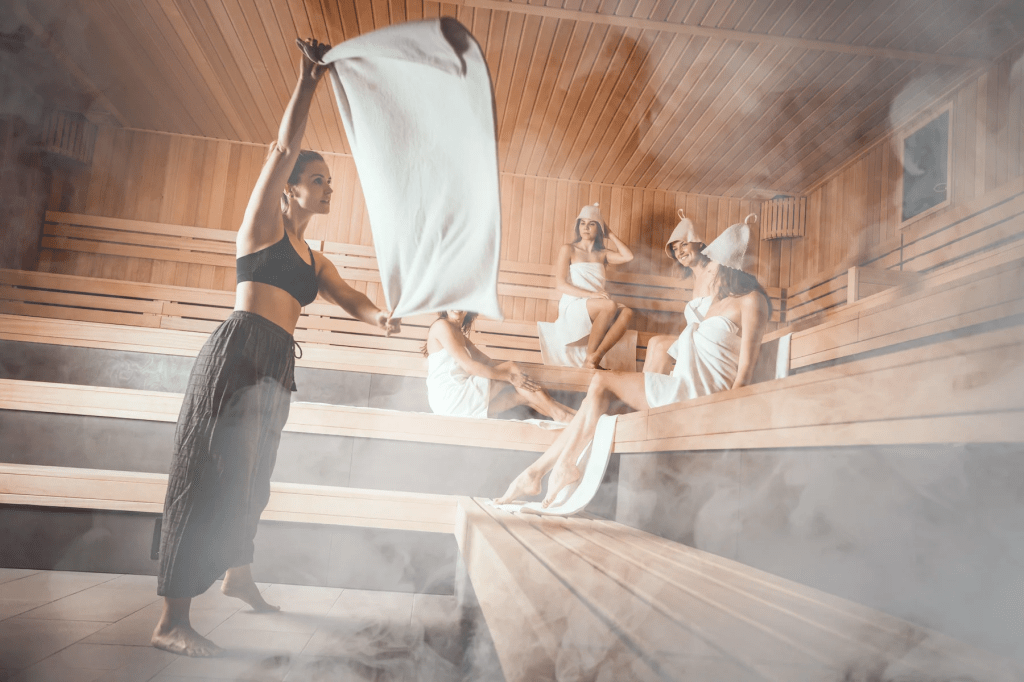
The ceremony of towel waving to diffuse essential oils throughout the sauna, often to music, with the aim of providing the audience with an intense heating experience that is often fused with artistic elements (coordinated towel waving to music, flashing lights, etc.).

To provide more clarity, I will also provide a definition that I really liked from Martjin Vanhoorelbelke, a two-time Aufguss World Champion finalist, taken from an excerpt found on Brooklyn sauna Bathhouse‘s website:

“Aufguss is a sauna ritual lasting about 15 minutes. It’s a multi-sensory experience inside the sauna. The Aufguss master works with water to circulate heat throughout the sauna with a towel. The core elements of an Aufguss are heat, essential oils and music.”

Vanhoorebelke then describes the goal of Aufguss as:

“To take you on a trip. It’s about having an experience that extracts the benefits of a sauna session and heightens them: elevated levels of endorphins and serotonin. Additionally, different essential oils can be utilized for different outcomes. For instance, peppermint can be used as a revitalizing oil, lavender for calm, and eucalyptus to clear the airways.”

Beautifully put. Better than I could have myself.
Aufguss in Japan

While Aufguss originates from Germany, it has gained popularity in Japan amidst the ongoing sauna boom. In Tokyo, many of the more reputable sauna/sento host regular Aufguss nights, with slots often booking out several hours in advance. Some of the top saunas even have their own teams that host elaborate Aufguss shows, many of which are used at “Aufguss Championship Japan”, Japan’s Aufguss national tournament.

At the national tournament, Aufguss performances are evaluated based on the following criteria:

  1. Professionalism
  2. Heat rise and distribution
  3. Fan technique [using the towel]
  4. How to use and amount of fragrance
  5. Theme and show structure
  6. Judge’s personal evaluation
  7. Team Spirit (groups only)

(translated using Google)

Teams and individuals that win move on to the World Aufguss Championship to compete on the international stage.

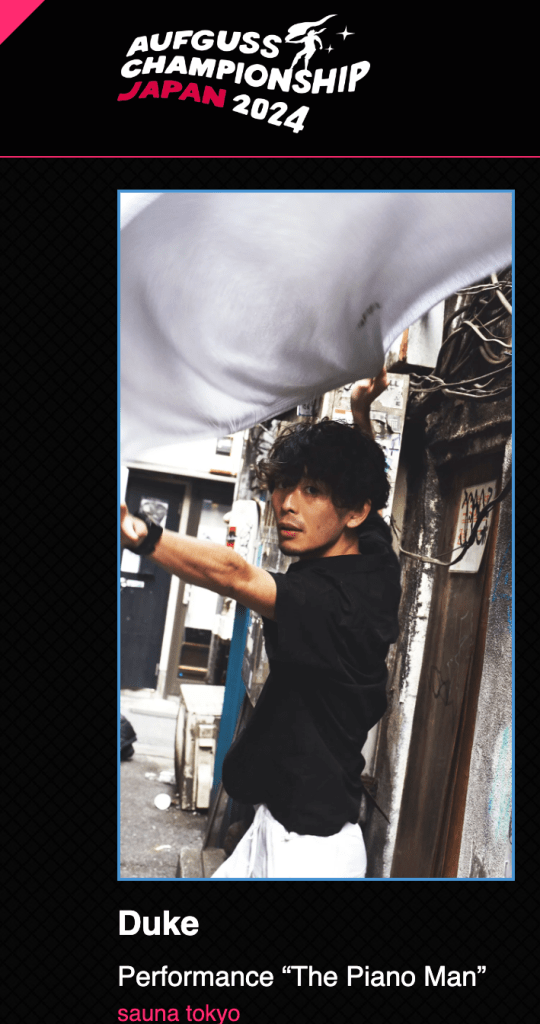
Competitive Aufguss performances are typically centered around a motif, such as a song or story that set the mood for the session. For example, This performer (one I have seen at Sauna Tokyo and is an excellent practitioner) has submitted an entry for the Aufguss Championship Japan for this year, and will use the song “Piano Man” as the centerpiece for his performance.
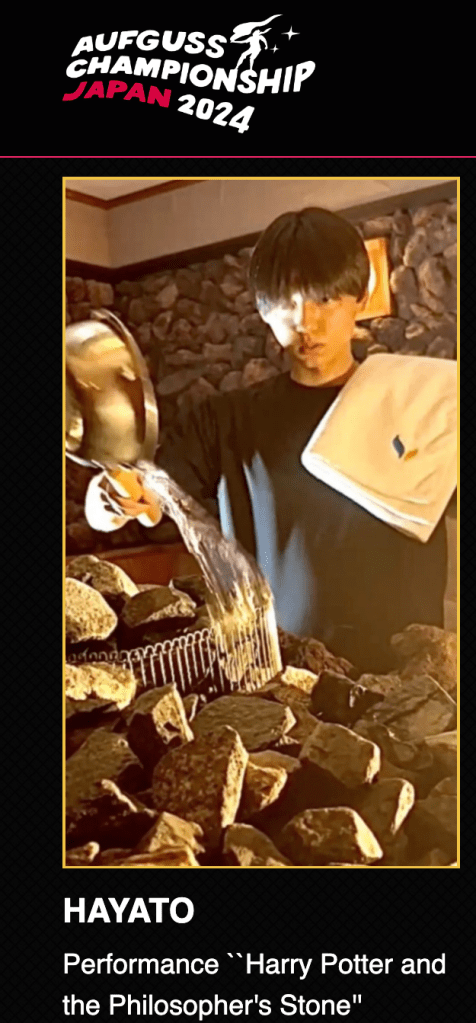
To give another distinct example, I’ll share a submission that really caught my eye. Along with a submitted image that looked like it was taken on a flip phone/potato, the only information for the performance listed is “Harry Potter and the Philosopher’s Stone”. While music can certainly be a driving component in Aufguss, other components like storytelling can also define the Aufguss session. I have to say, I’m quite curious how Harry Potter fits into this, and may have to report back to you all on this if I ever get the chance to find out…
Japan has become a force to be reckoned with in the international Aufguss community, with Yuma Kurokawa & Mayuka Sano from Wellbe Sauna in Nagoya winning the Team Competition category in 2023. Japan’s entrance on the global Aufguss stage has increasingly led to more and more Sauna creating Aufguss teams and programs. Seeing the innovation and creative energies surrounding Aufguss is incredibly exciting, and its inclusion at any given facility is always a highlight at any venue I visit.

From Sky Spa Yokohama, an Aufguss venue that is very high on my to-visit list!

Where can I Experience Aufguss in Tokyo?

Want to try Aufguss on your next trip to Japan, but not sure where to look? Fear not! With Aufguss taking the Japanese sauna world by storm, it can be found at many sauna throughout Japan! Since the majority of my sauna expertise is in the Tokyo area, all of my recommendations will be exclusively for Tokyo.
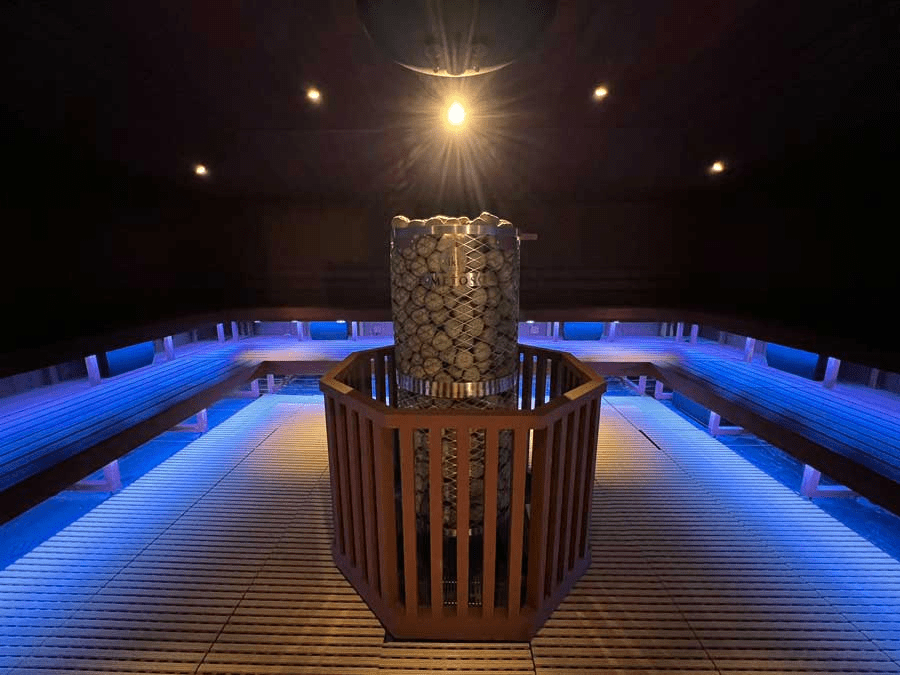
  • Sauna Tokyo
    • At the time of writing this post, this is easily my top recommendation for experiencing Aufguss in Tokyo. Every couple of hours, you are guaranteed to see a top-notch Aufguss show in their sauna outfitted for 50 people.
    • The aufguss practitioners are listed outside of the main sauna, and rotate every hour, so you have lots of opportunities to see different styles of Aufguss in one place.
    • I will go into more detail on Sauna Tokyo’s Aufguss experience in the next section, but to sum it up: Sauna Tokyo is an accessible, high quality way to see Aufguss that I can recommend to anyone.
  • Shibuya Saunas
    • Recognized as a top sauna team that has competed at the Japan Aufguss Championship, this is on the top of my list for Aufguss that I want to check out next. Unfortunately, their Aufguss offerings are somewhat random and are not on a set schedule. It has not been offered on my last two trips here, but online I only hear great things (on the Japanese side of the internet).
    • Regardless, even if Aufguss isn’t offered during your trip, I can highly recommend this facility (review to come at a later date)
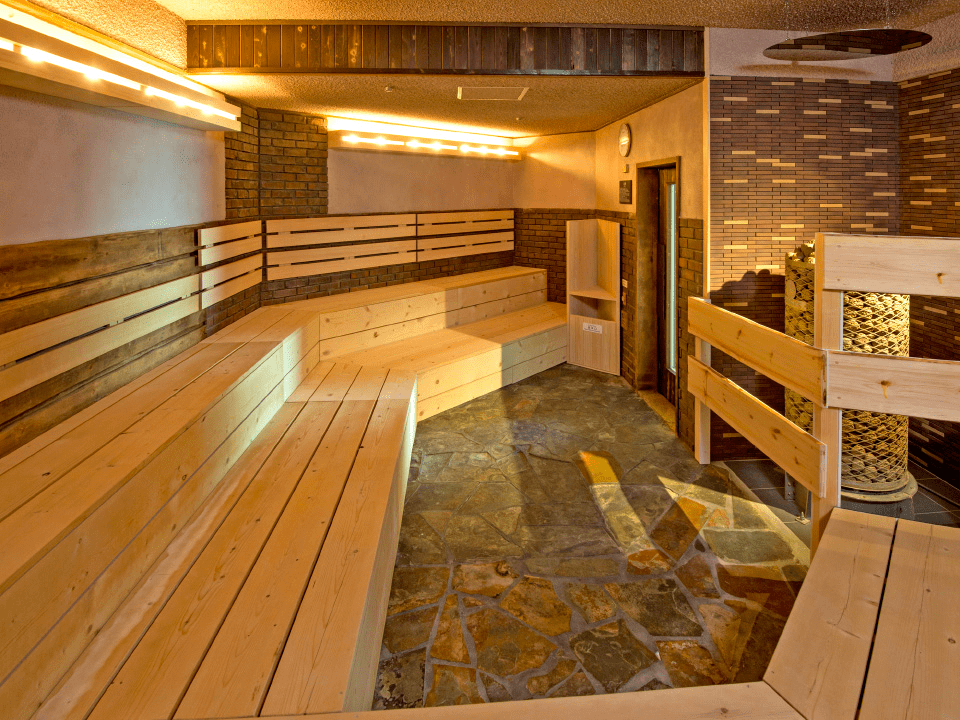
  • Spa Laqua
    • Located right by the Tokyo Dome, this is an excellent option if you are looking for a super sento that also offers quality Aufguss sessions.
  • Sky Spa Yokohama
    • Along with Shibuya Saunas, this is on the top of my list for Aufguss that I want to experience. Much like Shibuya Saunas, Sky Spa Yokohama has sent several contestants to the Japan Aufguss National Championship, and regularly is listed as a go-to destination for Aufguss. I still haven’t paid Sky Spa Yokohama a visit, and it’s one of the facilities I am most excited to check out!
  • Sauna and Hotel Karumaru
    • A more low-key option, Aufguss is offered every few hours in their stone sauna. Similar to Spa Laqua’s Aufguss, less performative than Sauna Tokyo, but still done by quality practitioners. Karumaru also has an attached capsule hotel, so if you are looking to bundle your lodging and Aufguss options into one, this is a great choice.

My Aufguss Experience with a Japan National Champion
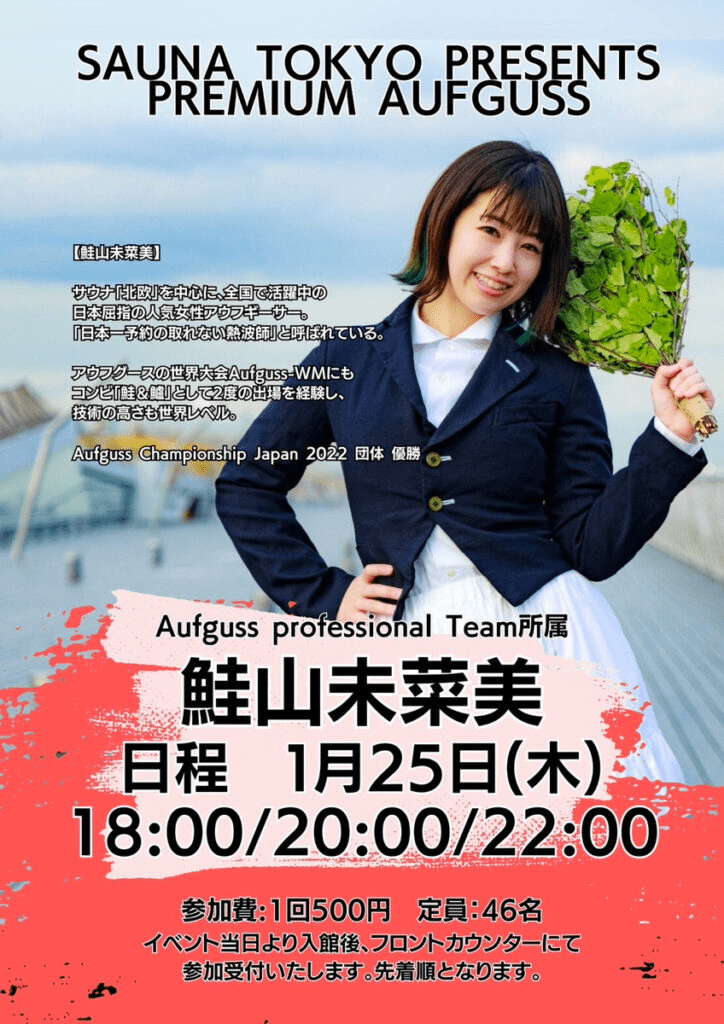
Flyer for the Aufguss event that I attended

While I have been to several Aufguss shows around Tokyo, I had the opportunity (and paid a little extra) to see the 2022 All Japan Aufguss Champion at Sauna Tokyo. While I have been to several impressive Aufguss shows, this one particularly left an impression. To give a taste of the heights of Japanese Aufguss, here is a narrative account of my experience:

After inquiring at the front desk two hours in advance about the Aufguss event, I was given a number (35 out of the 46 person capacity), and was instructed to line up outside the main Loyly sauna five minutes before to prepare.

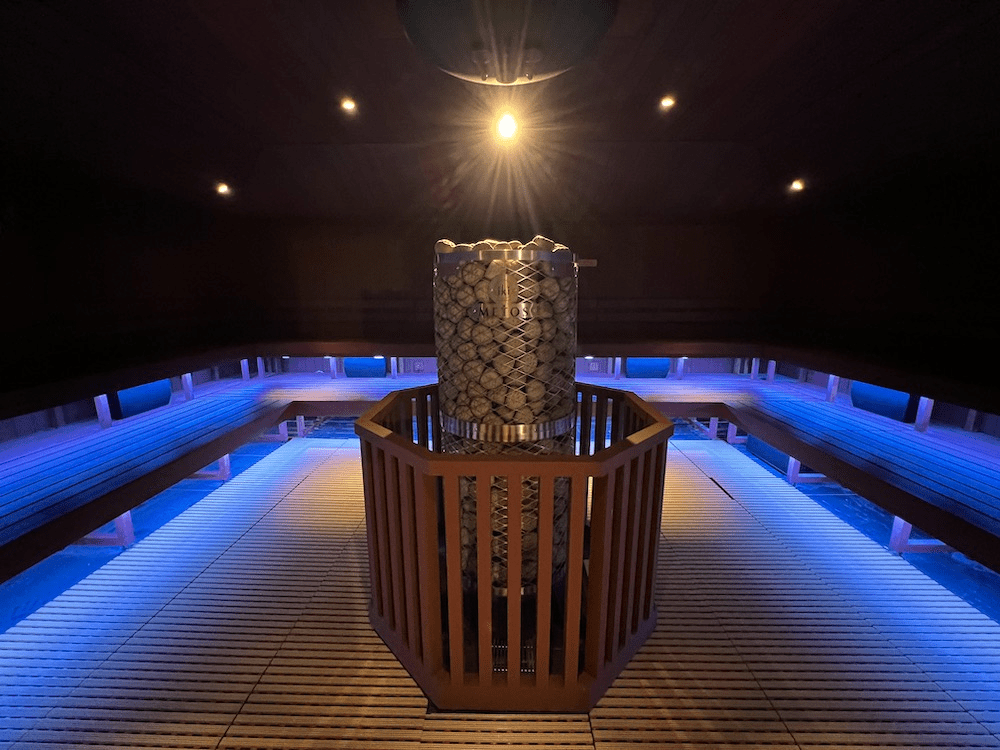
Jam-packed to its full 46 person capacity (I suspect there were a few more than 50 in reality), the staff strategically placed several conspicuous looking tools near the sauna stove, including an ice block, a speaker, and several essential-oil diffused buckets of water prior to the start of the performance.

Kicking things off, a series of lights turned on and immediately dimmed to a cool blue, then to red. Then, a Japan Airlines announcement cued on the speaker system, with the Aufguss champion emerging in a Flight Attendant Uniform. Announcing in time with the airline announcement, she followed with (in Japanese) “Welcome to the Sauna Airlines! Please locate the emergency exit and enjoy your flight!”. For the next several minutes, classical music played, with ice blocks being melted on top of the center sauna stove in time with the music. A nice warm breeze, relaxing, but not scorching intermittently spread around the room for several minutes.

All of a sudden, red lights started crashing. “Everyone! Everyone! The plane is crashing! The plane is crashing! We are in danger!!!” Immediately following, “Danger Zone” by Kenny Loggins starts to play over the speakers (yes- the one from Top Gun), and the Aufguss practitioner starts to take things up a notch. The towel waves increase in intensity, the collective atmosphere was filled with excitement and awe. As the guitar solo hit, the practitioner started performing one-handed towel spins that went behind the back and thrown mid-air. The audience started to clap to the rhythm, giving the atmosphere more akin to a rowdy sporting event than a “spa day”. This was the point where I had to look at the fifty other naked individuals wearing pointy sauna hats clapping in sync and remind myself that I had not joined a cult.

After the performance concluded, the audience gave a hearty round of applause, and nearly the entire crowd rushed into the nearby cold plunge pools for a much needed cool-off.

A follow up show the next hour included other members of Sauna Tokyo’s Aufguss team. Perhaps the most inventive idea I’ve seen in an Aufguss performance, one performer had a small handheld leaf blower, and used it to help diffuse the heat around the sauna. Backed by the soundtrack from the anime “Death Note”, the practitioner stated (in Japanese) “I am fear! I am fear!” (from what I could translate in my head), and moved the heat around to those with their hands up requesting more heat.

Needless to say, the Aufguss experience at Sauna Tokyo was exhilarating, awe inspiring, and unlike anything I had ever experienced.

Conclusion

While I could write about Aufguss at further length, its appeal is (perhaps even more so than sauna and bathing) difficult to encapsulate with words, and best experienced. If you want to level up your sauna experience, or want to experience a uniquely Japanese take on a tradition with its origins elsewhere (something Japan excels at), give Aufguss a try!

Thank you so much for reading! More content is on the way after a small hiatus, so please stay tuned!
Sauna Tokyo

Cutting-edge. Craftsmanship. Masterpiece.

Tattoos Okay? Yes***
Sauna? Yes. And lots of them.
Price? $$
Should I Bring Toiletries? No
Best For? Sauna enthusiasts looking to have immense thought and care go into every aspect of their sauna experience. Those searching for a sauna focused experience in Tokyo. Everyone who visits Tokyo or Japan.

Nearest Station: Akasaka Station (Chiyoda Line). 3 minute walk.

*Their tattoo policy is a bit weird, so I’ll get into it more in the article. The short answer is that you can go to Sauna Tokyo if you have tattoos, but you will have to pay an extra fee.

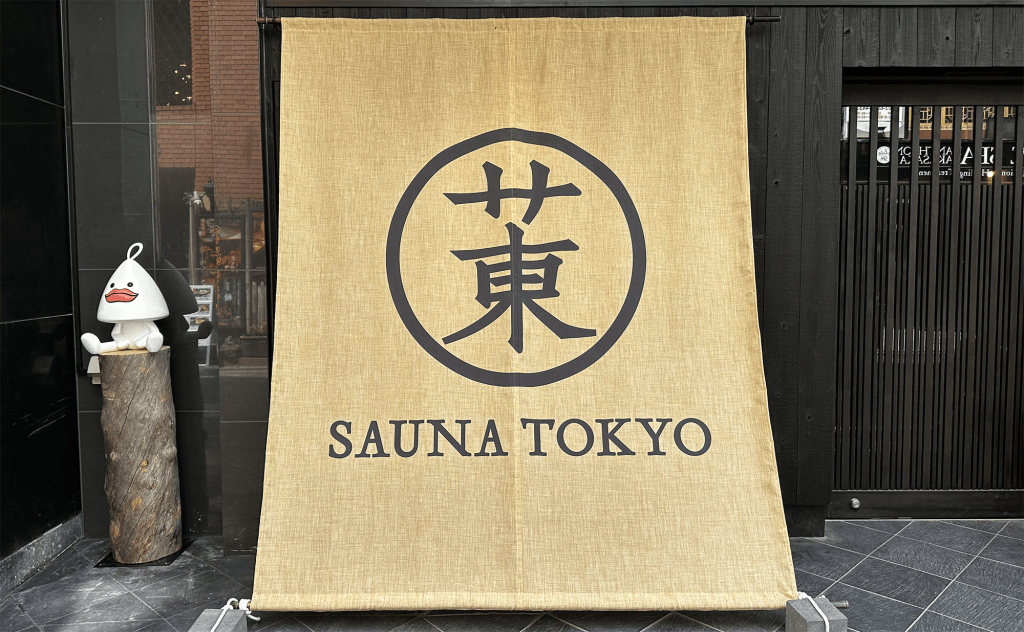
Located in the ritzy Akasaka district of Tokyo, the area known for the TBS (Tokyo Broadcasting System and Television) Headquarters, Higawa and Nogi Shrines, and now: Tokyo Sauna. A playground for the Tokyo elite, the area probably won’t pop up on a lot of tourist itineraries, but hosts many of Tokyo’s most expensive hotels and restaurants. And right in the heart of it all is perhaps the best sauna complex in the city, if not Japan. With sento architect Kentaro Imai at the helm, and a mission of creating a facility with sauna enthusiasts in mind, it’s hard not to get excited about Sauna Tokyo. Let’s dig into what makes it so great.

Aesthetics:

The driving philosophy behind Sauna Tokyo was to create a sauna facility that showcased a uniquely Japanese take on saunas. On designer Kentaro Imai’s architectural page, the project is described as:

” [Japan is known for] the rearrangement and redesigning of culture imported from abroad to [fit] Japanese specifications.” This is one of the unique characteristics of Japanese culture. The same is true for saunas, which were first imported to Japan during the Tokyo Olympics in the 1960s.

For this project, six cold/heat saunas have been installed under the keyword of “Japanese style” so that users can enjoy these variously arranged Japanese versions of saunas.”*

*Translated using Deep L.

Sauna Tokyo certainly delivers on this front. Apart from the striking, Japanese-inspired entrance, the first floor does a great job of cementing the Japanese aesthetic. With a sleek, black tile finish is present throughout the facility, you are greeted at the bathing area entrance by a black cauldron with water gently overflowing and the same style wash ladle that you would find at every sento across Japan (not pictured).

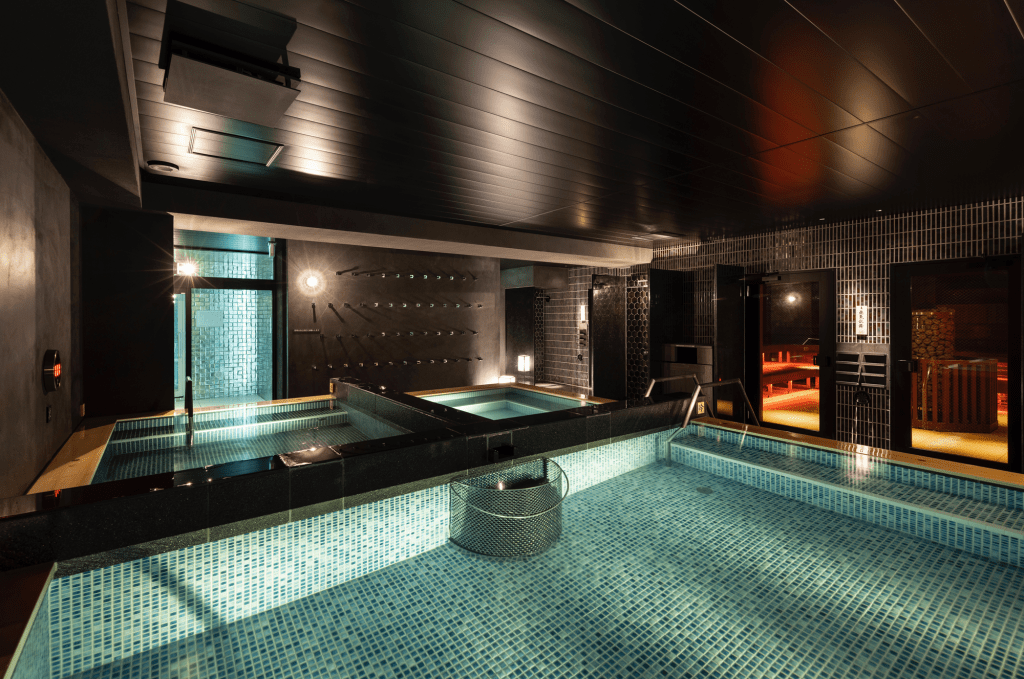
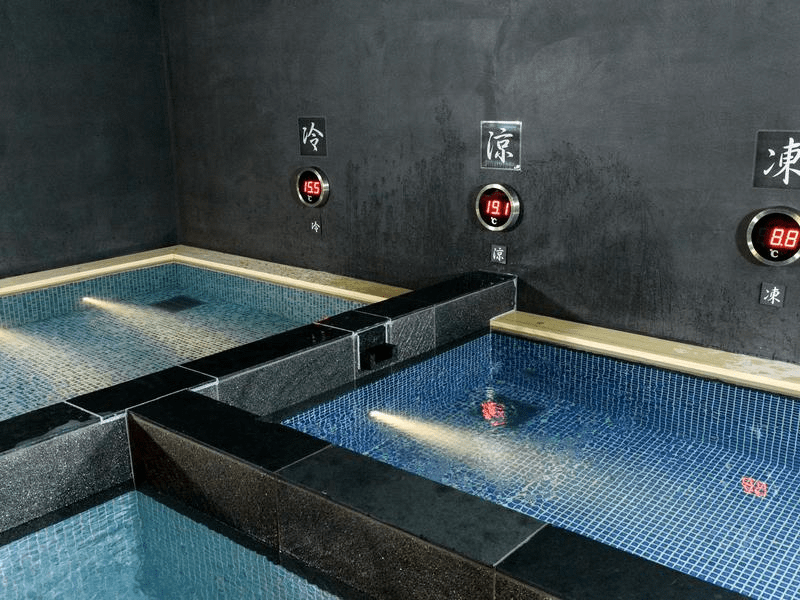
Upstairs, it’s hard not to be impressed with the contrast of the room’s black finish and the blue glimmer of Sauna Tokyo’s three cold plunge pools.

Aside from the upstairs hub hosting the plunge pools, the interiors of the sauna are just as sleek as the rest of the floor. Using high quality wood that is well kept after, each of the four saunas and the steam room are simultaneously portals into different parts of the Sauna Tokyo experience, while remaining grounded and cohesive feeling within the facility.

Culture/vibe:

Sauna Tokyo’s culture can best be summed up with two core ideas:

  • Japanese Style Sauna
  • Saunners (sauna enthusiasts)

Japanese Style

As covered in the Aesthetics section, Sauna Tokyo was designed with the aim of creating a distinctly Japanese adaptation of sauna. This can be seen in the design choices described above, such as the sento stylings of the first floor, and its adaptation of Aufguss (!).

For those unfamiliar, Aufguss is a sauna ritual originating from Germany (Aufguss literally translates from German as “infusion”) that uses coordinated towel movements to diffuse essential oils around the sauna, and is often done to music. While Aufguss is a topic worthy of its own article, Sauna Tokyo’s top-notch Aufguss is a noteworthy example of a distinctly Japanese take on the sauna experience.

Outside the Löyly sauna (largest sauna hosting up to 40 people), a list of times as well as names of Aufguss practitioners are listed. Rather than using real names, stage names are used for the practitioners. A personal favorite of mine was サDuke, an adaptation of Sir Duke, or “Sa-Duke” using the Japanese phonology.

In my several trips to Sauna Tokyo, each Aufguss experience has been completely different. The music selection ranges from both Western and Japanese music (I even heard anime music on one occasion), providing a Japanese spin on a Sauna tradition originating from Germany. Story telling elements have even been present, with one seeming (from what I could hear in Japanese) to “take place” on a Japan Airlines “Sauna airplane”! I’l save more of the specifics of the experience for my Aufguss article (stay tuned…), but these are just a few examples of the Japanese quirks of Sauna Tokyo.

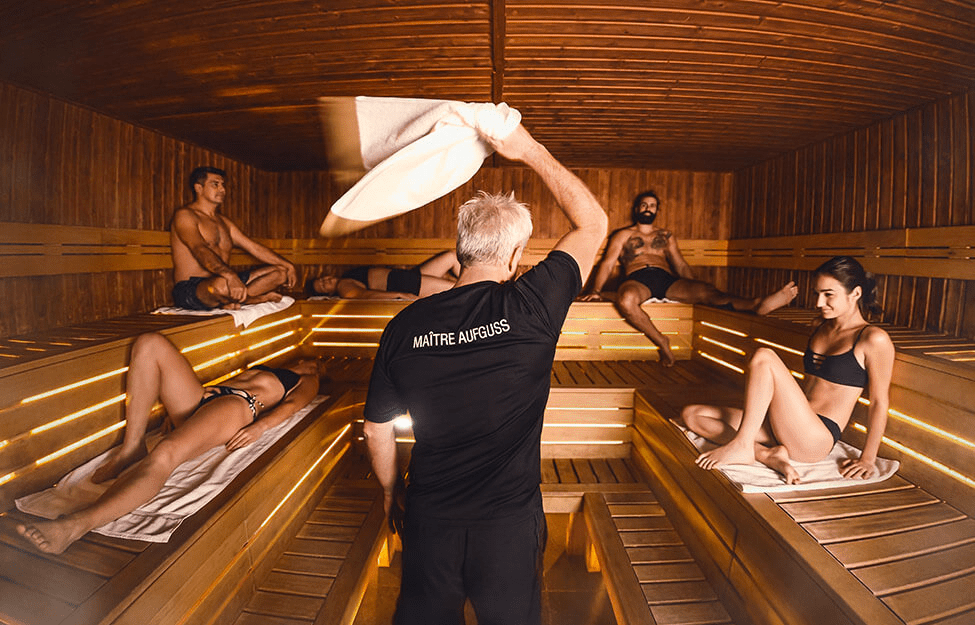
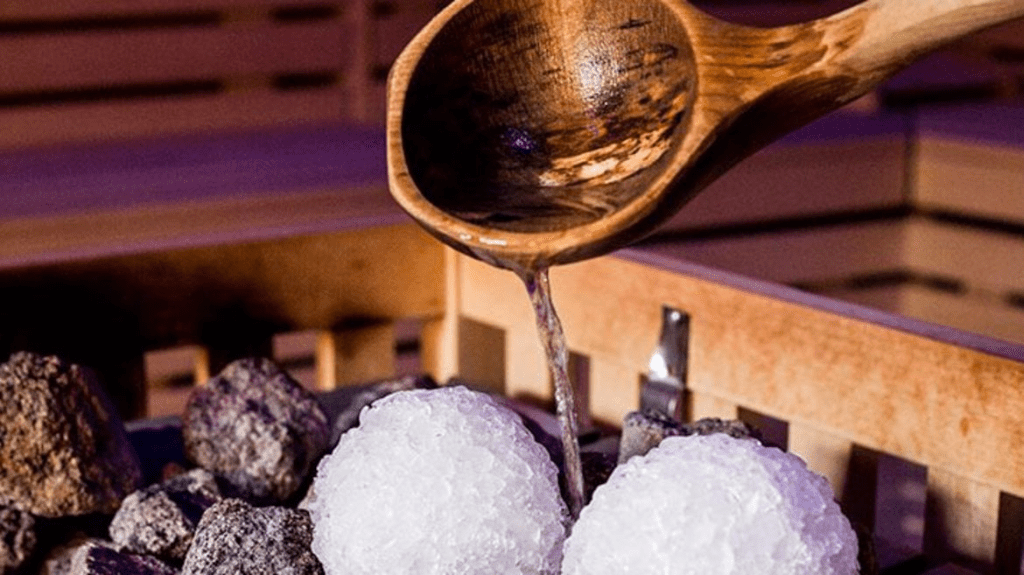
A sample image of an Aufguss experience (not from Sauna Tokyo)

Saunners

Besides the “Japanese Style” motif found throughout, Sauna Tokyo is clearly made for the diehard sauna fans in mind, or “Saunners” as they are called in Japan.

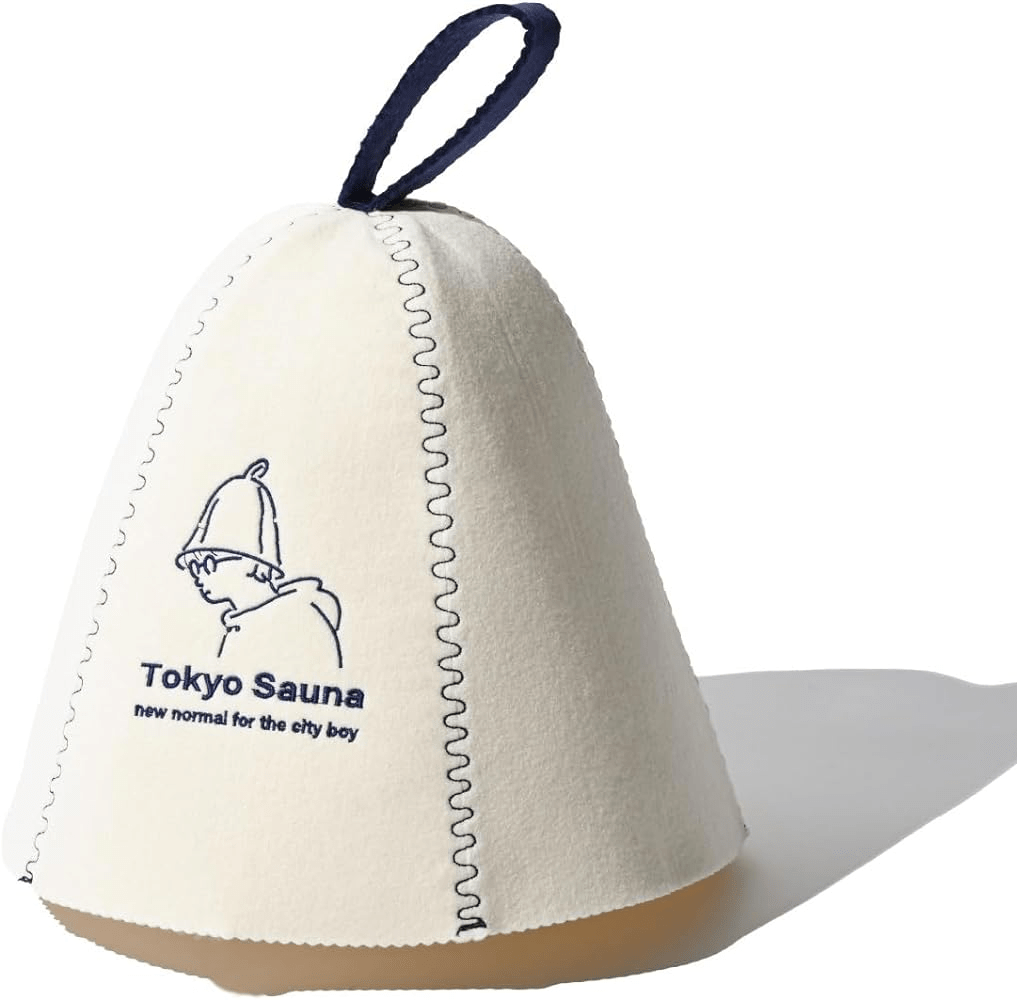
The visitors guide for the Minato-Ward of Tokyo describes Sauna Tokyo as “a new holy place for Sauna enthusiasts”. Sauna Tokyo’s merchandise line is a great example of the venue’s dedication to the sauna community. Ranging from Sauna hats, clothing items, and figures of Sauna Tokyo’s mascot Totonon, its a seemingly small detail that really took the experience to another level for me.

Sauna Tokyo‘s official Sauna Hat

Additionally, flyers for events around both Sauna Tokyo and the greater Sauna community can be found in the locker room. Ranging from special Aufguss shows to sauna pop-up events around Japan, one gets the sense that Sauna Tokyo holds a place in the Tokyo Sauna community, and despite being open less than a year, wants to be a staple.

Facilities:

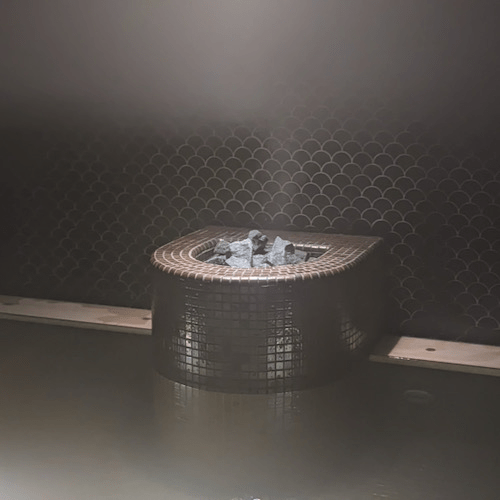
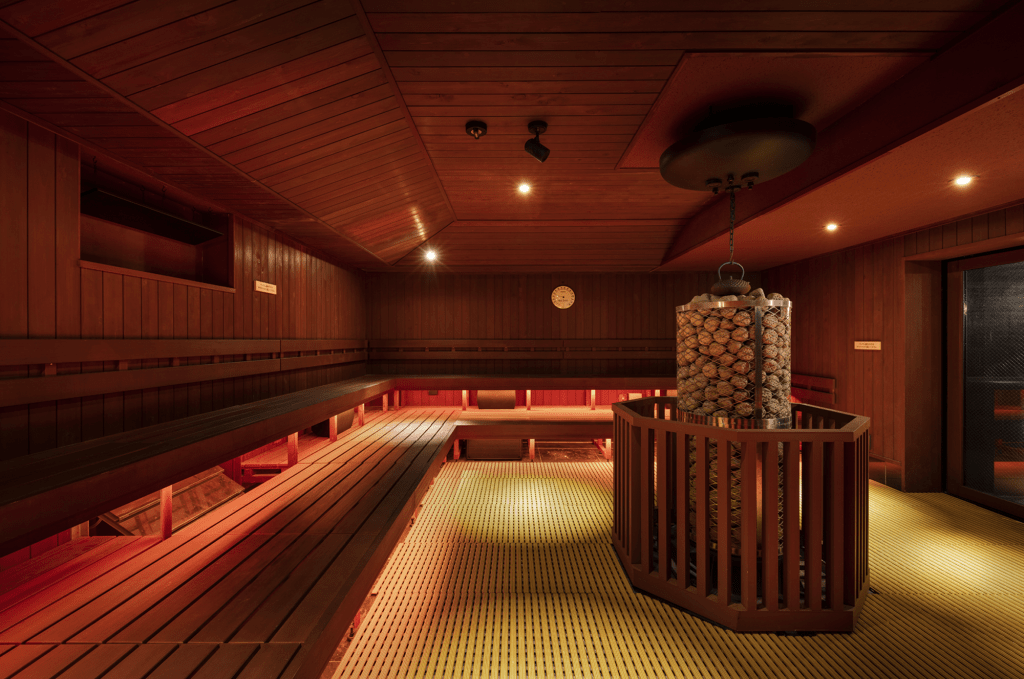
Sauna Tokyo’s facilities are some of the best I’ve found in the city, as well as Japan. Among other spaces, the upstairs portion has five saunas. The loyly sauna, the main “hub” sauna of sorts, is massive and seats up to forty people according to Sauna’s Tokyo website (anecdotally, I’ve seen closer to what seems like 50+ packed in during some of the Aufguss shows, which I will explain later). Aside from the Aufguss and special events, the sauna is open for general use, and has an auto loyly mechanism that keeps the sauna at a consistent 96 degrees (205 Fahrenheit).

Just next door to the Loyly sauna is the Meditation Sauna. Aside from the main Loyly sauna with its incredible Aufguss shows, the Meditation Sauna is probably my favorite. Set at a lower temperature with hanging birch leaves on the wall and bird sounds playing in the background, you get the sense of being in the middle of the Finnish countryside without a worry in the world. It’s a great place to take a break from the often-intense hot-cold cycles at Sauna Tokyo.

Across the hall, you can find the self-loyly Kero Sauna, the Super Dry Sauna, and the Cupboard steam room.

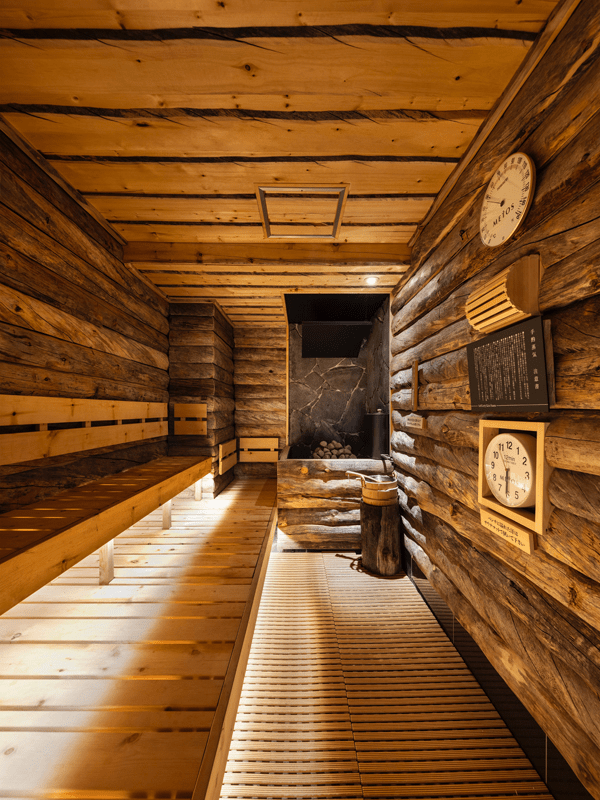
The Loyly Kero sauna is set at a medium humidity, medium heat, and uses Kero wood sourced from the Lapland region of Finland. As implied by the name, self loyly* means the heat and humidity in the room is regulated by a self-serve water bucket that can be poured on the stove.

*Loyly refers to the pouring of water on the sauna rocks to heat up the sauna

Super Dry Sauna

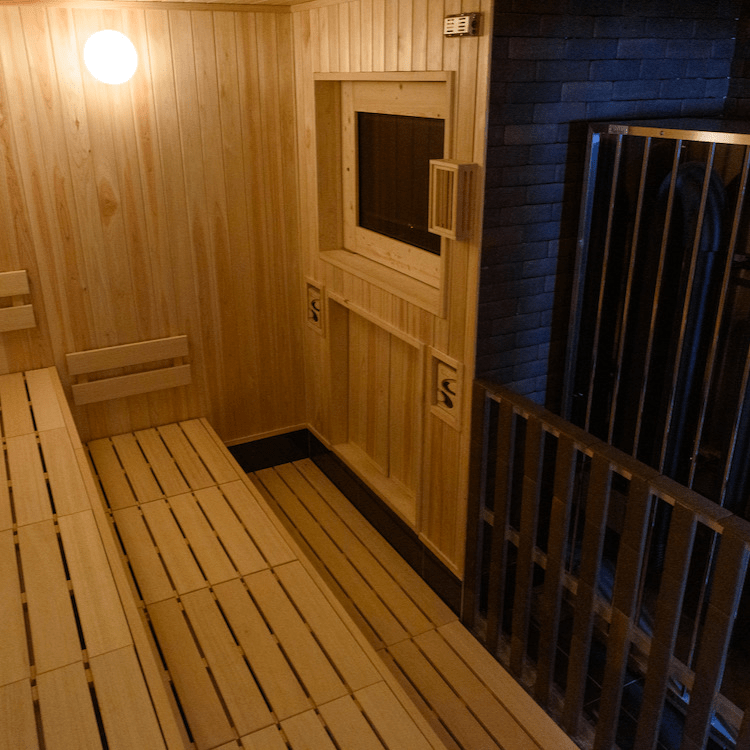
Just like the name suggests, this is a high heat, low humidity dry sauna. I don’t care for this one as much, but that comes down mostly to personal preference. Sauna Tokyo’s website describes it as “reminiscent of the Carakara-style high-temperature saunas of the Showa era”.* The sauna has a retro gym sauna feel that may be familiar to anyone coming from a Western country that had a similar type of sauna at their gym or health-club.

*For those unfamiliar, the Showa era refers to Japan’s longest lasting Imperial Era under Emperor Showa. While the era lasted from 1926-1989, it typically refers to 1946-1989. “Showa Japan” is often shorthand for old or retro Japan.

Cupboard Steam Room

This one is super interesting. What at first seems to combine a hot tub and a Turkish steam room, the room is actually inspired by the “cupboard bath” that was popular in Edo period Japan. I loved the concept, and I often start here when I make my way to the upstairs portion of the facility.

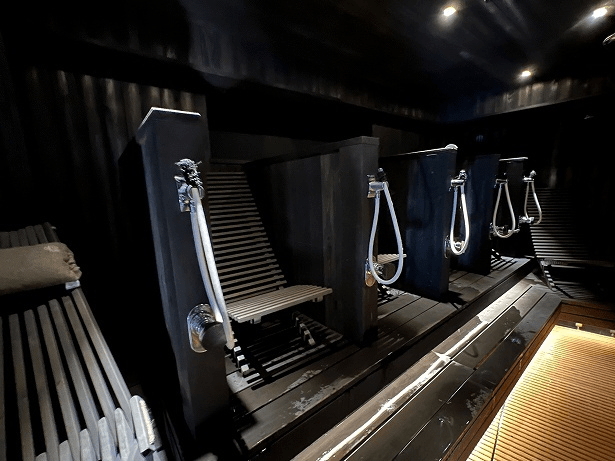
Besides the saunas, there are four cooling areas, including a cold sauna and three cold pools. The cold “sauna” (not pictured) is a dry room with fans going and a few chairs. Not much to write home about, but I appreciated the space. The cold pools are set at 8, 15, and 22 degrees (46, 59, and 71 Farenheit). Anecdotally, these each feel much colder than their listed temperatures, and I appreciated the variety of temperatures available.

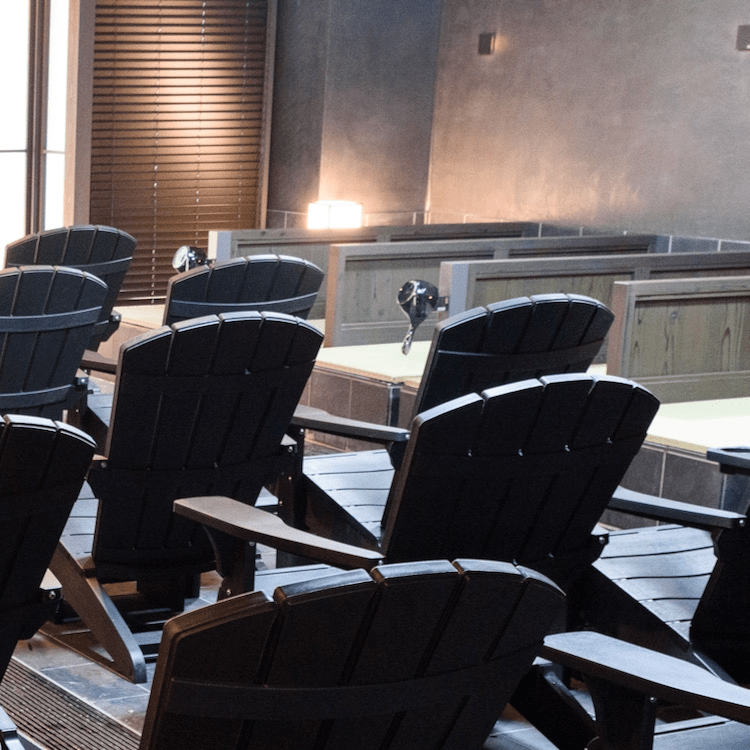
The upstairs also has a rest area, with space for around 60 people, and serves both Detox Water and Pocari Sweat.

Limitions/shortcomings:

Sauna Tokyo’s largest shortcoming is easily that the facility is, unfortunately, men only. This is a huge disappointment for any female bathers looking to experience this great contemporary piece of Japan’s sauna culture.

The silver lining is that Sauna Tokyo has hosted a few Women’s only nights. However, these are infrequent, so I unfortunately would have to rank a few other facilities higher as my go-to recommendation for Sauna facilities in Tokyo solely because of this.

I don’t factor in whether a venue allows tattoo’s or not into any of my reviews. As tattoo’s in Japan are historically associated with organized crime, I don’t think it is fair to judge it based on that criterion. That being said, I found Sauna Tokyo’s tattoo policy to be a bit…strange……

If you are visiting Sauna Tokyo, you are still allowed to use the facilities. However, you have to pay an additional 500 yen fee. Additionally, you are required to wear a sticker that says “Respect the Rules!” for the duration of your stay. During my several trips, I have seen staff members urgently stop guests, with either one small tattoo or tattooed from head to toe, only to put a 3×5 inch sticker saying “Respect the Rules” on their upper back, and walk away.

It seemed silly, and I’m not sure what the end goal of the policy is. It just seemed strange and unnecessary to me. Like a weird compromise that didn’t solve any prospective issues. It’s not a huge deal (partially becuase I haven’t had to deal with it myself, as I don’t have any tattoos), it just struck me as odd.

Verdict:

Sauna Tokyo is an absolute must visit. If you’re a sauna die-hard like me, you’ll be in heaven. If you’re just curious, you’ll walk out inspired and refreshed. From Kentaro Imai’s brilliant aesthetic choices, to the awe-inspiring Aufguss performances, there’s something for everyone at Sauna Tokyo.

Food Pairing:

For this food paring, I am trying something a little different. I am listing a local recommendation, which is something I would be more inclined to grab a bite at on my way home. My visiting recommendation is designed with tourists/visitors to Japan in mind. It may be slightly further than walking distance, but noteworthy enough to add to a tourist itinerary.

I may implement this into some of my reviews of larger venues, or locations close to particularly noteworthy restaurants (Michelin, major tourist attractions, etc).

Local Recommendation:

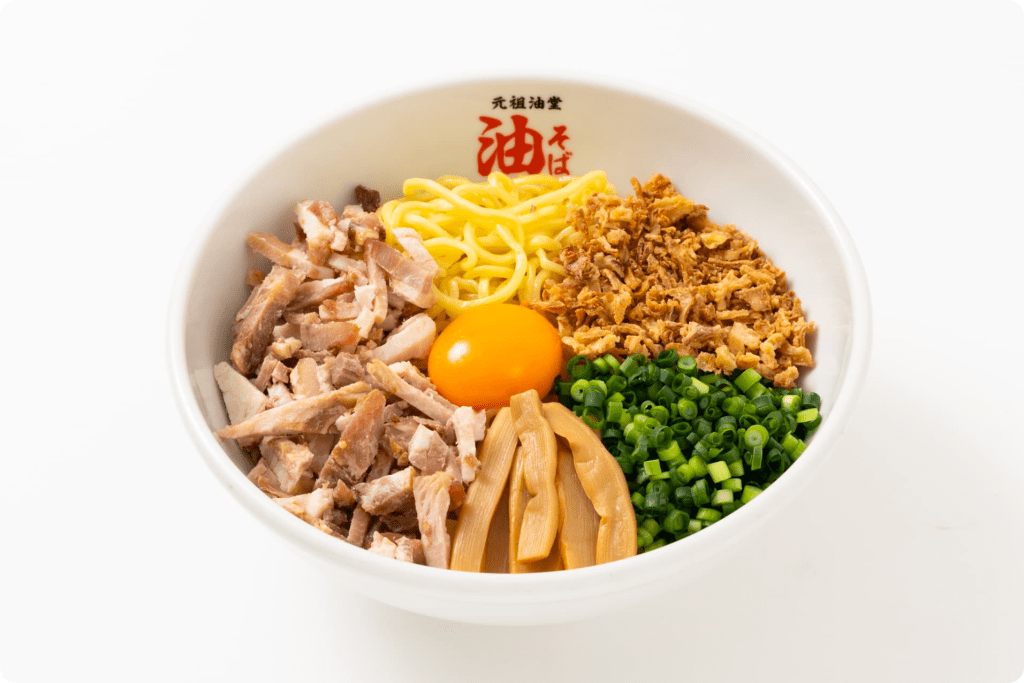
Genso Aburado (Maze Soba)

Maze soba has become a go-to post sauna/sento meal for me. And Genso Aburado is conveniently located a block away from Sauna Tokyo! Hosting an extensive spice bar, this maze-soba chain really hits the spot after a long sauna session. The wide variety of options, combined with the comfort-food feeling that a good spice-filled maze-soba bowl provides make Genso Aburado my go-to after Sauna Tokyo.

Visiting Recommendation (Great for Tourists)

Gonpacchi.

I think that Sauna Tokyo is the kind of experience that should be savored. As such, I think having a dinner that leaves an impression is essential for this pairing, particularly if you are visiting Tokyo from outside Japan.

Located about 1.2 km/just under a mile away, Gonpachi famously inspired the ending scene of Kill Bill: Volume 1, where The Bride fights The Crazy 88. While it’s certainly on the touristy side, I think it’s a lot of fun. Also, the staff here are fluent in both Japanese and English, so for travelers, this is particularly worthy of note. The menu is extensive, and you will almost certainly find something to your liking on the menu.