
One of the largest names in the Japanese sauna space, TTNE has their hand in seemingly everything cool and sauna related in Japan.
With projects as diverse as fashion lines, neighborhood bath houses, and even their Michelin inspired award “Saunachelin”, their tagline of being a “sauna creative team” is truly the best way to describe their work. With passionate saunners Dai Matsuo (known by his alias Totonoe Kata, which loosely translates to Mater of the Sauna High) and Daisuke Akiyama (known as Sauna Shisho, which loosely translates to Sauna Master/Teacher) at the helm, there’s no predicting what’s brewing at TTNE at any given time.
Background:
TTNE:
Founded by duo Dai Matsuo and Daisuke Akiyama, TTNE describes themselves as a Sauna Creative Team with a mission to “Positively rebrand Japanese Sauna. [Getting] people [to] come from all over the world to visit saunas in Japan. That’s the future we are aiming to create”.
The company promotes sauna cultural events, act as sauna consultants, and exchange sauna culture between Japan and other countries. With a mission of improving sauna culture around the world and ensuring a “future where people can be happier and healthier through saunas”. TTNE’s projects expand into all sorts of domains previously untouched by saunas. Ranging from streetwear collaborations, YouTube videos, book launches, and even helping organizations like The Sauna Society of Japan get off the ground, no one does things quite like TTNE.
Dai Matsuo/松尾 大: “Totonoe Oyakata ととのえ親方
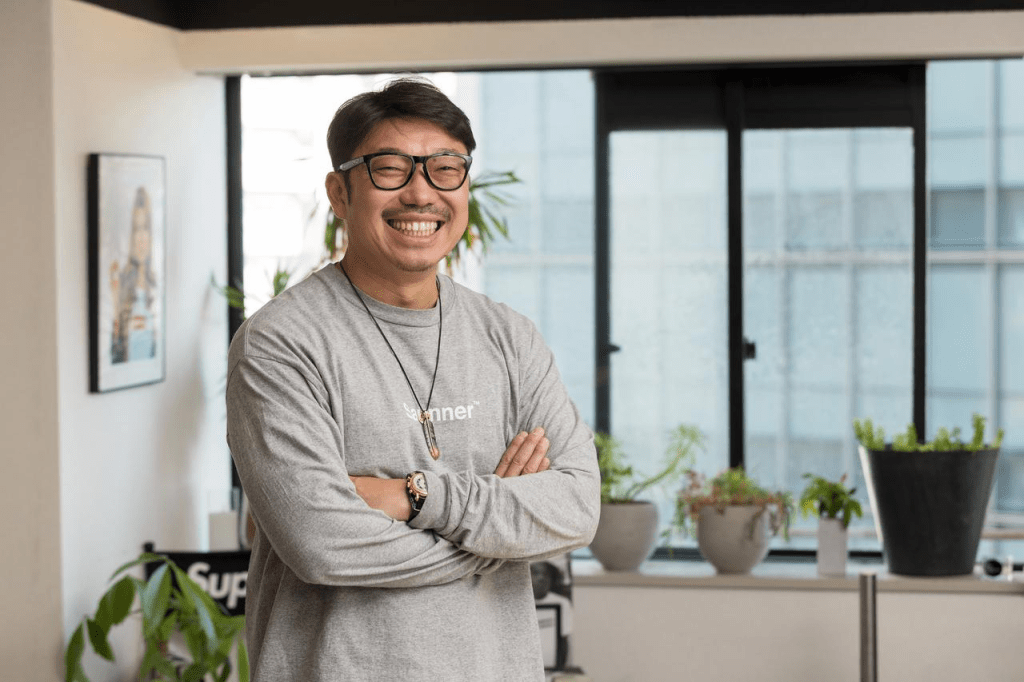
Originally from Hokkaido, Dai Matsuo, had a background in the business world before entering the sauna scene. However, he has been getting his sauna on since he was a child, frequenting sauna and sento in Sapporo during his school days.
With various experiences in construction and business, Matsuo’s entrepreneurial nature led him to be a charismatic figure in both Tokyo and Sapporo. From business ventures ranging from night clubs, fitness facilities, and beverage importing and exporting, Matsuo has had his hand in seemingly everything! This eventually led to Matsuo showing celebrities around Sapporo, often to local saunas. Overtime, this led him to pursue sauna full time. Today, he leads TTNE with his business partner, Daisuke Akiyama.
Selected Quote: “I want to give back to saunas by increasing the number of happy sauna users.”
Daisuke Akiyama: “Sauna Shisho”: サウナ師匠 [秋山 大輔]
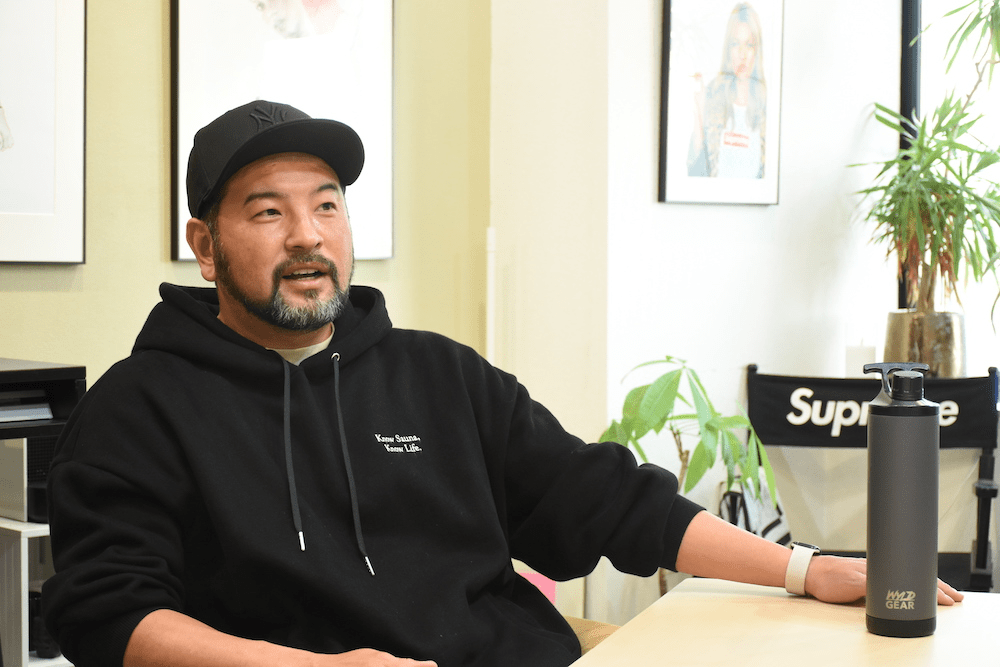
First introduced to sauna in his twenties, Akiyama’s background in fashion and event production, including the Tokyo Girls Collection (a fashion festival based out of Tokyo) gave him unique skills and perspective to help rebrand sauna with his mentor, Dai Matsuo.
Akiyama eventually became known as the “sauna master of Kanto” after teaching his friends the ways of the sauna. One day, he heard of a legendary saunner in Hokkaido, referred to as “Totonoe Oyakata”. Meeting in Finland on a sauna trip for the first time, the two hit it off, and went on to start TTNE.
Akiyama brings his perspective from fashion and event planning into the sauna world, with his insights on fashion in particular helping positively rebrand sauna culture. His event planning background has helped in organizing various TTNE projects, such as SAUNAFES, RoofTop37, and Corona Winter Sauna.
Selected Quote:
(on how to make sauna popular)
“Step 1 is to link it to fashion. Fashion is not just about style, it also has the function of showing identity. For example, surfers show that they are surfers by wearing surf brands. In the same way, if you wear a sauna brand, you can [show people] that you like saunas. Then, it will create an opportunity for conversation, like “Actually, I like saunas too.“
Works:
In an effort to contribute to the development of sauna culture, TTNE advises the creation of concept-based sauna around Japan. Below are a few highlights from the sort of projects they work on.
Totopa:
Located in Shinjuku’s Meiji Park, Totopa is based around the motif of “left and right brain saunas”, with separate sauna rooms distinctly designed with the aesthetics of the left and right brain in mind. First conceived when Matsuo was talking with famous arti director Gugi Akiyama, Totopa is a prime example the unique, distinct visions TTNE has for saunas that aren’t seen anywhere else.
Additionally, Totopa has an emphasis on extensive totonou experimentation, with a motif of “3 x 3 x 2” (3 saunas, 3 rest areas, 2 cold plunges) providing the user with ample opportunities to refine their sauna routine.
For a more detailed rundown of Totopa, see my review here.
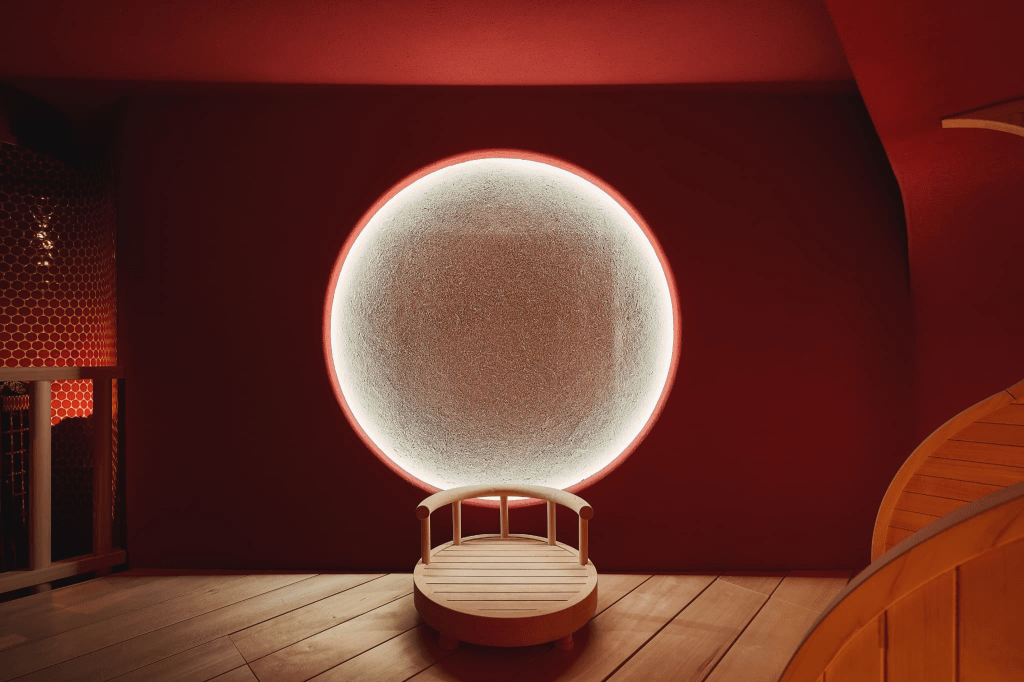
Sana Mane Sazae (Naoshima, Japan):
Located on Naoshima Island, TTNE collaborated with Tachi Kuma of the renowned architectural firm Kuma Kengo and Associates for this eye-catching, spiral designed sauna. For those unfamiliar, Kuma Kengo and his firm are known for buildings such as Japan National Station, the Nezu Museum, and Shibuya Scramble Square. He is considered one of the most famous architects both within Japan and around the world.
Naoshima Island is renowned for its nature, contemporary art installations, and architecture, with each of these bringing in visitors from across Japan. Internationally, the island is recognizable from the James Bond film “You Only Live Twice”, which was partially filmed on the island. The sauna was designed to bridge the gap between tourists and locals, blending “nature, art, and resort”.
The designers put the concept behind Sana Mane Sazae best:
“People can visit here being attracted to the shape of this sauna. But I also hope they discover the richness of nature once they arrive here. That’s the real purpose of this sauna- to savor nature”.
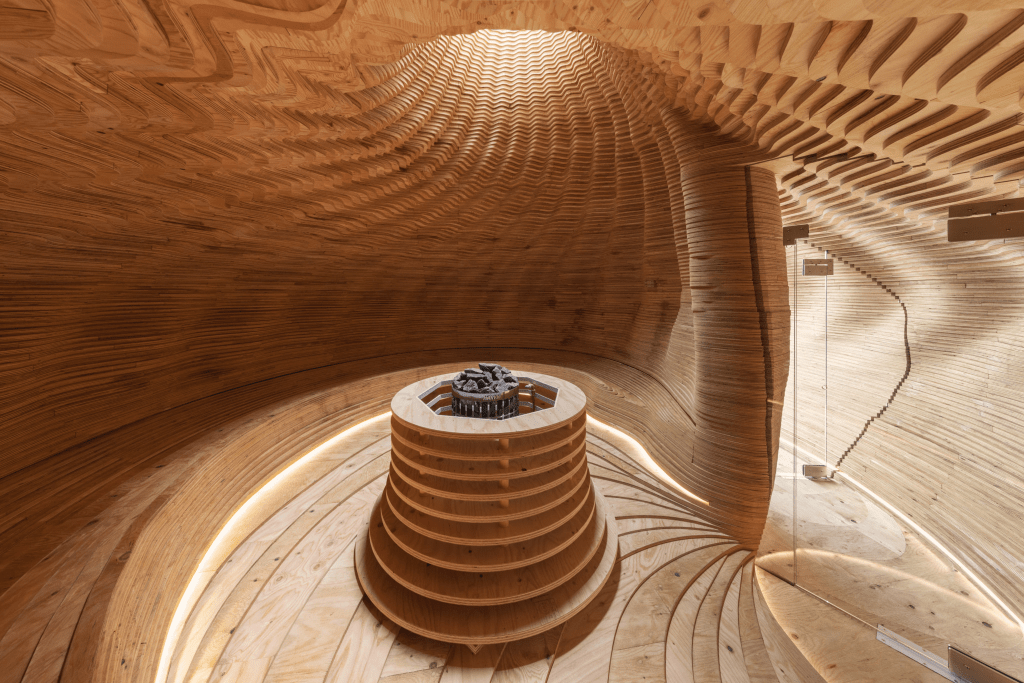
Matsuo expanded on this concept in an interview with THULE :
“If there are many interesting saunas all over the country, Japanese people will be happy, and people from overseas will be able to enjoy the fact that such saunas exist. For example, even if you create an art museum in a rural area, most people only go there once or twice a year. If it’s a sauna, some people might come every day. I feel that it would be nice to create a place where local people can relax because they can go to the sauna every day, and I would like to increase the number of saunas like that.”
The old proverb of the fisherman comes to mind here: Give a man a fish, and you feed him for a day; teach a man to fish and you feed him for a lifetime.
Sana Mane Sazae encapsulates this idea near perfectly, offering a high quality and uniquely rich experience for locals and visitors alike.
RoofTop 37
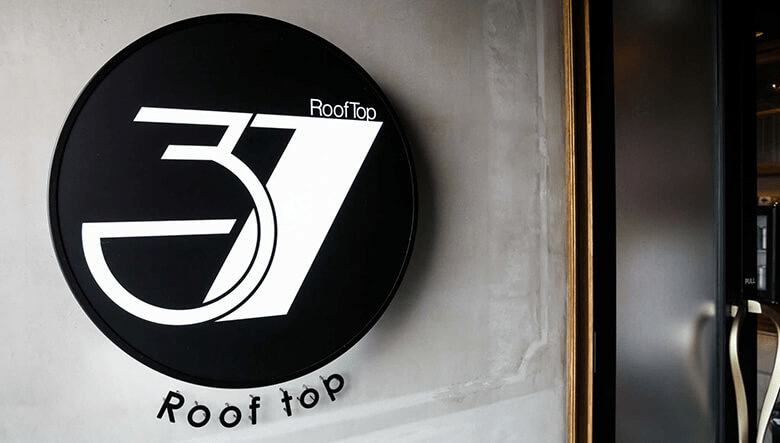
A limited opening during the pandemic, RoofTop 37 took the concept of speakeasies and brought them into sauna form. The event, one of the first of its kind in Japan, was a smash hit, and reservations filled up quickly upon announcement.
Rooftop37 is an excellent example of the groundbreaking work that TTNE does: integrating creativity and innovation into the sauna experience to help reinvent the culture. By taking sauna, something that had been associated with the older generations in Japan, and bringing in hidden bars as a motif, it infused intrigue into the developing sauna culture of Japan. With such a cool theme, it’s hard not to see why it was such a hit. Projects like this and Corona Winter Sauna pop-up event (a collaboration with Corona Beer, not to be confused with COVID-19) helped build hype for sauna in the early years of the Japanese Sauna Boom, which is ongoing today.
Culture:
Saunachelin:
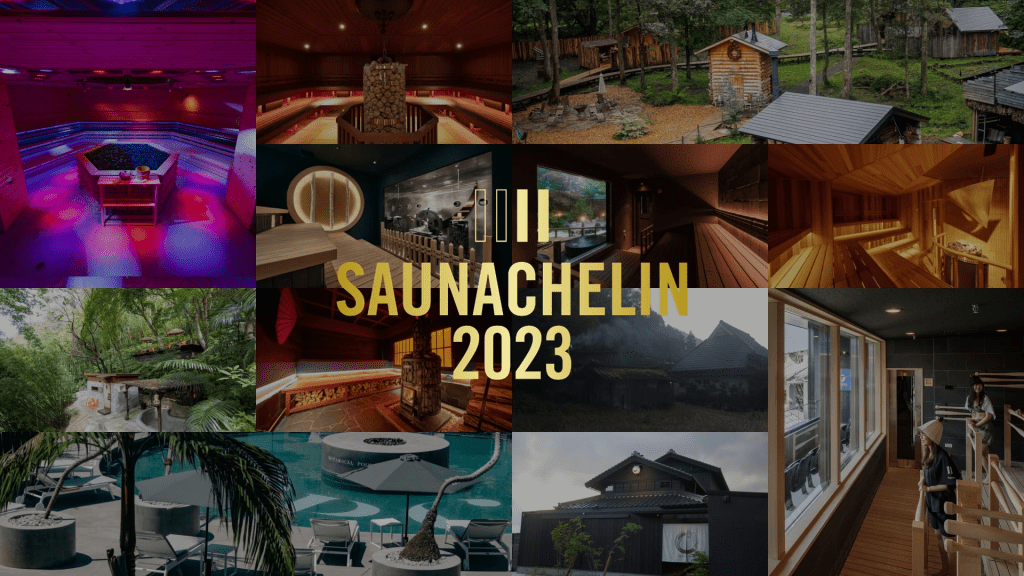
Aside from its establishments, TTNE also sponsor Saunachelin, an annual celebration of the best new saunas around Japan. Saunachelin not only recognizes facilities, but also outstanding contributors to sauna culture across the country. Brilliant name aside, Saunachelin is an excellent celebration of Japanese sauna culture, and also helps bring attention to new sauna and sauna-adjacent businesses getting their feet off the ground.
Pro tip, it’s also a great place to start if you’re not sure which sauna to go to in Japan. It’s hard to go wrong with any Saunachelin entry.
For more info, read here.
Best Sauna 37:
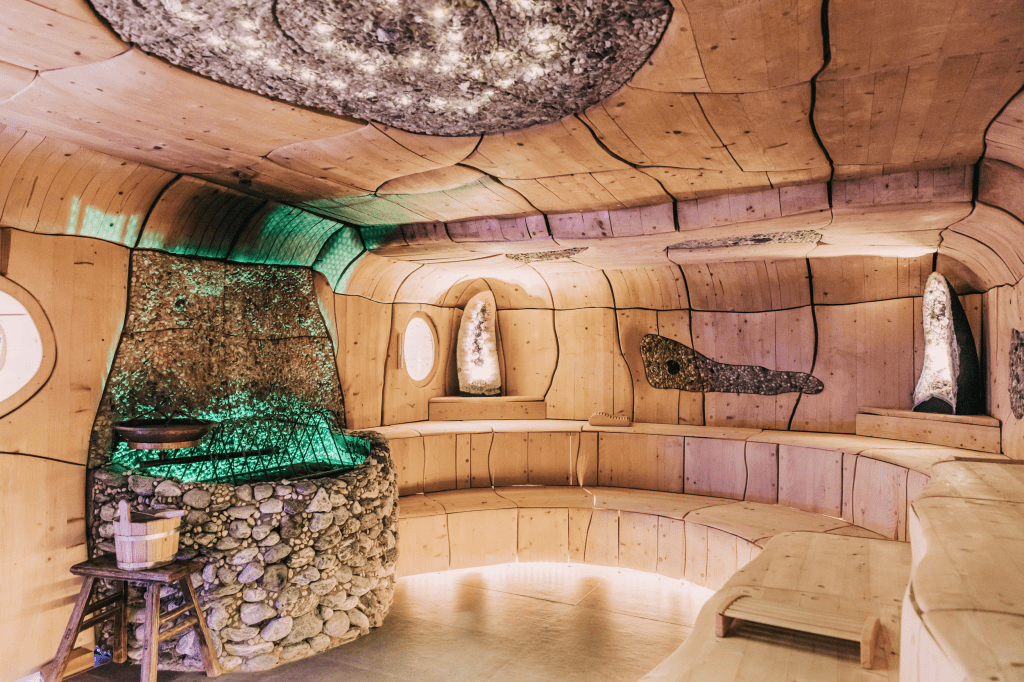
Launched in 2024, Best Sauna 37 took Saunachelin’s approach to an international level. Highlighting 37 sauna facilities internationally that promoted exceptional/significant art and cultural experience through sauna, the list brings the potential of what sauna could be to an international audience. It even has little extra educational bits on sauna culture around the world!
The list is incredibly useful for adding destinations to visit when traveling! Each entry offers something completely different, and I am curious to see how it continues to grow overtime. With the second list now released for 2025, it is amazing to see the 72 different saunas featured around the world, and how sauna is growing as a global artistic and cultural phenomenon.
Philosophy
Positively Rebranding Japanese Sauna
TTNE focuses on introducing people and cultures that haven’t had much contact with sauna before. With Matsuo and Akiyama’s diverse backgrounds in the business and fashion worlds, they see a lot of potential for sauna to reach people outside of what has historically been its demographic in Japan: middle aged businessmen.
Drawing inspiration from subcultures as diverse as surfing, architecture, and fashion, TTNE has succeeded in completely rebranding sauna in Japan, to the point where it’s often hard to pin down a single demographic at many sauna facilities.
Akiyama insisted on using fashion as an entry point, serving as a completely different demographic than middle aged men. Focusing ads on young, fashion-savvy women, TTNE has successfully brought in a new crowd into sauna culture without crowding out older sauna fans.
Building on this approach, Matuso himself started wearing shirts with “SAUNNER” written on the front, in order to spark intrigue among people he met in everyday life.
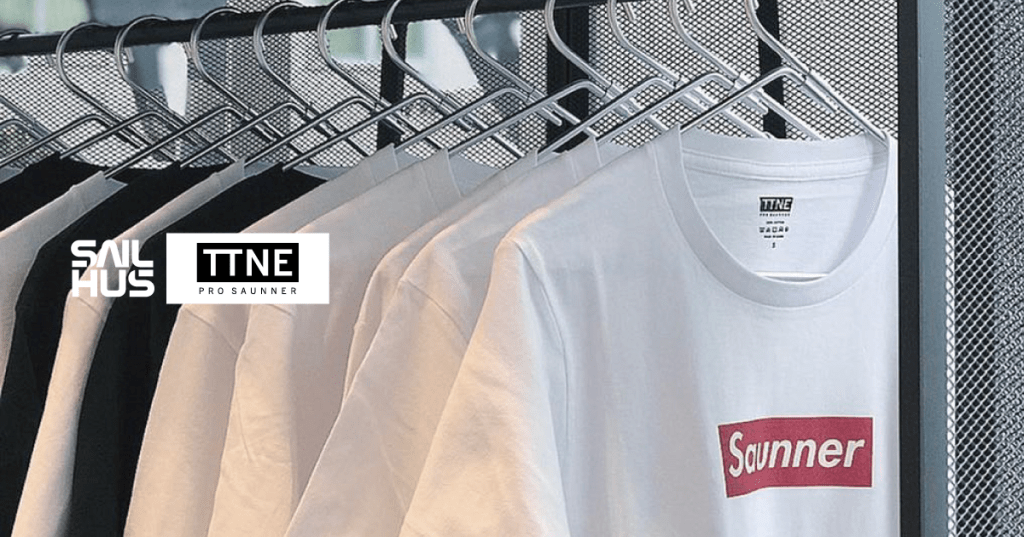
Just using the word “saunner” invites a lot of questions. “What is that?”. “Is this a trend?” “I didn’t know this was a culture?’. This is an ingenious approach- effectively birthing a culture that TTNE wanted to create.
Today, sauna is as popular among older men as it is younger women. Influencers like Misato Shizumu and “& Sauna” are among the top sauna influencers in Japan, and both instrumental in promoting sauna among women.
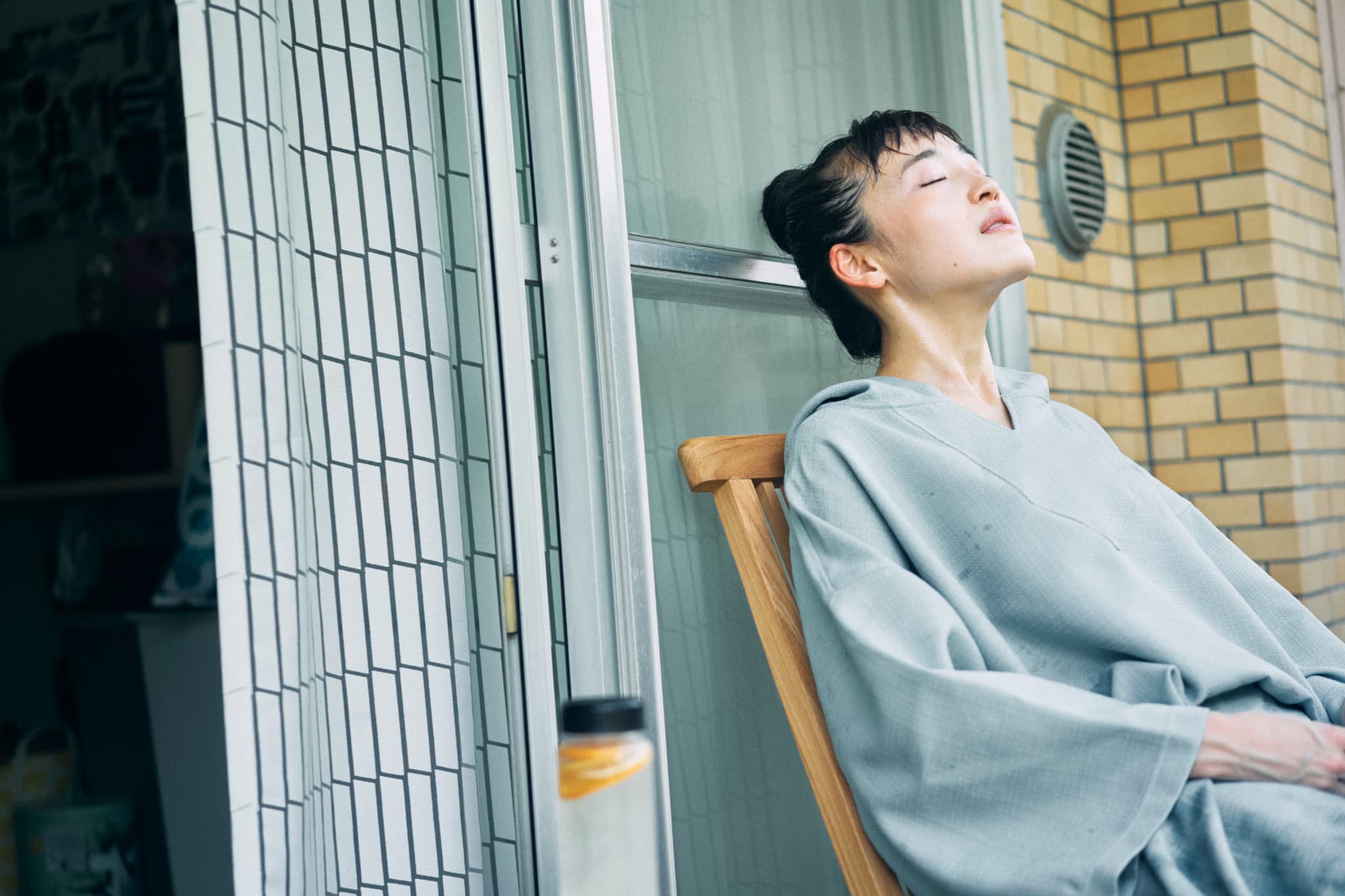
“That’s the most important point. Until now, there have been surfing, running, and yoga brands in sports, but famous fashion media has always looked at the origins of brands derived from various cultures. If we, as a sauna brand, had appealed to travel magazines or hot spring facilities, this boom would never have happened. It’s good to start from a completely different place.
We often do polar opposites, and because the image of saunas is of older men, we appealed to the opposite gender, beautiful model women, and young women. Also, saunas have the image of unfashionable older men, so we went for the more traditional side of fashion. There had never been a collaboration between saunas and architectural designers before, so we tried putting saunas in an architectural magazine. Or saunas and YouTubers. In short, we linked unfashionable saunas with the demographic that people admire.
Rather than going too far into the mainstream, I think about what punk and hip-hop were like in the heyday of rock and roll, as seen by rock and roll people at the time. Otherwise, you’ll never be able to create something new. Even if you do something in rock, it will end up being just rock. What was interesting was that we were able to create that with saunas, or appeal to them.”
-Dai Matsuo, interview with High Flyers
Connecting Japan and the World through Sauna
“To put it another way, I had never been able to put “totono” into words. In short, “totono” is the result of putting into words the feeling you get in a sauna, which could also be expressed as “euphoria,” “restart,” or “reboot.” I feel that putting all of these into words as “totono” has changed the way saunas are communicated. Now I think that the “totono” feeling of saunas can be beneficial to society.”
-Dai Matsuo, interview with Thule
TTNE’s international outreach, through projects like Best Sauna 37, connects the world to Japan via sauna. In the process, ideas like “totonou” or “four seasons” (四季) are integrated in sauna, and by proxy, shared with the world. Hopefully, this sort of rebranding of sauna in Japan can spread in a similar, but distinct fashion in countries outside of Japan.
Personally, I would love to see a similar rebranding happen in Western countries. In recent years, sauna’s burst in popularity has mostly been isolated to podcast bros and high-end wellness circles. Japan illustrates how much sauna has to offer when it covers a much wider tent.
I really hope to see sauna culture in other countries take off in a similar direction.
Conclusion
TTNE is at the forefront of Japanese sauna culture. Along with Sado and Imai Kentaro, they have some of the widest reaching impacts on the contemporary Japanese sauna scene. If you are curious in the slightest in Japanese sauna culture, TTNE has something for you.
I will leave you with a quote from Matsuo that really gets to the “why” of sauna in a way that really captures the core essence of what sauna is about.
“Even if you don’t have money, you can go together and just talk, and be naked—return to being an animal. Sometimes, when I look at the sauna stove, it feels like humans are gathering around a bonfire. It’s like humans get to return to their true roots as animals for a while. And since you’re not wearing anything, you can’t show off. It’s pointless to try to act important when you’re naked. Even if you say, “I’ve got a Ferrari,” there’s no key to show. Or if you say, “I’ve got a Richard Mille watch,” you can’t bring it into the sauna. The best thing you can brag about is a sauna hat that costs 2,000 or 3,000 yen. So in the sauna, everyone is on the same level. There’s no such thing as being good or bad at sauna—inside, everyone is truly equal. There are no superiors or inferiors. That’s why saunas are so great. They’re the best.”
-Dai Matsuo, interview with High Flyers.

Thank you for reading, more exciting projects are coming in the near future, so stay tuned!

 Sauna Sensei