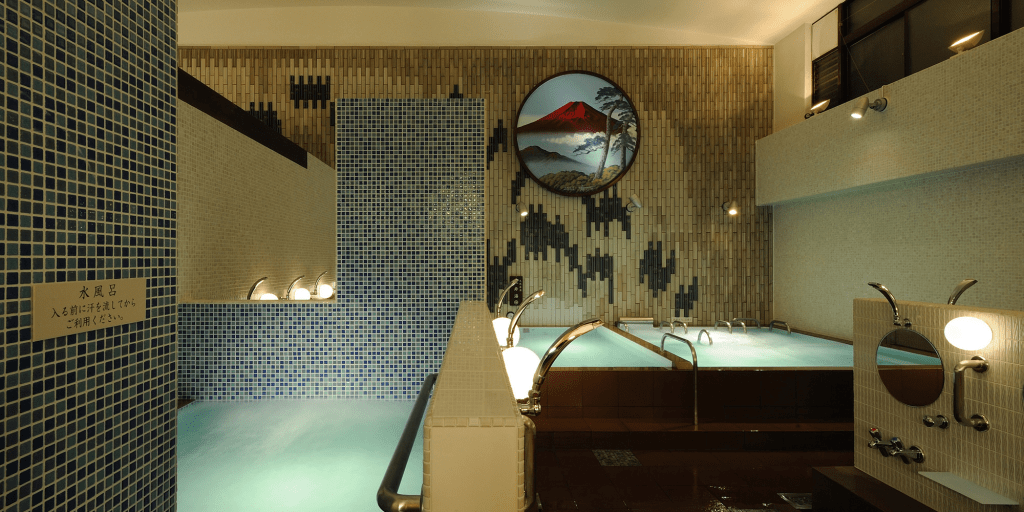
Design Spotlight: Kentaro Imai

I was first introduced to Mr. Imai’s work through a Time Out Tokyo article I stumbled upon, which focused on his vision of reinventing public bathing for a new generation of Japanese bathers. Discovering that sauna and bathing wasn’t merely something that felt good, but had culture significance and encouraged creative expression absolutely blew my mind. Sold on his vision, I felt determined to one day visit Mr. Imai’s new “designer sento”.

In the nearly seven years since I read Imai’s feature in Time Out Tokyo, sauna and sento have flourished as a creative medium throughout Japan. Sauna books, magazines, TV shows, breweries and entire fashion lines have spawned, often fusing elements of Japanese and Finnish culture in a truly unique way. Imai’s vision of a public bath revival is being embraced by the new generation of Japanese bathers/Saunners, further establishing his expertise and position in the community. It goes without saying that the man synonymous with “designer sento” has a lot ideas worth exploring.

BACKGROUND:
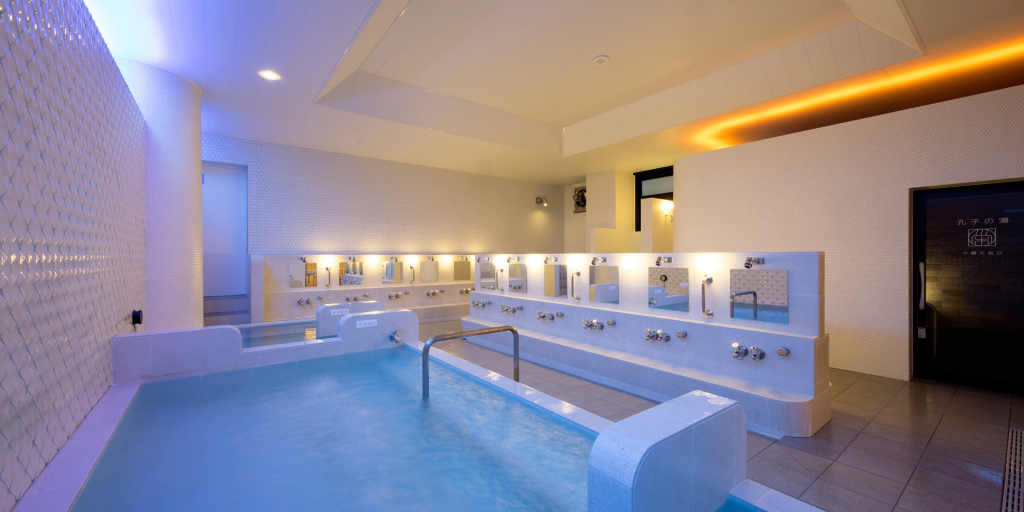
Sakae-yu

Mr. Imai has a background in architecture, and while he focuses on sento, his firm has also worked on residential and commercial buildings. Even in non-bathing facility projects, his distinct intentional minimalism and “evolution, not revolution” principle is visible, which can be seen on his portfolio.

Born in Shizuoka Prefecture about two and a half hours from Tokyo, he went on to pursue interior design in university. Initially planning to focus on industrial design, an initial exposure to Antoni Gaudi’s* architecture helped him change course. In his own words :

“When it comes to architecture, there are many other elements that come into play apart from pure design . However, when you look at Gaudi’s architecture*, that concept completely disappears. Citizens see art in their daily lives and live inside that art. It’s not just [about] logic, it’s the sense of necessity between the creator and the user, and I think it’s amazing. I really liked how it felt like it was used on a daily basis, like Park Güell [in Barcelona], a church, or an apartment complex . A space outside of books and museums as public art. Now that I think about it, I feel that it is surprisingly connected to public baths.” (translated from Google and edited for clarity)

*Catalan architect, best known as the original for the ongoing Sagrada Familia in Barcelona.
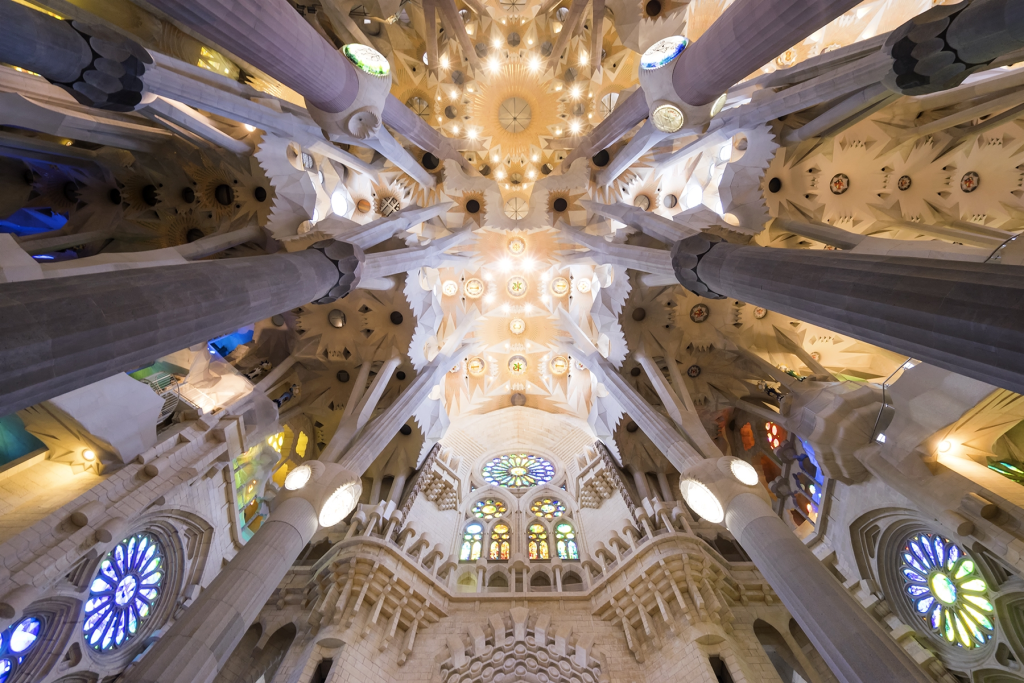
Sagrada Familia (interior) (Gaudi’s magnum opus)

Retrospectively, Imai also cites the famous manga “Thermae Romae”, the story of an ancient Roman architect transported to modern Japan and experiences Japanese public bathing, as an influence. Jokingly, he refers to himself as something of a “reverse Thermae Romae“, looking at ancient Roman architecture to help design some of his baths.

Going on to graduate from Musahino Art University with a masters in design in 1992, he went on to work for several architecture firms before establishing Kentaro Imai Architectural Office in 1998. While Imai is known for his work on public bathhouses, it wasn’t in his initial plans to focus on sento. After visiting a sento in Tokyo’s Kitasenju neighborhood, a regular customer suggested he try his hand at public baths. As a regular sento patron himself, he found the idea interesting and pursued it. Unlike other fields of architecture, public bathing design lacked any books covering design, floor plans, or anything specific to building and remodeling sento. Imai found his niche. As a result, Imai conducted independent research to break into the public bath design world. Looking back on an early remodeling experience:

“I am truly grateful to the owner of “Ohirayu” in Adachi Ward, as the first [connection] in the public bath industry is very important. Thinking back on it now, I feel that they allowed newcomers to work in this closed industry.”

Today, having worked on 28 bathing/sauna facilities (including one outside of Japan in Taiwan), Imai’s firm is at the forefront of the sauna boom, and is a pivotal force in the accompanying sento revival.

PHILOSOPHY
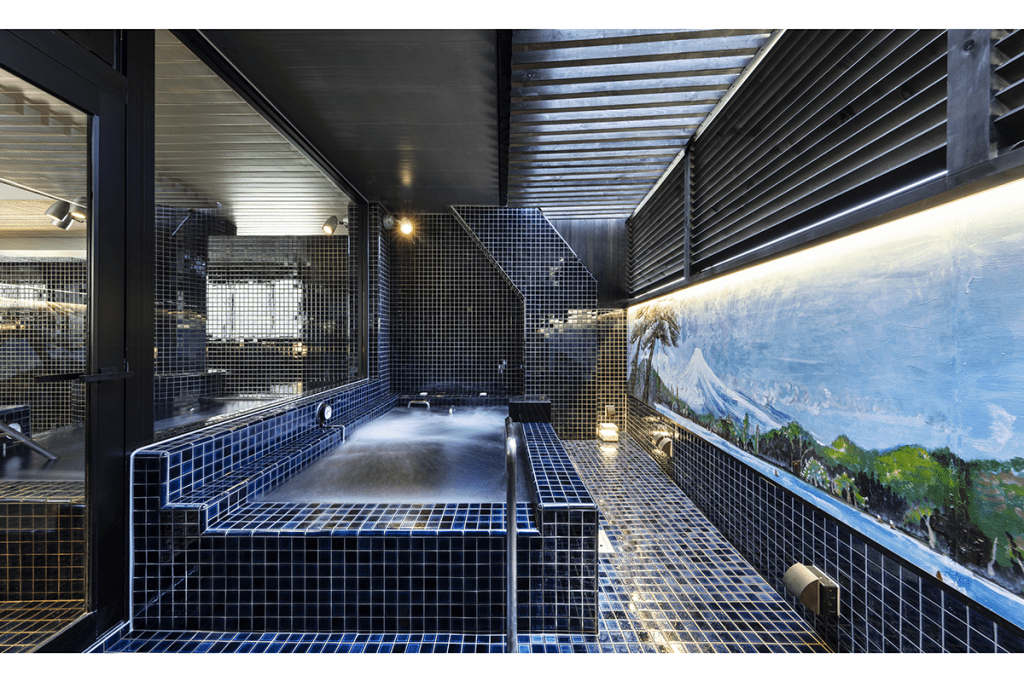
Matsuno-yu

Evolution, not revolution

At the core of Imai’s design philosophy, he combines “nostalgia with newness” in his own words.

“Another primary vision I value when designing a bathroom [bathhouse] is to create a space that combines a sense of nostalgia with newness. Traditionally, Japanese people enjoy a variety of forms and styles of bath, such as steam baths, hot springs, public bathhouses, super sento, home baths, spas, and saunas. In other words, bathing is a part of the traditional culture essential to Japanese. I believe tradition should be passed down from generation to generation while integrating conservational elements with evolution. As a representative space, it is reasonable to create a bathing space design that offers a sense of nostalgia and newness at the same time. Newness and nostalgia are defined as simplicity, which may lead to the idea for the space.”

A hallmark of his style, Imai masterfully strikes the balance of preserving the local character of a sento and adding new elements that make his projects’ distinctly modern. The result? A modern reimagining of historic bath houses that bring out their full potential. Succinctly put, this style is about “evolution, not revolution

Further expanding on this design philosophy in a Time Out Tokyo article:

“In order to make sure that this tradition lives on into the future, I try to leave the original style and details of bathhouses intact while adding new elements that make the experience more pleasant. Ideally, the result feels both new and familiar.”

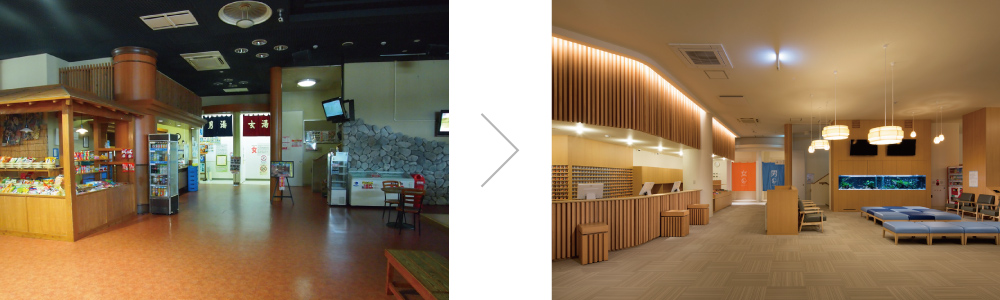
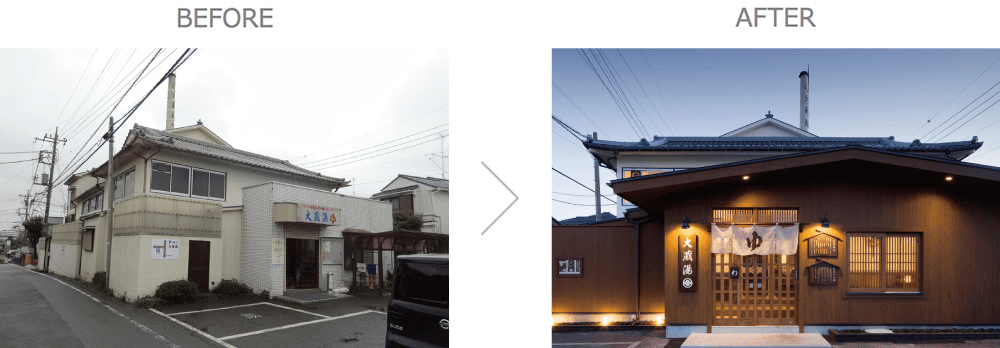
Imai’s adamance towards preserving the integrity of a venue, while being able to use a remodel to bring that character out is inspiring, and the dedication to the craft comes through in every one of his projects. To provide a few highlighted examples from his website, his results are striking:
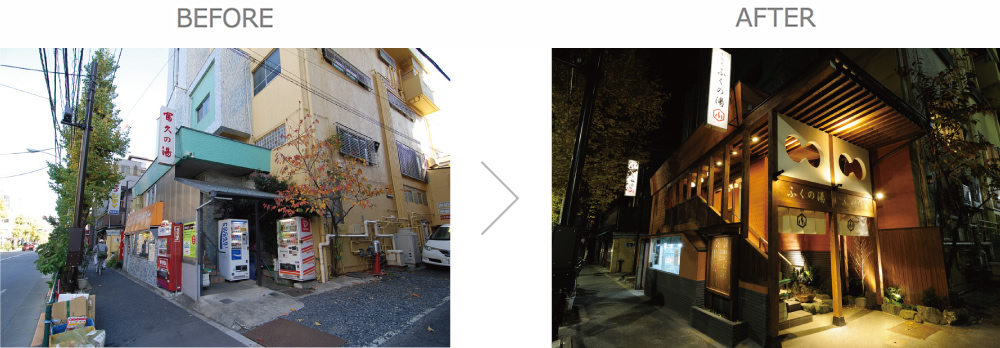
Fukuno-yu exterior
Okura-yu exterior
Yukko Morioka interior

While the buildings are almost unrecognizable, a careful look reveals subtle nods to the original design and the character of the surrounding neighborhood. Mr Imai’s commitment to designing baths with a specific concept, or motif in mind, is what makes these projects stand out the most.

Concept

Emphasizing the uniqueness of each bathhouse is fundamental to This is perhaps my favorite aspect of Imai. His dedication to each project’s concept and motif is unparalleled. While I have been a long time sauna/bathing fan, it was his work that showed me sauna and bathing exists as form of creative expression rather than exclusively recreation.

To give a few examples:
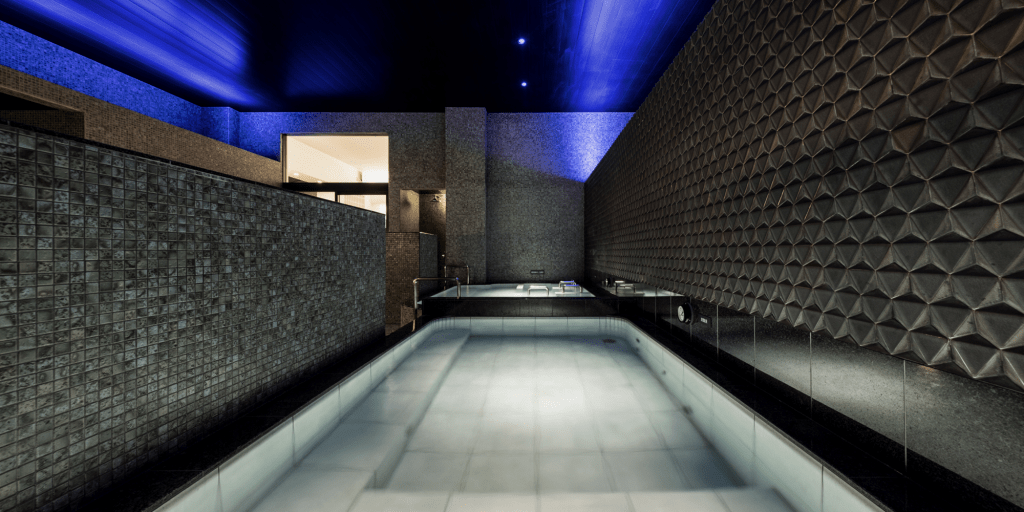
Kairyou-yu:

Cultural Crossing

“Our final purpose is to contribute to the reactivation of the Sento which have declined in the present age, so our challenge in this project was to show a new state of Sento with an urban function and a spatial image in a big city like Shibuya. The concept of this project was based on “cultural crossing” due to the location. To realize this concept, a practical plan and a spatial image were incorporated into the design. The idea of “cultural crossing” is used because a variety of events, workshops, and exhibitions can be held there, and both the exterior and interior walls have space to display artwork by new artists. These art-walls symbolize the cultural exchange which this space hopes to foster. Now the art-wall has became a hot spot for Instagram, and the combination of Sento, Shibuya, event space was well received to be fresh & exciting. KAIRYO-YU has gathered many people after the renovation and has became a hot topic as one of the stories of a reviving Sento. It will spark a new beginning for Sento by appealing to the younger generation. We believe the success of this project will bring a huge merit to the preservation of Japanese traditional culture and the healthy-beauty lifestyle of city dwellers in Japan.”
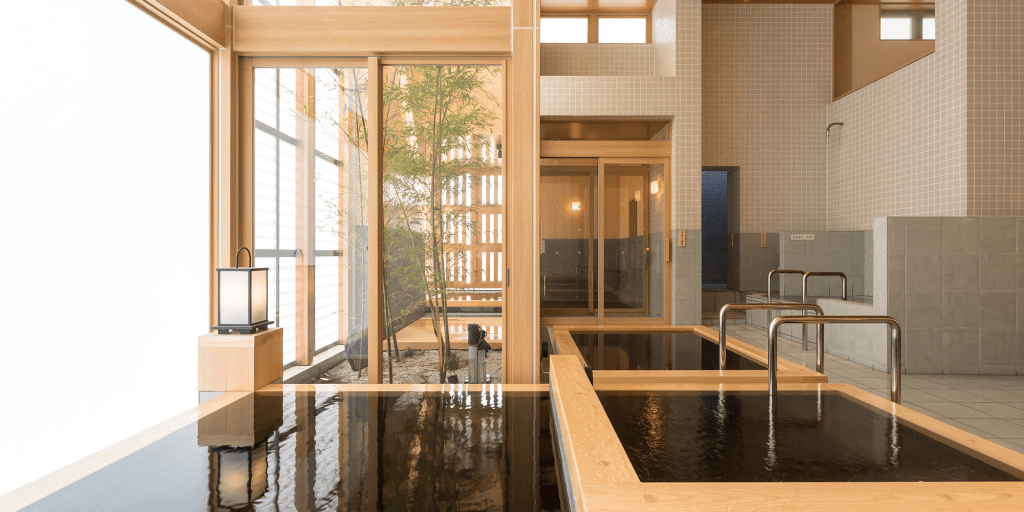
Mikoku-yu

Edo Style Sento in the Present Era

“MIKOKU-YU is standing near the birthplace of Hokusai Katsushika*, that has an atmosphere of deep down town of Tokyo. It’s located in the center of the spots which have become the face of Edo/Tokyo such as Asakusa, Ryogoku and Honjo-Azumabashi along with the “Sky tree”. The design concept was set as “Edo style Sento in the present era” and the design was developed based on uncolored wood usage and colors reminiscent of Edo.”

*Hokusai Katsushika is the renowned ukiyo-e artist of the world renowned “Great Wave off Kanagawa”painting.

Both bathhouses have incredibly different, yet focused themes that they are based around. I chose to highlight these two due to their vastly different themes. On one hand, Kairyou-yu looks to the modern, cutting edge neighborhood of Shibuya as a creative muse. On the other, Mikoku-yu looks to the historic past of downtown Tokyo to find inspiration. Despite their radically different designs, but commit to a unique and cohesive theme that give both spaces an individuality to them. As a bather, this is precisely what makes Imai’s projects such a treat. Much like a skilled film director, each work has its own identity, but his portfolio as a whole can be identified by his design principles and style.

FINAL THOUGHTS
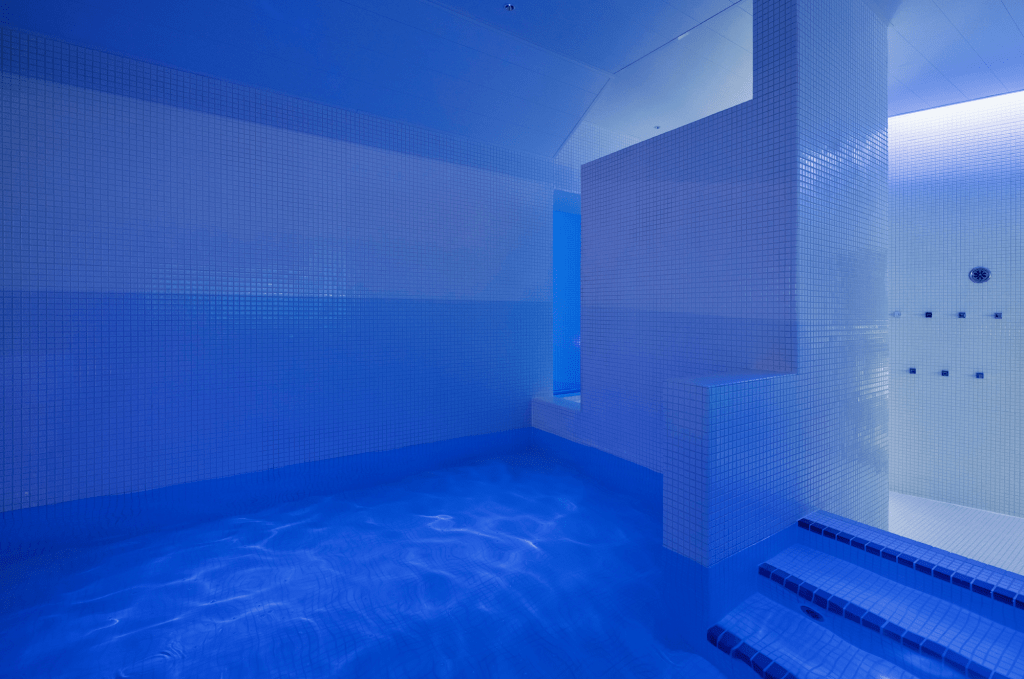
Corridor-no-Yu

Mr. Imai’s work has touched what seems like every corner of Tokyo, with outposts extending outside of the city. His works are an absolute delight to experience, and greatly enrich my day with every location I visit. The world would be a much better place with more architecture like his in it. For anyone interested in the forefront sento revival in Tokyo, any of Imai’s projects are a great place to start.

Selected Quote

“There’s another thing I care about when it comes to architectural design. I would like to make sure that each bathhouse [that I design] has a unique space. For this reason, when I design each bathhouse, I decide on the initial concept before starting on the design. For me, each bathhouse has a distinctive character that makes it unique. It could be the bathhouse’s tradition or local history.”

-Kentaro Imai [excerpt from “Mikokuyu, Sauna Channel Interview]

Goshiki-yu

Author’s Note:

This article is the start of a new series, “Design Spotlight”, which will cover a pivotal figure or group in the Japanese sauna and sento scene. Together, we will go over the individual/group’s top contributions, as well as their high philosophy on sauna and bathing. To kick things off, I could think of no better chocie than the designer that introduced me to Japan’s bathing culture, and one of my personal favorites in the Japanese bathing and sauna scene.

I hope you enjoyed this first entry. Thank you for giving it a read! I look forward to writing more in the near future…

Shibuya Saunas

Innovative. Ground-breaking. Cultural crossing.

Tattoos Okay? Yes
Sauna? Lots!
Price? $$
Should I bring toiletries? No
Best for? Anyone seeking out a premium sauna focused experience. Anyone with tattoos or dietary needs. Sauna junkies.

This review is going to work a bit differently. An aspect of Shibuya Saunas that makes it so special is that it essentially two separate sauna facilities with an overarching style. Each respective side alternates every other day between men and women, giving both genders the chance to experience everything Shibuya Saunas has to offer. For the Pokemon fans reading this, think of this like a release of a new generation of Pokemon games (Fire Red and Leaf Green, Sword and Shield, etc.). While both games have a lot in common, certain Pokemon are only available in one game, so both are required to get the whole experience.

The bulk of the review will walk you through what a session at each of both the WOODS and LAMPI portions of Shibuya Saunas are like.

WOODS

(Contains 3 upstairs saunas, two downstairs)

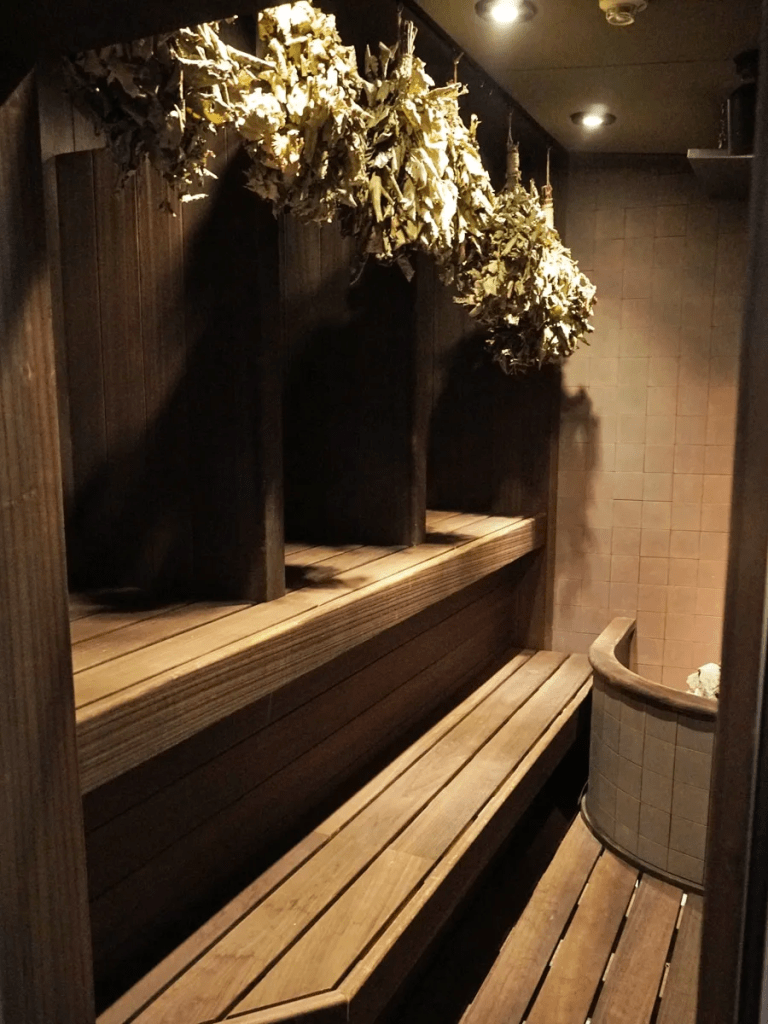
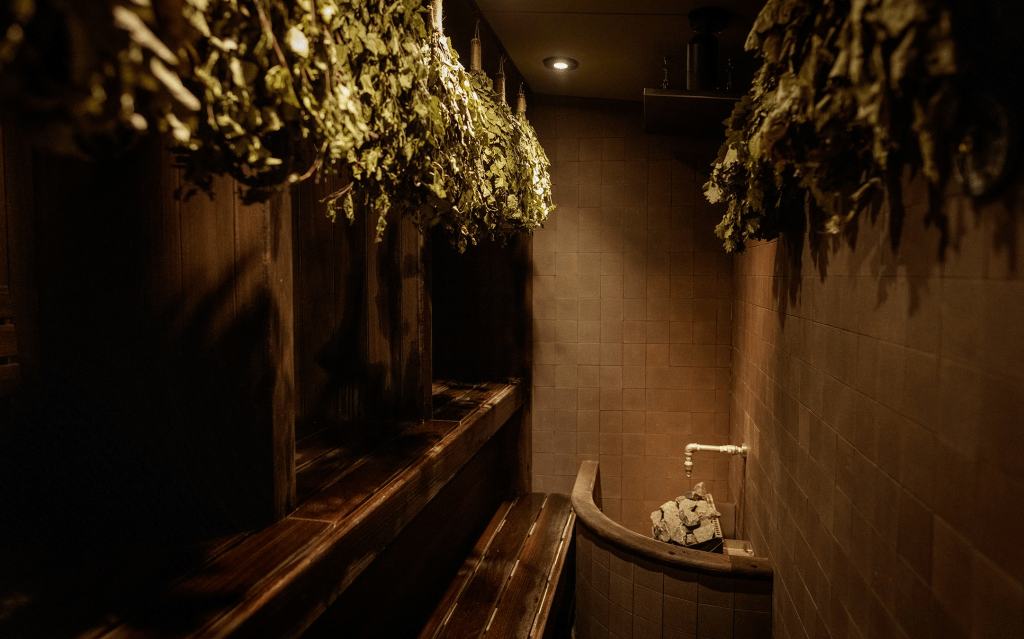
VIHTA SAUNA

I walk into a dark grey hallway. After showering off the worries of the day, I smell fresh birch leaves and hear birds chirping. Looking to my left, I see a closed off, yet inviting wooden door. I enter the door, only to be greeted by the increasingly audible bird sounds and pleasant scent of birch leaves (Vihta in Finnish). Sitting down, I am transported to the countryside. My worries of the day quickly start to dissolve as the world starts to simplify, both internally and externally. I gradually settle into a steady comfortable sweat until suddenly, I feel the call to slowly transition out.

MATALA

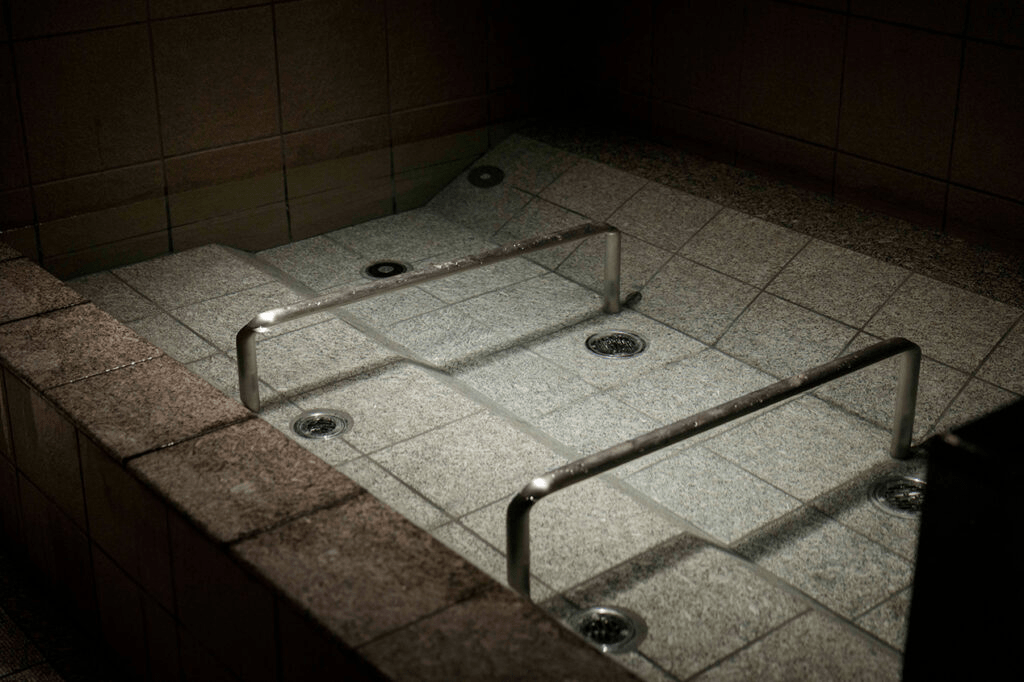
Spotting a nearby body length cold bath, I wash my sweat off and dip in to the bath to cool off. A slight shock, followed by acceptance of the cold, ends with the urge to sit down. Briefly rested and recharged, several unfamiliar faces start entering a large door. Curious, I follow behind and join them.

HAARMA SAUNA

Notably more intense than the last sauna, the auto-loyly steadily increases the humidity as needed. More fellow saunners start to trickle in and join me. By the time I am ready to move on, there is a line to enter the neighboring Vihta sauna. Another cold bath trip ensues…

Settling into my sauna routine, I see a lit staircase down the hall. Feeling adventurous, I ascend to see what lies in store.

Lush, serene, and quiet, who would guess that you’re only a number of blocks away the world’s second-largest subway station? Certainly not me…

With three saunas to choose from, I head towards the largest, most inviting of my options.

TUULI SAUNA

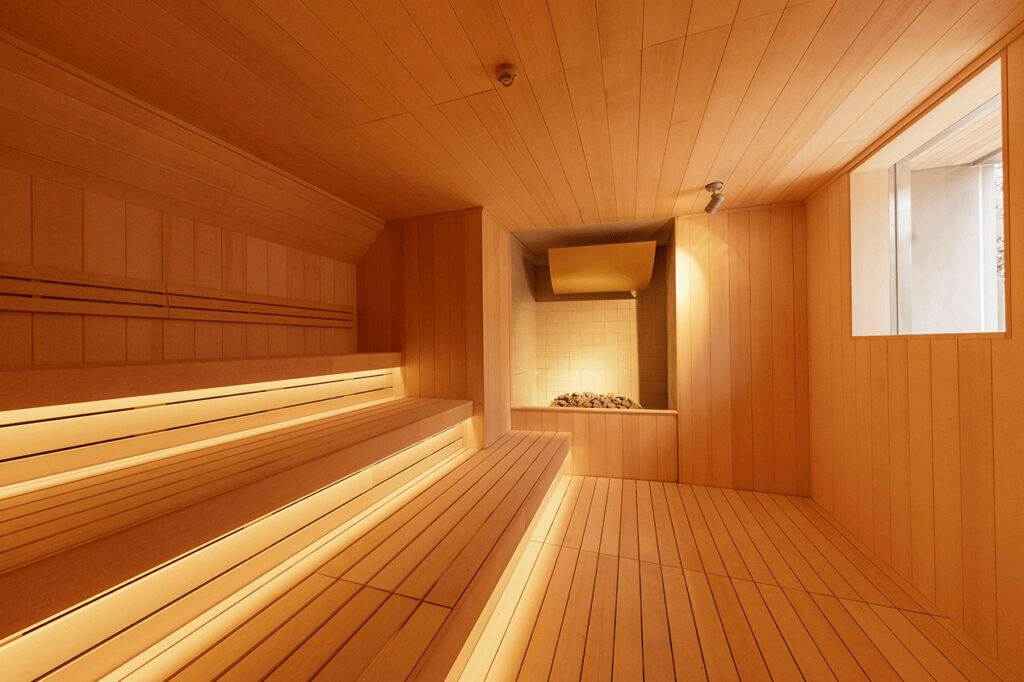
As I enter, I am greeted with a sign indicating the aroma for the day. Diffused in the water used for self-loyly, the room carries a refreshing, yuzu/citrusy* scent that immediately puts you at ease. Looking out the expansive window and into the immaculate outdoor garden, it’s hard not to feel both at peace and overjoyed all at once. Ready for a cool down, I wash off and head for the walk in cold plunge.

*The aroma is switched out daily. I have been lucky enough to enjoy a range of essential oil blends on my visits.

SYVA

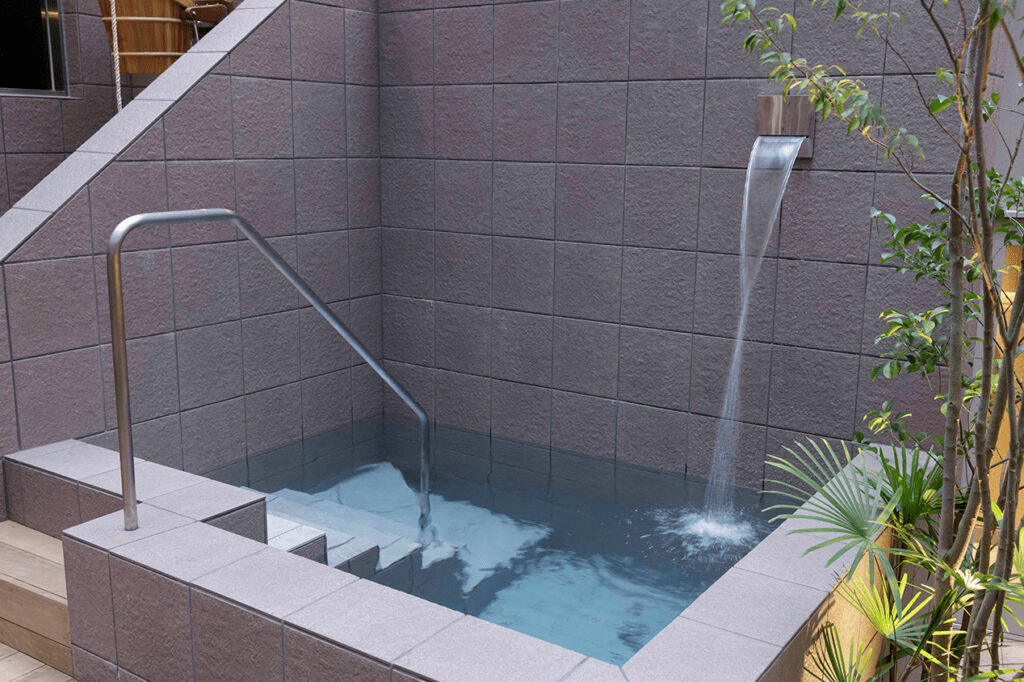
Deep and cold, this sensation makes the downstairs cold bath pale in comparison. I feel icy and relieved all at once, particularly when I stand under the cold waterfall flowing down onto the bath. Nearing the limit of my cold tolerance, I head to one of the ledge benches.

In Japanese cooking, much attention is given to all five senses, or 五感 being satisfied. I can’t help but feel that same attention present in the outdoor garden. Clean, quiet, pleasant smelling, and comfortable, I feel exhilarated and at peace. That’s the paradox of sauna. Peace and excitement. Existing at the same time. A sign of maturation is realizing that two seemingly conflicting feelings can coexist. As helpful as philosophy and introspection has been in coming to this universal truth, perhaps nothing has taught me this more than my time spent at the sauna.

These are the kinds of thoughts that pass through me as time flows by in seemingly an instant. At once, I feel ready to explore my surroundings a bit more. Eager to try the Kelo sauna, now without a line, I cram into the four seat, hut-style sauna.

KELO SAUNA

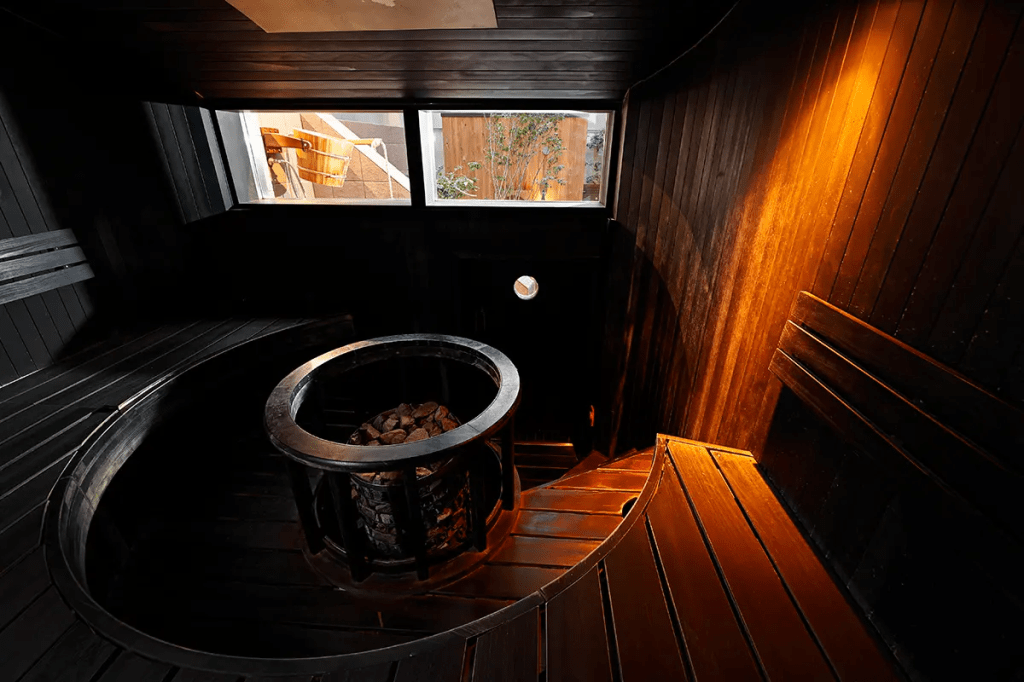
Set at a lower heat and with fewer seats, this Kelo sauna gives a more intimate feeling than the expansive, grand nature of the TUULI sauna. Just me and three other individuals enjoying the slow yet inevitable heat that increases over time. Across the bench, a fellow saunner looks around the room to seek approval to add more water to the rocks. We all nod in agreement. While the heat will inevitably increase, it is the added humidity that comes right away, along with the wonderful, calming sound that only comes from loyly. I feel comforted by both the easy heat and the soothing scent of the Kelo wood, safe even. A few faces come and go in the Kelo sauna until I feel the call to leave. Earning a steady sweat overtime, my body carries a rewarding kind of exhaustion without feeling attacked by the heat, as a lesser sauna can unfortunately do.

After an invigorating cold plunge, I spot a corner of the room with one last sauna to try.

TEETA SAUNA

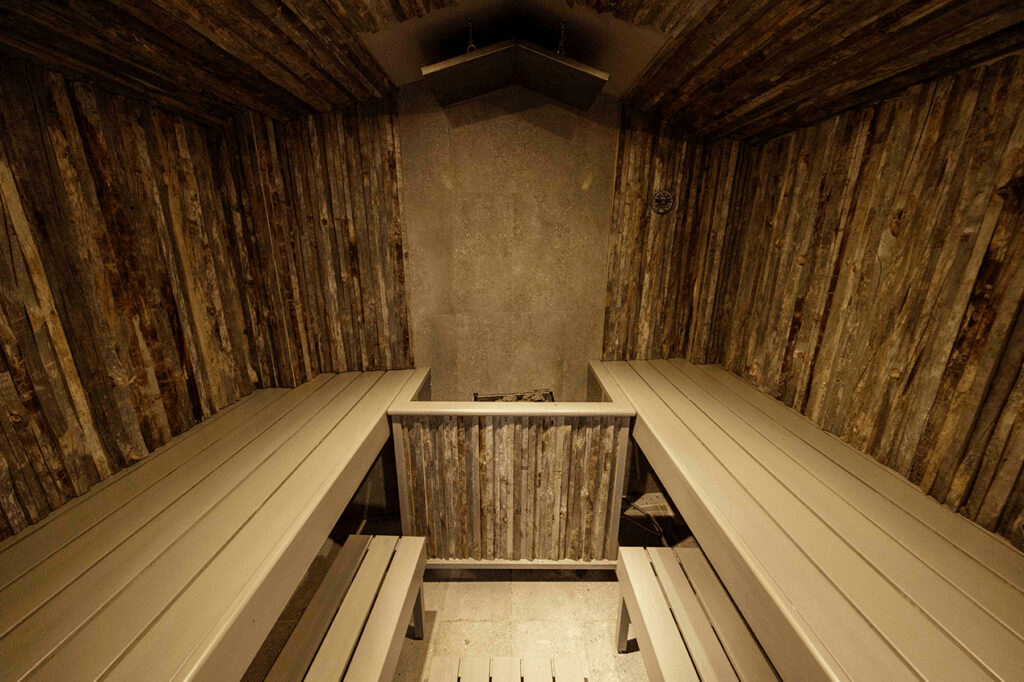
After crawling into what feels like a door from the Shire, I walk up the steps to enter the TEETA sauna. The room feels worn in, in a comfortable sort of way. The self-loyly set up further contributes to a DIY vibe. The room transports me to a cabin on a nice day, an escape with nothing but you, perhaps a few friends or family members, and nature. Unpretentious and no-nonsense, the TEETA sauna delivers a high heat that snuck up on me. Before I knew it, the sun seemed to be setting on me. The day slipping away as thoughts pass me by, like the beads of sweat that suddenly drip down from everywhere on my body. With limited stamina, I decide to depart.

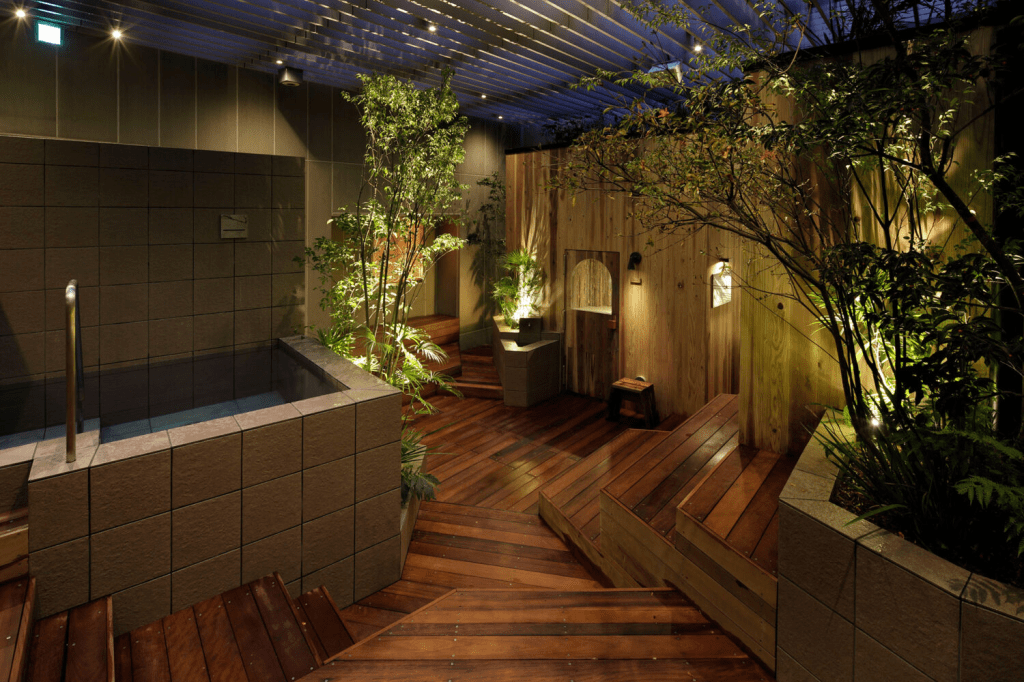
Emerging out of the hobbit door, the day has passed me by, and the outdoor garden has revealed a new face. Beautifully lit, the atmosphere, or 雰囲気, completely changes. Awe-struck, I rush into the cold plunge and take it all in. The endorphins. The rush. The greenery. The pause of my thoughts as I slip into a oneness with the moment. My legs carry my conscious mind to the closest bench. I am one with the moment. This is totonou….

My time to depart has come. I descend down the stairs from which I came to rinse off, and return to reality. Away from the WOODS, away from the sauna.

For now…

LAMPI

(Contains 2 upstairs, 2 downstairs sauna) [translates to “Pond” from Finnish]

Choosing to start my day with a sauna, I find myself in a naturally lit, grey hallway. With several potential routes to chose from, the bright wood door with only a small window beckons to me the most.

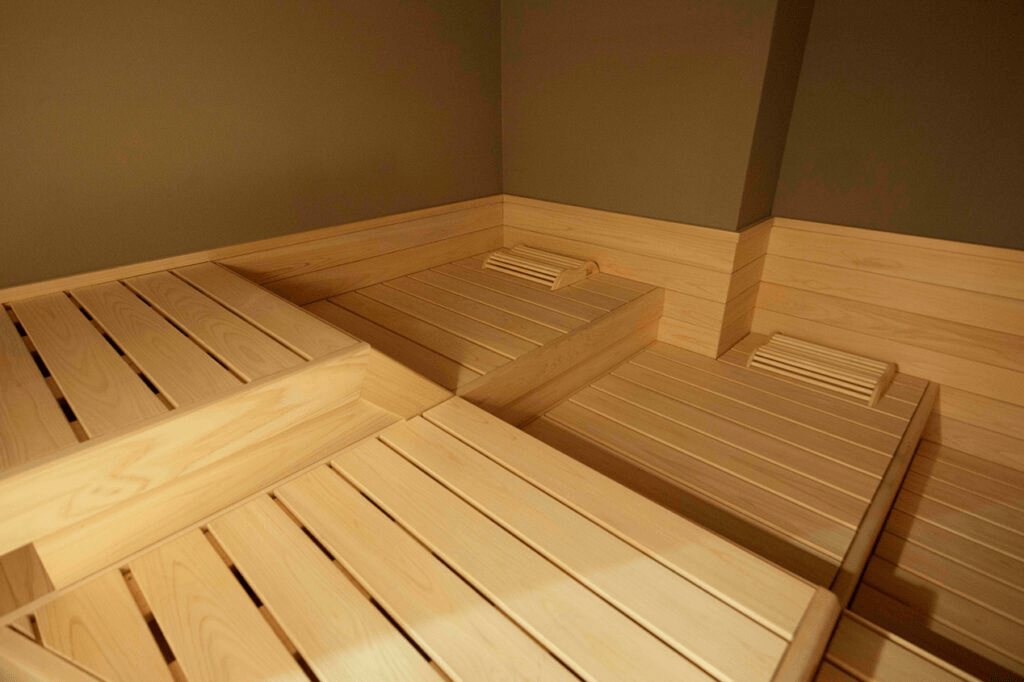
BED SAUNA

After crawling up to the wooden beds, the cozy setup along with the intensity heat get me to ease into this ingenious sauna in no time at all. The warm temperature seems to tuck me in like a warm blanket on a cold day. I can’t imagine ever wanting to leave. Comfortable, safe, and warm, the day is off to a great start. Outside of the two strangers beside me, I feel siphoned off from the rest of the world, but like I could hop back in at any moment I want. I decide not to for another ten minutes…. as long as my body can take. Afterwards, I feel the call to explore, and take on the rest of the LAMPI.

Bot not before a trip into the body length cold bath (just like the one found in the WOODS)…

Across the hall lies a larger, more inviting door with what seems to be a room with a grey interior.

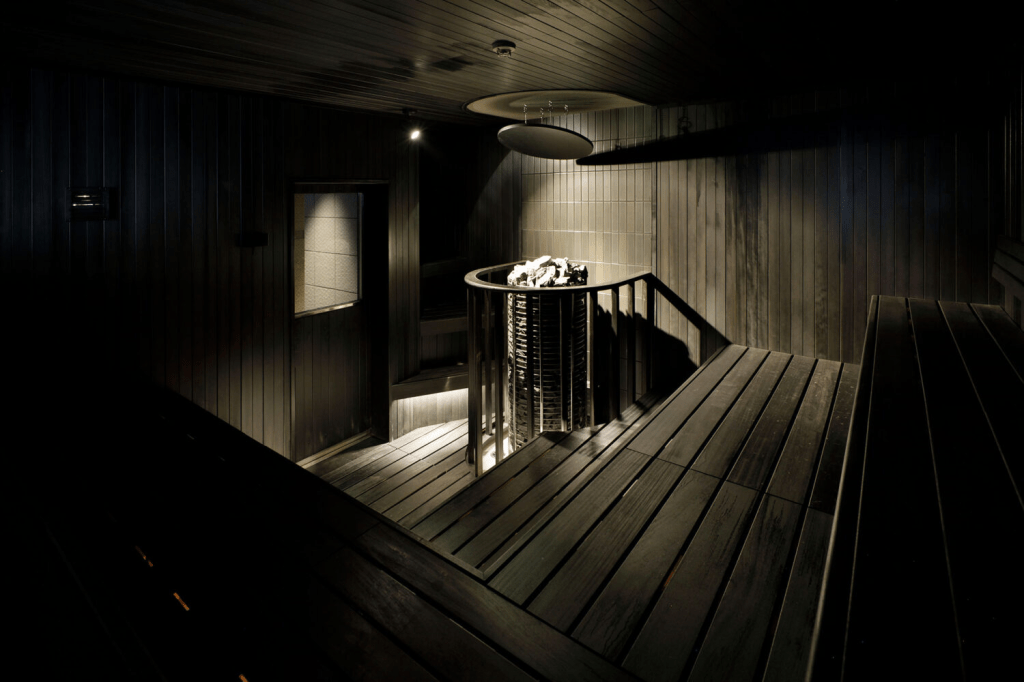
MUSTA SAUNA

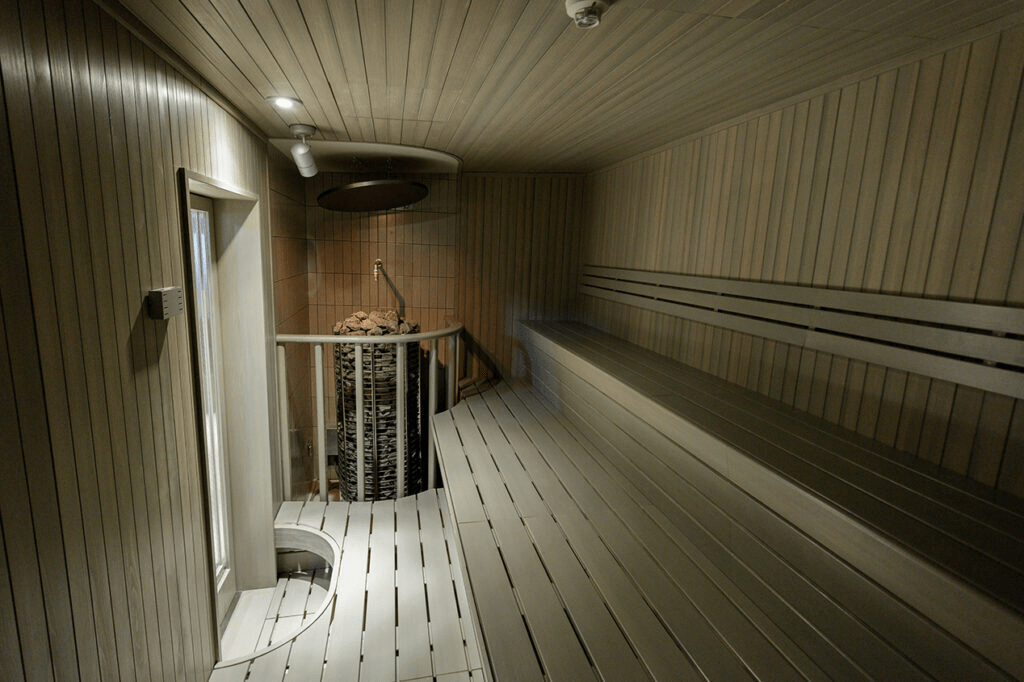
With a window running along the top bench, the MUSTA Sauna already gives a more inviting presence than the cozy bed sauna. The expansive yet inviting grey wood seating gives the room an accommodating feeling. I take the invitation to (after seeking consensus from the room) pour some water on the rocks. Self loyly: the ultimate invitation. While it’s noticeably a bit hotter than the bed sauna, the heat is welcome and un-abrasive. My pores already opened up from the bed sauna, I can lean into the heat a bit more. I can feel myself waking up, especially after my first cold plunge earlier. The time comes for another one.

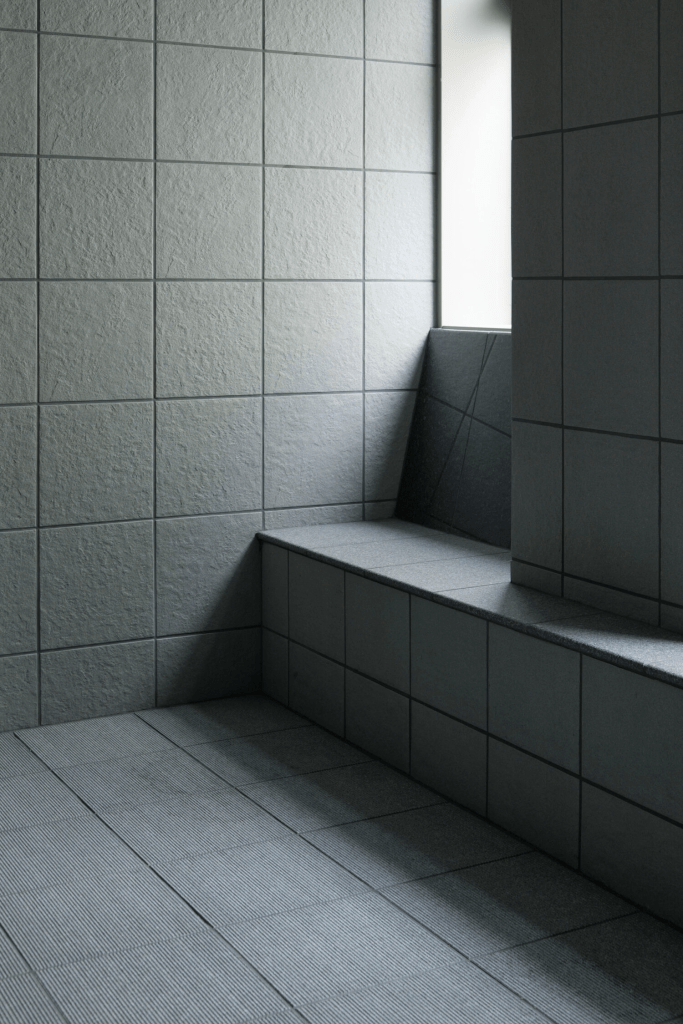
After a slightly longer dip in the cold bath, I take a seat and sip on some herbal water. Restorative, it aids my search for inner peace staring at the tinted window, glowing white. After a repose, I feel energized. Time to go upstairs.

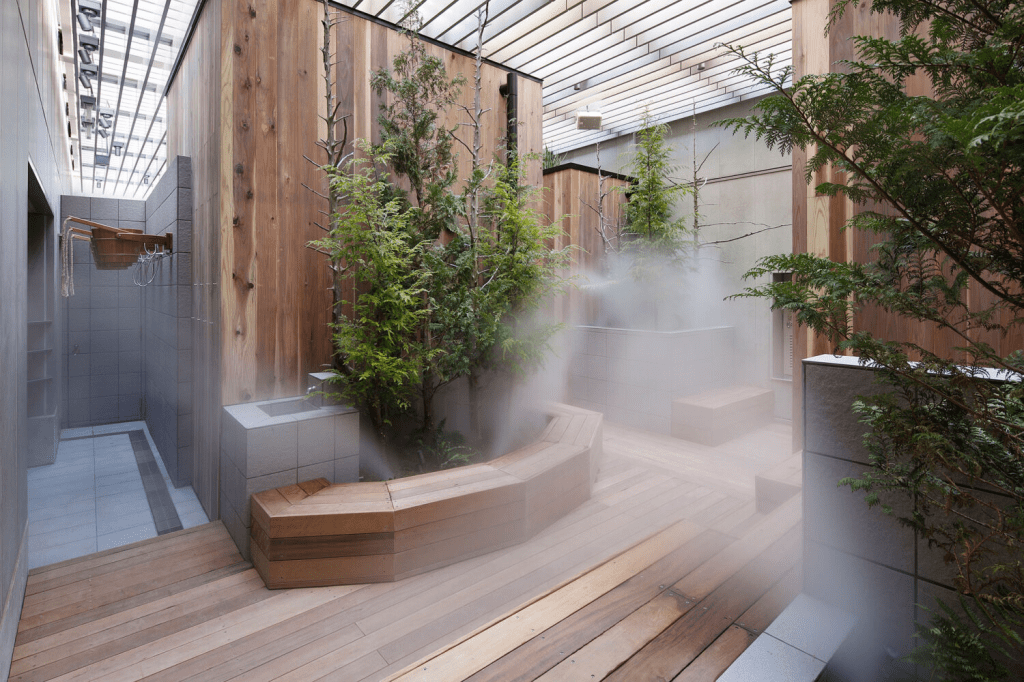
Plants, mist, water. Like a forest on a dew-filled morning, mist ushers out underneath the numerous trees on the crisp rooftop deck. Awe-struck, I stand and soak in the view. Distracted, I almost forgot why I came upstairs in the first place: to sauna.

An inviting sign advertises the essential oils in the loyly water: yuzu. Enticed, I follow the sign into the sauna.

SOUND SAUNA

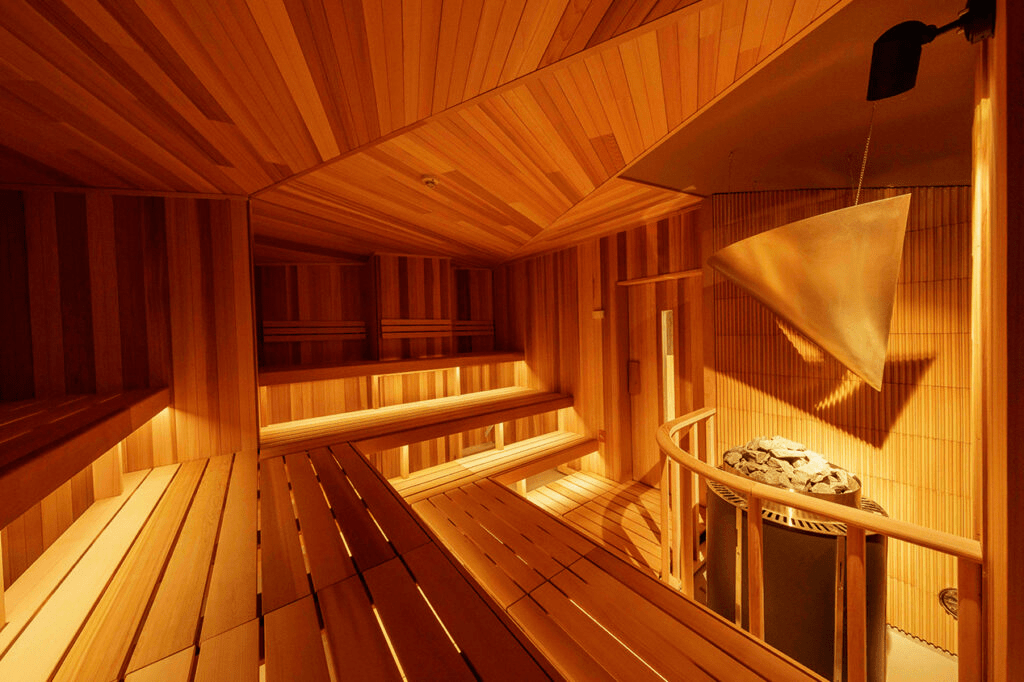
A wall of sound hits me upon entry- my gaze quickly turns towards the source of the sound. A spherical floating triangle is at the corner of the room, commanding presence throughout the sauna. The ethereal sounds make me feel like I’m in a science fiction movie (albiet, one with a scene inexplicably taking place in a sauna). The essential oil-infused self loyly set up add more sensory immersion to the experience. Through the window facing the garden, I can see the mist accumulating, slowly hiding the base of the surrounding plants. Once again, I get the sense that while I logically know I am only a matter of blocks from Shibuya Station, I couldn’t feel further from it.

At my heat limit, I head outside. I cut through the mist and venture to the walk-in cold plunge. Even on my third sauna round, the cold comes as a shock. The sheer depth of the cold plunge pool puts it on a different level than its counterpart downstairs. I finally start to settle into the cold. The initial shock is gone, and I feel relief from the heat. Suspended above the rooftop deck, I take in the beauty of my surrounding plants, mist, and wood; all while in an elevated cold-induced trance. This now transitions from a trance to the base instinct to exit, before the cold starts to become frigid once again.

Taking a minute, I grab a seat on the bench and close my eyes. Although I am in the heart of Shibuya, I feel at one with nature. A much needed break in the early part of my day. It’s easy to forget how much the worries of life can burden your mind over time. Especially if you don’t take time to tend to them and breathe. When you start to accept this, it can initially be stressful, even scary at times. But with time, checking in with yourself makes the journey that much easier. More peaceful. More steady. That’s what my time in the sauna provides me with- a chance to go into my body, and check in with myself. Those are some thoughts that pass through my head anyway…

KELO SAUNA

I have one more sauna to explore. Right across from the Sound Sauna, the Kelo sauna rears its head. Familiar from my walk in the WOODS, its value remains undiminished on a return trip. Its timeless, steady and low heat, aided by the self-loyly puts me at ease. This Kelo sauna is a great balance to the energy-giving sound sauna, serving as an energetic cooldown to the session. I feel safe and happy. The camaraderie of three random strangers bonded over a high quality heat and silence. As the comfort reaches its end and turns into overheating, I find my way to the door.

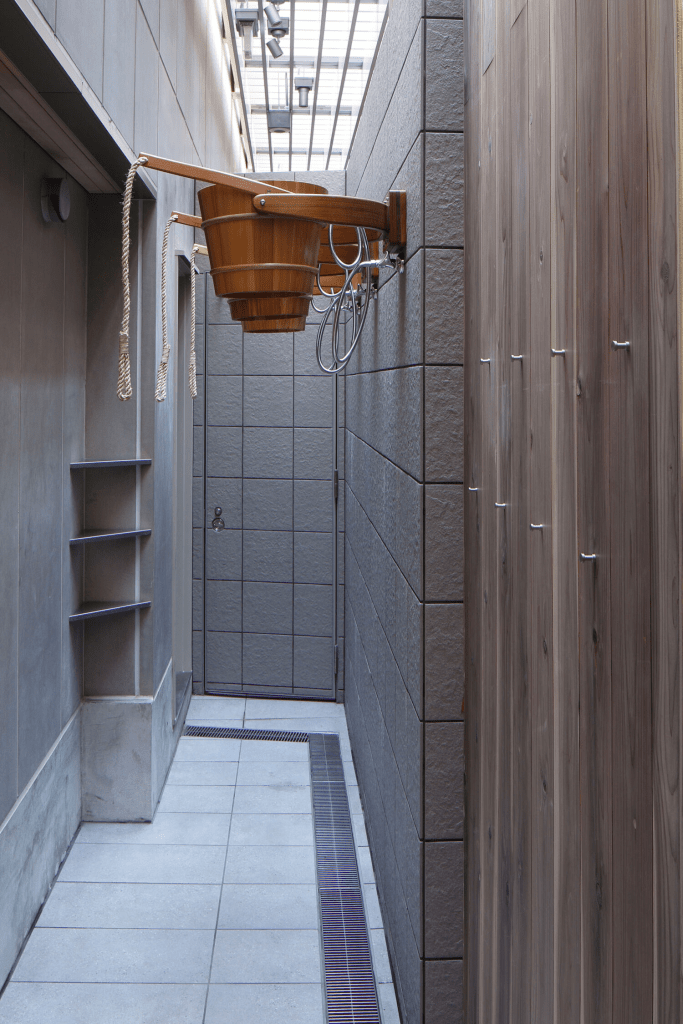
I poke my head around the corner and spot a bucket with a lever. Pulling it summons a powerful splash of cold water to the top of my head. Like a layer of primer on a painted wall, the cold splash is like a cold dip priming me for the more intense plunge to come.I feel less caught off guard by the cold this round. It only serves as relief…

I take a moment to sit down for one last time. Taking a good, long look at the misted plants on the rooftop deck. The serenity of the moment. The peace and good feelings that come from a quality sauna session. The feeling is shortly followed by the nudge of “it’s time”. I take one last look before I head down the stairs, and return to the ordered chaos of Shibuya station…

Shortcomings:

Two and a half hours is a bit short on the time limit. However, this only applies on the men’s side, as the women’s is three hours. Additionally, you can pay for extra time at a reasonable rate, so it’s not a huge deal.

Best Moment:

WOODS
Going into the Vhita sauna for a last session before checking out gives a sense of peace and relaxation. It’s hard to walk out of and feel anything but absolutely refreshed and content with the world.

LAMPI
Really hard choice. I’ll narrowly give it to the bed sauna on originality. Set at a perfect temperature to settle into the heat and walk out with a satisfying layer of sweat. That said, the sound sauna comes very close….

Overall
The rooftop garden on both sides never ceases to amaze me.

Just narrowly missing out in the LAMPI section is the incredible Sound Sauna upstairs, complemented by the plants regularly covered in mist every 10-15 minute that you can see through the sauna window.

Bonus Note:
The staff here is exceptionally kind! The bar is high for customer service in Japan, but every time I have been here, every team member has been exceptionally helpful and friendly (and patient with my Japanese). Please return the favor and be a good customer. The staff and team here puts a ton of effort into making this place as great as it is, so remember to be a considerate guest!

Conclusion

Shibuya Saunas is an absolute joy to visit. The two sides is a novel idea that gives the venue ample reason to revisit. This currently sits as one of my top sauna recommendations in all of Japan. Not only is it incredible, but also accessible for first time visitors to Japan.

I can’t recommend it highly enough. If you want to try Japanese sauna, if you are looking for a tattoo-friendly venue, or are even just looking to unwind while sightseeing in Shibuya/West Tokyo, give Shibuya Saunas a visit.

Food Pairing:

In-House Restaurant

This has actually been on my list every time I have been here, but I still haven’t made it in (it’s either been busy with a long wait, or I have had plans afterwards). With a Michelin-star chef at the helm of the all-vegan kitchen, I (although not a vegan) am eager to try the cafe!

I plan to update this with a first hand account next time I am in, but the reviews are good for the in-house dining option!

Shibuya Station

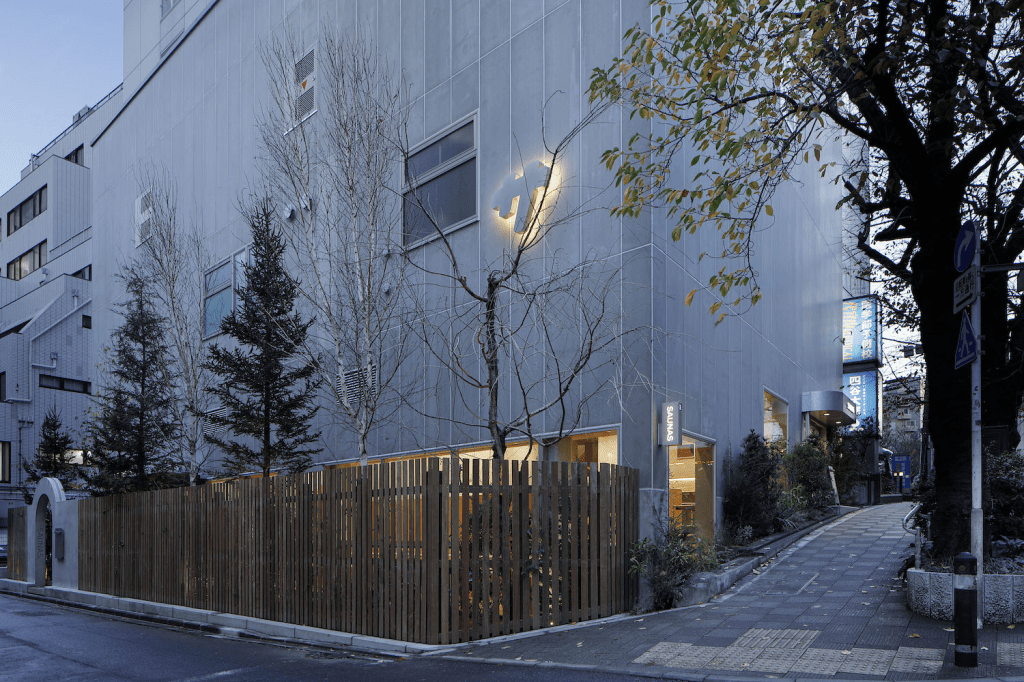
Shibuya Saunas is located just a few minute walk from the world’s second largest subway station, Shibuya Station. The famous “Shibuya Scramble” needs no explanation. Nearby, there are so many restaurants, I would recommend walking around until something catches your eye! There is something here for every budget and flavor palette.