I want to best provide the tools for anyone interested in sauna/sento/Japanese bathing culture to enjoy their experience, whether that be how to find and navigate an onsen in rural Japan, or helping someone trying sauna/public bathing for the first time. Additionally, I also want to be an ambassador for bathing culture in general. As a part of that, I want to help pass on what I have learned about being a respectful and mindful guest at a sauna/bathing facility in Japan.
This page is my attempt at making any first time sauna/bath visitors prepared for a stress-free trip that will have you welcomed back to any sento/onsen in Japan.
Note: I aim for this to be a working document. As I embark on this journey myself, I will discover more and reserve the right to be wrong, and to change my mind!
Additionally, this page refers specifically to etiquette at sauna/bathing facilities in Japan. If you are interested in how to get the most out of your experience, this article covers sauna methods in more detail.
How to use a Public Bath (Sento) in Japan: A Basic Guide
Before You Go:
You are getting ready to visit a Japanese sauna or bath for the first time. How exciting! Depending on where you visit, you may need to bring a few things with you, and have a few Japanese phrases prepared- a little goes a long way!
Key Phrases:
- Konnichiwa (hello) (こんにちわ)
- Hitori (one person) (ひとり)(一人)
- Ichi mei also works here (a bit more formal/polite) (いちめい)(一名)
- Arigato Gosaimasu (thank you) (ありがとごさいます)
- Toworu Arimasuka (do you have towels?)
What to Bring:
If you are visiting a small to medium sized sento, I would recommend bringing the following to bathe like a pro, or a “Saunner”, a term for sauna enthusiasts in Japan:
- Hand Towel
- These can be purchased at any convenience store, or at a Don Quixote (a common multipurpose store in Japan. The towels are ubiquitous at sento, and while they are often available for rent or purchase, having one can come in handy in the event that they are not available. The same can be said for body towels (but I have found it fairly rare for these to be unavailable).
- Toiletries.
- The majority, but certainly not all bathing facilities (particlarly smaller sento), carry shampoo and body soap. Traditionally, public bathing facilities were where people took care of their daily hygenic needs. While this has changed over time, some older Japanese still use the sento as such and bring toiletries with them to the sento. If you are worried about not being able to tidy up accordingly, I would suggest visiting a convenience store and grabbing what you wouldn’t want to go without.
- This is particularly true if you have a particular skincare/makeup/hair routine.
- The majority, but certainly not all bathing facilities (particlarly smaller sento), carry shampoo and body soap. Traditionally, public bathing facilities were where people took care of their daily hygenic needs. While this has changed over time, some older Japanese still use the sento as such and bring toiletries with them to the sento. If you are worried about not being able to tidy up accordingly, I would suggest visiting a convenience store and grabbing what you wouldn’t want to go without.
- Sauna Hat
- These are huge in Japan right now! Originally from Russia, sauna hats keep the heat receptors on your head covered, allowing the rest of your body to reap the benefits of sweat while your head stays a bit cooler. Designer sento are increasingly selling these at the front desk. If you are interested, I would highly recommend buying one! I don’t leave home without one in my bag.
- Cell Phone with Google Translate
- If you don’t speak or read Japanese, I would highly recommend bringing a smartphone with Google Translate/Deep L. Both apps have incredible translator cameras, that can help decipher some of the kanji and Japanese writing, particularly on the ticketing machines when entering the sento. But make sure that your phone isn’t used anywhere outside the lobby!
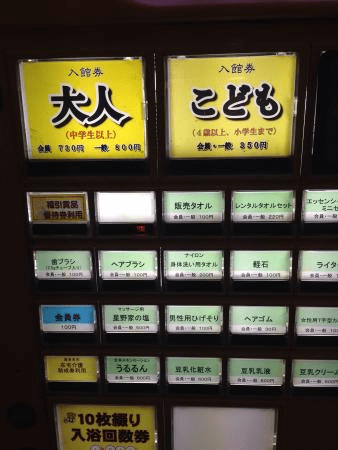
Lastly, I will share possibly the two most important things to know going into a sento. Regardless of your level of Japanese, I would highly encourage learning the two kanji/symbols below:
男: man
女: woman
Each of these characters will most likely be on a flag hung above their respective locker rooms. Pay attention to which one you are going to avoid any potential embarrassment.
Checking in:

Before entering, be sure to take off your shoes, and then place them in the shoe locker at the front. Once you put your shoes away, you may see a ticket machine, depending on the venue. These will often have options for an entrance fee, entrance with sauna (usually an extra 500 yen), and towels/various toiletries depending on the venue. Inserting cash into the machine will give you a ticket that you then bring to the front desk in exchange for your locker key and amenties. If the machine isn’t available, go directly to the desk and say “hitori/ichi mei onegaishimas” (one person please). If you want to use the sauna as well (it isn’t usually included in the standard entrance fee), say “sento tou sauna onegaishimas” (bath and sauna please). From here, you can head to the locker room with your key and begin!
During the Experience
- Shower before entering the sento.
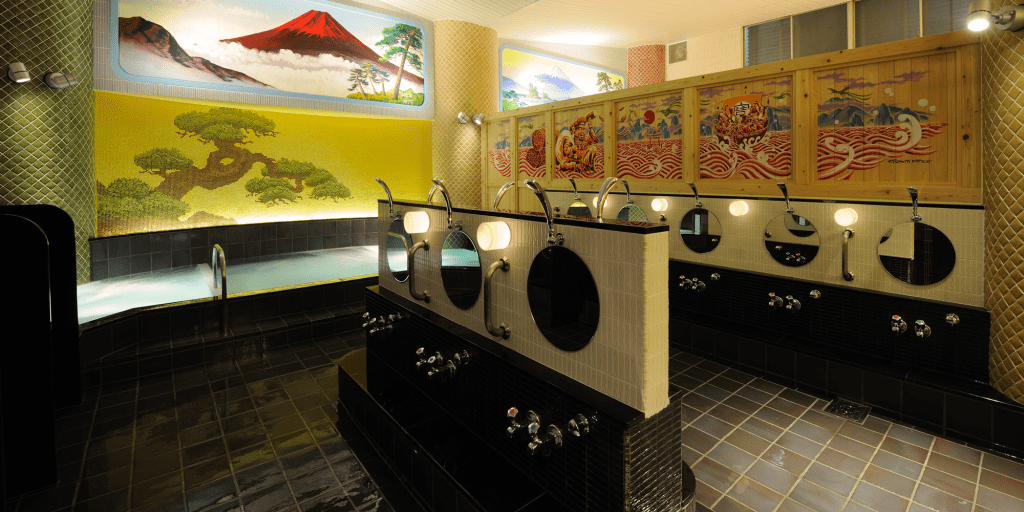
- This is typically done at the sitting showers. Wash the stool before sitting down using the shower head or water bowl in front of the seat. If they aren’t in front of the shower head, they are usually in a stack near the door. Make sure to put your stool back once you are done using if this is the case.
- If they are stacked, do NOT sit on a seat that is out. It means it is currently in use.
- Once you are done showering, wash the seat and return to the stack if needed.
- Sauna Mats
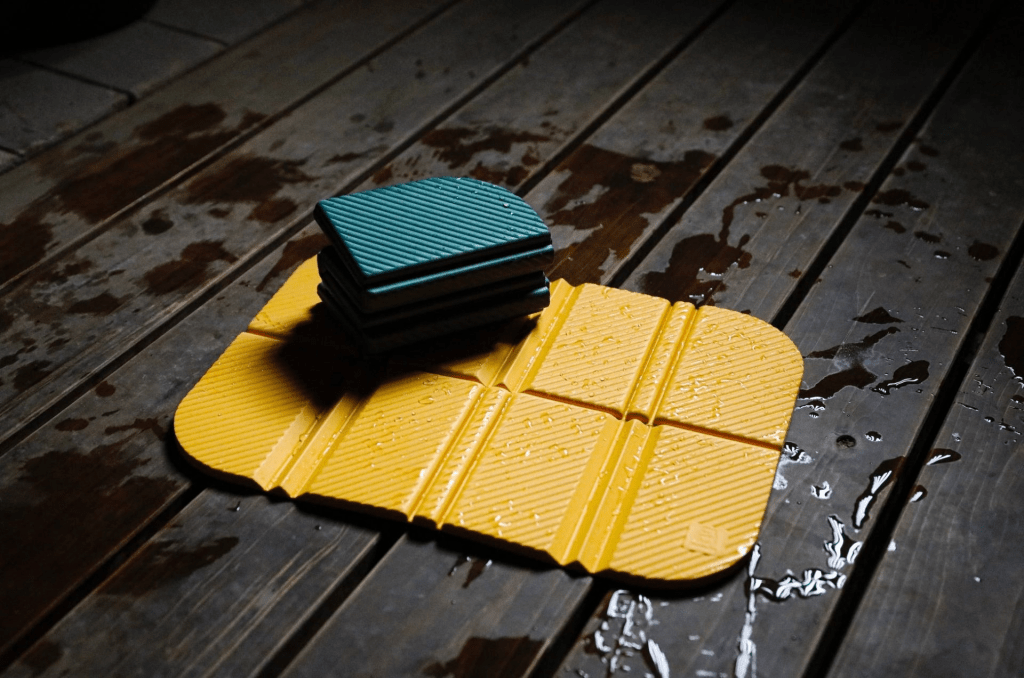
- This initially confused me, as this wasn’t something I had seen elsewhere. Often, you see a stack of protective mats near the sauna. Be sure to wash at a nearby faucet before entering. And especially wash afterwards!
- Often there is a well marked pile for where to drop off. Wash the mat and leave in the bin.
Wrapping Up
- Make sure you are completely dry before leaving the bath area and entering the locker room.
- When checking out hand your key to the front desk (with two hands is most polite).
- Give a slight bow and say thank you (ありがとごさいます!)(Arigato gosaimas).
A note on Tattoos
In Japan, tattoo’s are associated with the yakuza (Japanese mafia). Historically, these were the only people who had tattoos in Japan. Unfortunately for our tattooed readers, this does limit some of your options in Japan (but not as many as you might think!).
However, I have found that
- Japanese staff understand that you are a foreigner. And while you are still obligated to follow the rules, I am yet to see any staff be anything but polite when informed that tattoos are not allowed.
- Many younger/trendier sento (especially in Tokyo) allow tattoos in an effort to draw in a younger crowd. This includes many of the facilities part of the sauna boom that I write about on this site.
- However, this can (sometimes) also mean it is a yakuza friendly place, so please do be mindful about your general surroundings and apply common sense. Japan is an extremely safe country, but crime exists everywhere.
- As is often said in Japan “read the air” (場の空気を読む)
On all of my reviews, I indicate if a place is tattoo friendly or not in he heading, which should make visiting the best facilities around Japan a breeze! You still have plenty of options if you have ink, so if you’re interested in visiting a bath or saunawhile in Japan, don’t think that you are out of luck!
 Sauna Sensei