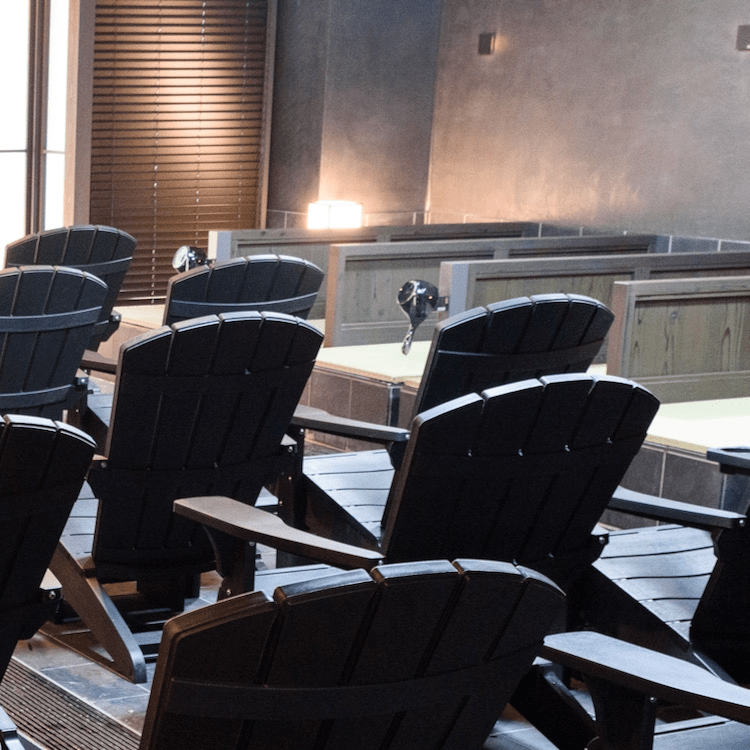
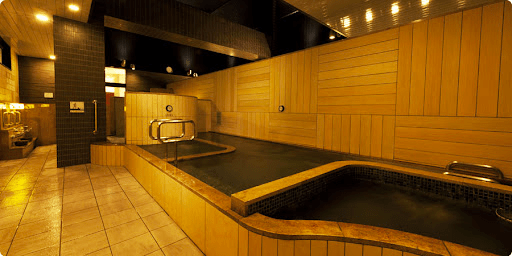
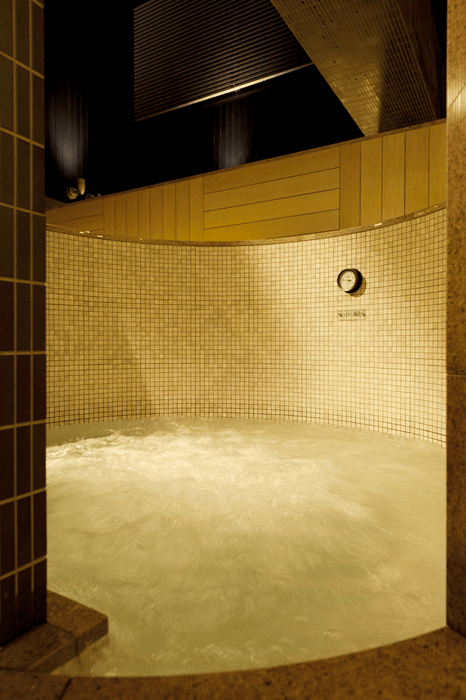
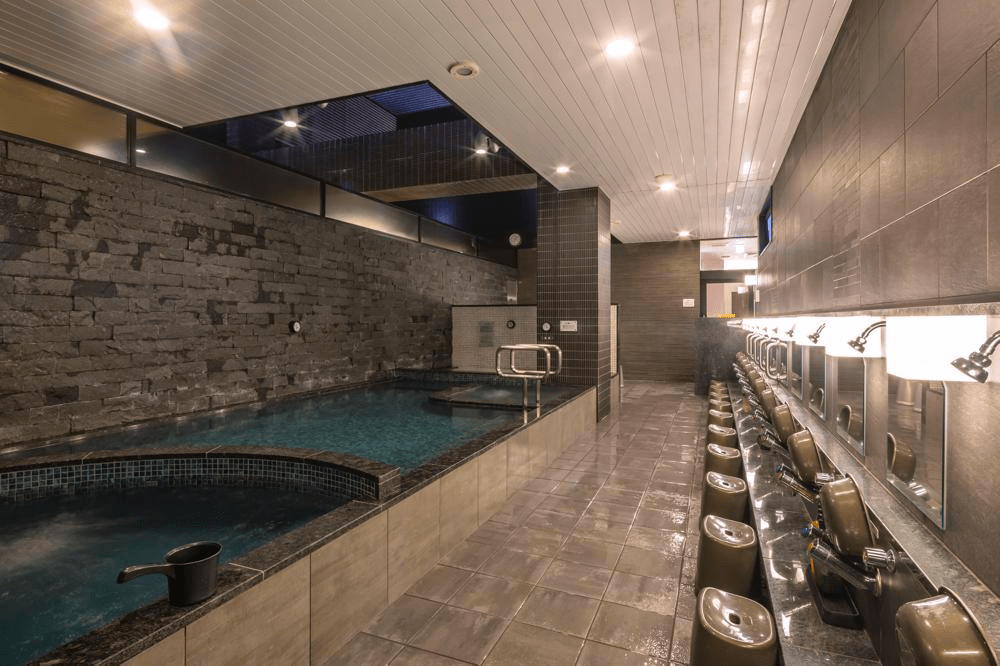
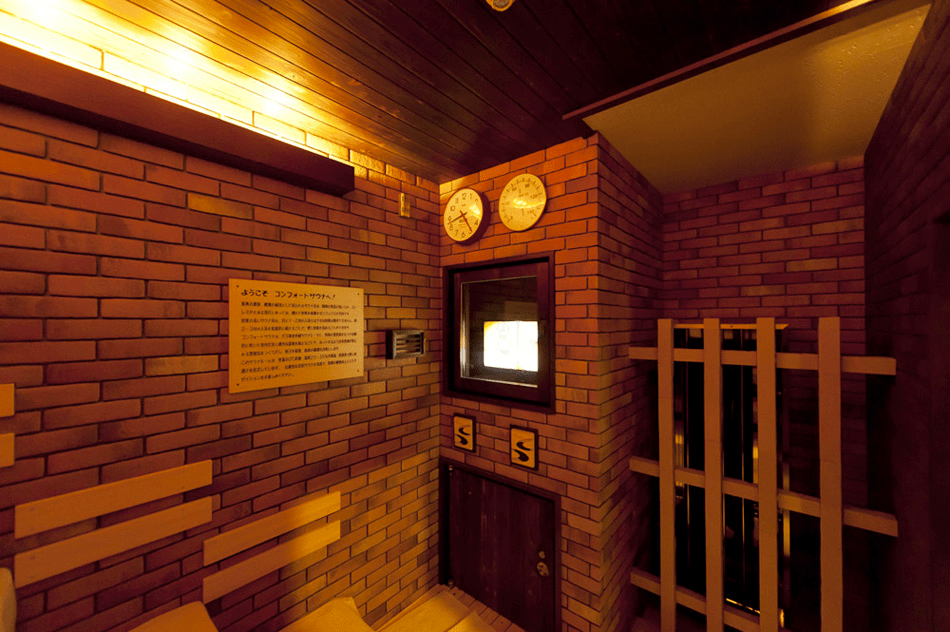
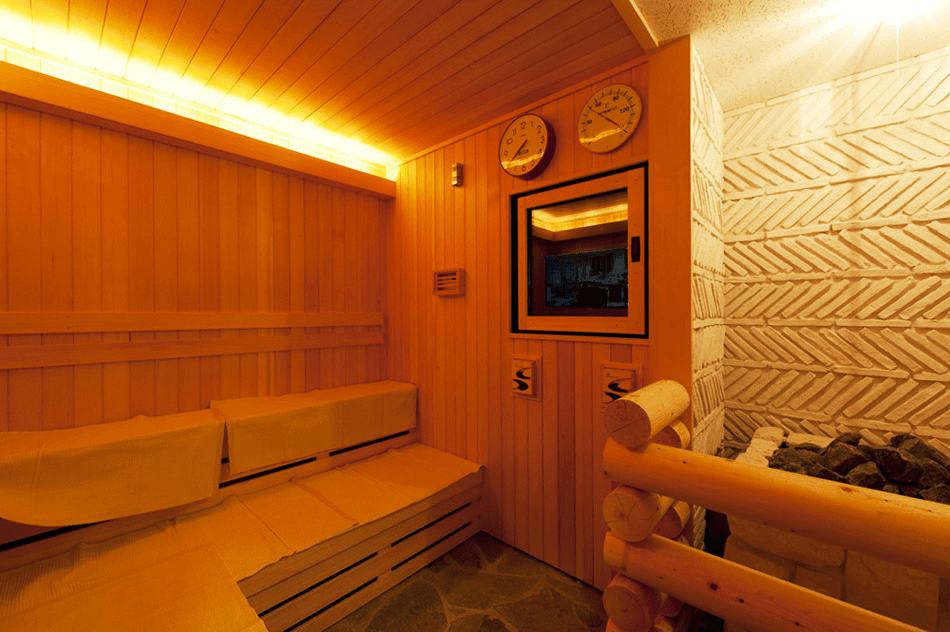
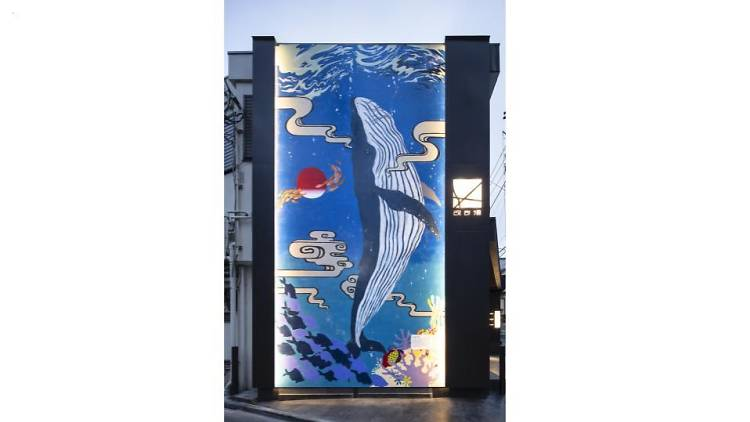
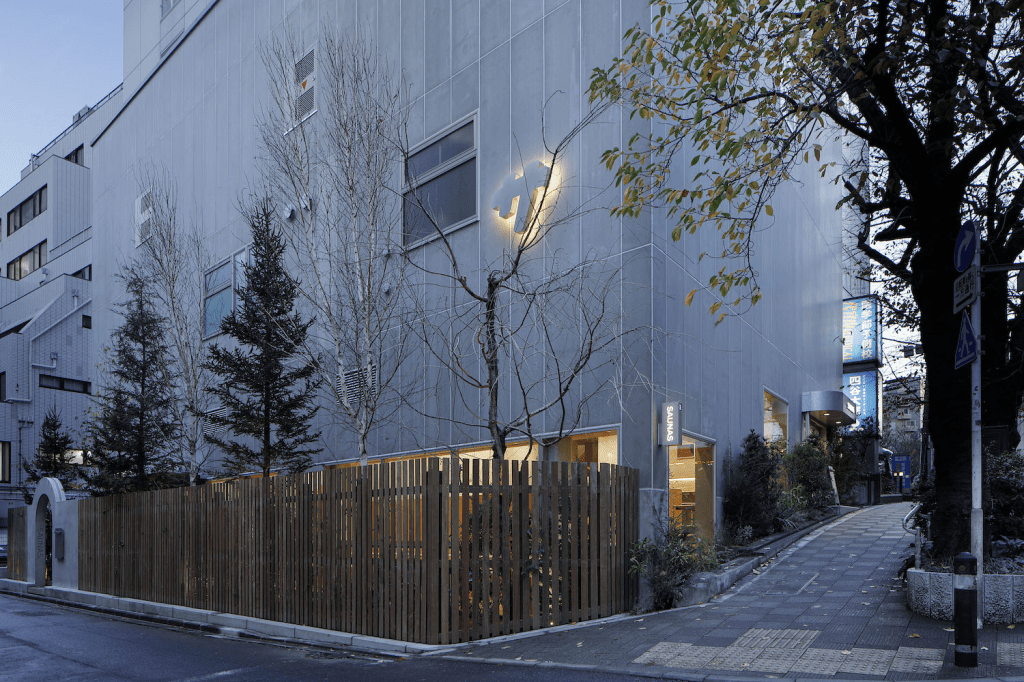
Shibuya Saunas

Innovative. Ground-breaking. Cultural crossing.

Tattoos Okay? Yes
Sauna? Lots!
Price? $$
Should I bring toiletries? No
Best for? Anyone seeking out a premium sauna focused experience. Anyone with tattoos or dietary needs. Sauna junkies.

This review is going to work a bit differently. An aspect of Shibuya Saunas that makes it so special is that it essentially two separate sauna facilities with an overarching style. Each respective side alternates every other day between men and women, giving both genders the chance to experience everything Shibuya Saunas has to offer. For the Pokemon fans reading this, think of this like a release of a new generation of Pokemon games (Fire Red and Leaf Green, Sword and Shield, etc.). While both games have a lot in common, certain Pokemon are only available in one game, so both are required to get the whole experience.

The bulk of the review will walk you through what a session at each of both the WOODS and LAMPI portions of Shibuya Saunas are like.

WOODS

(Contains 3 upstairs saunas, two downstairs)
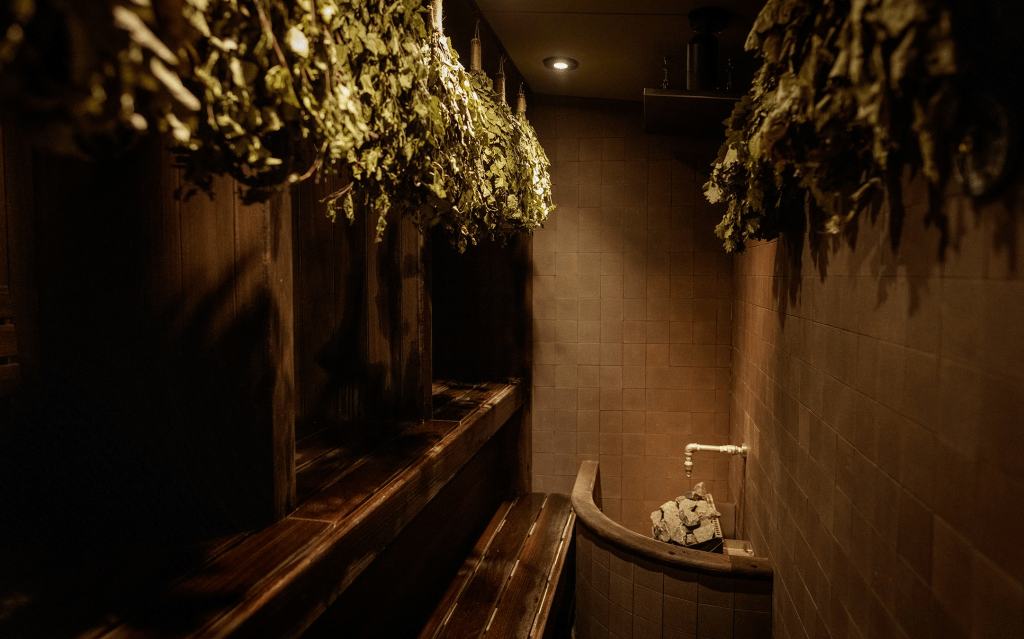
VIHTA SAUNA

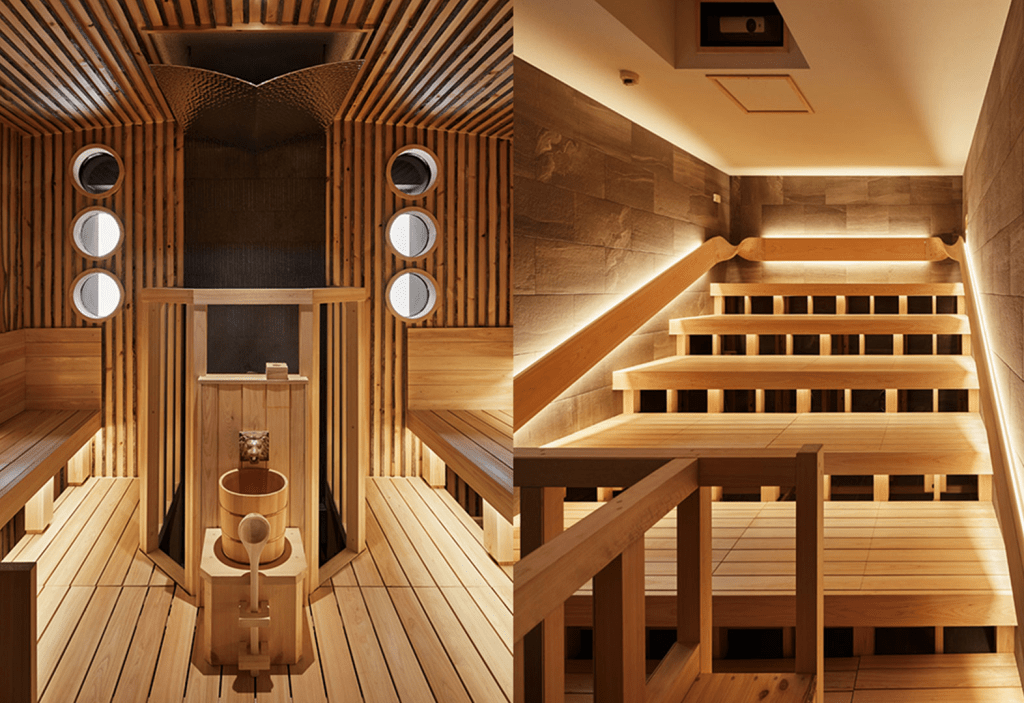
I walk into a dark grey hallway. After showering off the worries of the day, I smell fresh birch leaves and hear birds chirping. Looking to my left, I see a closed off, yet inviting wooden door. I enter the door, only to be greeted by the increasingly audible bird sounds and pleasant scent of birch leaves (Vihta in Finnish). Sitting down, I am transported to the countryside. My worries of the day quickly start to dissolve as the world starts to simplify, both internally and externally. I gradually settle into a steady comfortable sweat until suddenly, I feel the call to slowly transition out.
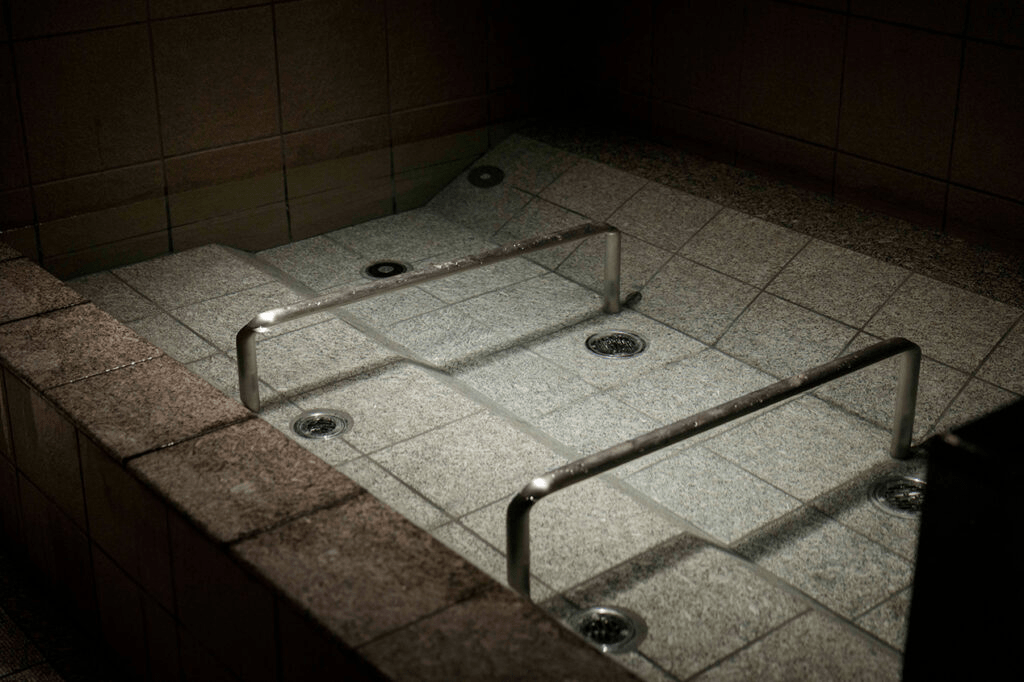
MATALA

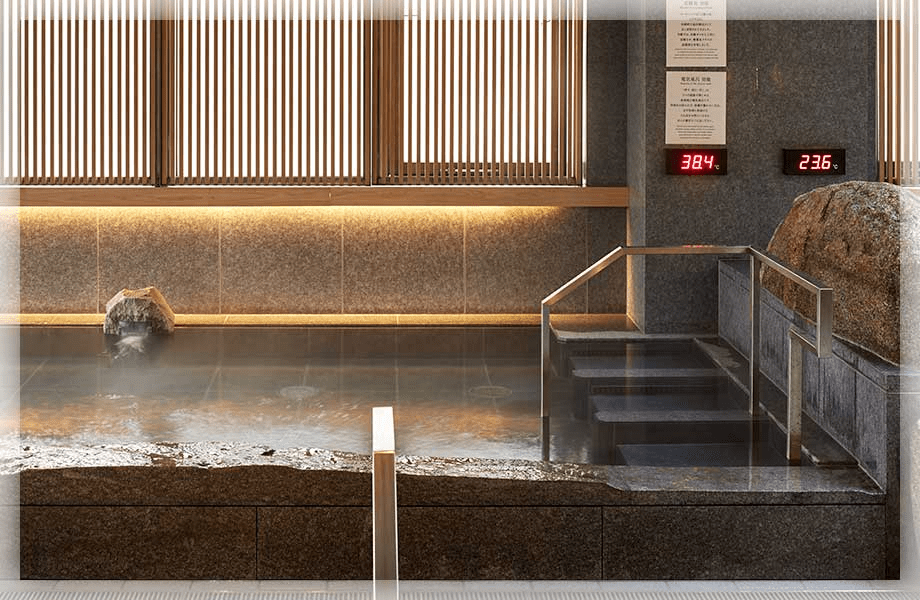
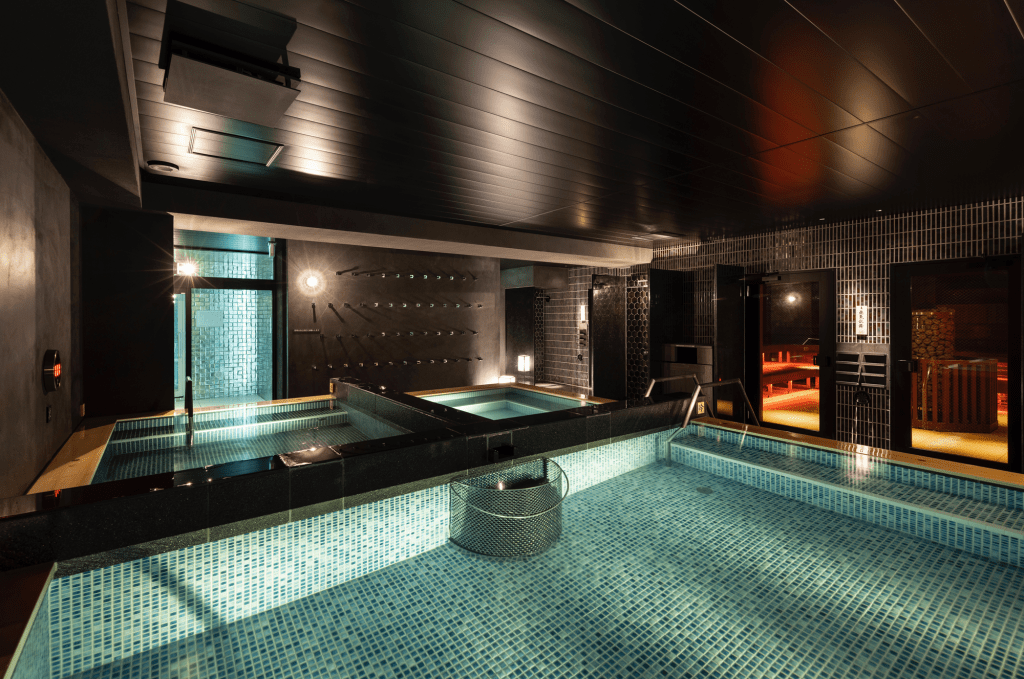
Spotting a nearby body length cold bath, I wash my sweat off and dip in to the bath to cool off. A slight shock, followed by acceptance of the cold, ends with the urge to sit down. Briefly rested and recharged, several unfamiliar faces start entering a large door. Curious, I follow behind and join them.
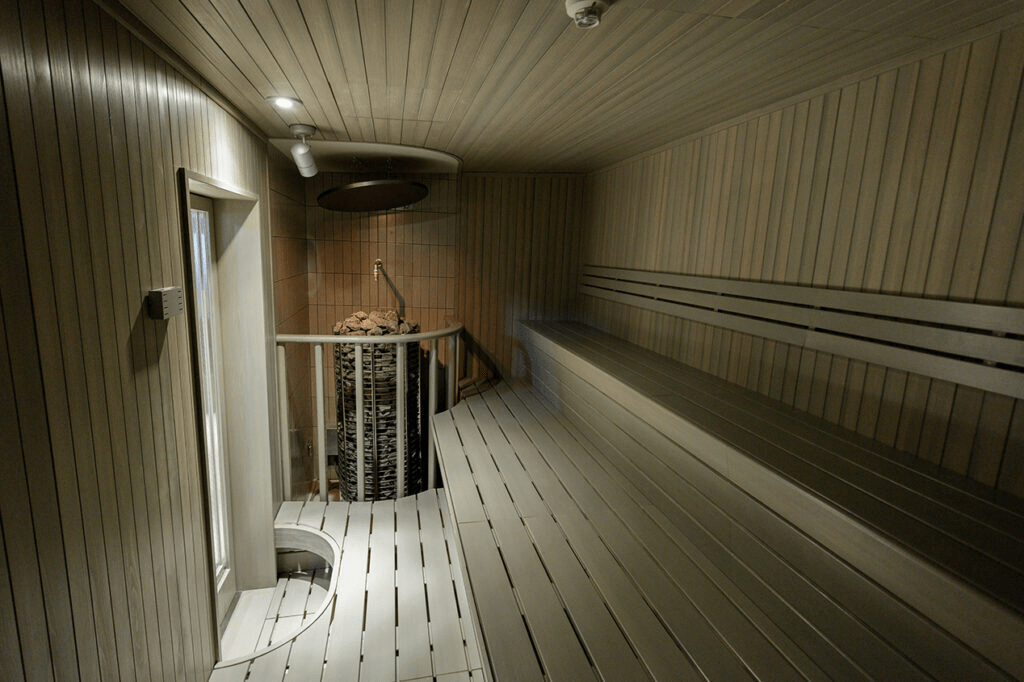
HAARMA SAUNA

Notably more intense than the last sauna, the auto-loyly steadily increases the humidity as needed. More fellow saunners start to trickle in and join me. By the time I am ready to move on, there is a line to enter the neighboring Vihta sauna. Another cold bath trip ensues…

Settling into my sauna routine, I see a lit staircase down the hall. Feeling adventurous, I ascend to see what lies in store.

Lush, serene, and quiet, who would guess that you’re only a number of blocks away the world’s second-largest subway station? Certainly not me…

With three saunas to choose from, I head towards the largest, most inviting of my options.
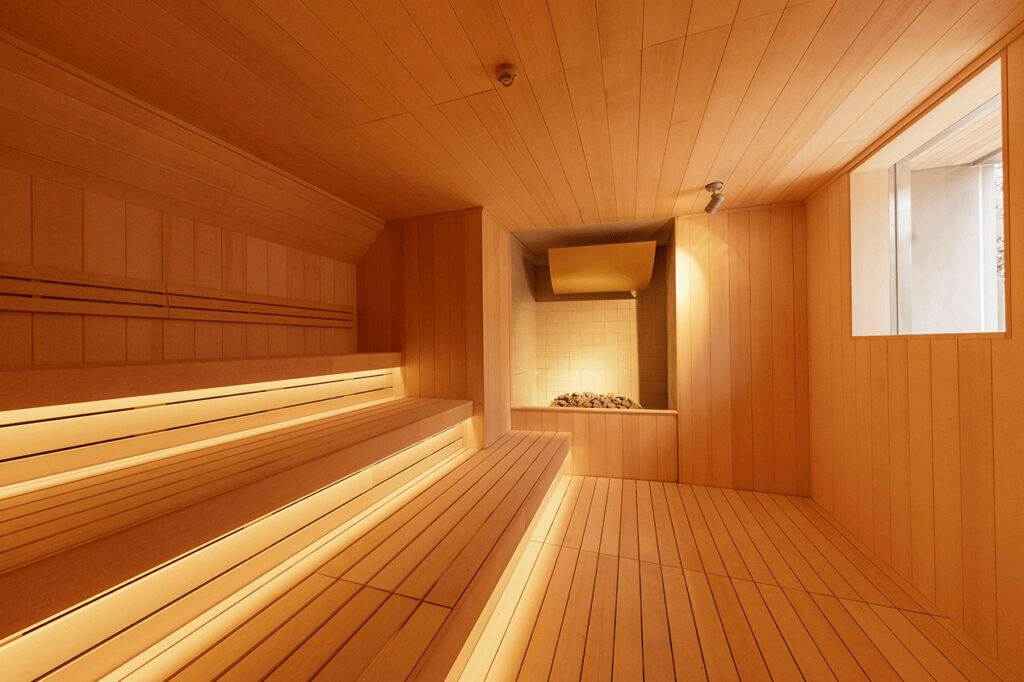
TUULI SAUNA

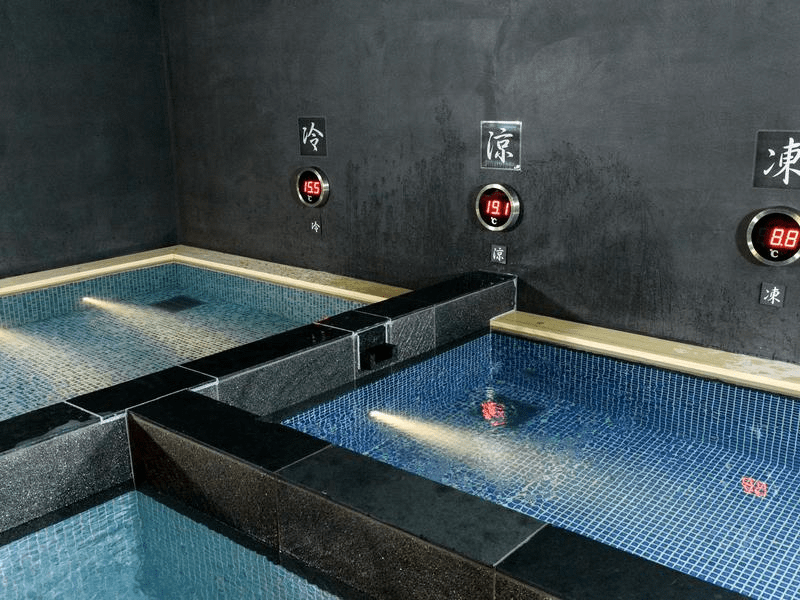
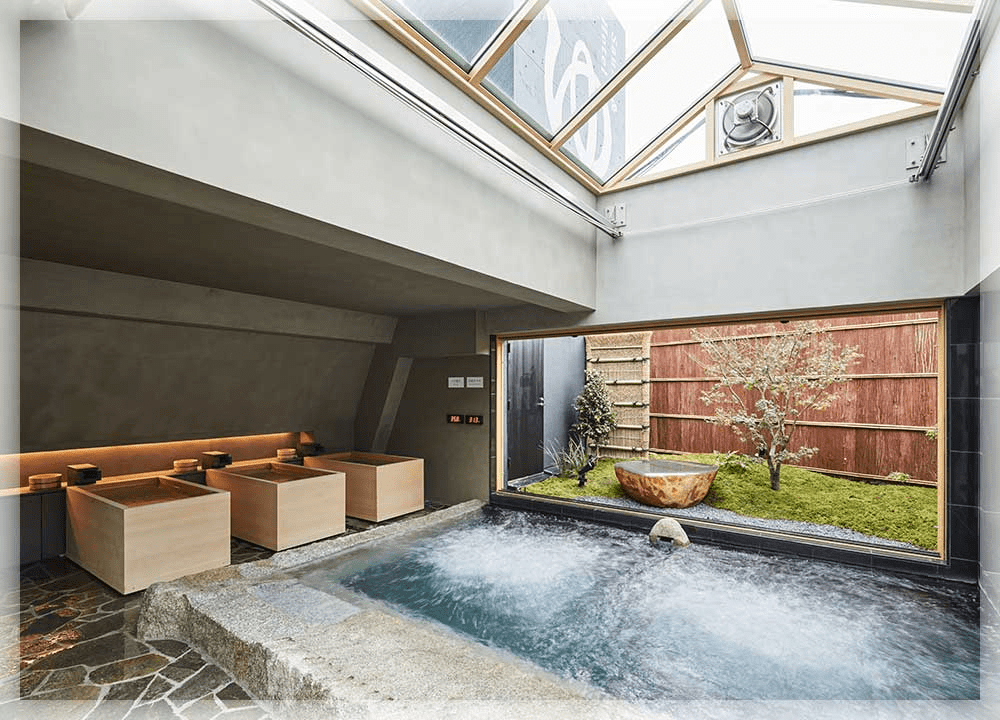
As I enter, I am greeted with a sign indicating the aroma for the day. Diffused in the water used for self-loyly, the room carries a refreshing, yuzu/citrusy* scent that immediately puts you at ease. Looking out the expansive window and into the immaculate outdoor garden, it’s hard not to feel both at peace and overjoyed all at once. Ready for a cool down, I wash off and head for the walk in cold plunge.

*The aroma is switched out daily. I have been lucky enough to enjoy a range of essential oil blends on my visits.
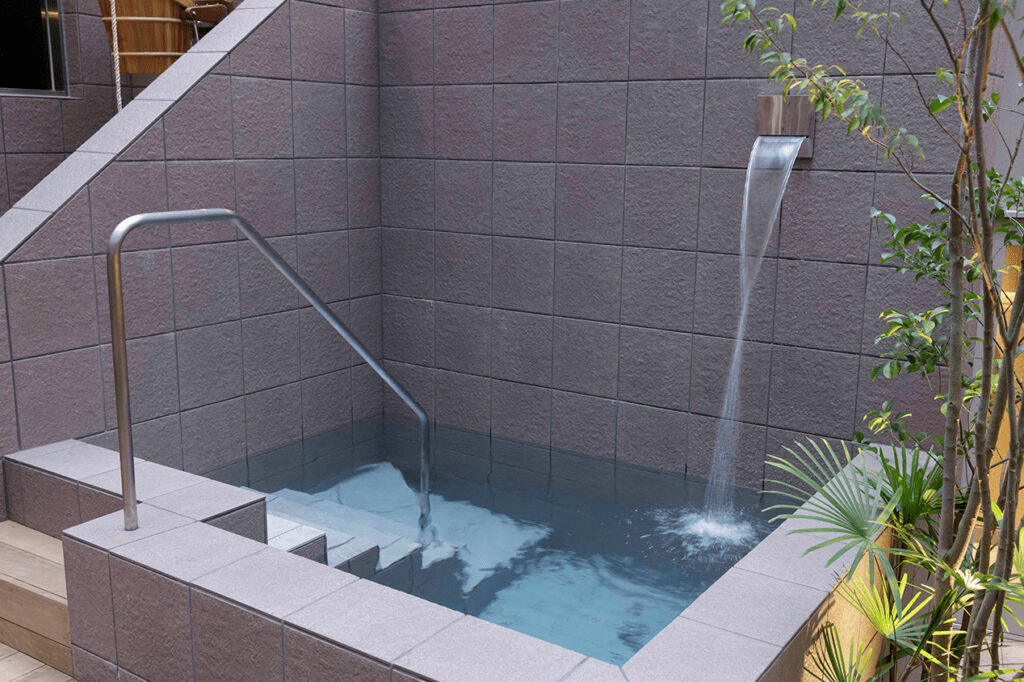
SYVA

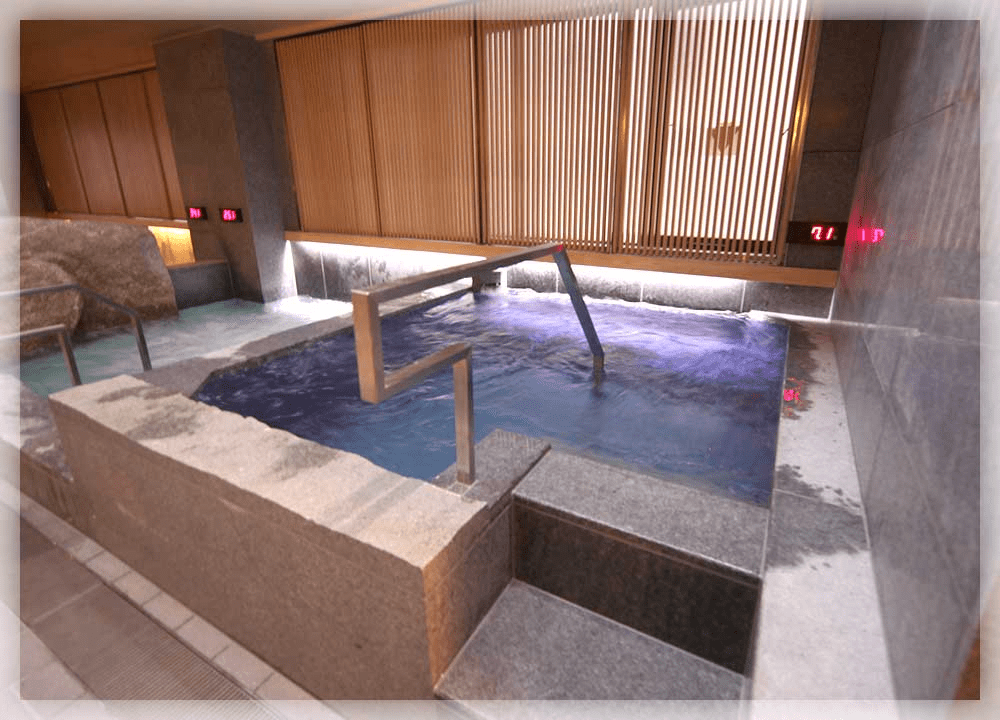
Deep and cold, this sensation makes the downstairs cold bath pale in comparison. I feel icy and relieved all at once, particularly when I stand under the cold waterfall flowing down onto the bath. Nearing the limit of my cold tolerance, I head to one of the ledge benches.

In Japanese cooking, much attention is given to all five senses, or 五感 being satisfied. I can’t help but feel that same attention present in the outdoor garden. Clean, quiet, pleasant smelling, and comfortable, I feel exhilarated and at peace. That’s the paradox of sauna. Peace and excitement. Existing at the same time. A sign of maturation is realizing that two seemingly conflicting feelings can coexist. As helpful as philosophy and introspection has been in coming to this universal truth, perhaps nothing has taught me this more than my time spent at the sauna.

These are the kinds of thoughts that pass through me as time flows by in seemingly an instant. At once, I feel ready to explore my surroundings a bit more. Eager to try the Kelo sauna, now without a line, I cram into the four seat, hut-style sauna.
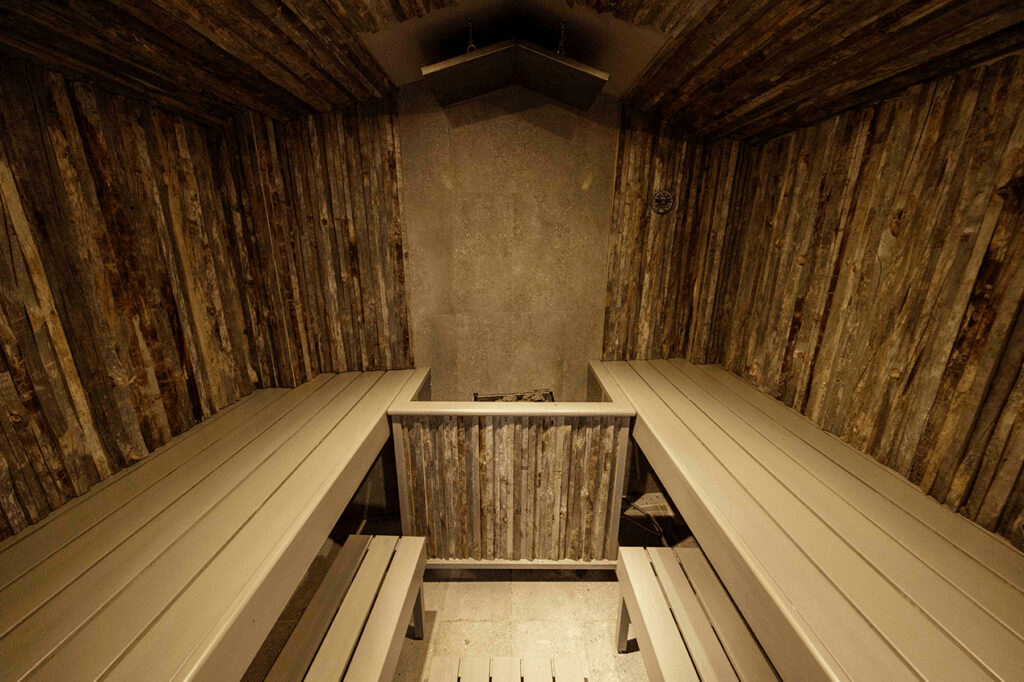
KELO SAUNA

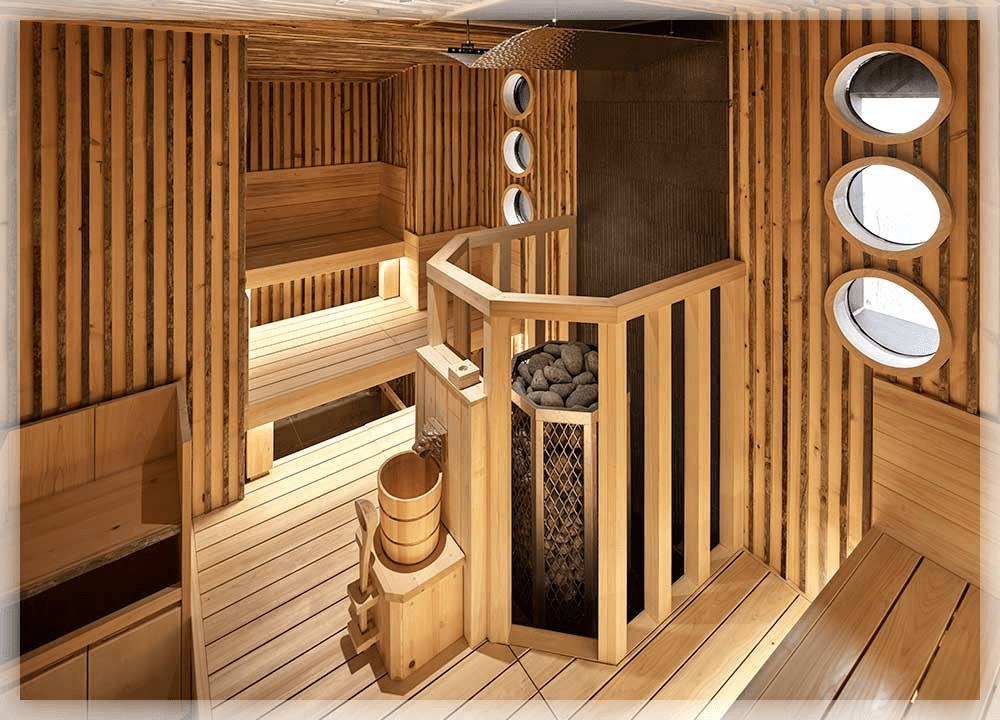
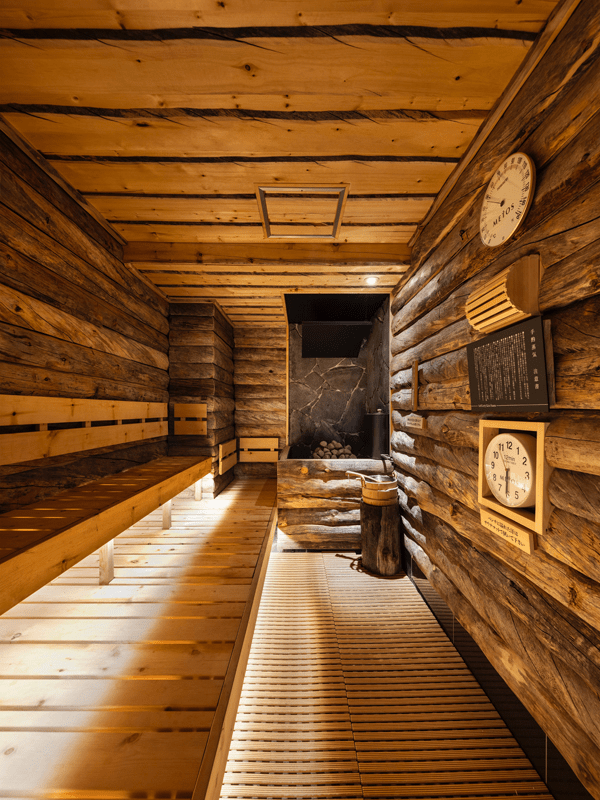
Set at a lower heat and with fewer seats, this Kelo sauna gives a more intimate feeling than the expansive, grand nature of the TUULI sauna. Just me and three other individuals enjoying the slow yet inevitable heat that increases over time. Across the bench, a fellow saunner looks around the room to seek approval to add more water to the rocks. We all nod in agreement. While the heat will inevitably increase, it is the added humidity that comes right away, along with the wonderful, calming sound that only comes from loyly. I feel comforted by both the easy heat and the soothing scent of the Kelo wood, safe even. A few faces come and go in the Kelo sauna until I feel the call to leave. Earning a steady sweat overtime, my body carries a rewarding kind of exhaustion without feeling attacked by the heat, as a lesser sauna can unfortunately do.

After an invigorating cold plunge, I spot a corner of the room with one last sauna to try.

TEETA SAUNA

After crawling into what feels like a door from the Shire, I walk up the steps to enter the TEETA sauna. The room feels worn in, in a comfortable sort of way. The self-loyly set up further contributes to a DIY vibe. The room transports me to a cabin on a nice day, an escape with nothing but you, perhaps a few friends or family members, and nature. Unpretentious and no-nonsense, the TEETA sauna delivers a high heat that snuck up on me. Before I knew it, the sun seemed to be setting on me. The day slipping away as thoughts pass me by, like the beads of sweat that suddenly drip down from everywhere on my body. With limited stamina, I decide to depart.
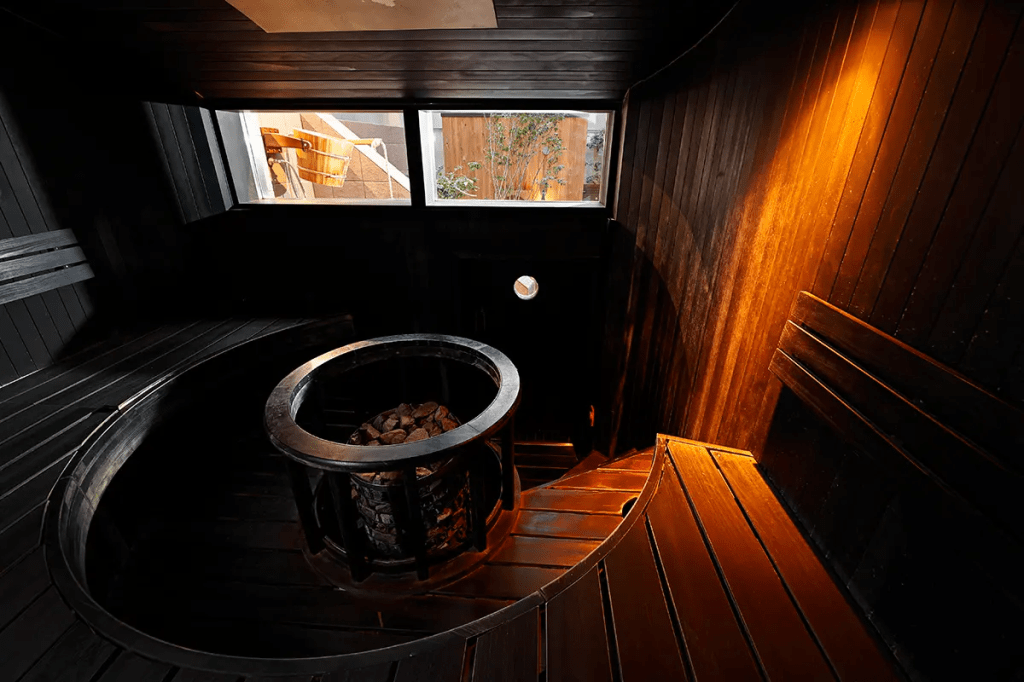
Emerging out of the hobbit door, the day has passed me by, and the outdoor garden has revealed a new face. Beautifully lit, the atmosphere, or 雰囲気, completely changes. Awe-struck, I rush into the cold plunge and take it all in. The endorphins. The rush. The greenery. The pause of my thoughts as I slip into a oneness with the moment. My legs carry my conscious mind to the closest bench. I am one with the moment. This is totonou….
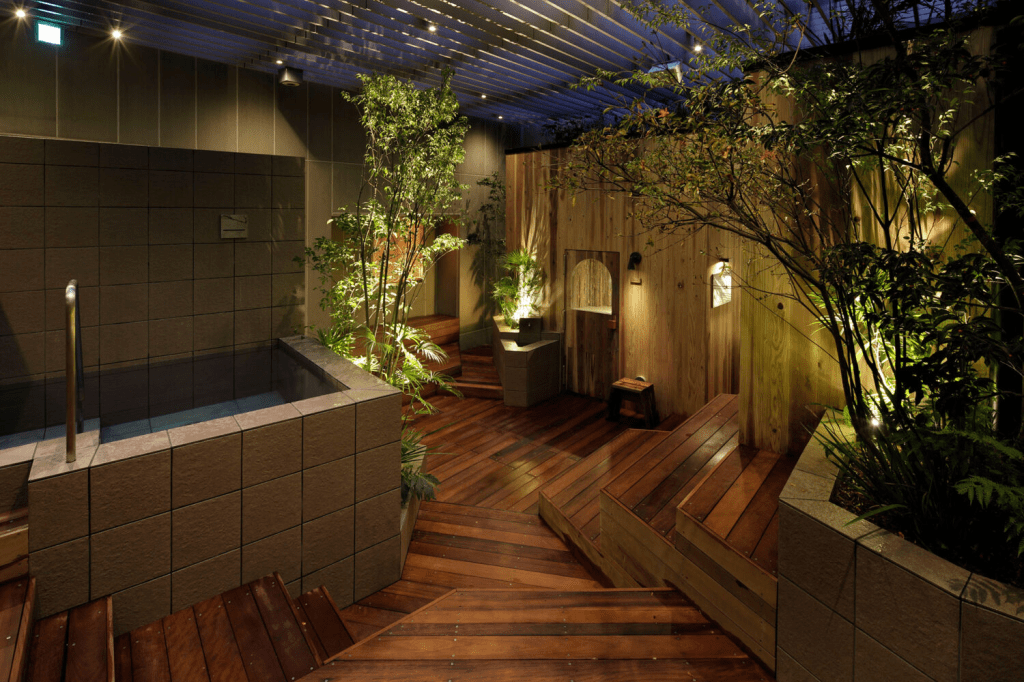
My time to depart has come. I descend down the stairs from which I came to rinse off, and return to reality. Away from the WOODS, away from the sauna.

For now…

LAMPI

(Contains 2 upstairs, 2 downstairs sauna) [translates to “Pond” from Finnish]

Choosing to start my day with a sauna, I find myself in a naturally lit, grey hallway. With several potential routes to chose from, the bright wood door with only a small window beckons to me the most.
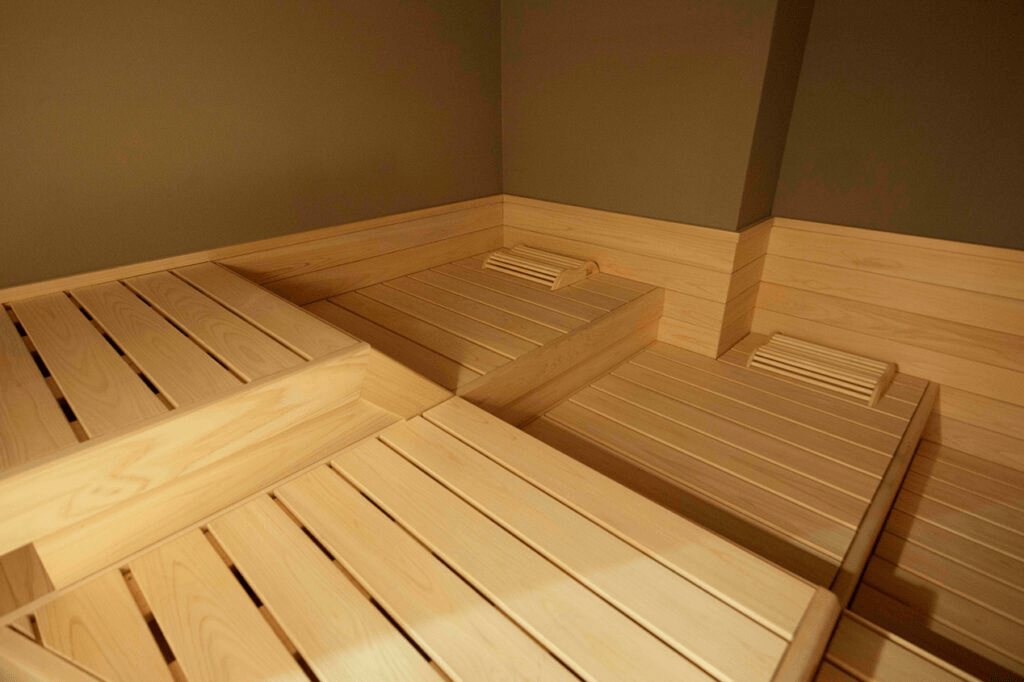
BED SAUNA

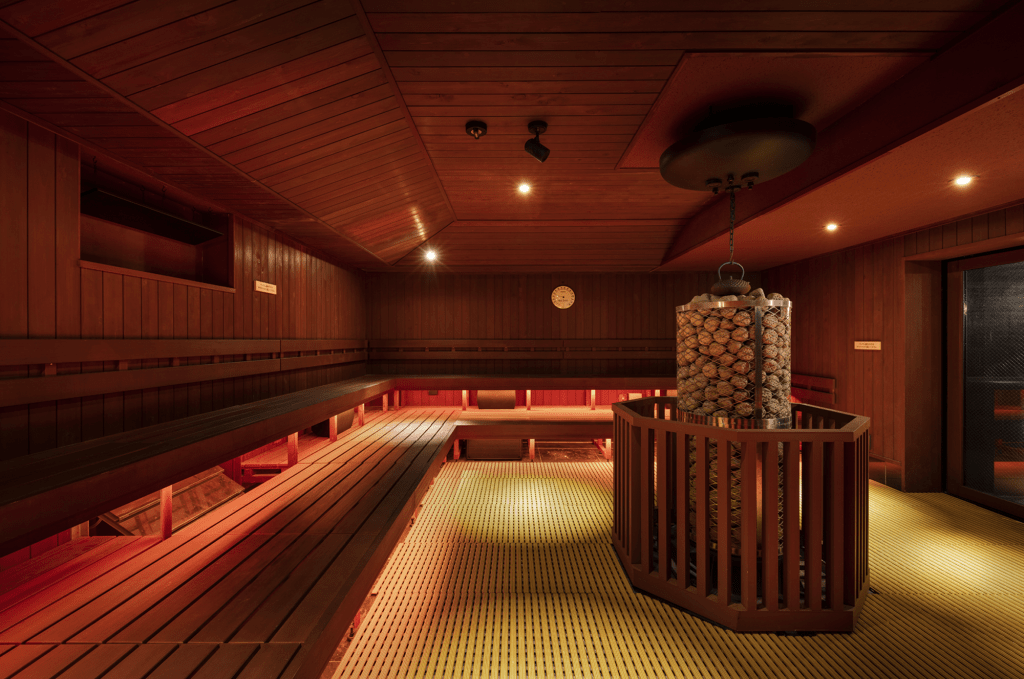
After crawling up to the wooden beds, the cozy setup along with the intensity heat get me to ease into this ingenious sauna in no time at all. The warm temperature seems to tuck me in like a warm blanket on a cold day. I can’t imagine ever wanting to leave. Comfortable, safe, and warm, the day is off to a great start. Outside of the two strangers beside me, I feel siphoned off from the rest of the world, but like I could hop back in at any moment I want. I decide not to for another ten minutes…. as long as my body can take. Afterwards, I feel the call to explore, and take on the rest of the LAMPI.

Bot not before a trip into the body length cold bath (just like the one found in the WOODS)…

Across the hall lies a larger, more inviting door with what seems to be a room with a grey interior.
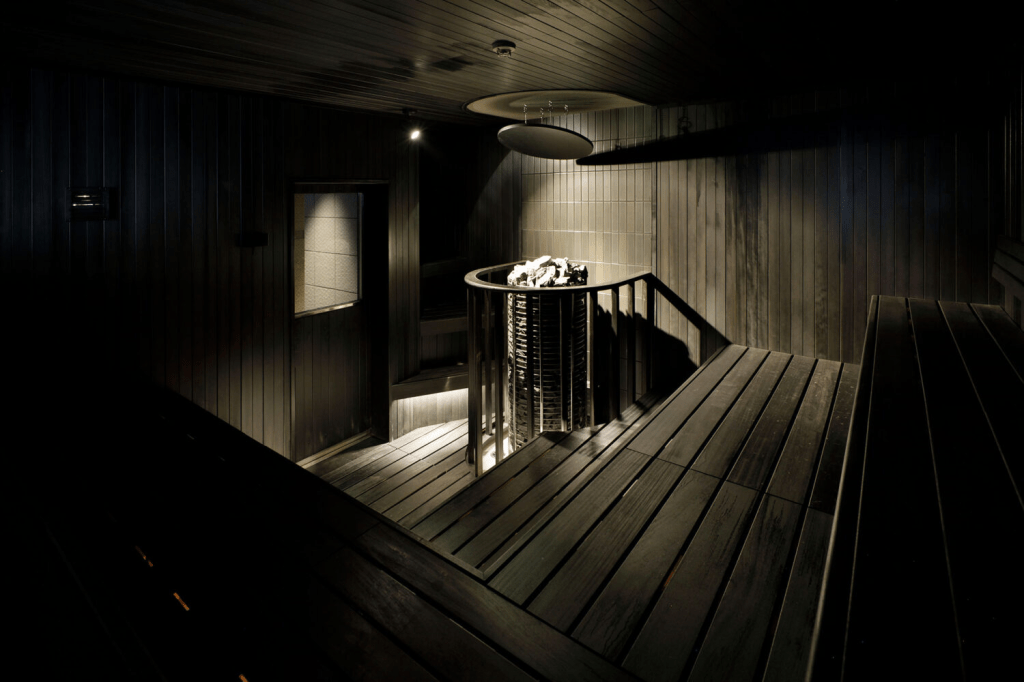
MUSTA SAUNA

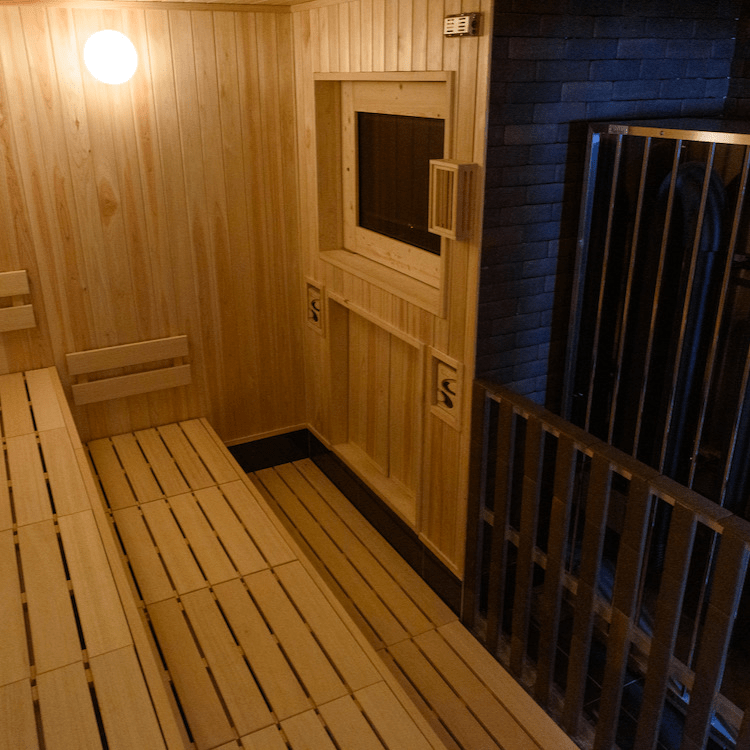
With a window running along the top bench, the MUSTA Sauna already gives a more inviting presence than the cozy bed sauna. The expansive yet inviting grey wood seating gives the room an accommodating feeling. I take the invitation to (after seeking consensus from the room) pour some water on the rocks. Self loyly: the ultimate invitation. While it’s noticeably a bit hotter than the bed sauna, the heat is welcome and un-abrasive. My pores already opened up from the bed sauna, I can lean into the heat a bit more. I can feel myself waking up, especially after my first cold plunge earlier. The time comes for another one.
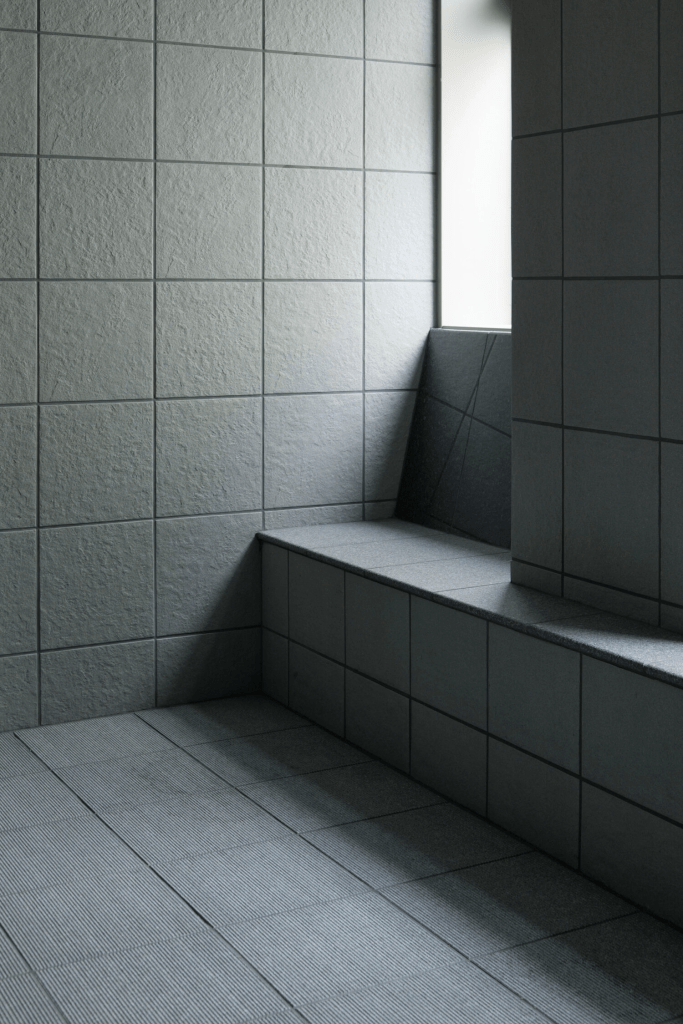
After a slightly longer dip in the cold bath, I take a seat and sip on some herbal water. Restorative, it aids my search for inner peace staring at the tinted window, glowing white. After a repose, I feel energized. Time to go upstairs.
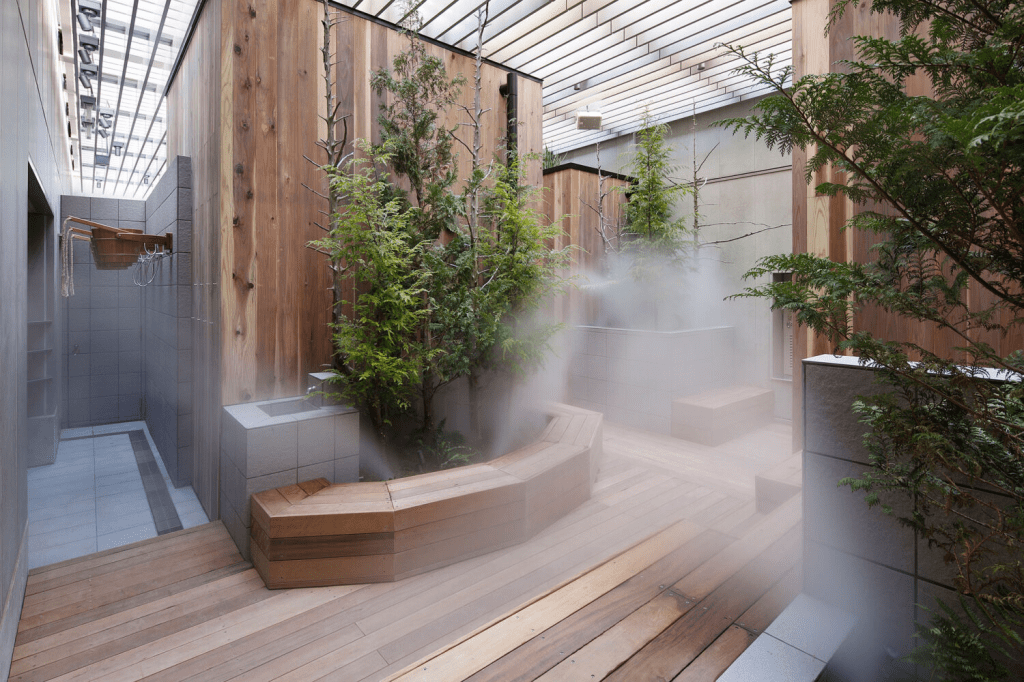
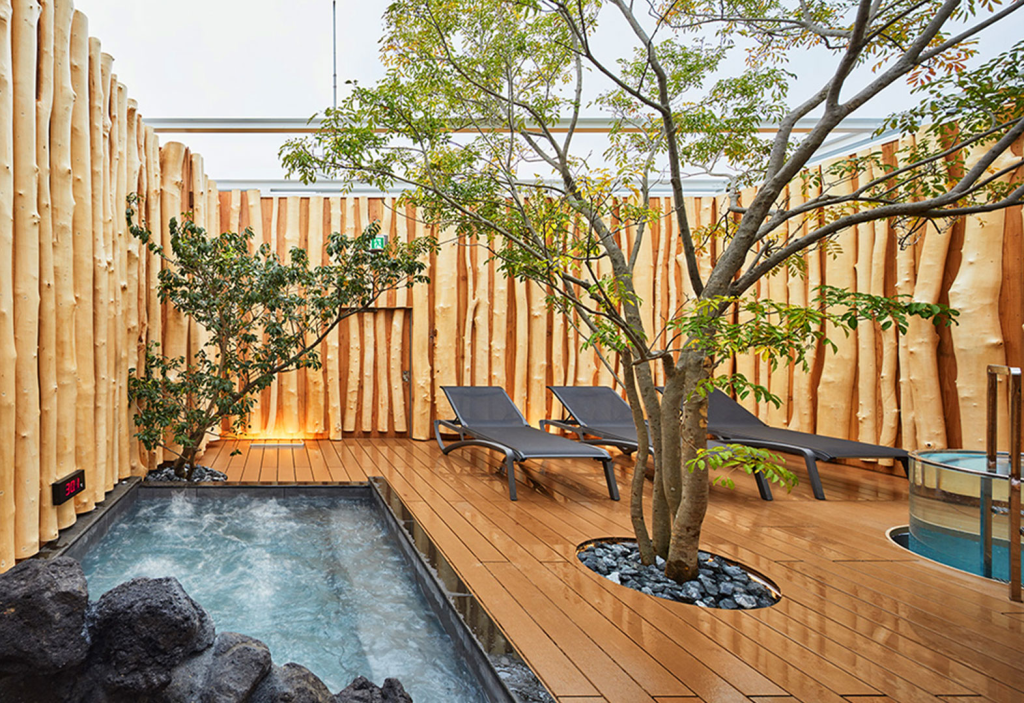
Plants, mist, water. Like a forest on a dew-filled morning, mist ushers out underneath the numerous trees on the crisp rooftop deck. Awe-struck, I stand and soak in the view. Distracted, I almost forgot why I came upstairs in the first place: to sauna.

An inviting sign advertises the essential oils in the loyly water: yuzu. Enticed, I follow the sign into the sauna.
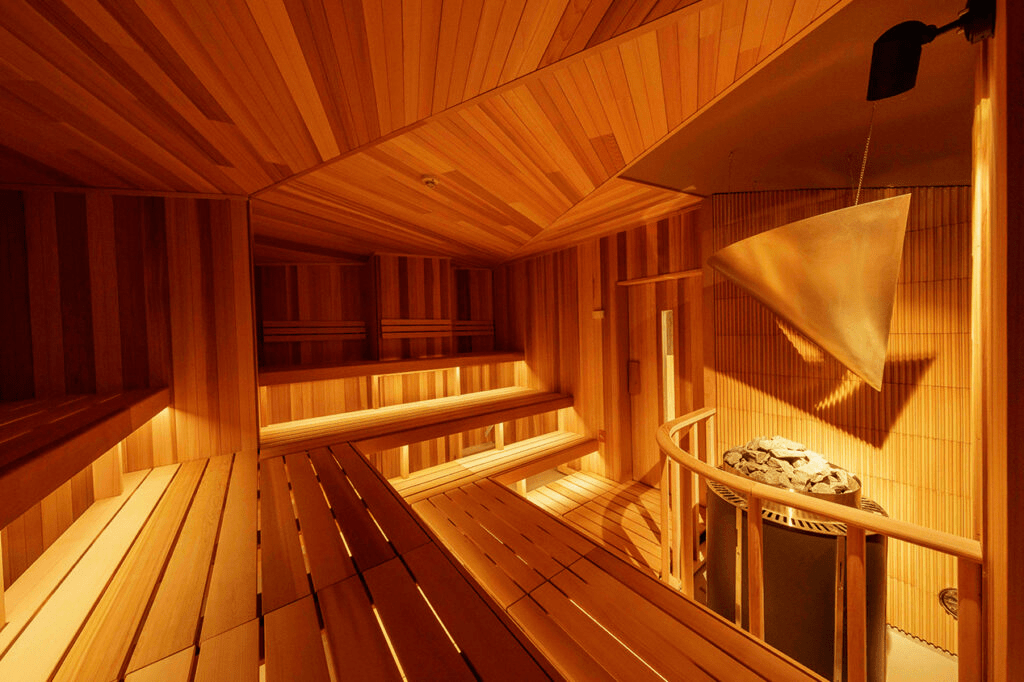
SOUND SAUNA

A wall of sound hits me upon entry- my gaze quickly turns towards the source of the sound. A spherical floating triangle is at the corner of the room, commanding presence throughout the sauna. The ethereal sounds make me feel like I’m in a science fiction movie (albiet, one with a scene inexplicably taking place in a sauna). The essential oil-infused self loyly set up add more sensory immersion to the experience. Through the window facing the garden, I can see the mist accumulating, slowly hiding the base of the surrounding plants. Once again, I get the sense that while I logically know I am only a matter of blocks from Shibuya Station, I couldn’t feel further from it.

At my heat limit, I head outside. I cut through the mist and venture to the walk-in cold plunge. Even on my third sauna round, the cold comes as a shock. The sheer depth of the cold plunge pool puts it on a different level than its counterpart downstairs. I finally start to settle into the cold. The initial shock is gone, and I feel relief from the heat. Suspended above the rooftop deck, I take in the beauty of my surrounding plants, mist, and wood; all while in an elevated cold-induced trance. This now transitions from a trance to the base instinct to exit, before the cold starts to become frigid once again.

Taking a minute, I grab a seat on the bench and close my eyes. Although I am in the heart of Shibuya, I feel at one with nature. A much needed break in the early part of my day. It’s easy to forget how much the worries of life can burden your mind over time. Especially if you don’t take time to tend to them and breathe. When you start to accept this, it can initially be stressful, even scary at times. But with time, checking in with yourself makes the journey that much easier. More peaceful. More steady. That’s what my time in the sauna provides me with- a chance to go into my body, and check in with myself. Those are some thoughts that pass through my head anyway…

KELO SAUNA

I have one more sauna to explore. Right across from the Sound Sauna, the Kelo sauna rears its head. Familiar from my walk in the WOODS, its value remains undiminished on a return trip. Its timeless, steady and low heat, aided by the self-loyly puts me at ease. This Kelo sauna is a great balance to the energy-giving sound sauna, serving as an energetic cooldown to the session. I feel safe and happy. The camaraderie of three random strangers bonded over a high quality heat and silence. As the comfort reaches its end and turns into overheating, I find my way to the door.
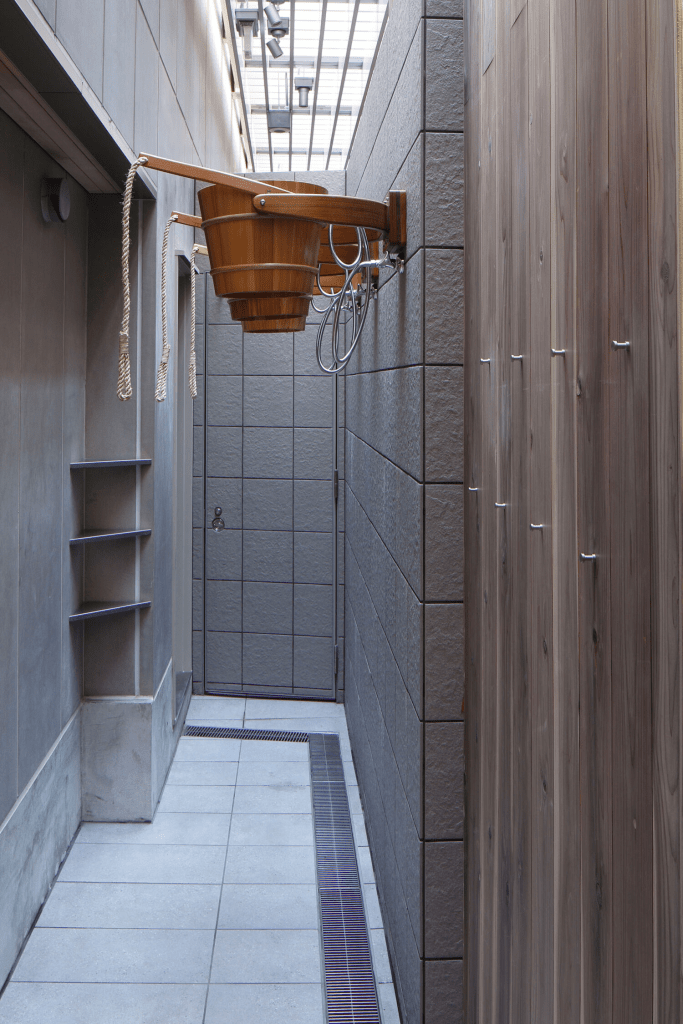
I poke my head around the corner and spot a bucket with a lever. Pulling it summons a powerful splash of cold water to the top of my head. Like a layer of primer on a painted wall, the cold splash is like a cold dip priming me for the more intense plunge to come.I feel less caught off guard by the cold this round. It only serves as relief…

I take a moment to sit down for one last time. Taking a good, long look at the misted plants on the rooftop deck. The serenity of the moment. The peace and good feelings that come from a quality sauna session. The feeling is shortly followed by the nudge of “it’s time”. I take one last look before I head down the stairs, and return to the ordered chaos of Shibuya station…

Shortcomings:

Two and a half hours is a bit short on the time limit. However, this only applies on the men’s side, as the women’s is three hours. Additionally, you can pay for extra time at a reasonable rate, so it’s not a huge deal.

Best Moment:

WOODS
Going into the Vhita sauna for a last session before checking out gives a sense of peace and relaxation. It’s hard to walk out of and feel anything but absolutely refreshed and content with the world.
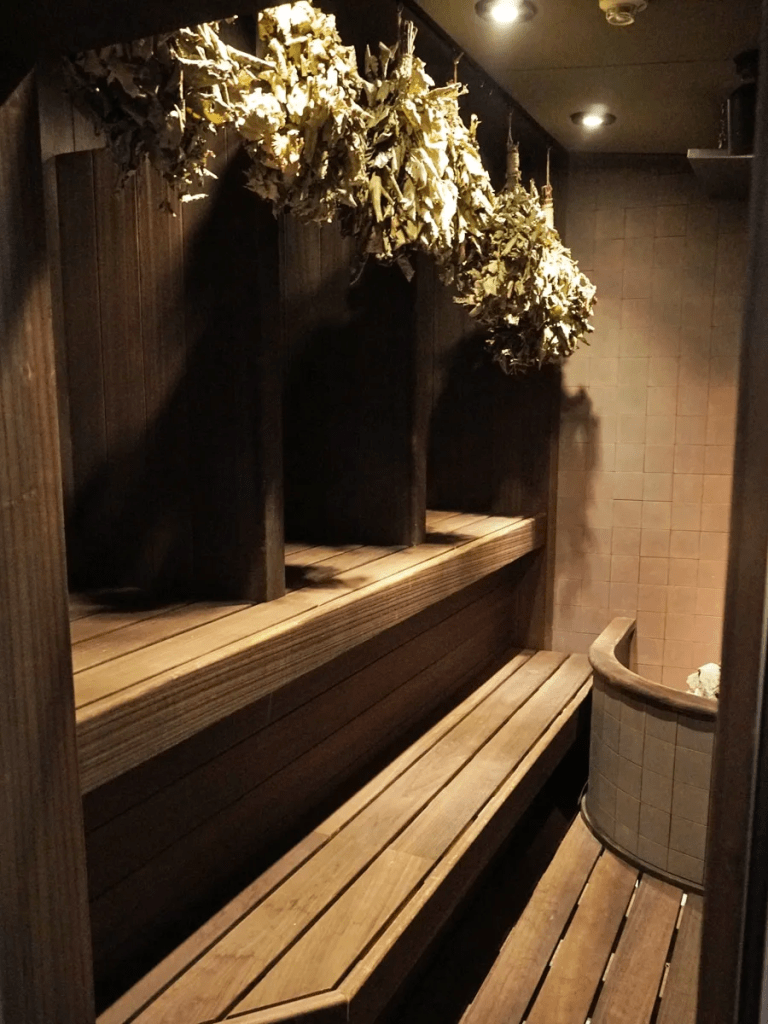
LAMPI
Really hard choice. I’ll narrowly give it to the bed sauna on originality. Set at a perfect temperature to settle into the heat and walk out with a satisfying layer of sweat. That said, the sound sauna comes very close….

Overall
The rooftop garden on both sides never ceases to amaze me.

Just narrowly missing out in the LAMPI section is the incredible Sound Sauna upstairs, complemented by the plants regularly covered in mist every 10-15 minute that you can see through the sauna window.

Bonus Note:
The staff here is exceptionally kind! The bar is high for customer service in Japan, but every time I have been here, every team member has been exceptionally helpful and friendly (and patient with my Japanese). Please return the favor and be a good customer. The staff and team here puts a ton of effort into making this place as great as it is, so remember to be a considerate guest!

Conclusion

Shibuya Saunas is an absolute joy to visit. The two sides is a novel idea that gives the venue ample reason to revisit. This currently sits as one of my top sauna recommendations in all of Japan. Not only is it incredible, but also accessible for first time visitors to Japan.

I can’t recommend it highly enough. If you want to try Japanese sauna, if you are looking for a tattoo-friendly venue, or are even just looking to unwind while sightseeing in Shibuya/West Tokyo, give Shibuya Saunas a visit.
Food Pairing:

In-House Restaurant

This has actually been on my list every time I have been here, but I still haven’t made it in (it’s either been busy with a long wait, or I have had plans afterwards). With a Michelin-star chef at the helm of the all-vegan kitchen, I (although not a vegan) am eager to try the cafe!

I plan to update this with a first hand account next time I am in, but the reviews are good for the in-house dining option!

Shibuya Station

Shibuya Saunas is located just a few minute walk from the world’s second largest subway station, Shibuya Station. The famous “Shibuya Scramble” needs no explanation. Nearby, there are so many restaurants, I would recommend walking around until something catches your eye! There is something here for every budget and flavor palette.
Sauna and Hotel Karumaru

Refined. Modern. Balanced.

Tattoos Okay? No
Sauna? Yes
Price? $$$
Should I bring toiletries? No
Best For? Those looking for an equal balance of high quality baths and sauna. Anyone looking for a capsule hotel destination with a complimentary sauna experience to match.

Nearest Station: Ikebukuro Station. 3 minute walk.

Advertised as one the Kanto region’s largest sauna facilities, Karumaru has been a player on the Tokyo sauna scene for quite some time. Anyone who has been will see why it has made such a name for itself. Featuring a modern yet classic aesthetic, a great balance of baths and sauna, and amenities to match, Sauna and Hotel Karumaru is a sauna destination worth visiting. Let’s dig into what makes it stand out!

Aesthetics

Located on several high-level floors of a multi-story building near Ikebukuro station, Sauna Karumaru cultivates an oasis-like environment in an otherwise exciting and chaotic part of Tokyo.

When I think of this facility, its natural stone and wood tones are what come to mind. Maintaining a light wood motif throughout, Sauna Karumaru forces you to forget you are in urban Tokyo, and relax into your natural surroundings. From the bright wood tones in the lobby, to the calm rooftop garden hidden in the center of Ikebukuro, Sauna Karumaru puts bathers at ease from start to finish.

The venue’s overall aesthetic is enhanced by the attention to detail to non-visual senses as well, specifically smell and touch. In particular, I think of the herb selection in the steam sauna, and the use of real wood in the wood-burning sauna. Additionally, the meticulous attention to detail used to craft each of the sauna (more on that in the facilities section of this review) give each and every bath/sauna a unique sensation, not duplicated anywhere else in the facility.

As you ascend up Sauna Karumaru, the amount of greenery gradually increases, a subtle detail I appreciated. From the lack of plants in the lobby, you start to see some loose birch branches in the resting areas, then towards the top floor, you can spot a small bonsai tree, leading to the outdoor rooftop with full trees at the center of the roof. The gradual addition of plants subtly lures you into relaxing and unwinding as you retreat from the city and into the depths of the facility.

Culture/vibe

Sauna Karumaru secured a second place Saunachelin spot back in 2020, as well as a third place spot in 2021. As both an early and well recognized player in the Japanese sauna boom, Sauna Karumaru is well renowned for its variety of sauna, conscious aesthetic choices, and attention to detail. Taking a closer look, there is more going on behind the scenes that makes Sauna Karumaru standout.

Beyond being a business, two concepts are the driving force of everything that happens at Sauna Karumaru: “Human Return” (人間回帰) and “My Place” (自分の居場所). On Karumaru’s “Concept” page, “Human Return is described as:

Nature has the power to bring people back to normal.
Therefore, when people are tired, they desire nature.
However, nature is far away.
So, Karumaru is a place where people can feel nature and return to their normal selves while still being in the city.
That is one of the concepts of Karumaru.

Something I really appreciate about the description is how it emphasizes the value of nature without needing to devalue urban life. As someone who loves cities and values the urban experience, I often see a dualistic “cities are bad/nature is good” at the core of arguments to convince people to spend more time in nature. Both are absolutely important, and I appreciate the balance emphasized here. I also, as someone who loves cities, do not spend nearly enough time out in nature. Whenever I make the time to spend time in nature, removed from the constant noise of the modern world (spare a friend or two that I brought along for the ride), I always come back refreshed and recharged to better appreciate the exciting pace of my urban life.

Living in Tokyo, I have come to appreciate how the city so effectively maintains a balance between bustling urban spaces and dedicated parks, temples, and even sauna that reintegrate nature into your daily life. With essential oils, a wood burning sauna, and plants carefully placed around the facility, Sauna Karumaru does an excellent job of taking you into the woods without having to leave the world’s largest city.

“My Place”, the other motif of Sauna Karumaru, is described as

A place that seems to be everywhere, but surprisingly is not.
However, everyone has moments when they want to relax.
Karumaru is a place where you can find your own place to relax.
That is one of the concepts of Karumaru.

This first line strongly resonated with me. A conversation that I frequently have within the sauna community is how increasingly rare “third places” are. Outside of bars and the occasional gym, many of the conventional places outside of the home and work for people to congregate have disappeared or diminished over the past forty years. Where local community organizations, labor unions, and recreational sports teams previously served as spaces outside of work to form friendships and relax, these spaces are becoming increasingly less common for adults.

While this has been the case in much of the developed world for the past 30-40 years, it seems to have been accelerated by the global pandemic. One of (and possibly the last) bastions of a cell-phone free space, sauna have, oddly enough, emerged as a third place in nearly everywhere I have traveled. Ranging from small towns to the largest cities in the world, sauna provide a third place for a lot of people, including many of my close friends. Free from the constant bombardment of modern technology, you are forced both to connect with people and relax into your body. I don’t think it’s a coincidence that Japan’s sauna boom has coincided with COVID-19 so neatly. People crave a third space and connection deeply, which places like Sauna Karumaru understand.

*For more on this topic, Robert Putnam’s “Bowling Alone” does a great deep dive from a sociological perspective on this issue, focusing specifically on American public life, and its decline into the late 20th century.

Facilities:

Kero Sauna (left) and Stone Sauna (right)

Kero (Kelo) Sauna:

If you’re anything like me, you are probably curious what a “kero” sauna is. The “kero” in kero sauna refers to kelo wood (Japanese doesn’t have the L sound, so it is adjusted here to fit the Japanese phonology). Those who are a fan of my reviews may recognize the term from my Sauna Tokyo review, which also boasts a kelo sauna.

Kelo wood comes from pine trees in Finland that have grown for 300-400 years, then gone through the process of dying and shedding bark for several decades, until it has completed this process, and can then be considered kelo wood. Given how long it takes for “new” kelo wood to emerge, the wood is considered a rarity. Additionally, kelo wood is an incredibly effective as an insulator, and has a distinctly comforting woodsy scent that make kelo wood highly sought after in sauna building.

Sauna Karumaru’s kelo sauna seats just under ten people, and does an excellent job of keeping mid-to high heat paired with moderate humidity. The top and bottom levels are drastically different temperatures than each other, which allows for a more relaxed or intense experience in the sauna.

Stone Sauna:

Karumaru’s largest sauna, this stone sauna uses Aji stone, a highly durable type of Japanese granite that is known for its densitiy and durability. The use of Aji stone results in a sauna that effectively retains heat, while also absorbing excess heat to ensure a comfortable sauna experience. They also host Aufguss here, which is a pleasant experience on any of the four sauna benches, due to the stone sauna’s effective heat regulation.

Barrel Steam Sauna:

A personal sauna with a capacity for one (be prepared to wait in line), the barrel steam sauna is made of Koya Pine from Wakayama Prefecture in western Japan, as well as Himalayan and Nanyang cedar. These types of wood give the sauna rot-resistance from the steam exposure, as well as a nice woodsy aroma you can smell inside the sauna. Each person only gets around six minutes in the sauna, but trust me: that is ample time. The barrel sauna gets incredibly hot, and will have you running into the near-freezing cold plunge nearby!

Wood Burning Sauna:

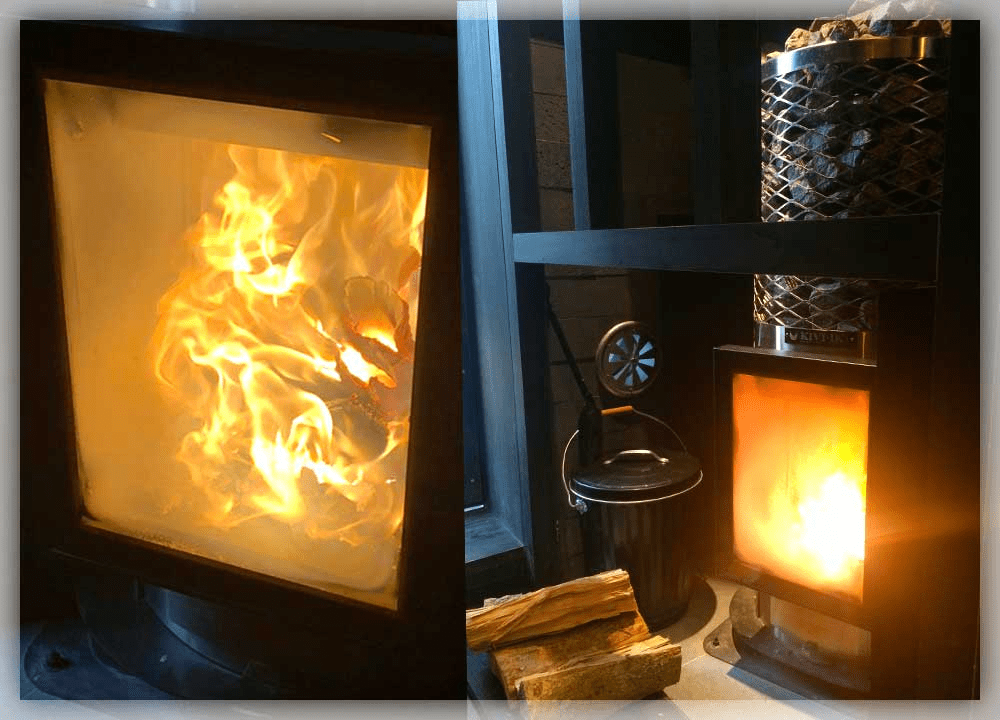
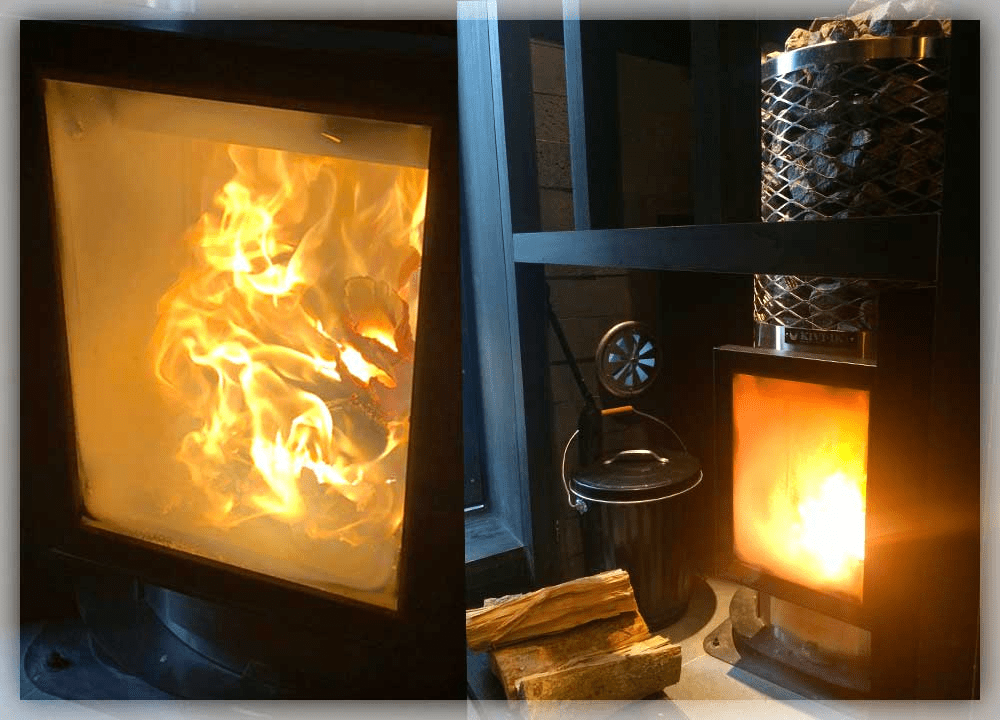
My personal favorite, this sauna lives up to its name and uses an actual wood-fired stove as its heat source. Only groups of five are allowed in at a time, so you enter with a sense of anticipation and excitement. With a temperature around 80 degrees (around 176 Farenheit), the sauna allows you to slowly build up to a steady and comfortable sweat. Used in conjunction with the nearby cold plunge, this sauna is an absolute treat.

*This sauna only seats five at a time, so time slots are booked every hour in the main bathing area, so be sure to keep an eye out for when time slots are called!

Baths:

Note: Due to the sheer volume of baths (nine), this section will just cover the most unique baths. The rest are normal warm, cool, and electric baths that live up to the quality of the other amenities.

Thunder Tornado

This one is cold! I mean really cold! The temperature is above freezing at around 8-9 degrees (around 45 degrees). On its own, this can be cold but bearable. However, what really takes this pool up a notch is the hot-tub style jets that keep the water moving at all times. This makes the water feel close to freezing for an always exhilarating, often intense experience. Great after a high heat sauna session. Be careful with this one, especially if you are new to sauna!

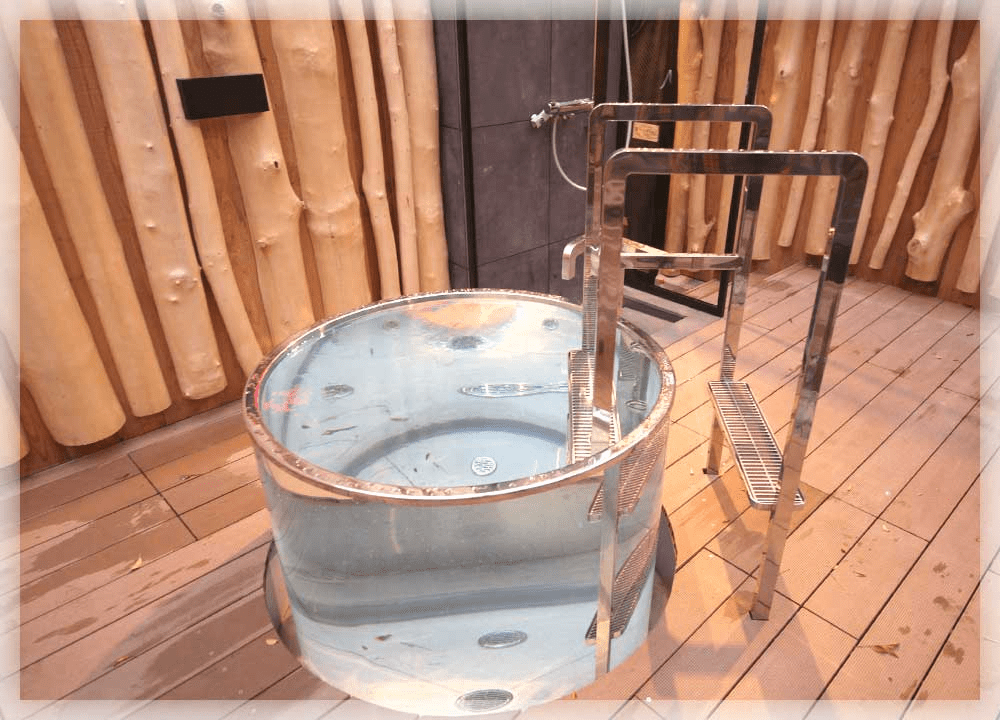
Acrylic Avant (transparent cold bath/plunge tank)

Located on the rooftop deck, this one person plunge tank is designed like an Avant (which means “hole in a frozen lake in Finnish”). Just a few steps away from both the wood burning sauna and several warm rooftop baths, this bath is an absolute treat! With a temperature at around 14 degrees (57 Fahrenheit), the one-meter deep plunge tank matches the surrounding baths and sauna incredibly well. This bath is possibly my favorite amenity from an aesthetic standpoint, as I think its easy to look at, and complements its surroundings well.

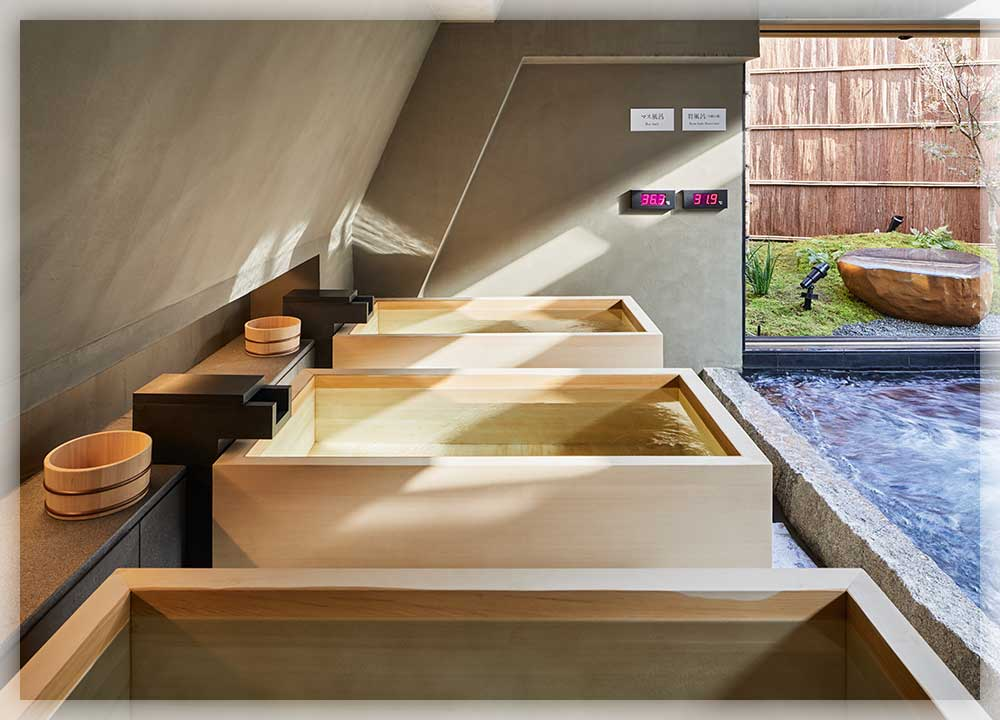
Rock and Box Baths:

Situated next to each other, the Rock and Box baths offer the most bathing focused experiences in area up the stairs from most of the sauna facilities.

The rock bath is set at a relaxing “neutral warm” temperature of 36 degrees (97 degrees), that make it a pleasant bath to reset and relax in. The bath is made of Kitagi stone from the Okayama prefecture in and around the Southern portion of Honshu, the largest island in Japan. Combined with the serene garden through the window, I really enjoyed utilizing this bath to unwind between intense sauna and cold bath sessions.

The box bath uses Aomori Hiba wood, a type of Cypress wood historically used in the construction of temples, and has a refreshing aroma well suited for baths. Lying down in the body length bath gives a regal feeling, especially situated next to the visible outdoor garden and up the stairs from the majority of the sauna and baths. These baths are fairly hot at around 42 degrees (107 Fahrenheit), so it does’t take long to get the most out of these baths.

Bonus- Rest Area

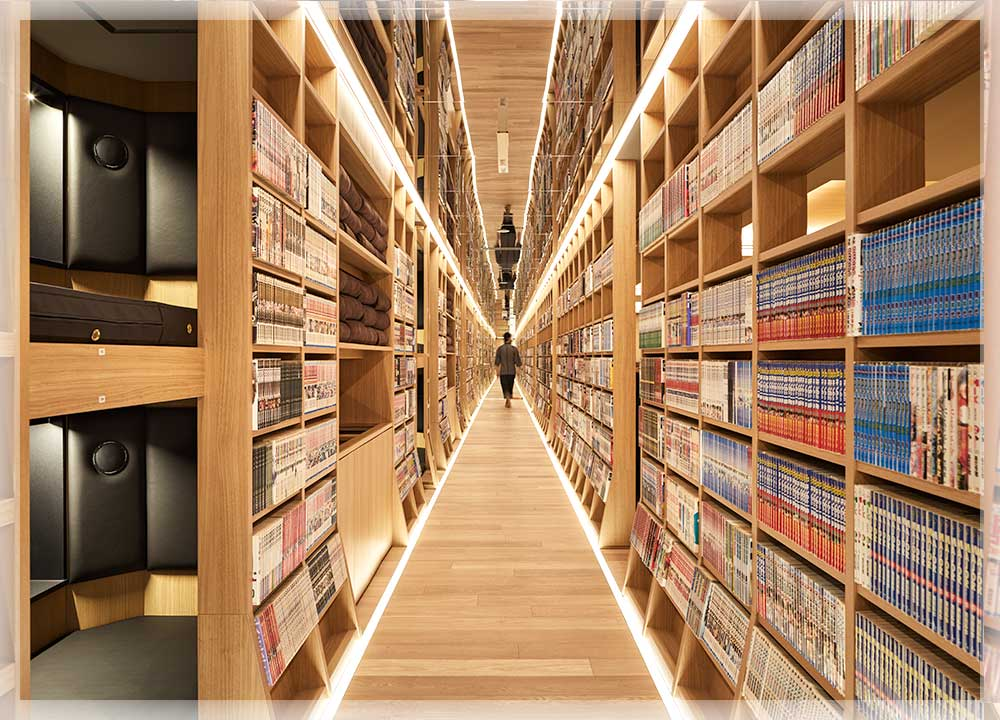
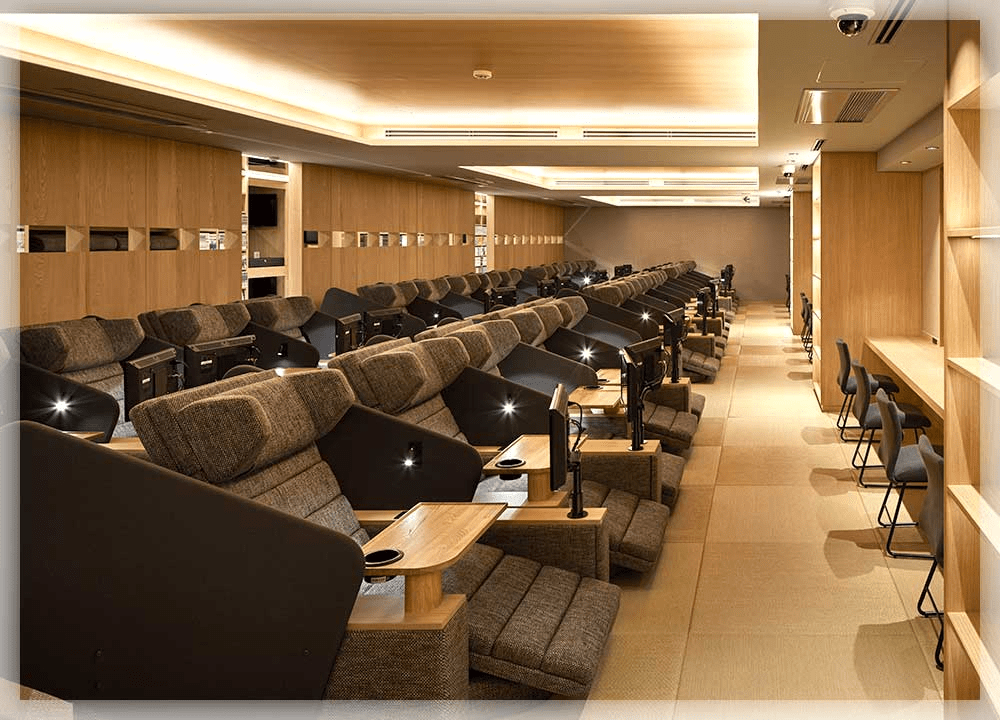
Located a few floors down from the rest of the facilities, you can find one of my favorite parts of Sauna Karumaru- the rest area! Famous for its absolutely massive library with over 10,000 manga and magazines, you could spend nearly an entire day here alone (especially if you can read Japanese!).

The lounge area itself is excellent as well, with lots of comfortable chairs and places to sit and read. Be sure to stop by at some point on your visit!

Limitations/shortcomings:

While I do sincerely appreciate Sauna Karumaru’s sauna facilities, an issue I have ran into on my trips are the relatively small capacities of most of the sauna. Sauna Karumaru boasts four excellent sauna. However, two of them have a very limited capacity, with the barrel steam sauna seating only one person, and the wood sauna only seating five people. For a facility housing (what I estimate) to be around one hundred people using the bathing facilities at a given time, having only two sauna that fit more than five people can make things feel a bit cramped. Even just one additional sauna fit to hold ten to fifteen more people would give the space a bit more breathing room and make the congestion more manageable.

Lastly, this is a minor complaint, but in my sessions in the barrel steam sauna, I found that it would border on painful to exit the sauna with how much the steam would accumulate. In my experience, my gut reaction to the adding humidity to the sauna (steam, loyly, etc.) should be “aaahhh” and not “ow!”. Again, it’s nothing major, but lowering the steam output by just a bit would make the barrel steam sauna an even better experience than it already is.

Best Moment:

The wood burning sauna is nothing short of magical. While capacity is limited and you will likely only get to use once during your stay, it is absolutely a must during your time at Karumaru. In combination with the outdoor transparent cold plunge/Avant, I left the wood sauna grinning ear to ear.

Verdict

Sauna Karumaru is both a great introduction to the specifics of Japanese sauna culture, and well refined bathing facilities. If you are looking for a balance of sauna and baths, a sauna/bathing oriented capsule hotel experience, and an excellent lounge to unwind in afterwards, give Sauna Karumaru a visit!

Food Pairing:

Anan (Yakiniku next door!)

Right across from the elevator to the entrance is a yakinikku restaurant. For those unfamiliar, yakiniku is similar to korean barbeque. When Koreans intitially imigrated to Osaka in west Japan, they brought Korean BBQ with them. Overtime, this developed some distinctly Japanese characteristics and became what is now yakinikku. If you’re hungry after your sauna session, this couldn’t be more conveniently located.
Greater Ikebukuro station.

While yakiniku is nice and convenient, there are also countless food options near Japan’s third largest (!) subway station. If you’re adventurous, I would highly encourage going for a stroll and seeing what you find! There are lots of both Japanese and international food options, so you’re bound to find something to your liking before too long.

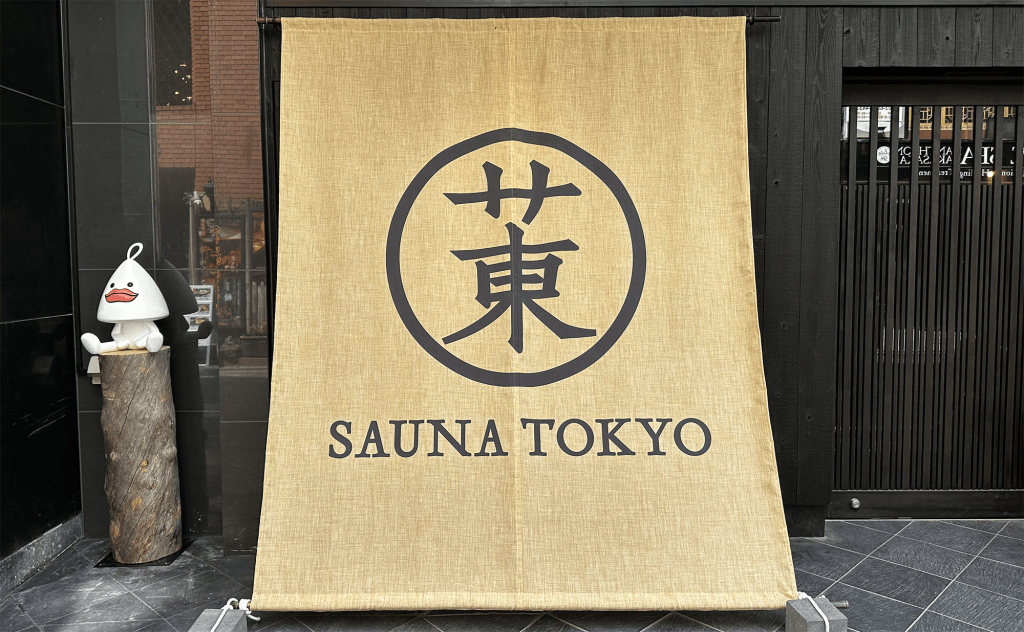
Sauna Tokyo

Cutting-edge. Craftsmanship. Masterpiece.

Tattoos Okay? Yes***
Sauna? Yes. And lots of them.
Price? $$
Should I Bring Toiletries? No
Best For? Sauna enthusiasts looking to have immense thought and care go into every aspect of their sauna experience. Those searching for a sauna focused experience in Tokyo. Everyone who visits Tokyo or Japan.

Nearest Station: Akasaka Station (Chiyoda Line). 3 minute walk.

*Their tattoo policy is a bit weird, so I’ll get into it more in the article. The short answer is that you can go to Sauna Tokyo if you have tattoos, but you will have to pay an extra fee.

Located in the ritzy Akasaka district of Tokyo, the area known for the TBS (Tokyo Broadcasting System and Television) Headquarters, Higawa and Nogi Shrines, and now: Tokyo Sauna. A playground for the Tokyo elite, the area probably won’t pop up on a lot of tourist itineraries, but hosts many of Tokyo’s most expensive hotels and restaurants. And right in the heart of it all is perhaps the best sauna complex in the city, if not Japan. With sento architect Kentaro Imai at the helm, and a mission of creating a facility with sauna enthusiasts in mind, it’s hard not to get excited about Sauna Tokyo. Let’s dig into what makes it so great.

Aesthetics:

The driving philosophy behind Sauna Tokyo was to create a sauna facility that showcased a uniquely Japanese take on saunas. On designer Kentaro Imai’s architectural page, the project is described as:

” [Japan is known for] the rearrangement and redesigning of culture imported from abroad to [fit] Japanese specifications.” This is one of the unique characteristics of Japanese culture. The same is true for saunas, which were first imported to Japan during the Tokyo Olympics in the 1960s.

For this project, six cold/heat saunas have been installed under the keyword of “Japanese style” so that users can enjoy these variously arranged Japanese versions of saunas.”*

*Translated using Deep L.

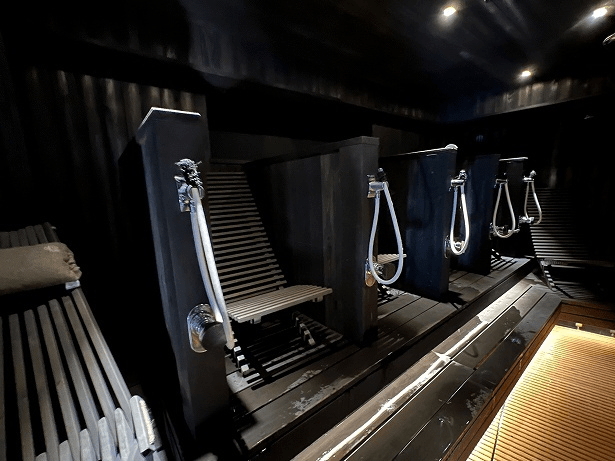
Sauna Tokyo certainly delivers on this front. Apart from the striking, Japanese-inspired entrance, the first floor does a great job of cementing the Japanese aesthetic. With a sleek, black tile finish is present throughout the facility, you are greeted at the bathing area entrance by a black cauldron with water gently overflowing and the same style wash ladle that you would find at every sento across Japan (not pictured).

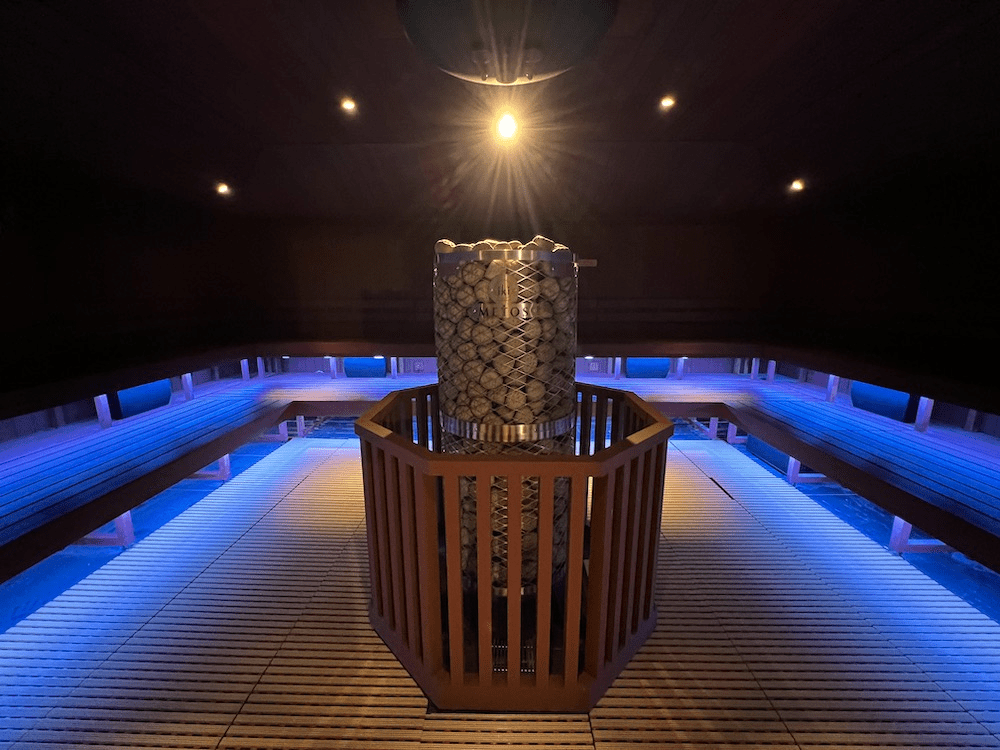
Upstairs, it’s hard not to be impressed with the contrast of the room’s black finish and the blue glimmer of Sauna Tokyo’s three cold plunge pools.

Aside from the upstairs hub hosting the plunge pools, the interiors of the sauna are just as sleek as the rest of the floor. Using high quality wood that is well kept after, each of the four saunas and the steam room are simultaneously portals into different parts of the Sauna Tokyo experience, while remaining grounded and cohesive feeling within the facility.

Culture/vibe:

Sauna Tokyo’s culture can best be summed up with two core ideas:

  • Japanese Style Sauna
  • Saunners (sauna enthusiasts)

Japanese Style

As covered in the Aesthetics section, Sauna Tokyo was designed with the aim of creating a distinctly Japanese adaptation of sauna. This can be seen in the design choices described above, such as the sento stylings of the first floor, and its adaptation of Aufguss (!).

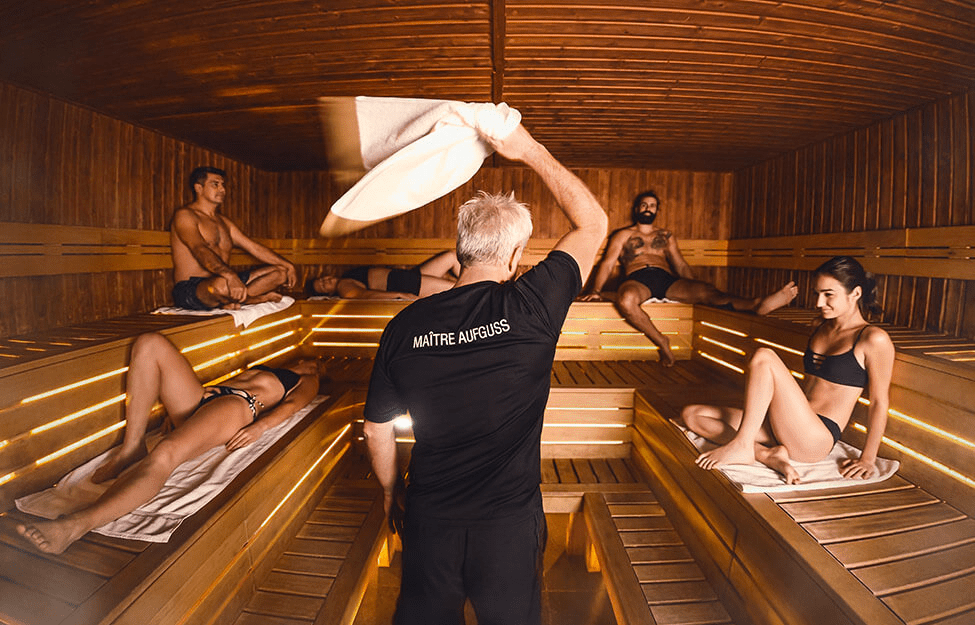
For those unfamiliar, Aufguss is a sauna ritual originating from Germany (Aufguss literally translates from German as “infusion”) that uses coordinated towel movements to diffuse essential oils around the sauna, and is often done to music. While Aufguss is a topic worthy of its own article, Sauna Tokyo’s top-notch Aufguss is a noteworthy example of a distinctly Japanese take on the sauna experience.

Outside the Löyly sauna (largest sauna hosting up to 40 people), a list of times as well as names of Aufguss practitioners are listed. Rather than using real names, stage names are used for the practitioners. A personal favorite of mine was サDuke, an adaptation of Sir Duke, or “Sa-Duke” using the Japanese phonology.

In my several trips to Sauna Tokyo, each Aufguss experience has been completely different. The music selection ranges from both Western and Japanese music (I even heard anime music on one occasion), providing a Japanese spin on a Sauna tradition originating from Germany. Story telling elements have even been present, with one seeming (from what I could hear in Japanese) to “take place” on a Japan Airlines “Sauna airplane”! I’l save more of the specifics of the experience for my Aufguss article (stay tuned…), but these are just a few examples of the Japanese quirks of Sauna Tokyo.

A sample image of an Aufguss experience (not from Sauna Tokyo)

Saunners

Besides the “Japanese Style” motif found throughout, Sauna Tokyo is clearly made for the diehard sauna fans in mind, or “Saunners” as they are called in Japan.

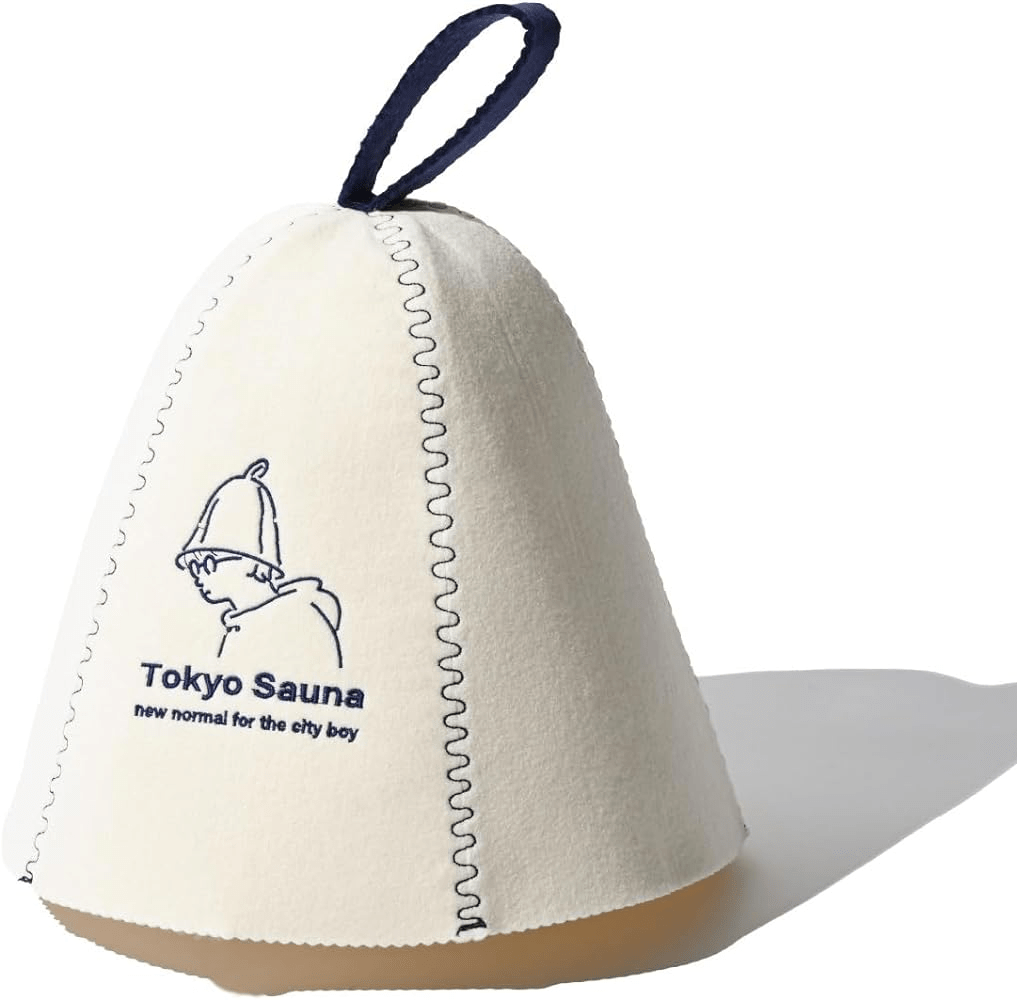
The visitors guide for the Minato-Ward of Tokyo describes Sauna Tokyo as “a new holy place for Sauna enthusiasts”. Sauna Tokyo’s merchandise line is a great example of the venue’s dedication to the sauna community. Ranging from Sauna hats, clothing items, and figures of Sauna Tokyo’s mascot Totonon, its a seemingly small detail that really took the experience to another level for me.

Sauna Tokyo‘s official Sauna Hat

Additionally, flyers for events around both Sauna Tokyo and the greater Sauna community can be found in the locker room. Ranging from special Aufguss shows to sauna pop-up events around Japan, one gets the sense that Sauna Tokyo holds a place in the Tokyo Sauna community, and despite being open less than a year, wants to be a staple.

Facilities:

Sauna Tokyo’s facilities are some of the best I’ve found in the city, as well as Japan. Among other spaces, the upstairs portion has five saunas. The loyly sauna, the main “hub” sauna of sorts, is massive and seats up to forty people according to Sauna’s Tokyo website (anecdotally, I’ve seen closer to what seems like 50+ packed in during some of the Aufguss shows, which I will explain later). Aside from the Aufguss and special events, the sauna is open for general use, and has an auto loyly mechanism that keeps the sauna at a consistent 96 degrees (205 Fahrenheit).

Just next door to the Loyly sauna is the Meditation Sauna. Aside from the main Loyly sauna with its incredible Aufguss shows, the Meditation Sauna is probably my favorite. Set at a lower temperature with hanging birch leaves on the wall and bird sounds playing in the background, you get the sense of being in the middle of the Finnish countryside without a worry in the world. It’s a great place to take a break from the often-intense hot-cold cycles at Sauna Tokyo.

Across the hall, you can find the self-loyly Kero Sauna, the Super Dry Sauna, and the Cupboard steam room.

The Loyly Kero sauna is set at a medium humidity, medium heat, and uses Kero wood sourced from the Lapland region of Finland. As implied by the name, self loyly* means the heat and humidity in the room is regulated by a self-serve water bucket that can be poured on the stove.

*Loyly refers to the pouring of water on the sauna rocks to heat up the sauna

Super Dry Sauna

Just like the name suggests, this is a high heat, low humidity dry sauna. I don’t care for this one as much, but that comes down mostly to personal preference. Sauna Tokyo’s website describes it as “reminiscent of the Carakara-style high-temperature saunas of the Showa era”.* The sauna has a retro gym sauna feel that may be familiar to anyone coming from a Western country that had a similar type of sauna at their gym or health-club.

*For those unfamiliar, the Showa era refers to Japan’s longest lasting Imperial Era under Emperor Showa. While the era lasted from 1926-1989, it typically refers to 1946-1989. “Showa Japan” is often shorthand for old or retro Japan.

Cupboard Steam Room

This one is super interesting. What at first seems to combine a hot tub and a Turkish steam room, the room is actually inspired by the “cupboard bath” that was popular in Edo period Japan. I loved the concept, and I often start here when I make my way to the upstairs portion of the facility.

Besides the saunas, there are four cooling areas, including a cold sauna and three cold pools. The cold “sauna” (not pictured) is a dry room with fans going and a few chairs. Not much to write home about, but I appreciated the space. The cold pools are set at 8, 15, and 22 degrees (46, 59, and 71 Farenheit). Anecdotally, these each feel much colder than their listed temperatures, and I appreciated the variety of temperatures available.

The upstairs also has a rest area, with space for around 60 people, and serves both Detox Water and Pocari Sweat.

Limitions/shortcomings:

Sauna Tokyo’s largest shortcoming is easily that the facility is, unfortunately, men only. This is a huge disappointment for any female bathers looking to experience this great contemporary piece of Japan’s sauna culture.

The silver lining is that Sauna Tokyo has hosted a few Women’s only nights. However, these are infrequent, so I unfortunately would have to rank a few other facilities higher as my go-to recommendation for Sauna facilities in Tokyo solely because of this.

I don’t factor in whether a venue allows tattoo’s or not into any of my reviews. As tattoo’s in Japan are historically associated with organized crime, I don’t think it is fair to judge it based on that criterion. That being said, I found Sauna Tokyo’s tattoo policy to be a bit…strange……

If you are visiting Sauna Tokyo, you are still allowed to use the facilities. However, you have to pay an additional 500 yen fee. Additionally, you are required to wear a sticker that says “Respect the Rules!” for the duration of your stay. During my several trips, I have seen staff members urgently stop guests, with either one small tattoo or tattooed from head to toe, only to put a 3×5 inch sticker saying “Respect the Rules” on their upper back, and walk away.

It seemed silly, and I’m not sure what the end goal of the policy is. It just seemed strange and unnecessary to me. Like a weird compromise that didn’t solve any prospective issues. It’s not a huge deal (partially becuase I haven’t had to deal with it myself, as I don’t have any tattoos), it just struck me as odd.

Verdict:

Sauna Tokyo is an absolute must visit. If you’re a sauna die-hard like me, you’ll be in heaven. If you’re just curious, you’ll walk out inspired and refreshed. From Kentaro Imai’s brilliant aesthetic choices, to the awe-inspiring Aufguss performances, there’s something for everyone at Sauna Tokyo.

Food Pairing:

For this food paring, I am trying something a little different. I am listing a local recommendation, which is something I would be more inclined to grab a bite at on my way home. My visiting recommendation is designed with tourists/visitors to Japan in mind. It may be slightly further than walking distance, but noteworthy enough to add to a tourist itinerary.

I may implement this into some of my reviews of larger venues, or locations close to particularly noteworthy restaurants (Michelin, major tourist attractions, etc).

Local Recommendation:

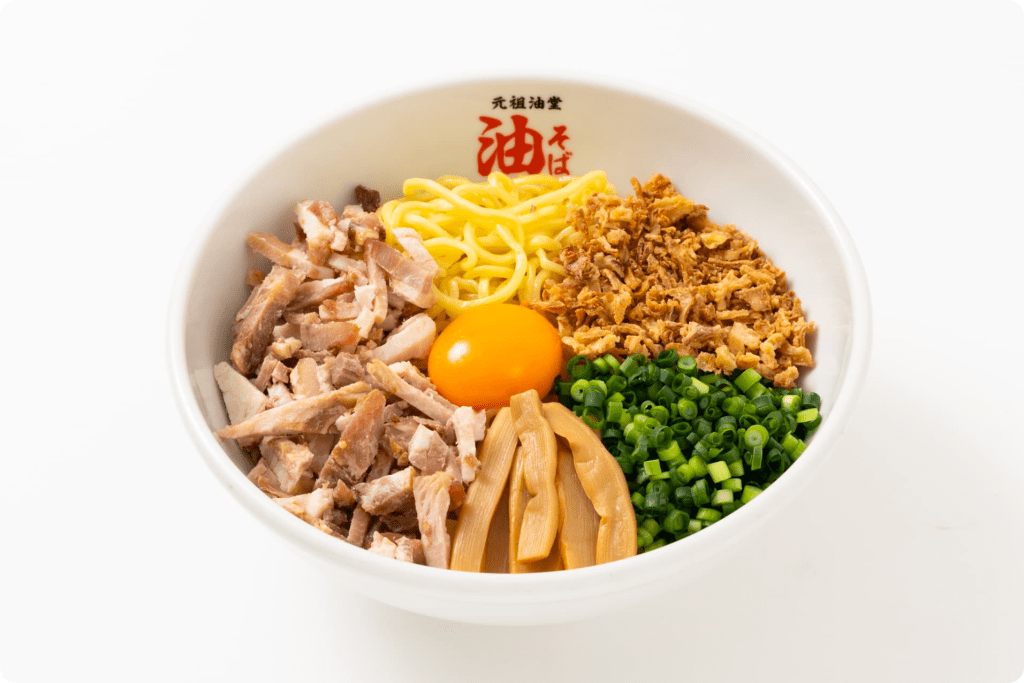
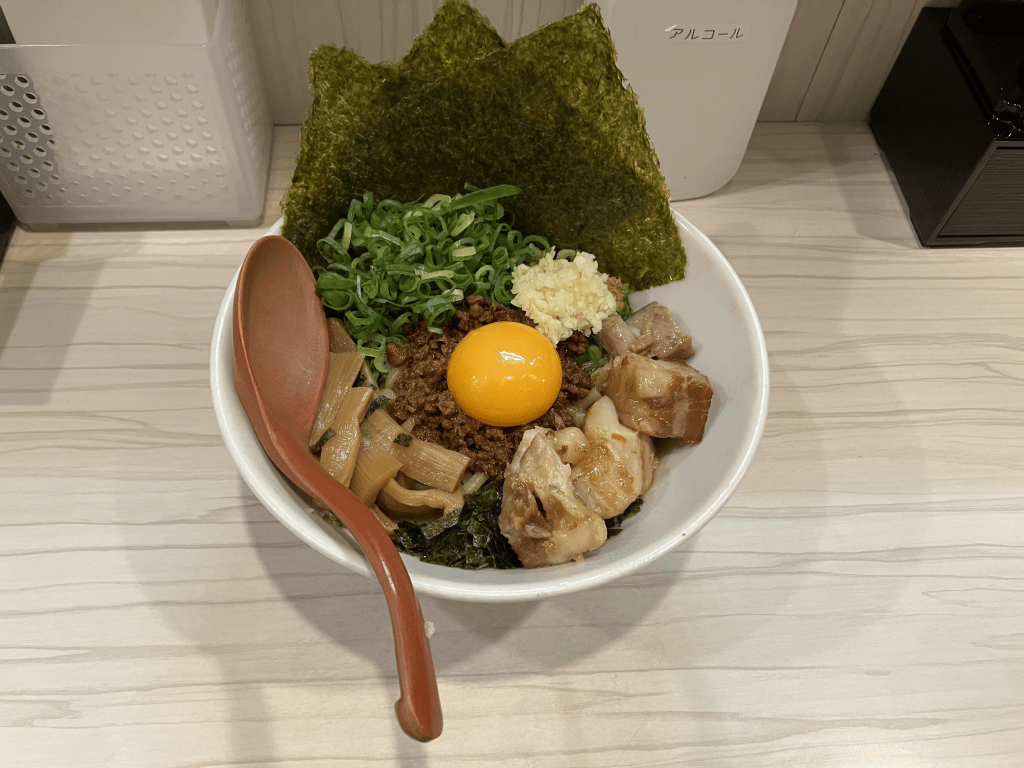
Genso Aburado (Maze Soba)

Maze soba has become a go-to post sauna/sento meal for me. And Genso Aburado is conveniently located a block away from Sauna Tokyo! Hosting an extensive spice bar, this maze-soba chain really hits the spot after a long sauna session. The wide variety of options, combined with the comfort-food feeling that a good spice-filled maze-soba bowl provides make Genso Aburado my go-to after Sauna Tokyo.

Visiting Recommendation (Great for Tourists)

Gonpacchi.

I think that Sauna Tokyo is the kind of experience that should be savored. As such, I think having a dinner that leaves an impression is essential for this pairing, particularly if you are visiting Tokyo from outside Japan.

Located about 1.2 km/just under a mile away, Gonpachi famously inspired the ending scene of Kill Bill: Volume 1, where The Bride fights The Crazy 88. While it’s certainly on the touristy side, I think it’s a lot of fun. Also, the staff here are fluent in both Japanese and English, so for travelers, this is particularly worthy of note. The menu is extensive, and you will almost certainly find something to your liking on the menu.

Minato-Yu

Elegant, hidden, modern.

Tattoos Okay? No
Sauna? Yes
Price? $
Should I Bring Toiletries? Some. Body wash and shampoo provided.
Best For? Those looking for a luxurious, bathing forward experience for a reasonable price.

Nearest Station? Hatchibori Station (Hibiya Line)

Tucked away in Tokyo’s wealthy Minato ward, Minato-Yu is one of the classiest neighborhood baths in the city. Thoughtful aesthetic choices combined with extensive bath options make Minato-Yu a destination to visit.

Aesthetics

Minato-yu excels in this department. The entrance looks like if Team Lab designed a speakeasy entrance leading to a sento. “Unassuming” and “sparkling jade” don’t sound like they would go together, but Minato-yu makes it work.

Entrance to Minato-yu

Once the automatic, secretive door opens, you find yourself in a cozy lobby. Similar to most local sento around Tokyo, albiet a bit nicer. The small hallway leading into the locker room is a highlight of the venue. Using the same sparkling jade motif as the front door, the hallway sets the tone for the venue, emphasizing that while this is a public bath, that doesn’t prevent if from being luxurious.

Absolutely breathtaking. Looks more like an art exhibition than a public bath hallway.

Thankfully, this idea doesn’t stop at the hallway. The baths don’t pull any punches either. With a black tile finish complimented by a grey tile and wood exterior, the baths fulfill the luxurious image provided by the entrance and hallway of the venue.

Right at the bath entrance to wash yourself. Another great aesthetic choice that elevates the experience.

Culture/vibe

Minato-yu is, as the name suggests located in the Minato ward of Tokyo. This is widely known as one of the wealthiest parts of the city. Despite how nice Minato-yu is, it is still a public bath. The wealth of the community is on full display here, and you can clearly see the contrast between a lot of dying public baths around Japan and Minato-yu. While many baths houses are dated, near empty, and thirty years overdue for a renovation, Minato-yu the complete opposite. Modern, lively, and state of the art, Minato-yu reflects the affluence of the neighborhood it resides in.

What I really appreciate about Minato-yu is despite how nice it is, it’s still priced at a standard sento rate (520 yen for a bath, an additional 500 yen for using the sauna). When I feel like I want to treat myself to a slice of luxury and don’t want to break the bank, I have found Minato-yu to be a great compromise.

Despite how luxurious the venue is, it has a certain subdued nature that I find comforting. Maybe the secretive door found on an unassuming side street contributes to this, but I found myself really able to mentally disconnect from the outside world and let any thoughts from the outside world pass me by here. Much like a zen garden, finding a small aesthetically pleasing space to pause and relax in a relatively busy area can really add a sense of peace to the day.

Facilities

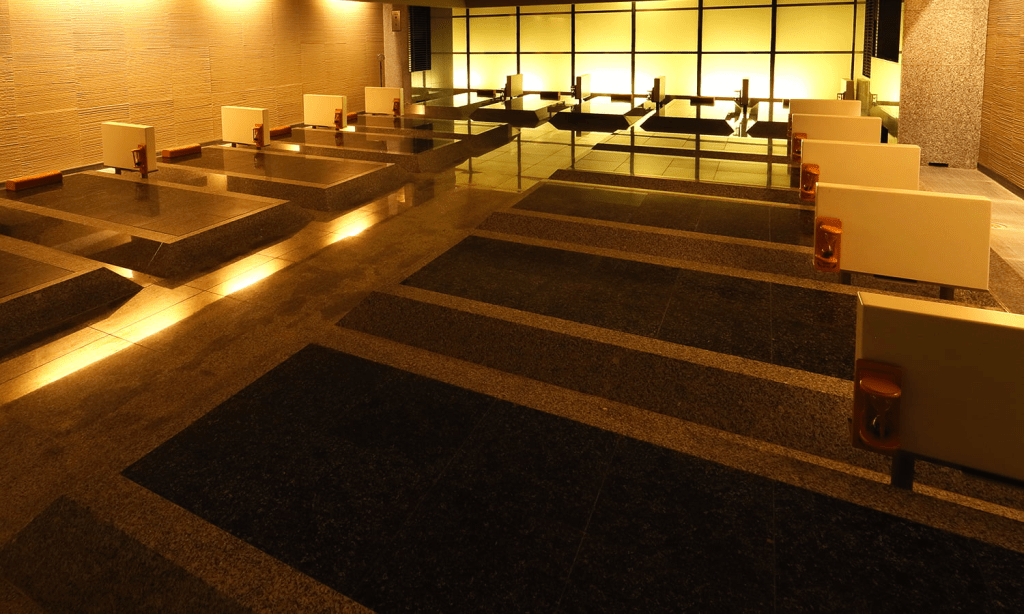
The baths are a highlight of the facility, and stand out above all else. I appreciated the variety at Minato-yu, with the left side (typically men’s) of the venue hosting four different baths: one cold bath, a jaccuzzi, a warm bath (with sections for a jetted bath and electric bath attached) and a hotter bath nearby (pictured below). The warm bath water felt especially nice, with the circular jacuzzi coming in at a close second (found behind the left circular wall pictured below).

Men’s side of the baths (right side- switches on Sundays)
The spherical Jacuzzi bath isn’t something I’ve seen at many sento before, and trying Minato-yu’s made me want to see more!

The right side (women’s, except on Sunday’s) (pictured below) is a touch smaller. No circular jacuzzi bath), but it compensates with a better sauna.

Women’s bathing area

The sauna differed between sides, with the mens (right) side sauna being an infared sauna, and the women’s being a stone sauna. The men’s sauna is sufficient, but nothing to write home about. It’s a nice addition and pairs with the cold plunge well, but isn’t a definitive part of the experience.

The women’s (left side) sauna however, is a different story. Thankfully, I was able to go on a Sunday where sides are switched and try it myself. A larger stone sauna, the heat is hot without being suffocating, and is located right next to the cold plunge pool. A bit more spacious and a higher quality heat, the stone sauna definitely wins out from its counterpart.

Limitations/shortcomings

Each side is fairly different. Thankfully, both have strengths. As mentioned above, one side (typically the women’s) has a better sauna, the other has better baths. That said, in a bathing focused facility, the side with better baths wins out, creating a discrepancy between the two sides. The “better” side with more baths is currently men only except for on Sunday’s, so keep this in mind when visiting. There is conflicting information on the website about if the baths rotate weekly or just on Sundays. It currently appears like the rotation is just on Sundays for now, but if anything changes, I will update this section accordingly.

Additionally, while the sauna on the men’s side certainly isn’t bad, I think the baths certainly outshine the sauna here. It’s still a solid sauna, but if you’re on the fence about using it or not/on a tight budget, I would just go for the baths. The bathing here is top notch, and you can have a great time just using the baths. That said, it’s certainly not a poor quality sauna. Not sure why the sauna varied so much between sides, but it is something to note.

Verdict:

Minato-yu is a unique, modern public bathing experience that is worth a visit, especially if you want to focus on bathing. Minato-yu’s aesthetics are top-notch, and the low price point make this an even more enticing option in the otherwise expensive Minato-ward of Tokyo. For those wanting a bathing-forward experience and luxury on a budget, pay Minato-yu a visit.

Food Pairing

Menya Kokoro

A chain of maze soba restaurants, I always treat myself to Menya Kokoro whenever I visit Minato-yu. This was my first introduction to maze soba, which is a Taiwanese style dry noodle dish typically served with vegetables, raw egg, and meat. Menya Kokoro serves the dish with a spice blend that always hits the spot. Dishes are relatively affordable here at around 1000 yen (around $8.00 USD). While it is a chain, I often find Minato-yu’s proximity to Menya Kokoro as a deciding factor when choosing between sento to visit! You won’t be disappointed.

Edo-yu Ryogoku

Minimalist, expansive, focused.

Tatoos Okay? No
Sauna? Yes
Price? $$
Should I Bring Toiletries? No. Price is inclusive of amenities.
Best For? Those looking to take a breather after sightseeing in East Tokyo (Asakusa, Akihabara, Ueno, etc.). Those looking for a high quality super-sento at a lower price point, or something off the beaten path that attracts fewer foreign tourists than other super sento complexes.

Nearest Station? Ryogoku Station (Oedo Line) (1 minute walk), Ryogoku Station (JR Line, 8-10minute walk

The venue Located in Tokyo’s Ryogoku neighborhood, famous for the Kokugikan Sumo stadium, which hosts Japan’s largest sumo tournaments. Edo-yu Ryogoku is an excellent, low-key super sento that provides a large scale Japanese bathing experience without relying on gimmicks that make it feel excessively “touristy”. Let’s take a look at what sets Edo-yu Ryogoku apart as a super sento!

What is a Super Sento?

While I have used the term sparingly in other articles, I would like to pause for a moment to explain what exactly a “super sento” is. In contrast with a regular sento, a super sento is not only larger in size, but is typically marketed as more of a luxury and cultural experience than as a utilitarian public bath. Super sento are often targeted at tourists (both domestic and international), and are more likely to include “spa services” (massage, body scrubs, etc.) and often are themed around aspects of traditional Japanese culture (yukata/traditional Japanese robes are often given out, for example).

To combat the closing of sento around Japan due to the installation of household baths in the 20th century, super sento were introduced as a way to revive sento culture, and became popular in the 1980-1990’s. This sparked what is now referred to as Japan’s second sauna boom (the first being after the 1964 Tokyo Olympics).

While there can be tension between neighborhood sento and super sento (see the description for this sento here), with the former pulling customers away from less flashy neighborhood sento, I find that they are often a blast to visit, and can offer a high quality bathing experience that can coexist with smaller neighborhood venues (see here).

Aesthetics

Edo-Yu Ryogoku has a consistent minimalist motif that is visible throughout the facility. Perhaps the most prominent example of this, nearly every floor has a major portion made of light wood, with white accents nearby. This can be seen from the get-go, with the facility’s entrance demonstrating the same color scheme that is constant throughout.

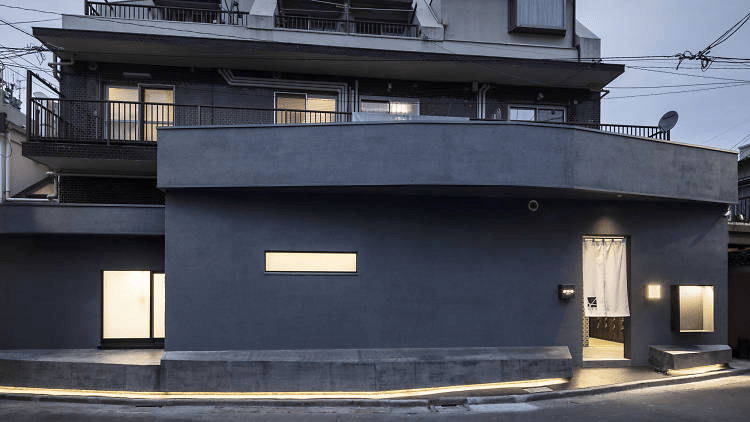
Minimal and eye-catching without being too distracting, the entrance immediately drew me in

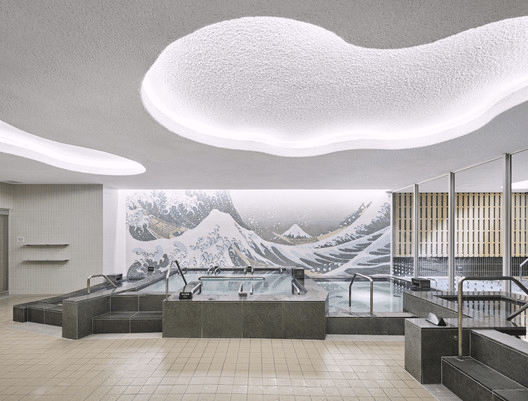
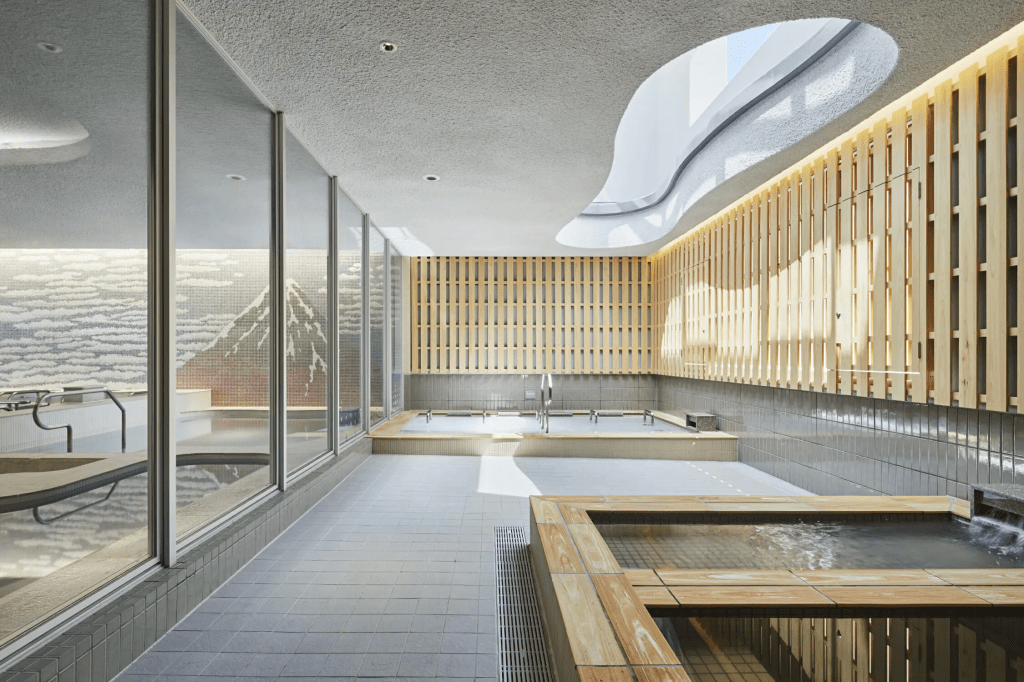
The wood and white motif continues through each of the five floors of the facility, with the inside providing a few nice touches of distinctly Japanese additions. For instance, the primary bathing area’s wall mural appears to be of the famous ukiyo-e (Japanese woodblock carving) Great Wave off Kanagawa. While maintaining the motif presented outside and in the lobby, I found the subtle yet prominent addition of the distinctly Japanese style mural to be an excellent touch without feeling too gaudy, as some tourist attractions/super sento can feel.

Great Wave off Kanagawa“. I’m sure you’ve seen it in a freshman college dorm somewhere…

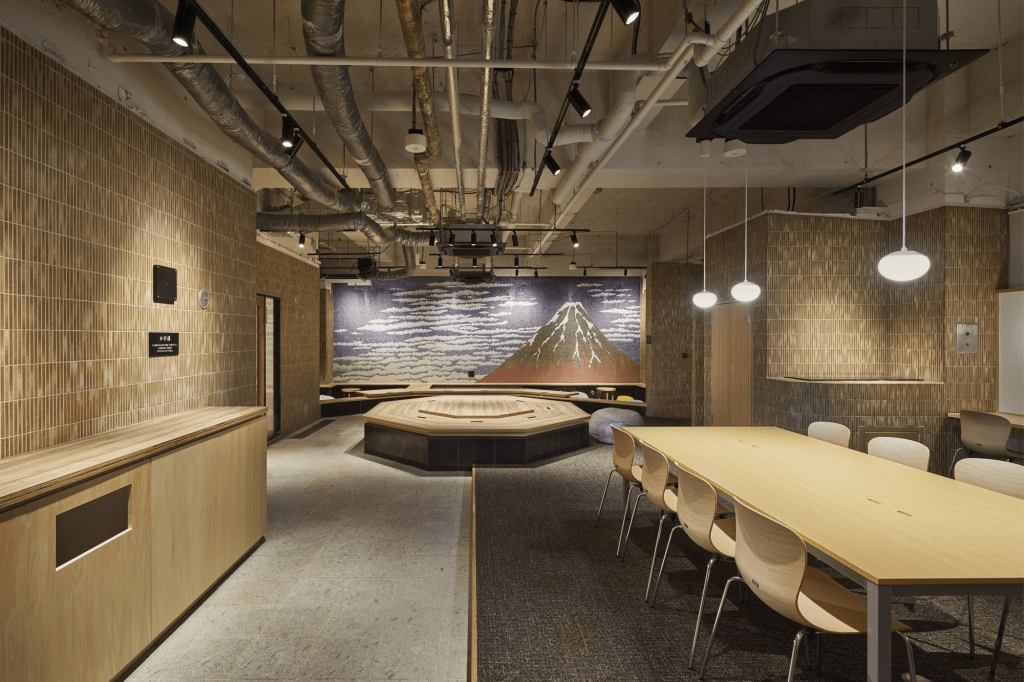
Outside of the gender segregated bathing area, there are two primary areas; the relaxation area and the bedrock sauna (which I will cover in the facilities section of this review). The relaxation area maintains the consistent, wood and white motif found in the rest of the facility, while adding wooden windows in the style of a ryokan (Japanese style inn). With areas to nap, work, and read nearby, I found the simple, non-distracting aesthetics of the space to put me at ease while relaxing.

Not pictured: bookstands with Sauna Bros. Magazine (Japan exclusive) and Sado (famous Japanese Sauna manga, literally translating to “Way of the Sauna”). Great place to recharge!

Culture/Vibe

Unlike the previous facilities I have reviewed thus far, Edo-Yu Ryogoku isn’t aimed to serve as a community space, since it is a super sento. With that in mind, I would say that the culture here isn’t as relevant as much as the overall vibe is. In my visits to the venue, I noticed a distinct lack of foreign tourists compared to other super sento (Spa Laqua, Thermae-yu, etc.). I think a part of this was intentional, as it seems more catered to domestic visitors, and has less English/Chinese/Korean signage (but not completely absent) than other super sento in Tokyo. With that in mind, I do think that explains why Edo-yu Ryogoku has more design choices that feel targeted at a Japanese audience. For example, the rest areas felt notably quieter, and had more work spaces and less “spa services” than other super sento I have visited.

Working area found on the gendered floor of each area

I sincerely appreciate how the venue, despite being a large bathing complex, maintains a relaxed atmosphere, and allows me to avoid feeling like I need to get the absolute most out of my experience to get my money’s worth. The relatively low price point (especially if you visit on a weekday/non holiday) helps contribute to this as well.

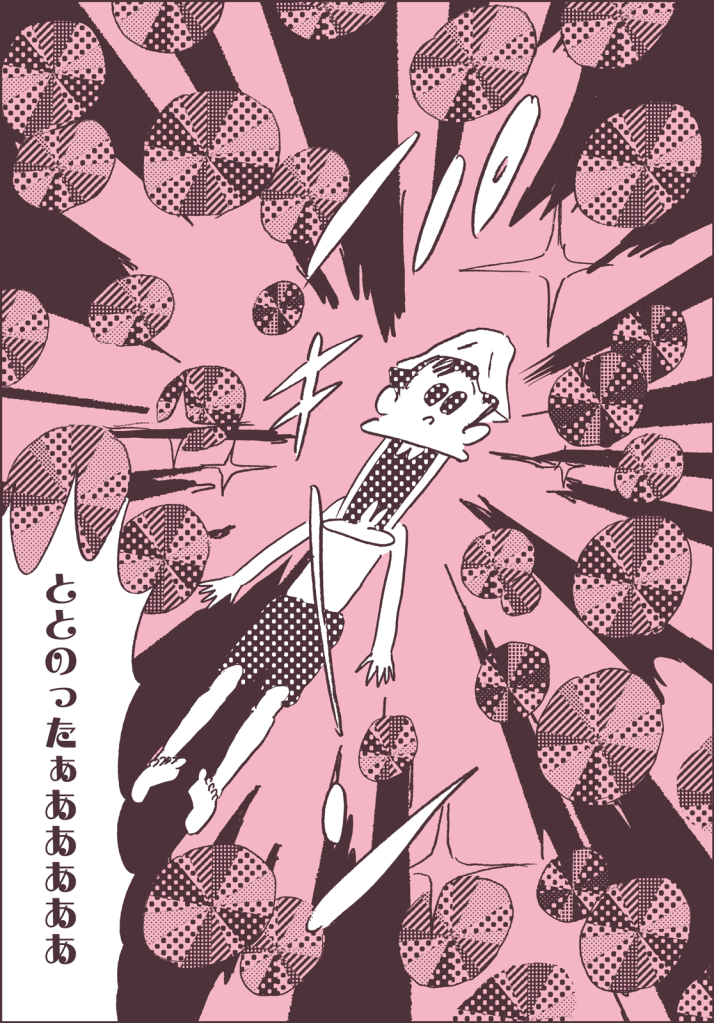
Edo-yu Ryogoku also had saunners/sauna enthusiasts in mind with several design choices throughout. For instance, above the cold plunge pool, there is a guide with characters from the Sado manga about how to achieve totonou in six steps. While subtle, I found this was a great touch, and I have used the guide at other facilities as well (which itself is worthy of an article).

I unfortunately couldn’t find the guide on the Japanese side of the internet, so here is an image from the original Sado manga of a character achieving totonou (sauna enlightenment)

Another design choice for the sauners, the bathing area features a recommended order of how to use the baths and sauna for optimal effect. It is written in Japanese across one of the walls (not translated into English), and goes into the step-by-step on what is the best order to use the facilities in. I know of only a few venues in various countries that provide this kind of information, but I always appreciate when it is made available. I think it’s a fantastic idea, and I always try and implement it when I visit.

Facilities

The main gendered bathing area hosts five different baths. The indoor portion features a standard heated bath (jetted and non-jetted), a cold plunge pool, and a carbonated bath. The low rise, wide carbonated bath stood out as a highlight for me. Nestled under the Great Wave off Kanagawa mural, I found it to be a great place to warm up before starting any serious sauna endeavors.

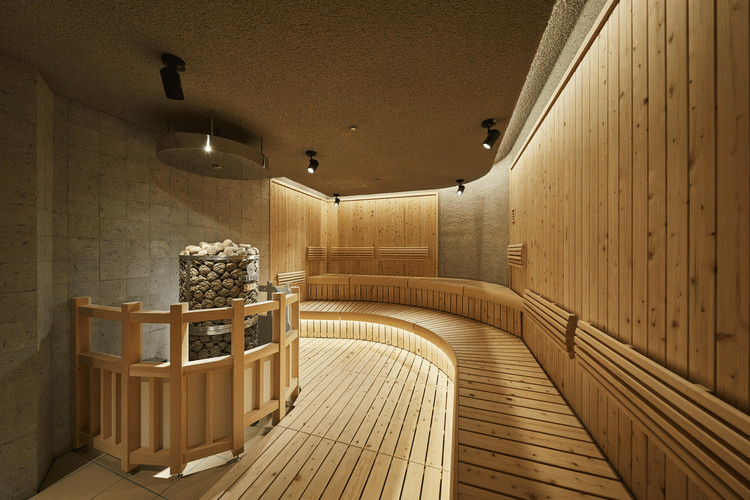
There are two saunas adjacent to the bathing area: a Finnish style sauna and a lower temperature sauna (the women’s section swaps this with an aromatic steam room). The Finnish sauna had a nice medium heat, medium humidity maintained throughout my visits (thanks to the auto-loyly, which is the Finnish word water dispensing over the sauna rocks to increase/sustain the heat). It contrasted well with the nearby cold plunge and served its job well. The lower temperature sauna on the mens side was a nice option as well for those who want a less extreme experience, even if I didn’t use it much during my visits.

Edo-yu’s Finnish style sauna, or the “main” sauna

The remaining two baths are in a semi outdoor area (covered canopy, with an open face window toward the ceiling, tucked away in a corner). Closest to the door is the Chinese medicinal bath. Filled with various herbs, you come out of the bath with a distinct yet pleasant earthy smell after a few minutes. Across the room is the open air sleeping bath, filled with what Edo-yu’s website describes as air bubbles that remove dirt from the body. This bath has access to the open air atrium, which I found to be a great contrast on a cold day with the warm resting bath.

Herbal bath on the right, open-air/sleeping bath in the back

One last remaining area that I haven’t discussed is on an entirely separate floor: the bedrock sauna. Similar to a Korean style jjimjilbang (찜질방, for those who can read Korean), the room is referred to as the “Shirishibo”. On the facility’s website, it is described as:

“a room where each person can relax in their own bed space. The “Zakuro-guchi'” (small door) reminiscent of public baths from the Edo period maintains a constant humidity and temperature inside the room. The bedrock is Liaoning stone, which contains a lot of organic germanium.”

The room has a a sleek, black finish to it, and I found it to be a nice middle ground between the lounge area, and the more concentrated bathing and sauna area. I found I enjoyed it the most towards the end of my visits, serving as a nice way to work up a sweat if I didn’t have the stamina to do another extreme hot/cold cycle.

Limitations/shortcomings

Unfortunately for my inked readers, the venue does not allow entry for tattooed visitors. For whatever reason, I have found that super sento (at least in Tokyo) are consistently the most strict about the no tattoo policy (I find that lot of hip smaller sento allow tattoos to attract a younger, urban crowd). I imagine that this is due to more expensive venues wanting to cater to families and provide more of a a “luxury” experience. As such, they take extra precautions to keep Yakuza out. Regardless, if you have tattoos, I would suggest visiting of the numerous tattoo-friendly facilities that I have reviewed.

Additionally, since it is a bit more off the beaten path, I would come with at least a few Japanese phrases prepared, as the facility isn’t really set up with a lot of English infrastructure. That said, the staff is incredibly helpful. I don’t consider this a demerit by any means (this is in Japan after all), but just something to consider before you go if this is a dealbreaker, or you are planning on swapping this in place of a super sento that is more accessible for first time visitors.

Verdict:

Edo-yu Ryogoku has a cultivated minimalist vibe, while simultaneously providing the most out of its bathing, sauna, and lounge facilities. Giving a more concentrated experience, I would recomend Edo-yu Ryogoku for someone who enjoyed a first trip to a super sento, and is curious about making steps towards exploring more of Japan’s sauna culture outside of the general English speaking tourist circuit, but isn’t sure where to go next. Regardless of your reasons for visiting, you certainly won’t regret it.

Food Pairing:

Tonkatsu Hasegawa.

Located near JR Ryogoku Station (roughly a ten minute walk from the venue), this restaurant is on the Michelin Bib Gourmand list. The aforementioned list covers restaurants that the Michelin Guide recognizes as high quality, and more budget friendly than its Michelin Star counterparts (a general travel tip I would give for anyone visitng Tokyo as well).

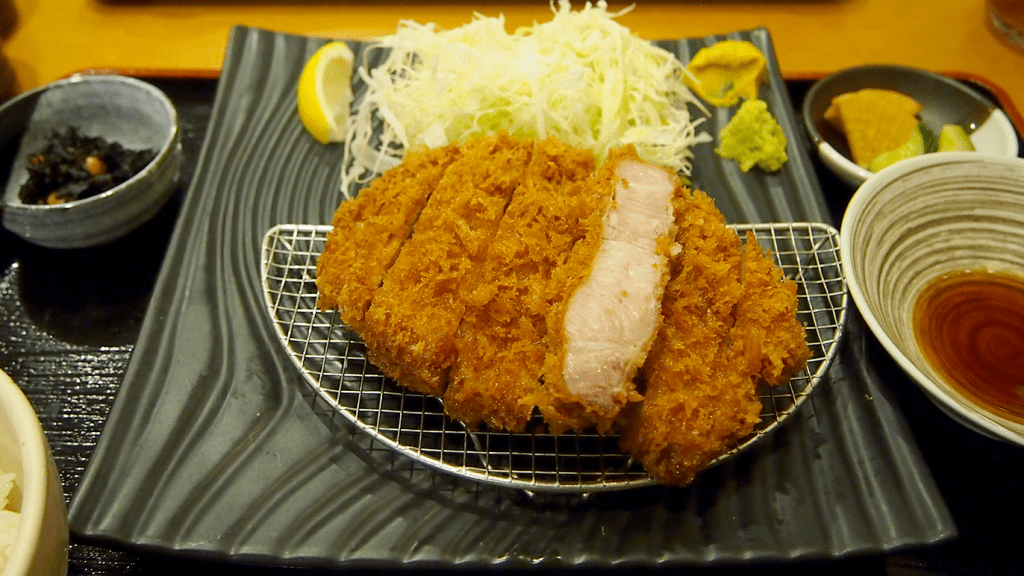
I had to wait around 30 minutes to secure a table, but the food was absolutely worth the wait. With an extra crispy coating and a high quality, fatty cut of pork, my taste buds were happy with every second that I waited in line.

For 1800 yen (a little over $12.50 USD), I was able to get a full Tonkatsu set with a side salad, miso, tea, and two vegetable sides. In my view, very well worth it for a Michelin recognized meal.

Authors Note: Much like a wine pairing with a good meal, I find that finding the right bite to eat after a sento/sauna session to help make my totonou/sauna high that much more euphoric. As such, I am considering adding a food pairing suggestion as a staple of my reviews if this is received well, or something readers would be interested in.

Thank you all for reading, I wish you a Merry Christmas. Happy Holidays, and hope you can make the time to find a piece of “tototnou” in your week!

Kairyo-yu

Trendy, sleek, hip.

This trendy sento epitomizes Shibuya’s energy in bathhouse form. Kairyo-yu is an excellent example of how renovation can breathe new life into traditional spaces.


I have been following both the renowned sento architect Kentaro Imai and declining sento attendance trends amongst younger Japanese for quite some time. So when I heard that Kairyo-yu is both designed by Mr. Imai and drawing in primarily younger crowds, I headed toward Shibuya as soon as I could to see Kairyo-yu for myself. Located a 5-10 minute walk from Yoyogi station, I couldn’t resist the allure of a sento right in the heart of Tokyo’s “cool capital”.

Aesthetics:
Kairyoyu is nothing short of breathtaking. While the traditional layout of a 100+ year old bath house remains intact (two to three baths on one side, a line of seated showers on the other side of the room, a wall mural with Mount Fuji, etc.), Kairyoyu radiates the vibrance of Shibya, and its time-tested status as a hub for youth culture.

Right from the get-go, Kairyo-yu stands out from its peers as a hip and modern space. Upon finding the building in an alleyway about half a mile from Ebisu station, you will find a whale mural that adorns an entire wall of the building.

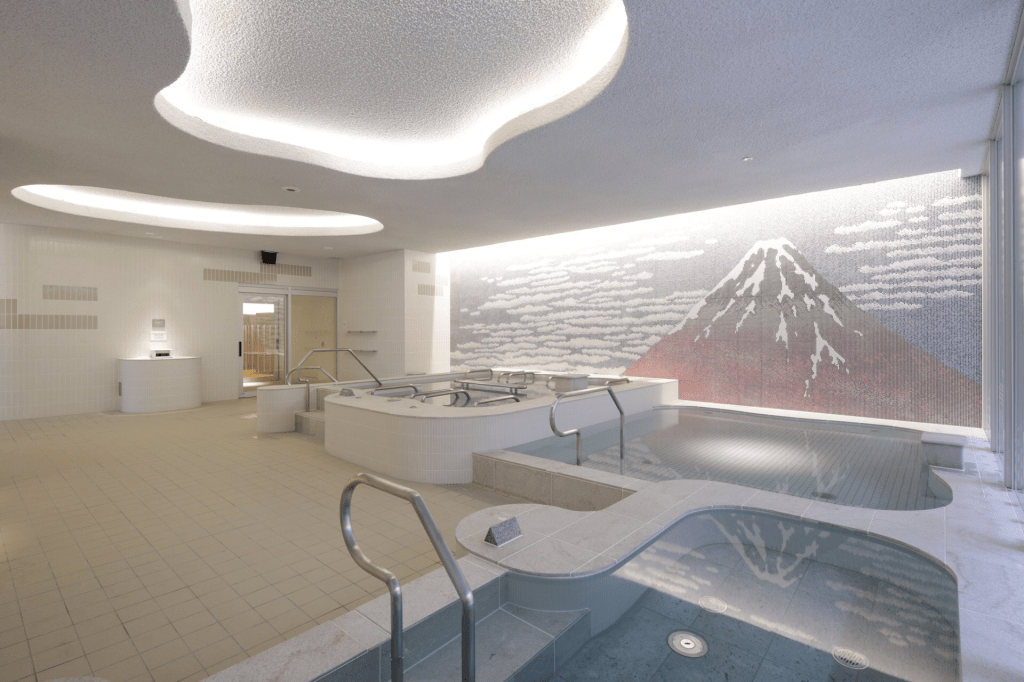
This does not stop just at the building, as several works of modern art are on display throughout. On the architectural description of Kairyo-yu given on Imai’s website, he describes the motif for Kairyoyu as “cultural crossing and cultural exchange”. This is manifested throughout the space, with its’ signature modern flair featured in the lobby and the mural along the sento/bathing area adorning a futuristic, graffiti style Mount Fuji mural.

The sento itself has a cohesive black marble and tile motif, with some mild blue lighting throughout. Between the lighting and the nearly exclusively twenty-something crowd, this gives the bath house a feeling reminiscent of a classy nightclub. Thankfully, all nightlife shenanigans are left at the door.

Perhaps the example that best illustrates the vibe of Kairyo-yu is that whenever the sauna heats up via an automatic heat/humidity detector, a dim red light would slowly light up the furnace. I found that small details, like keeping a consistent dim-light motif throughout the sento, gave Kairyo-yu a cohesive vibe that significantly added to my bathing experience.

Culture/vibe:
Twenty-something urbanites constitute most of Kairyo-yu’s clientele. While this is common in Shibuya, this is not standard for many sento. Throughout Japan, sento are dying (a nuanced topic which I plan to cover at a later date) due to their clientele being primarily elderly Japanese who grew up using sento regularly. I found the presence of a younger crowd to be refreshing.

Upon entry, patrons are greeted with a sign introducing the staff for the night. Using my (limited at best) Kanji knowledge and a translation app, I was able to decipher some of the signs at the front gate. From what I could gather, the staff were introduced as “tonight’s heat wave masters” and had the names of employees working that night. While only a minor detail, I found that touch went a long way for me in setting Kairyo-yu apart from a standard Tokyo sento. At the same time, I found it endearing and impressive that the bathhouse successfully cultivates a hip feel, while maintaining a small “up and coming” vibe absent from many super sento and luxury saunas in Tokyo.

On the standard ticket vending machine (seen at the entrance after placing your shoes in the nearby cubby), various stickers were placed all around the machine. It reminded me of the Shibuya depicted in the early 2000’s cult classic video game (a longshot here) Jet Set Radio. For those unfamiliar (pardon the obscure reference) Jet Set Radio is a videogame from the early 2000’s that depicted Shibuya’s youth culture through the eyes of twenty-something year old graffiti artists.

On my way out, I noticed several co-ed groups of bathers meeting up in the lobby, appearing to chitchat about plans for the night, and the sorts of exuberant conversations you get after a refreshing schvitz. The lobby itself, while small, carried a wholesome aura, akin to hanging out at a regular friend’s house or local hang out in high school. Adorned with cushiony chairs and a vending machine, patrons seemed comfortable to stay and chat after their time in the sento. The lobby also had a well outfitted store, featuring t-shirts, trendy sauna hats, and merchandise for various affiliated Shibuya based clothing companies.

Facilities:
With its reputation as a trendy renovated sento in the heart of Shibya, I was curious (and perhaps skeptical) what the quality of the actual baths would be like. Thankfully, they did not disappoint, and are among the best I have experienced in Japan. The baths themselves are reminiscent of a traditional sento (one warm bath, and one hot bath). The temperatures are toned down a bit, which I frankly appreciated. Some of the old-school sento in Japan keep their hottest bath temperature close to skin melting, so toning down the dial just a hair was a nice touch.

The sauna (which cost a bit extra) kept the humidity somewhat higher than a Finnish sauna, but still at a level where the dry heat was tolerable. I found my time in the sauna to be the peak heat of the facility, which had me running to the cold plunge.

Conveniently, the cold plunge is directly next to the sauna, kept at a cool but not frigid temperature of around 15 degrees (Celsius) that perfectly contrasted with the sauna.

Directly between the sauna and cold plunge, Kairyo-yu features an outdoor atrium with roughly ten chairs to sit and lounge in between sauna sessions. With some dim outdoor lighting, the atrium kept me grounded and allowed me to catch a breather between rounds, without taking me too far out of the experience.

Limitations/shortcomings:
Kairyoyu had few shortcomings. If anything, the music played in the bathing area was inconsistent, ranging from quiet to American Top 40 radio being played loud enough to hear it, but not quite loud enough to feel like more than an afterthought. That said, I don’t think that the inclusion of “Cake by the Ocean” and dated Drake tracks put a significant damper on my experience (plus seeing the mild head bobbing to the music while patrons were in line for the sauna was rather entertaining.

Verdict:

Modern, elegant, and refreshing, Kairyoyu is a must visit. A near perfect example of how to both conserve and honor origins, while still innovating and embracing change and progress.