After watching Sado (see my last article) for the first time, I enjoyed nearly every episode. However, one stood out among the rest: “With the Sauna Godfather” (ゴッドファーザーと共にととのう). References to the 1972 film aside, I was drawn in by Yukitaka Yoneda, the larger-than-life character who popularized Finnish style sauna in Japan.
BACKGROUND:
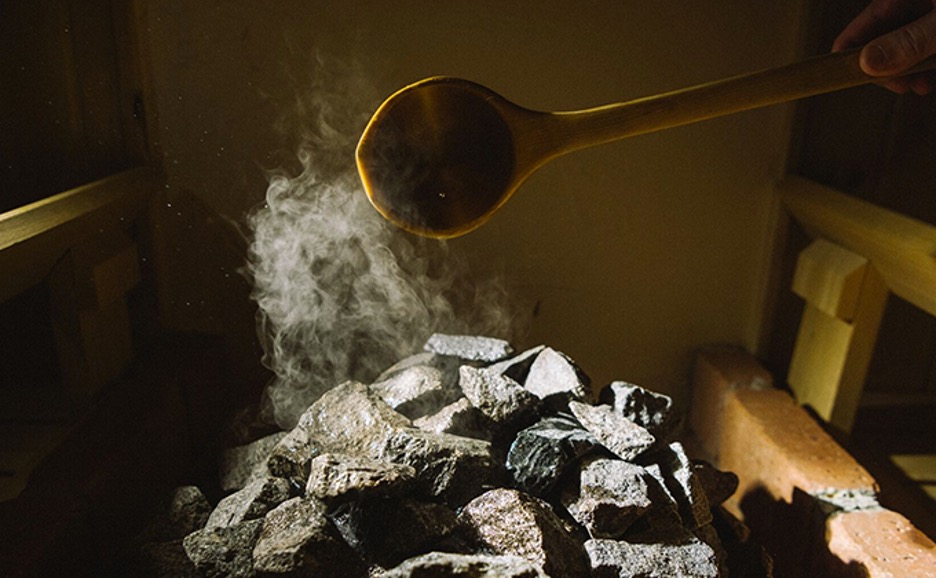
Yukitaka Yoneda (米田行孝) was born in Nagoya to a sauna family- with his father and grandfather operating saunas across the Kansai region of Western Japan.
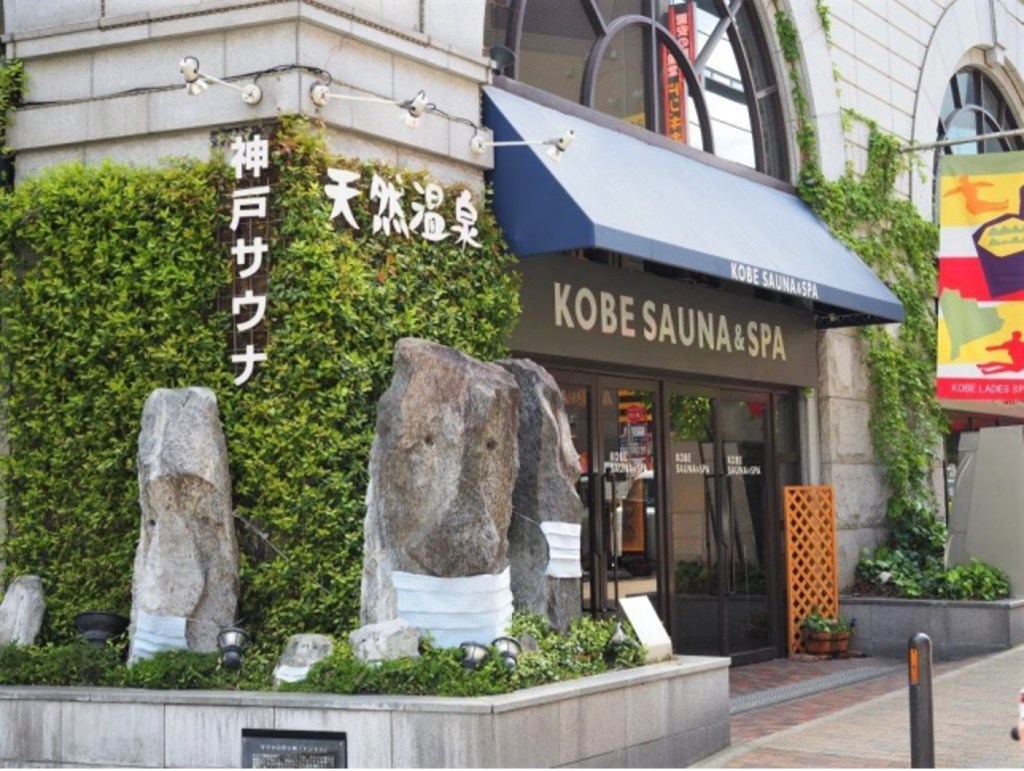
His grandfather opened Kobe Sauna and Spa just after World War II- when sauna was far from popular, or even known by the public. What was he thinking? He anticipated that as post-war reconstruction progressed, more Japanese people would seek out leisure activities. His prediction was correct, and led to Kobe Sauna’s success (which endures today).
A man surrounded in lore and legend, he reportedly kept a baby elephant in his garden, and potentially lions and tigers (!).
Fast forward to today, Kobe Sauna and Spa is still operating, with Yoneda’s cousin Atushi Yoneda serving as President-talk about a sauna family!
While Yukitaka Yoneda’s passion for saunas is now known across Japan, this wasn’t always the case. While his family ran saunas, they were at that time, as he describes it, rooted in the male-dominated ethos of the Showa era*. This image endured in Japanese sauna culture until very recently.
*Note: Showa refers to the Imperial Era between 1945 and 1989, when Emperor Showa ruled, particularly referring to his rule after World War II. He is often referred to as “Emperor Hirohito” in English. This is due to Japanese emperors receiving new names when they die. In this case, “Hirohito” was his name while he was alive, and his posthumous name is “Showa”. Since we don’t have this concept anywhere in the English-speaking world, “Hirohito” is still used in English Contrastingly, in Japan, “showa” is used to refer to both the emperor and the era in which he ruled. It is often shorthand for “retro” in a positive sense and “outdated” in a negative one.
The style of sauna of that time didn’t resonate with Yoneda. With the culture revolving around old salarymen saying “Let’s do our best tomorrow!” (明日もがんばるぞ) and watching TV in an itchy, dry, electric sauna wasn’t for him (who could blame him?). His future sauna ambitions were to remain dormant for now.
“I was a carefree rich kid. I had no interest in the family business, let alone saunas. Even when I was about to graduate from university, I didn’t feel any sense of crisis about my future. In fact, I didn’t even bother to look for a job.”
A few years after graduating university in 1993, he gained experience sauna consulting in China. At the request of his father, partially concerned about Yoneda’s lack of ambition, had him work in his sauna business in Nagoya, and eventually help a business acquaintance’s first Japanese-style urban sauna in China get off the ground.
During his time in China, his father passed away, leaving his sauna business in Japan (and its debts) with him. Straddled with debt and overwhelmed by the death of his father, Yoneda’s inner world became quite somber. At the height of personal anguish, Yoneda embarked on a trip to Finland. Feeling pushed to the limit by the trials of life, one smoke sauna session in the woods on a spur-of-the-moment trip Finland changed everything.
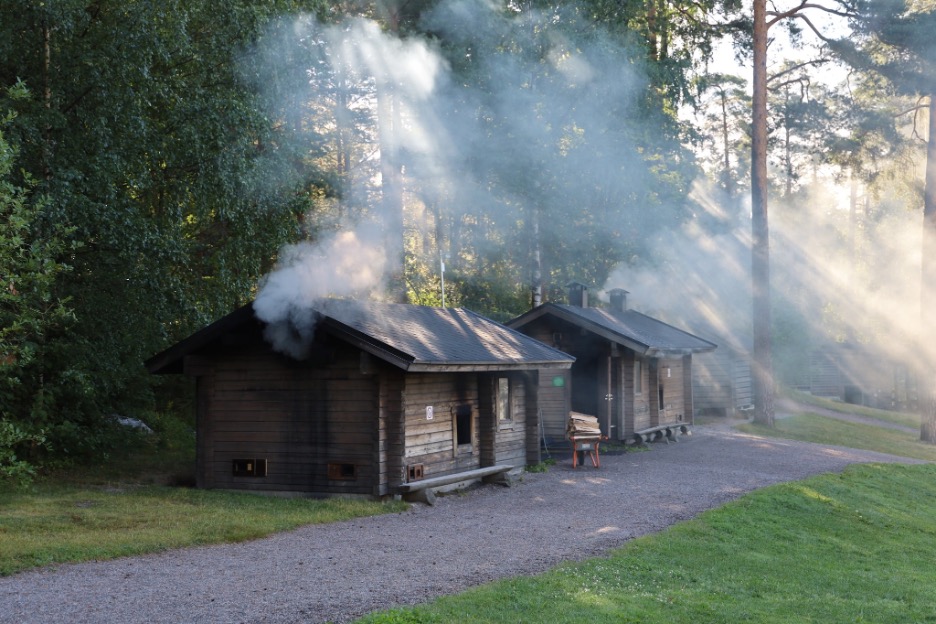
“That’s when I suddenly realized: ‘I should really think [more] about saunas.’ For the next 10 years, my goal wasn’t to pay off my debts, but to think about what I could do for the world with saunas”
After the experience, Yoneda wanted to not only spread Finnish style sauna to Japan, but also explore what Finnish sauna could look like in a Japanese context.
Doubling down on his efforts, Wellbe and eventually, Sauna Lab, became legendary in the Japanese sauna world.
Later on, he cited Katsuki Tanaka’s groundbreaking “Sado” (サ道)as a contributor to his clarity on the role of Saunas in Japan.
‘It was only after I discovered Sado that I was able to clearly articulate that saunas are truly necessary in today’s society. From then on, I focused on ‘how to increase the number of people who enjoy saunas, rather than just doing it for the money,’ and as a result, the business of my company started to run smoothly.”
Today, his sauna facilities rank as some of the top throughout Japan, and with his passion for saunas, it’s not difficult to see why.
WORKS:
Wellbe:
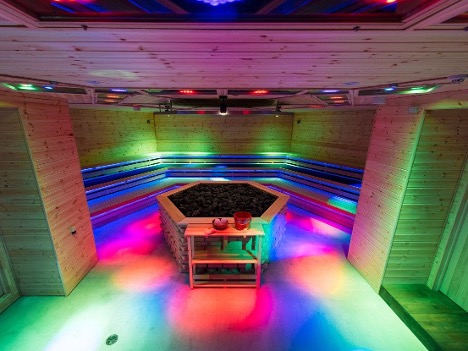
Wellbe is Yoneda’s original storefront that he inherited from his father. Since he took over, it has transformed into a pioneer of the contemporary Japanese sauna boom.
Located in Nagoya, this Saunachelin Hall of Famer is famous for being one of the first authentic Finnish style saunas in Japan. Established well before the start of the sauna boom, Wellbe managed to attract regular customers, despite it being a niche hobby at time. This is especially impressive being in Nagoya, since Tokyo and Osaka are the go-to destinations for anything international and experimental in Japan.
Wellbe is known for its authentic Finnish style saunas, top quality aufguss, and its cold “Lapland” room, meant to emulate the cold winters of Northern Finland while providing a place to cool down.
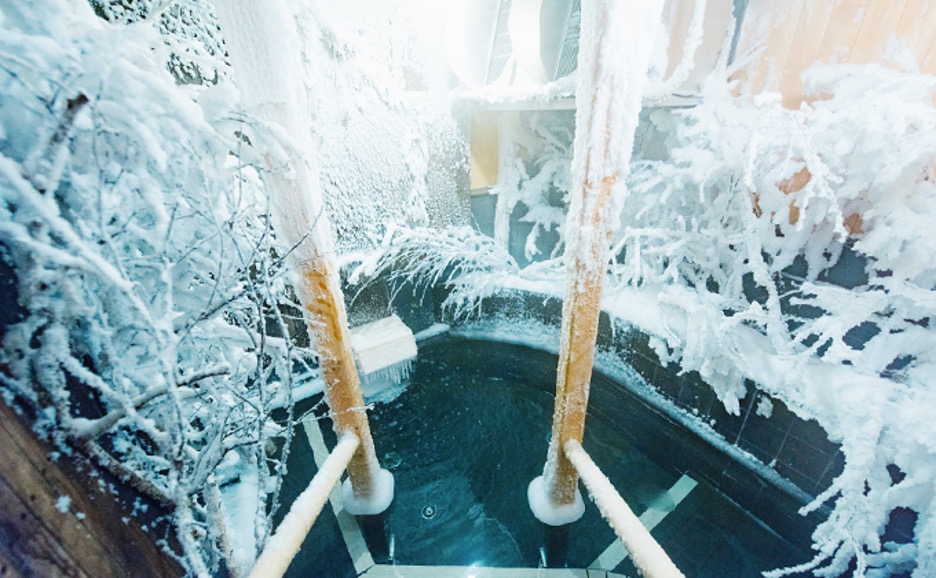
Today, Wellbe (men’s only) has a women’s only section (Forest House) and a Fukuoka location.
Sauna Lab:
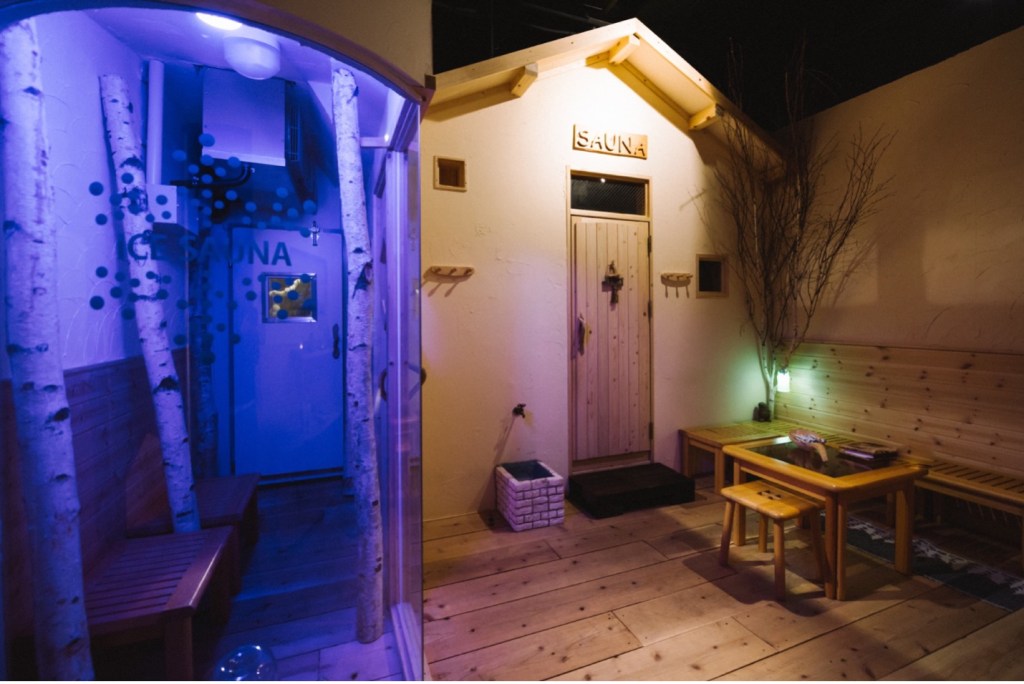
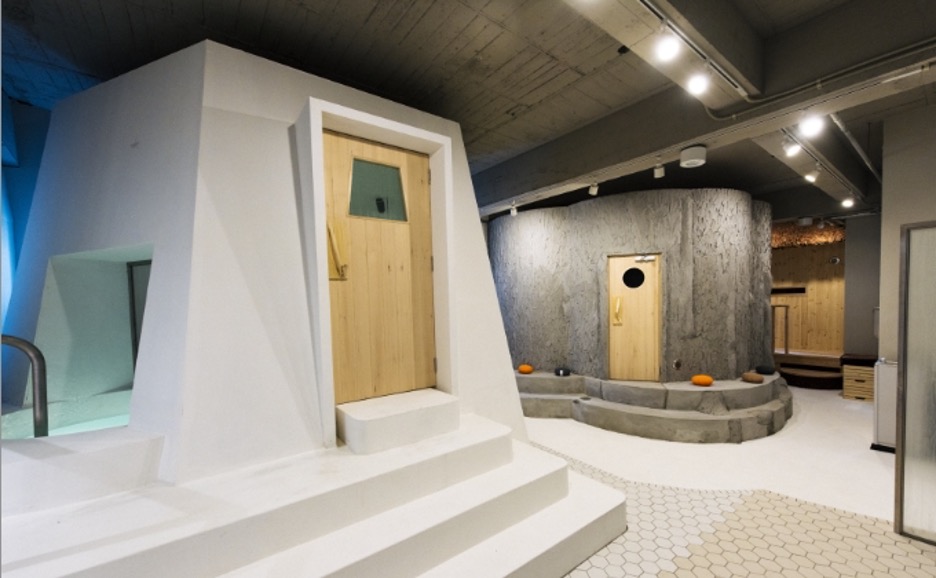
Designed as an oasis in the city to help urbanites find peace and clarity in the midst of their busy lives, Sauna Lab uses Finnish design principles with Japanese influences to create an unparalleled experience.
Inspired by an increased interest in Sauna from women who were unable to visit the (then) men-only Wellbe Sauna, Sauna Lab was born. Inspired by his holistic view of sauna as a path to alleviating human suffering, SaunaLab broadened access to sauna beyond his work at Wellbe, focusing more on the communal aspects of sauna.
Today are Sauna Lab locations in Nagoya, Tokyo (near Kanda Station), and Fukuoka.

Yoneda’s vision for sauna lab.
PHILOSOPHY:
Reduce suffering through sauna
After his own transformative experience in Finland, Yoneda recognized sauna’s potential to alter human behavior and enhance the wellbeing of mankind. While this might sound a bit dramatic, Yoneda articulates his vision well, both implicitly through his saunas and explicitly in numerous interviews.
On nature making the urban experience more manageable.Yoneda says
“Living in a city, there is an invisible barrier that says. ” This is the human zone.” But I sometimes wonder if a smooth, polished world is really comfortable for people.
I don’t have the answer, but if we could find a compromise between the natural and the artificial, we might be able to feel a little more comfortable. That’s what we want to explore at Sauna Lab.”
Upon my own visit to Sauna Lab, the amount of greenery, herbs, and wood throughout the building stood out as one of Sauna Lab’s most striking components. Despite the Kanda location being a short walk from Akihabara, a poster child for a technology dominated “human zone”, Sauna Lab manages to take you away from it all and feel a bit of fresh air and the Finnish woods in the center of Tokyo.
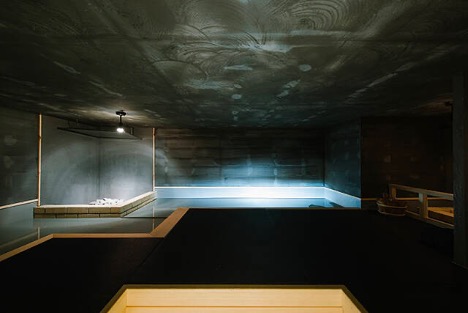
Expanding on this, Yoneda credits our separation from nature to the hubris of the modern man:
“I think the idea that humans are above nature is arrogant. The idea that humans are stronger than nature, that nature can be controlled, that kind of idea can be easily overturned. We have a lot of experiences like that, don’t we?”
“As I said before, it’s not about giving up urban life and
going back to nature. I think life would be easier if we got closer to nature and had a more humble attitude.”
Buddhist influence in sauna…?
If any of this sounds familiar, Yoneda’s philosophy has a lot overlap with Buddhism, as some have pointed out. On an archived version of the Sauna Lab website, you can find a distilled example of this
“The world in which nature is being lost and digitization is becoming more and more convenient is a wonderful place, but it is also bringing with it an increasing number of unique hardships. It is precisely because of these times that we created SaunaLab using natural wood in a building, as if we were planting trees in the city.”
He adds that
“I’m constantly asking myself what is needed to alleviate the suffering in the world right now, and that’s what I’m building these saunas with [in mind]”
The integration of nature (in particular, acknowledging that separateness between man and nature is artificial and that we are all part of one great existence) is as much a component in Yoneda’s work as the core acknowledgement of suffering, the latter which is found at the core of Buddhist theology.
Anyone who has experience ととのう (sauna enlightenment) can attest to the feeling of oneness and presence found in sauna. The importance of aesthetic spaces, such as Yoneda’s, in aiding the process are crucial to this feeling of oneness and presence found in both in Buddhist thought and the sauna experience.
Self-discovery through sauna
Cell phones have increasingly disconnected us from ourselves. The sauna survives as one of the last bastions to not only unplug, but reestablish self-reflection. As Yoneda puts it:
“I feel like there is a slight connection between
when saunas started to become popular and when smartphones started to become widespread. I think the reason saunas are becoming so popular worldwide is that people want to reset themselves from all that brain-intensive activity by going to the sauna.
In other words, the sauna gives your brain a rest.”
Yoneda emphasizes sauna as a remedy against the hyperconnected lifestyle of the modern age, suggesting that:
“If you spend all day on your computer or smartphone, I’d like you to try resetting yourself in a sauna, even if it’s just once a week. Sometimes, when you’re alone and you find yourself thinking endlessly, going into a sauna can actually help ease your mind.”
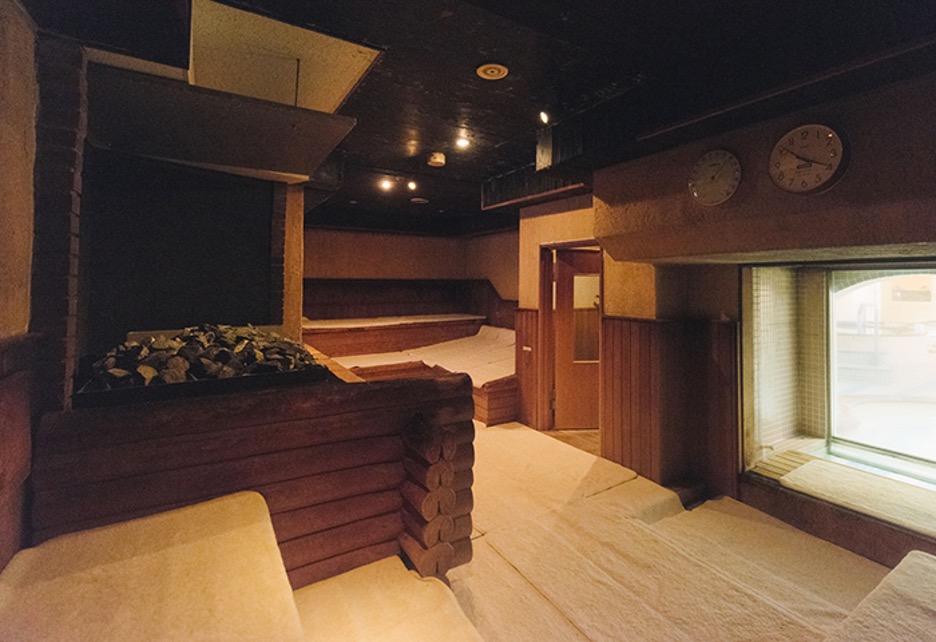
The combination of being without your phone and forced to focus on the body does wonders for one’s mental health. In the modern world where nearly everywhere is invaded by phones, saunas have held out when even strongholds like airplanes and schools have succumbed.
Throughout history, creatives, spiritual leaders, and innovators have relied on silence and stillness to prompt insights and “a-ha “moments. In a world of constant distractions, we have sanitized and scrubbed out nearly all opportunities for these sorts of insights.
In his own words:
“If the people of Tokyo could come to this sauna, reflect on themselves, rediscover themselves, and unleash their true potential, I believe Japan would become a better country. No, it’s not that saunas themselves will change the world. But if we can make the people in the town more and more energetic by creating saunas like this, then maybe we can indirectly change the world. I really believe that. ”
More than anything, this is why this blog exists. Frankly, I’ve wrestled back and forth if it’s appropriate to draw attention to a country facing massive overtourism issues and a low amount of English infrastructure to support it.
What unceasingly compels me to keep writing is the kindness shown Japanese sauna community, and how sauna continues to show up in my own life and the lives of others as a force for good in the world. The absence of phones and rare presence of a social space that draws us into our bodies is a potent tool in a world fraught by social isolation, division, and uncertainty.
Yoneda’s vision is the kind that inspires me to write about and share both his works and saunas across both Japan and the world.
Influence:
Yoneda’s influence is easy to find within the Japanese sauna community.
Outside of the success of Wellbe and Sauna Lab, he has continued to be an active part of the sauna boom. In the first season of Sado, Yoneda even makes an appearance at Wellbe. Cued with the titular “Godfather Theme” to fit his nickname, the show did a great job of presenting him as a towering, yet unassuming figure in the Japanese sauna community.
His influence extends beyond his nationwide reach (with saunas in Nagoya, Fukuoka, and Tokyo at the moment), representing Japan abroad as well. Outside of Japan, Yoneda is a part of the International Sauna Association, and is listed as a supporting member on their website. This has helped Japan get on stage at events such as the International Sauna Congress (yes, really).
Final Thoughts:
Like most who find themselves in the global sauna community, Yoneda is an eccentric, one of a kind visionary. Both his material and philosophical visions are distinctive and unprecedented.
As he puts it:
“I truly believe that saunas will save the world”
I hope that, in time, the world will follow suit.
Thank you for reading. Wishing you happy sauna sessions and for ととのうin your future…

 Sauna Sensei