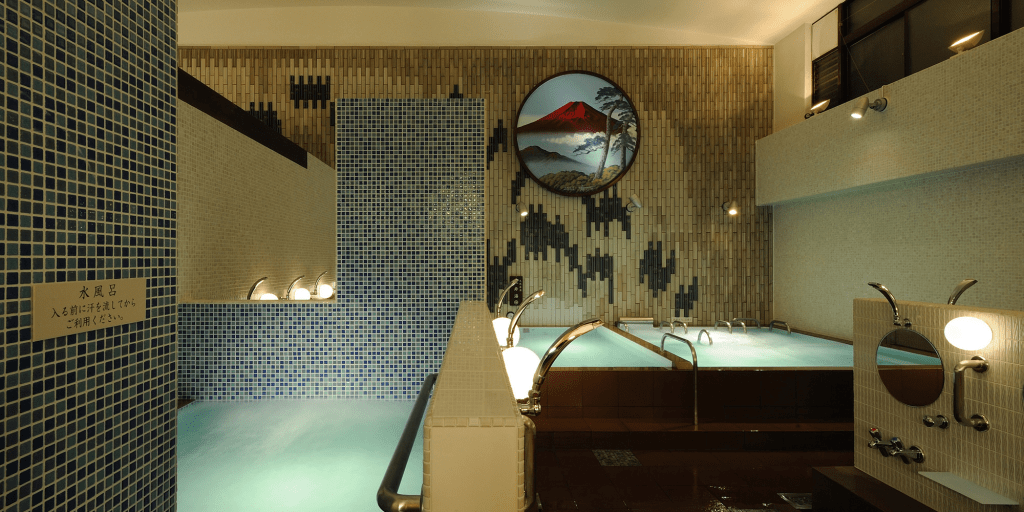
I was first introduced to Mr. Imai’s work through a Time Out Tokyo article I stumbled upon, which focused on his vision of reinventing public bathing for a new generation of Japanese bathers. Discovering that sauna and bathing wasn’t merely something that felt good, but had culture significance and encouraged creative expression absolutely blew my mind. Sold on his vision, I felt determined to one day visit Mr. Imai’s new “designer sento”.
In the nearly seven years since I read Imai’s feature in Time Out Tokyo, sauna and sento have flourished as a creative medium throughout Japan. Sauna books, magazines, TV shows, breweries and entire fashion lines have spawned, often fusing elements of Japanese and Finnish culture in a truly unique way. Imai’s vision of a public bath revival is being embraced by the new generation of Japanese bathers/Saunners, further establishing his expertise and position in the community. It goes without saying that the man synonymous with “designer sento” has a lot ideas worth exploring.
BACKGROUND:
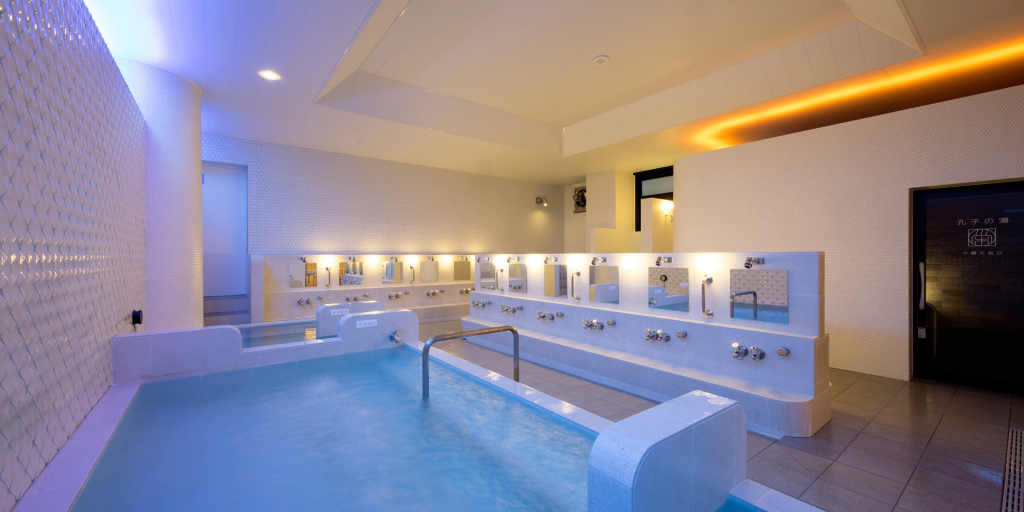
Mr. Imai has a background in architecture, and while he focuses on sento, his firm has also worked on residential and commercial buildings. Even in non-bathing facility projects, his distinct intentional minimalism and “evolution, not revolution” principle is visible, which can be seen on his portfolio.
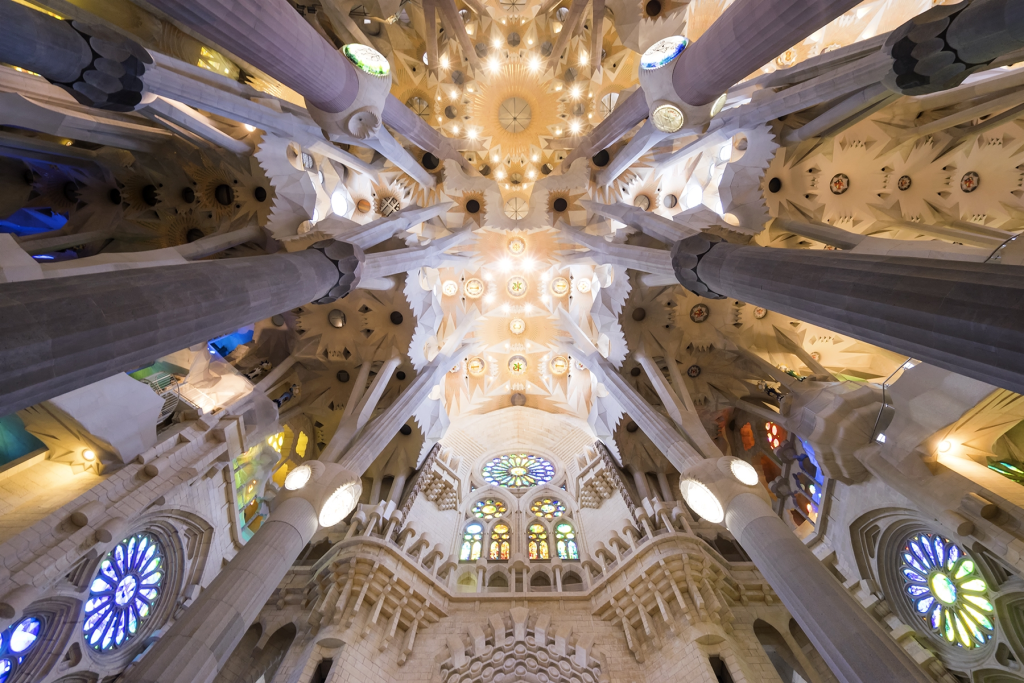
Born in Shizuoka Prefecture about two and a half hours from Tokyo, he went on to pursue interior design in university. Initially planning to focus on industrial design, an initial exposure to Antoni Gaudi’s* architecture helped him change course. In his own words :
“When it comes to architecture, there are many other elements that come into play apart from pure design . However, when you look at Gaudi’s architecture*, that concept completely disappears. Citizens see art in their daily lives and live inside that art. It’s not just [about] logic, it’s the sense of necessity between the creator and the user, and I think it’s amazing. I really liked how it felt like it was used on a daily basis, like Park Güell [in Barcelona], a church, or an apartment complex . A space outside of books and museums as public art. Now that I think about it, I feel that it is surprisingly connected to public baths.” (translated from Google and edited for clarity)
*Catalan architect, best known as the original for the ongoing Sagrada Familia in Barcelona.
Retrospectively, Imai also cites the famous manga “Thermae Romae”, the story of an ancient Roman architect transported to modern Japan and experiences Japanese public bathing, as an influence. Jokingly, he refers to himself as something of a “reverse Thermae Romae“, looking at ancient Roman architecture to help design some of his baths.
Going on to graduate from Musahino Art University with a masters in design in 1992, he went on to work for several architecture firms before establishing Kentaro Imai Architectural Office in 1998. While Imai is known for his work on public bathhouses, it wasn’t in his initial plans to focus on sento. After visiting a sento in Tokyo’s Kitasenju neighborhood, a regular customer suggested he try his hand at public baths. As a regular sento patron himself, he found the idea interesting and pursued it. Unlike other fields of architecture, public bathing design lacked any books covering design, floor plans, or anything specific to building and remodeling sento. Imai found his niche. As a result, Imai conducted independent research to break into the public bath design world. Looking back on an early remodeling experience:
“I am truly grateful to the owner of “Ohirayu” in Adachi Ward, as the first [connection] in the public bath industry is very important. Thinking back on it now, I feel that they allowed newcomers to work in this closed industry.”
Today, having worked on 28 bathing/sauna facilities (including one outside of Japan in Taiwan), Imai’s firm is at the forefront of the sauna boom, and is a pivotal force in the accompanying sento revival.
PHILOSOPHY
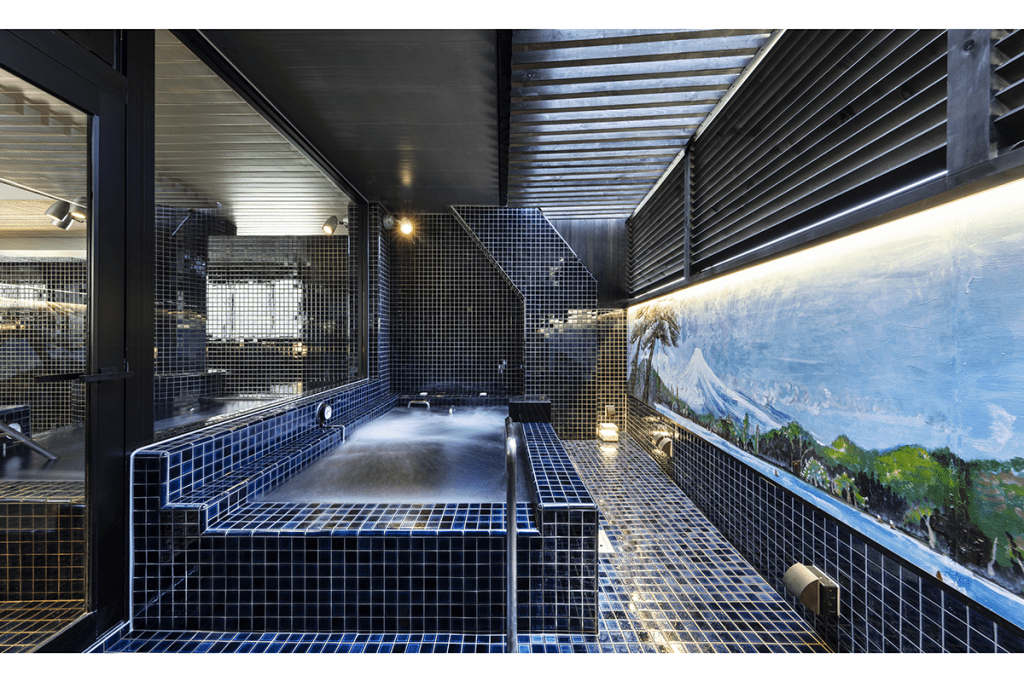
Evolution, not revolution
At the core of Imai’s design philosophy, he combines “nostalgia with newness” in his own words.
“Another primary vision I value when designing a bathroom [bathhouse] is to create a space that combines a sense of nostalgia with newness. Traditionally, Japanese people enjoy a variety of forms and styles of bath, such as steam baths, hot springs, public bathhouses, super sento, home baths, spas, and saunas. In other words, bathing is a part of the traditional culture essential to Japanese. I believe tradition should be passed down from generation to generation while integrating conservational elements with evolution. As a representative space, it is reasonable to create a bathing space design that offers a sense of nostalgia and newness at the same time. Newness and nostalgia are defined as simplicity, which may lead to the idea for the space.”
A hallmark of his style, Imai masterfully strikes the balance of preserving the local character of a sento and adding new elements that make his projects’ distinctly modern. The result? A modern reimagining of historic bath houses that bring out their full potential. Succinctly put, this style is about “evolution, not revolution“
Further expanding on this design philosophy in a Time Out Tokyo article:
“In order to make sure that this tradition lives on into the future, I try to leave the original style and details of bathhouses intact while adding new elements that make the experience more pleasant. Ideally, the result feels both new and familiar.”
Imai’s adamance towards preserving the integrity of a venue, while being able to use a remodel to bring that character out is inspiring, and the dedication to the craft comes through in every one of his projects. To provide a few highlighted examples from his website, his results are striking:
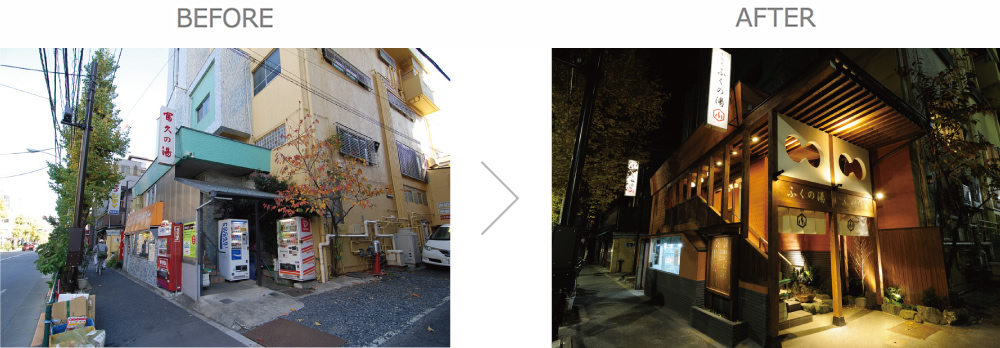
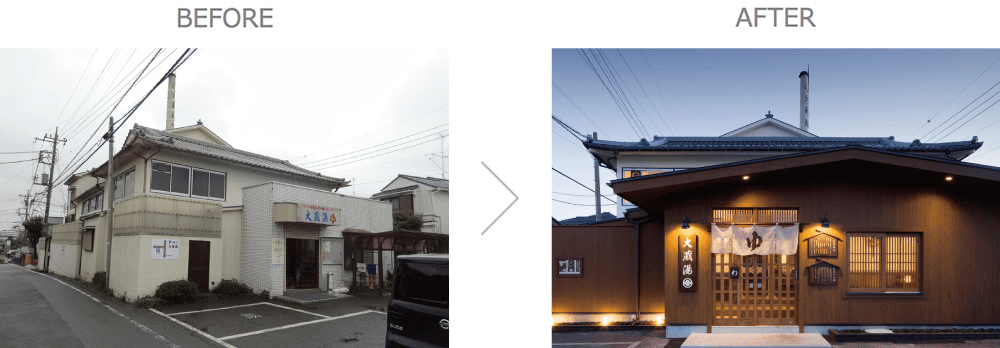
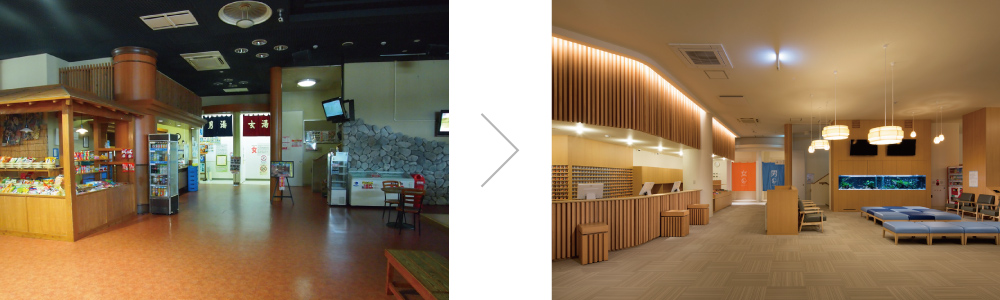
While the buildings are almost unrecognizable, a careful look reveals subtle nods to the original design and the character of the surrounding neighborhood. Mr Imai’s commitment to designing baths with a specific concept, or motif in mind, is what makes these projects stand out the most.
Concept
Emphasizing the uniqueness of each bathhouse is fundamental to This is perhaps my favorite aspect of Imai. His dedication to each project’s concept and motif is unparalleled. While I have been a long time sauna/bathing fan, it was his work that showed me sauna and bathing exists as form of creative expression rather than exclusively recreation.
To give a few examples:
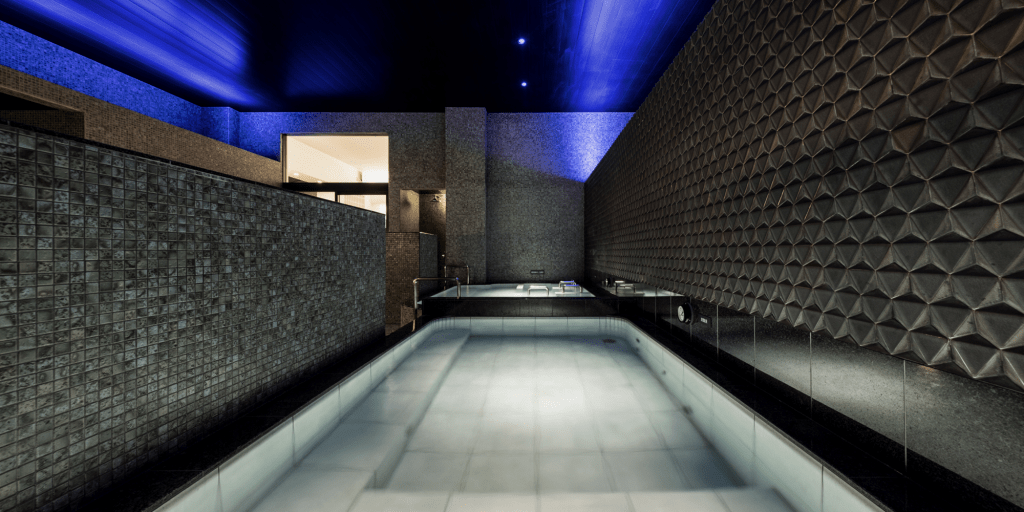
Cultural Crossing
“Our final purpose is to contribute to the reactivation of the Sento which have declined in the present age, so our challenge in this project was to show a new state of Sento with an urban function and a spatial image in a big city like Shibuya. The concept of this project was based on “cultural crossing” due to the location. To realize this concept, a practical plan and a spatial image were incorporated into the design. The idea of “cultural crossing” is used because a variety of events, workshops, and exhibitions can be held there, and both the exterior and interior walls have space to display artwork by new artists. These art-walls symbolize the cultural exchange which this space hopes to foster. Now the art-wall has became a hot spot for Instagram, and the combination of Sento, Shibuya, event space was well received to be fresh & exciting. KAIRYO-YU has gathered many people after the renovation and has became a hot topic as one of the stories of a reviving Sento. It will spark a new beginning for Sento by appealing to the younger generation. We believe the success of this project will bring a huge merit to the preservation of Japanese traditional culture and the healthy-beauty lifestyle of city dwellers in Japan.”
Edo Style Sento in the Present Era
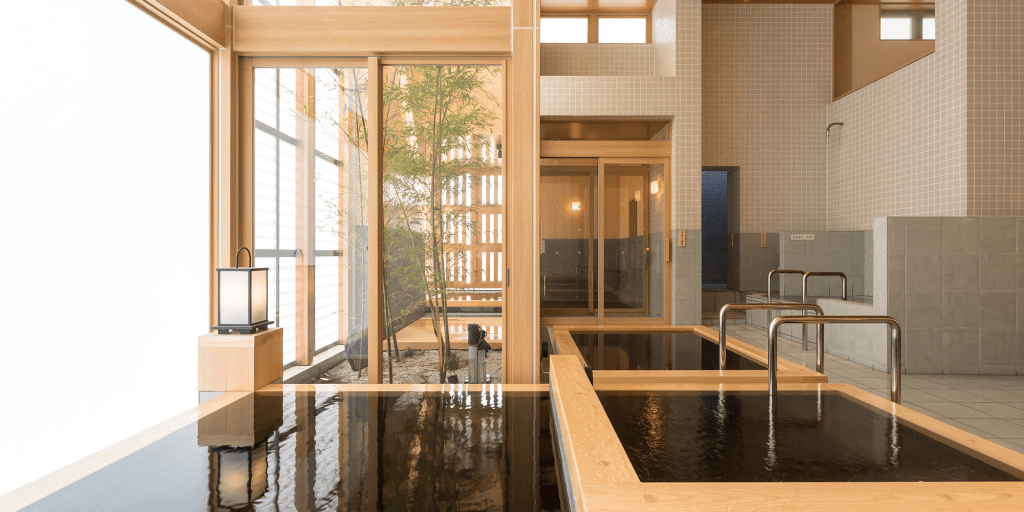
“MIKOKU-YU is standing near the birthplace of Hokusai Katsushika*, that has an atmosphere of deep down town of Tokyo. It’s located in the center of the spots which have become the face of Edo/Tokyo such as Asakusa, Ryogoku and Honjo-Azumabashi along with the “Sky tree”. The design concept was set as “Edo style Sento in the present era” and the design was developed based on uncolored wood usage and colors reminiscent of Edo.”
*Hokusai Katsushika is the renowned ukiyo-e artist of the world renowned “Great Wave off Kanagawa”painting.
Both bathhouses have incredibly different, yet focused themes that they are based around. I chose to highlight these two due to their vastly different themes. On one hand, Kairyou-yu looks to the modern, cutting edge neighborhood of Shibuya as a creative muse. On the other, Mikoku-yu looks to the historic past of downtown Tokyo to find inspiration. Despite their radically different designs, but commit to a unique and cohesive theme that give both spaces an individuality to them. As a bather, this is precisely what makes Imai’s projects such a treat. Much like a skilled film director, each work has its own identity, but his portfolio as a whole can be identified by his design principles and style.
FINAL THOUGHTS
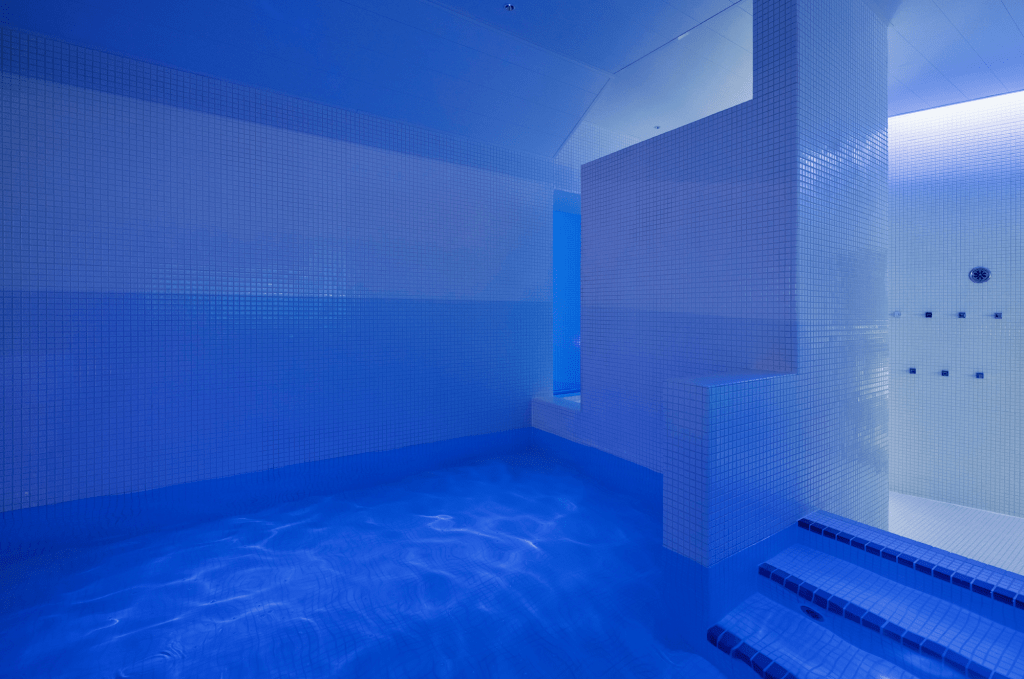
Mr. Imai’s work has touched what seems like every corner of Tokyo, with outposts extending outside of the city. His works are an absolute delight to experience, and greatly enrich my day with every location I visit. The world would be a much better place with more architecture like his in it. For anyone interested in the forefront sento revival in Tokyo, any of Imai’s projects are a great place to start.
Selected Quote
“There’s another thing I care about when it comes to architectural design. I would like to make sure that each bathhouse [that I design] has a unique space. For this reason, when I design each bathhouse, I decide on the initial concept before starting on the design. For me, each bathhouse has a distinctive character that makes it unique. It could be the bathhouse’s tradition or local history.”
-Kentaro Imai [excerpt from “Mikokuyu, Sauna Channel Interview]

Author’s Note:
This article is the start of a new series, “Design Spotlight”, which will cover a pivotal figure or group in the Japanese sauna and sento scene. Together, we will go over the individual/group’s top contributions, as well as their high philosophy on sauna and bathing. To kick things off, I could think of no better chocie than the designer that introduced me to Japan’s bathing culture, and one of my personal favorites in the Japanese bathing and sauna scene.
I hope you enjoyed this first entry. Thank you for giving it a read! I look forward to writing more in the near future…

 Sauna Sensei