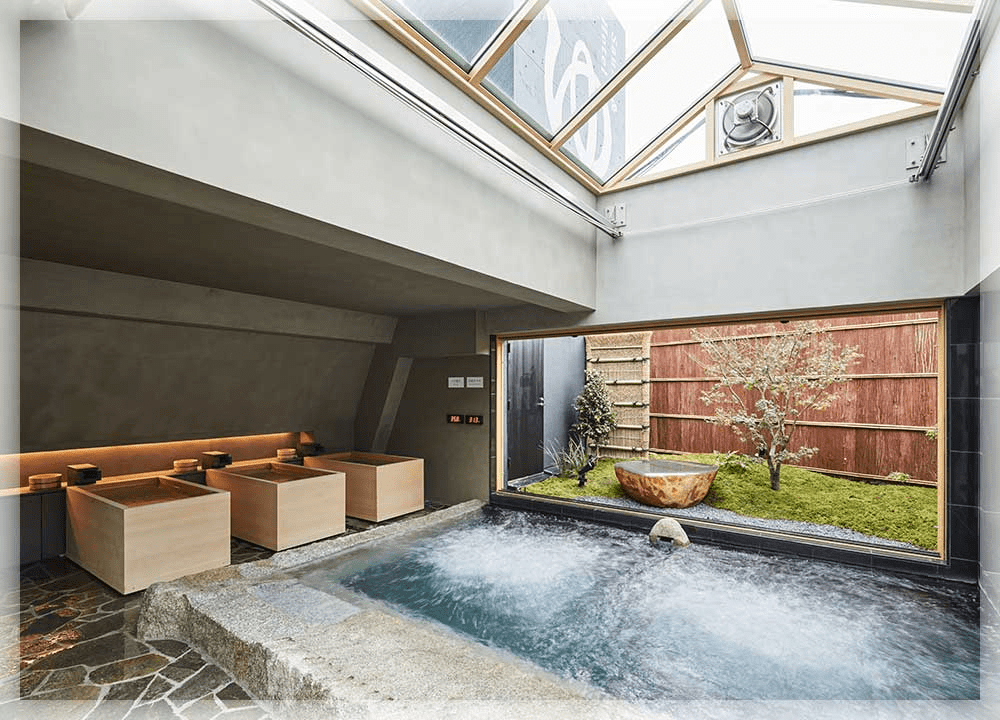
Refined. Modern. Balanced.
Tattoos Okay? No
Sauna? Yes
Price? $$$
Should I bring toiletries? No
Best For? Those looking for an equal balance of high quality baths and sauna. Anyone looking for a capsule hotel destination with a complimentary sauna experience to match.
Nearest Station: Ikebukuro Station. 3 minute walk.
Advertised as one the Kanto region’s largest sauna facilities, Karumaru has been a player on the Tokyo sauna scene for quite some time. Anyone who has been will see why it has made such a name for itself. Featuring a modern yet classic aesthetic, a great balance of baths and sauna, and amenities to match, Sauna and Hotel Karumaru is a sauna destination worth visiting. Let’s dig into what makes it stand out!
Aesthetics
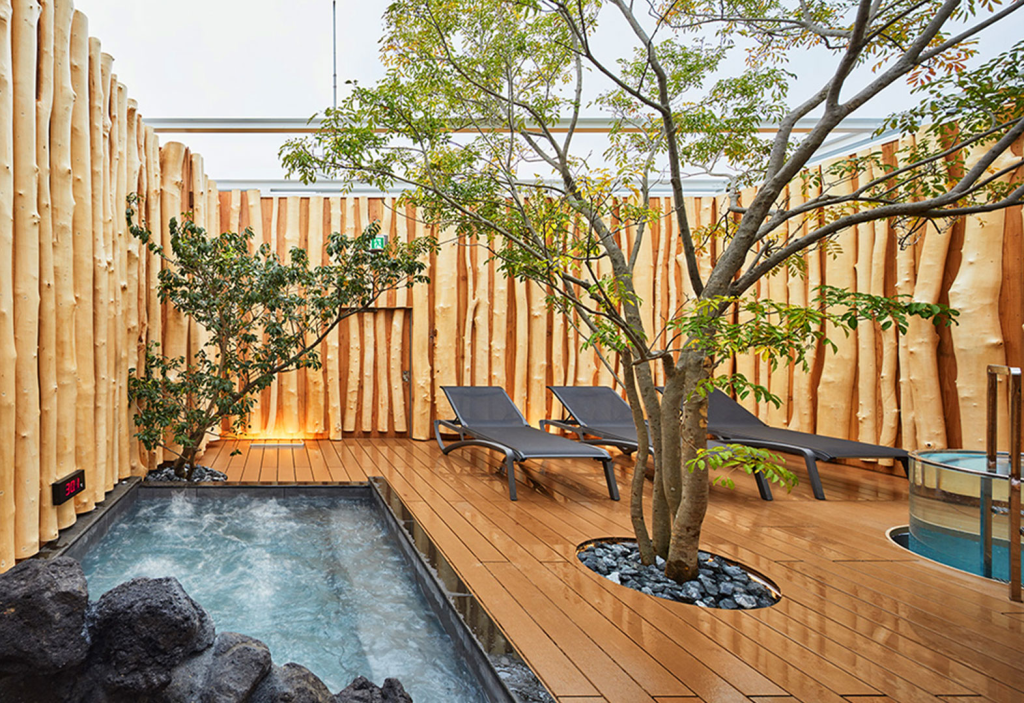
Located on several high-level floors of a multi-story building near Ikebukuro station, Sauna Karumaru cultivates an oasis-like environment in an otherwise exciting and chaotic part of Tokyo.
When I think of this facility, its natural stone and wood tones are what come to mind. Maintaining a light wood motif throughout, Sauna Karumaru forces you to forget you are in urban Tokyo, and relax into your natural surroundings. From the bright wood tones in the lobby, to the calm rooftop garden hidden in the center of Ikebukuro, Sauna Karumaru puts bathers at ease from start to finish.
The venue’s overall aesthetic is enhanced by the attention to detail to non-visual senses as well, specifically smell and touch. In particular, I think of the herb selection in the steam sauna, and the use of real wood in the wood-burning sauna. Additionally, the meticulous attention to detail used to craft each of the sauna (more on that in the facilities section of this review) give each and every bath/sauna a unique sensation, not duplicated anywhere else in the facility.
As you ascend up Sauna Karumaru, the amount of greenery gradually increases, a subtle detail I appreciated. From the lack of plants in the lobby, you start to see some loose birch branches in the resting areas, then towards the top floor, you can spot a small bonsai tree, leading to the outdoor rooftop with full trees at the center of the roof. The gradual addition of plants subtly lures you into relaxing and unwinding as you retreat from the city and into the depths of the facility.
Culture/vibe
Sauna Karumaru secured a second place Saunachelin spot back in 2020, as well as a third place spot in 2021. As both an early and well recognized player in the Japanese sauna boom, Sauna Karumaru is well renowned for its variety of sauna, conscious aesthetic choices, and attention to detail. Taking a closer look, there is more going on behind the scenes that makes Sauna Karumaru standout.
Beyond being a business, two concepts are the driving force of everything that happens at Sauna Karumaru: “Human Return” (人間回帰) and “My Place” (自分の居場所). On Karumaru’s “Concept” page, “Human Return is described as:
Nature has the power to bring people back to normal.
Therefore, when people are tired, they desire nature.
However, nature is far away.
So, Karumaru is a place where people can feel nature and return to their normal selves while still being in the city.
That is one of the concepts of Karumaru.
Something I really appreciate about the description is how it emphasizes the value of nature without needing to devalue urban life. As someone who loves cities and values the urban experience, I often see a dualistic “cities are bad/nature is good” at the core of arguments to convince people to spend more time in nature. Both are absolutely important, and I appreciate the balance emphasized here. I also, as someone who loves cities, do not spend nearly enough time out in nature. Whenever I make the time to spend time in nature, removed from the constant noise of the modern world (spare a friend or two that I brought along for the ride), I always come back refreshed and recharged to better appreciate the exciting pace of my urban life.
Living in Tokyo, I have come to appreciate how the city so effectively maintains a balance between bustling urban spaces and dedicated parks, temples, and even sauna that reintegrate nature into your daily life. With essential oils, a wood burning sauna, and plants carefully placed around the facility, Sauna Karumaru does an excellent job of taking you into the woods without having to leave the world’s largest city.
“My Place”, the other motif of Sauna Karumaru, is described as
A place that seems to be everywhere, but surprisingly is not.
However, everyone has moments when they want to relax.
Karumaru is a place where you can find your own place to relax.
That is one of the concepts of Karumaru.
This first line strongly resonated with me. A conversation that I frequently have within the sauna community is how increasingly rare “third places” are. Outside of bars and the occasional gym, many of the conventional places outside of the home and work for people to congregate have disappeared or diminished over the past forty years. Where local community organizations, labor unions, and recreational sports teams previously served as spaces outside of work to form friendships and relax, these spaces are becoming increasingly less common for adults.
While this has been the case in much of the developed world for the past 30-40 years, it seems to have been accelerated by the global pandemic. One of (and possibly the last) bastions of a cell-phone free space, sauna have, oddly enough, emerged as a third place in nearly everywhere I have traveled. Ranging from small towns to the largest cities in the world, sauna provide a third place for a lot of people, including many of my close friends. Free from the constant bombardment of modern technology, you are forced both to connect with people and relax into your body. I don’t think it’s a coincidence that Japan’s sauna boom has coincided with COVID-19 so neatly. People crave a third space and connection deeply, which places like Sauna Karumaru understand.
*For more on this topic, Robert Putnam’s “Bowling Alone” does a great deep dive from a sociological perspective on this issue, focusing specifically on American public life, and its decline into the late 20th century.
Facilities:
Kero (Kelo) Sauna:
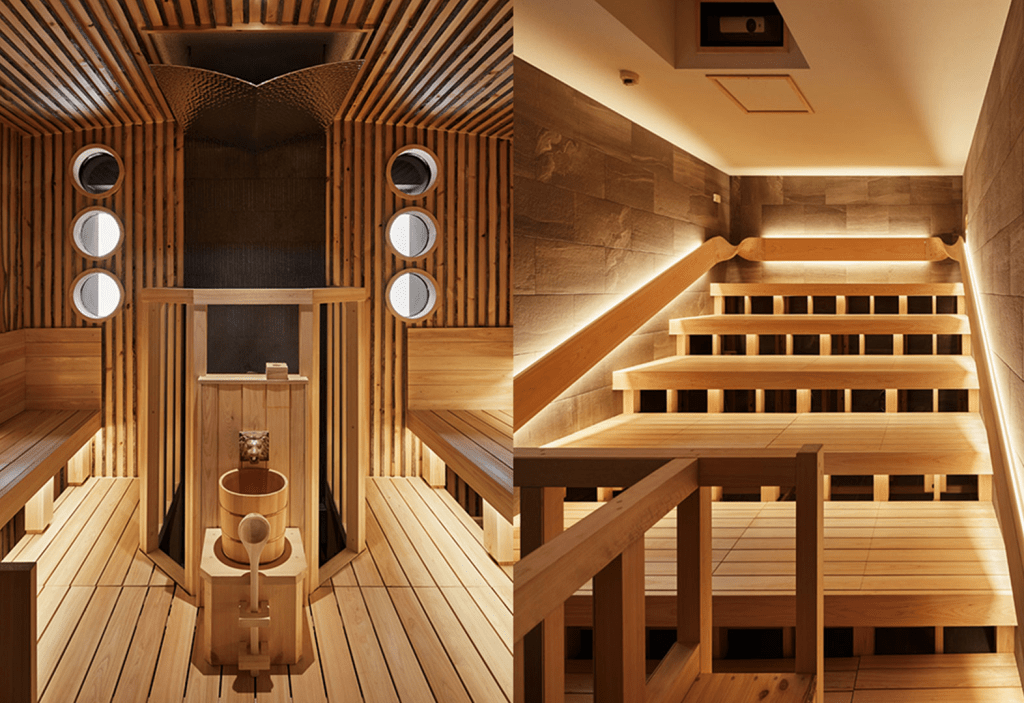
If you’re anything like me, you are probably curious what a “kero” sauna is. The “kero” in kero sauna refers to kelo wood (Japanese doesn’t have the L sound, so it is adjusted here to fit the Japanese phonology). Those who are a fan of my reviews may recognize the term from my Sauna Tokyo review, which also boasts a kelo sauna.
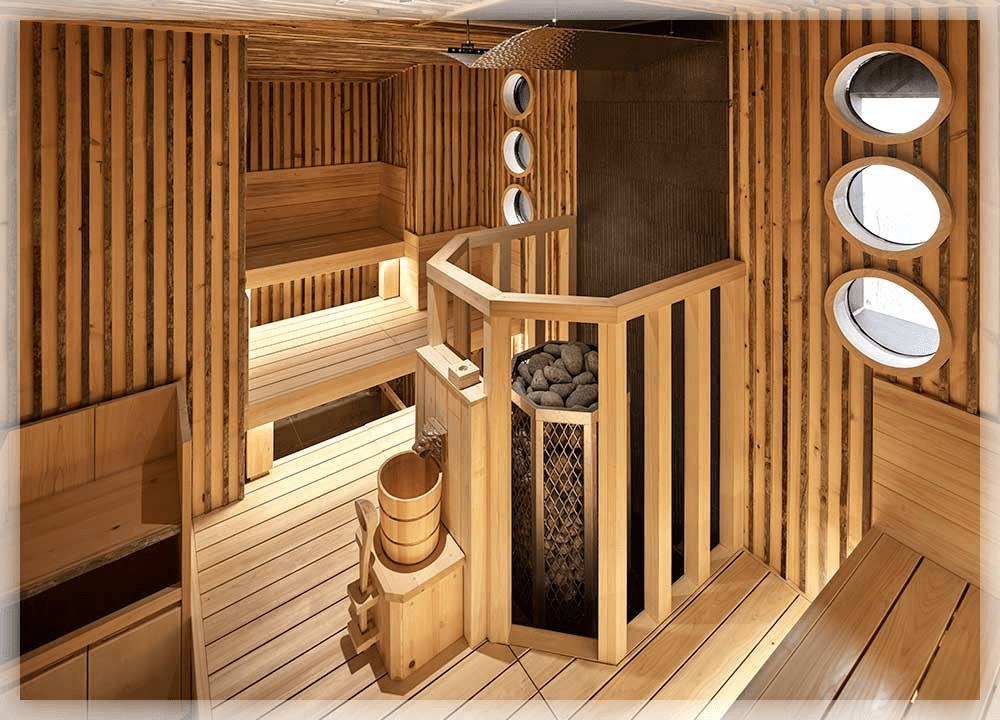
Kelo wood comes from pine trees in Finland that have grown for 300-400 years, then gone through the process of dying and shedding bark for several decades, until it has completed this process, and can then be considered kelo wood. Given how long it takes for “new” kelo wood to emerge, the wood is considered a rarity. Additionally, kelo wood is an incredibly effective as an insulator, and has a distinctly comforting woodsy scent that make kelo wood highly sought after in sauna building.
Sauna Karumaru’s kelo sauna seats just under ten people, and does an excellent job of keeping mid-to high heat paired with moderate humidity. The top and bottom levels are drastically different temperatures than each other, which allows for a more relaxed or intense experience in the sauna.
Stone Sauna:
Karumaru’s largest sauna, this stone sauna uses Aji stone, a highly durable type of Japanese granite that is known for its densitiy and durability. The use of Aji stone results in a sauna that effectively retains heat, while also absorbing excess heat to ensure a comfortable sauna experience. They also host Aufguss here, which is a pleasant experience on any of the four sauna benches, due to the stone sauna’s effective heat regulation.
Barrel Steam Sauna:

A personal sauna with a capacity for one (be prepared to wait in line), the barrel steam sauna is made of Koya Pine from Wakayama Prefecture in western Japan, as well as Himalayan and Nanyang cedar. These types of wood give the sauna rot-resistance from the steam exposure, as well as a nice woodsy aroma you can smell inside the sauna. Each person only gets around six minutes in the sauna, but trust me: that is ample time. The barrel sauna gets incredibly hot, and will have you running into the near-freezing cold plunge nearby!
Wood Burning Sauna:
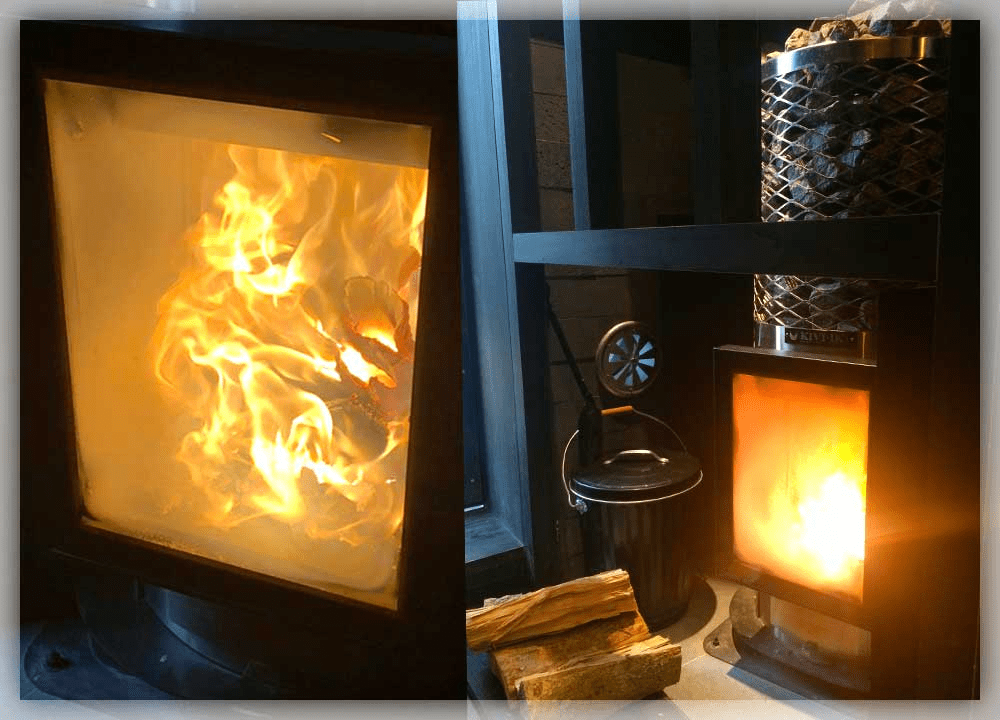
My personal favorite, this sauna lives up to its name and uses an actual wood-fired stove as its heat source. Only groups of five are allowed in at a time, so you enter with a sense of anticipation and excitement. With a temperature around 80 degrees (around 176 Farenheit), the sauna allows you to slowly build up to a steady and comfortable sweat. Used in conjunction with the nearby cold plunge, this sauna is an absolute treat.
*This sauna only seats five at a time, so time slots are booked every hour in the main bathing area, so be sure to keep an eye out for when time slots are called!
Baths:
Note: Due to the sheer volume of baths (nine), this section will just cover the most unique baths. The rest are normal warm, cool, and electric baths that live up to the quality of the other amenities.
Thunder Tornado
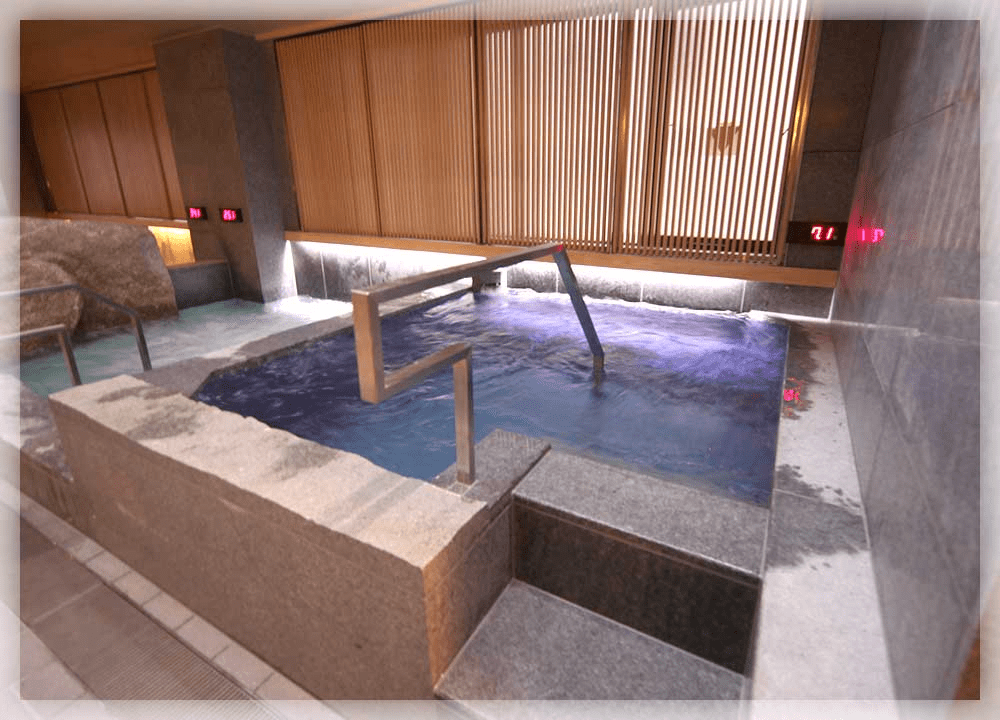
This one is cold! I mean really cold! The temperature is above freezing at around 8-9 degrees (around 45 degrees). On its own, this can be cold but bearable. However, what really takes this pool up a notch is the hot-tub style jets that keep the water moving at all times. This makes the water feel close to freezing for an always exhilarating, often intense experience. Great after a high heat sauna session. Be careful with this one, especially if you are new to sauna!
Acrylic Avant (transparent cold bath/plunge tank)
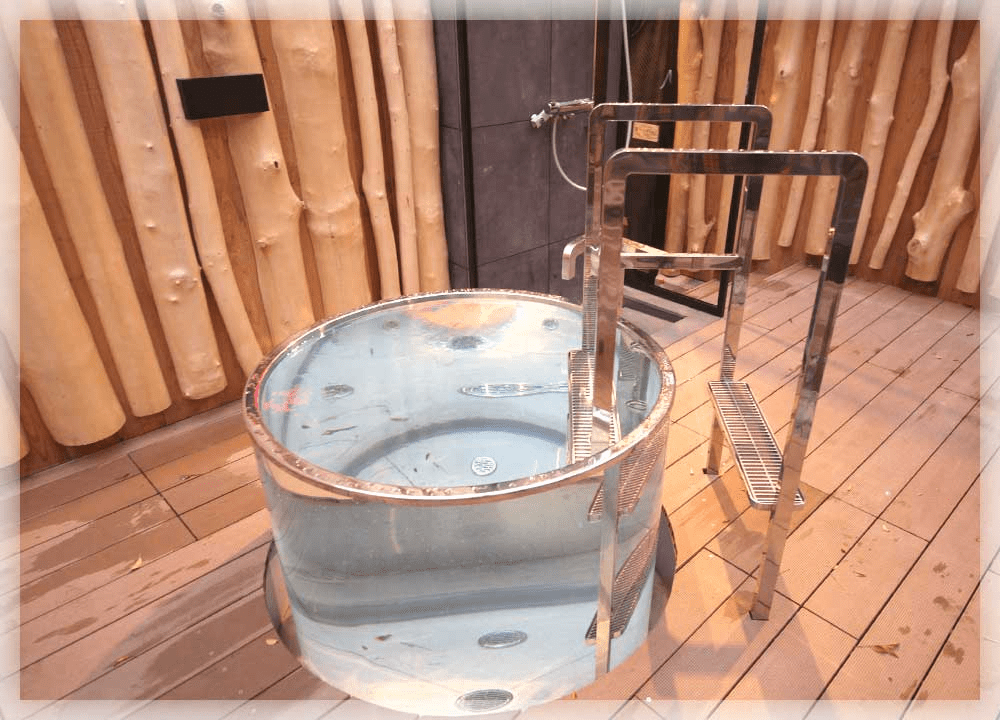
Located on the rooftop deck, this one person plunge tank is designed like an Avant (which means “hole in a frozen lake in Finnish”). Just a few steps away from both the wood burning sauna and several warm rooftop baths, this bath is an absolute treat! With a temperature at around 14 degrees (57 Fahrenheit), the one-meter deep plunge tank matches the surrounding baths and sauna incredibly well. This bath is possibly my favorite amenity from an aesthetic standpoint, as I think its easy to look at, and complements its surroundings well.
Rock and Box Baths:
Situated next to each other, the Rock and Box baths offer the most bathing focused experiences in area up the stairs from most of the sauna facilities.

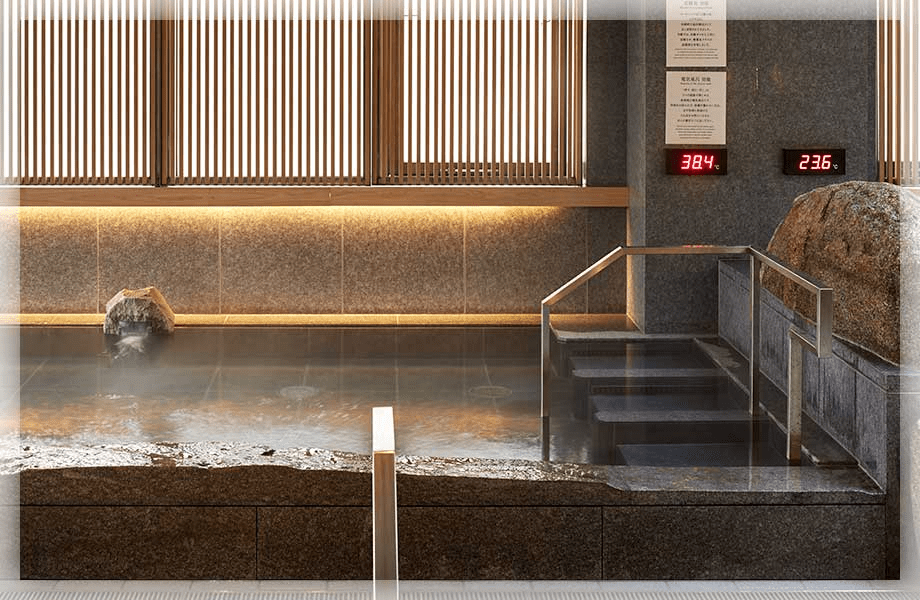
The rock bath is set at a relaxing “neutral warm” temperature of 36 degrees (97 degrees), that make it a pleasant bath to reset and relax in. The bath is made of Kitagi stone from the Okayama prefecture in and around the Southern portion of Honshu, the largest island in Japan. Combined with the serene garden through the window, I really enjoyed utilizing this bath to unwind between intense sauna and cold bath sessions.
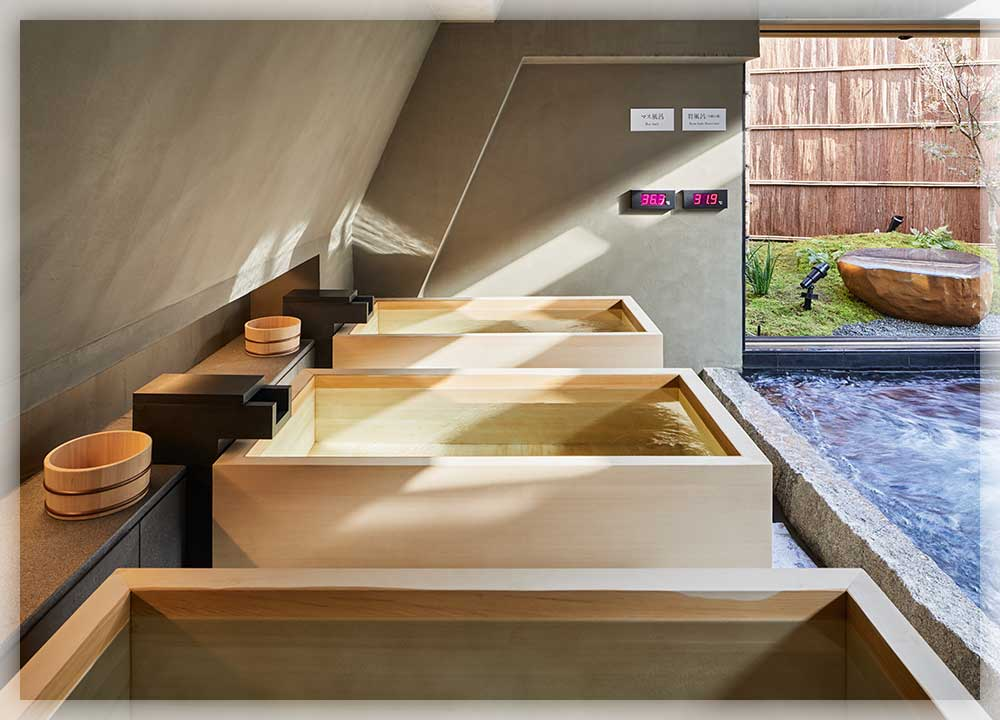
The box bath uses Aomori Hiba wood, a type of Cypress wood historically used in the construction of temples, and has a refreshing aroma well suited for baths. Lying down in the body length bath gives a regal feeling, especially situated next to the visible outdoor garden and up the stairs from the majority of the sauna and baths. These baths are fairly hot at around 42 degrees (107 Fahrenheit), so it does’t take long to get the most out of these baths.
Bonus- Rest Area
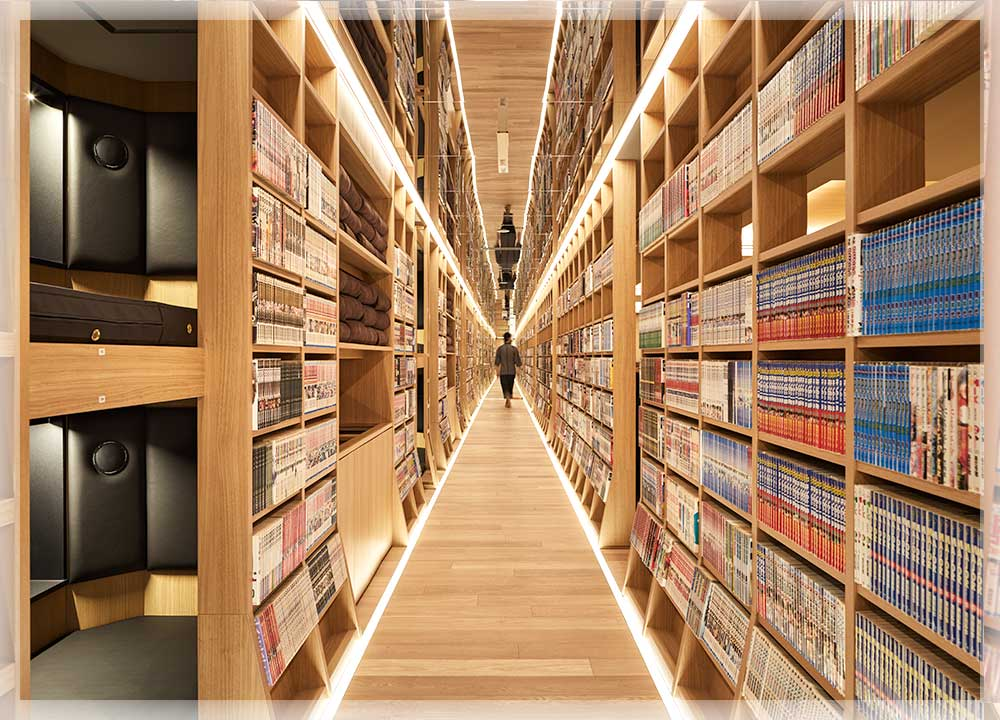
Located a few floors down from the rest of the facilities, you can find one of my favorite parts of Sauna Karumaru- the rest area! Famous for its absolutely massive library with over 10,000 manga and magazines, you could spend nearly an entire day here alone (especially if you can read Japanese!).
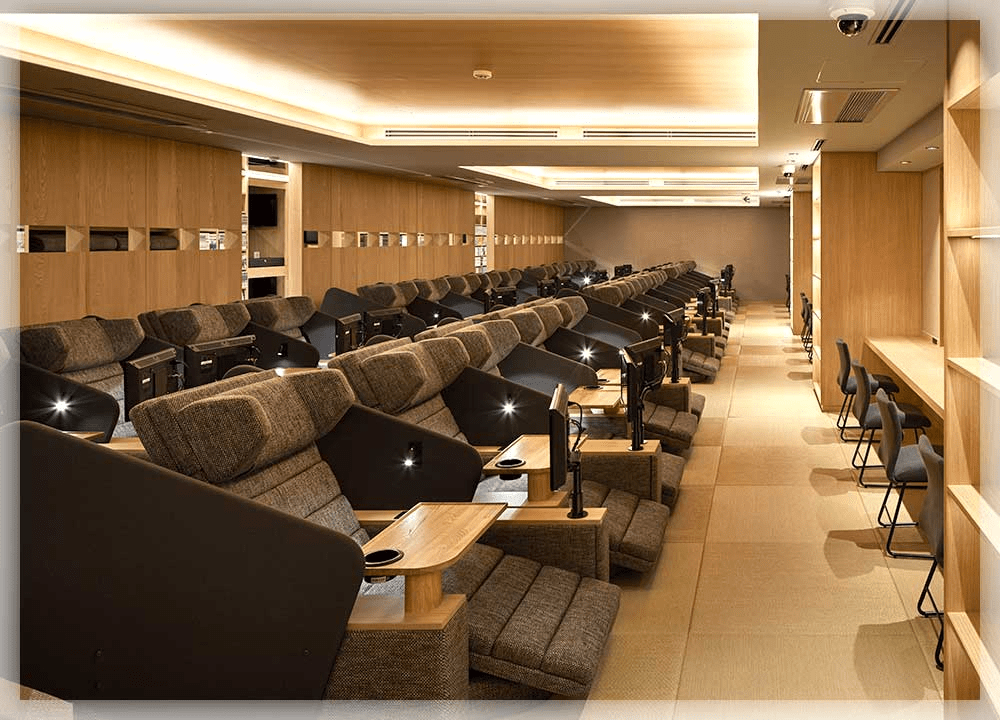
The lounge area itself is excellent as well, with lots of comfortable chairs and places to sit and read. Be sure to stop by at some point on your visit!
Limitations/shortcomings:
While I do sincerely appreciate Sauna Karumaru’s sauna facilities, an issue I have ran into on my trips are the relatively small capacities of most of the sauna. Sauna Karumaru boasts four excellent sauna. However, two of them have a very limited capacity, with the barrel steam sauna seating only one person, and the wood sauna only seating five people. For a facility housing (what I estimate) to be around one hundred people using the bathing facilities at a given time, having only two sauna that fit more than five people can make things feel a bit cramped. Even just one additional sauna fit to hold ten to fifteen more people would give the space a bit more breathing room and make the congestion more manageable.
Lastly, this is a minor complaint, but in my sessions in the barrel steam sauna, I found that it would border on painful to exit the sauna with how much the steam would accumulate. In my experience, my gut reaction to the adding humidity to the sauna (steam, loyly, etc.) should be “aaahhh” and not “ow!”. Again, it’s nothing major, but lowering the steam output by just a bit would make the barrel steam sauna an even better experience than it already is.
Best Moment:
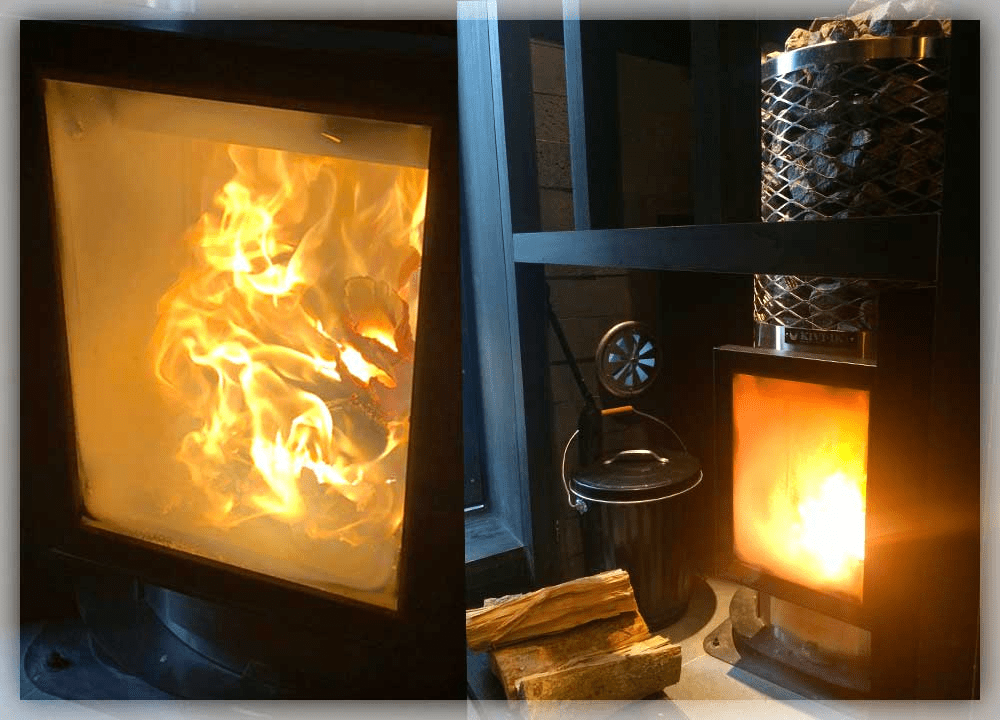
The wood burning sauna is nothing short of magical. While capacity is limited and you will likely only get to use once during your stay, it is absolutely a must during your time at Karumaru. In combination with the outdoor transparent cold plunge/Avant, I left the wood sauna grinning ear to ear.
Verdict
Sauna Karumaru is both a great introduction to the specifics of Japanese sauna culture, and well refined bathing facilities. If you are looking for a balance of sauna and baths, a sauna/bathing oriented capsule hotel experience, and an excellent lounge to unwind in afterwards, give Sauna Karumaru a visit!
Food Pairing:
Anan (Yakiniku next door!)
Right across from the elevator to the entrance is a yakinikku restaurant. For those unfamiliar, yakiniku is similar to korean barbeque. When Koreans intitially imigrated to Osaka in west Japan, they brought Korean BBQ with them. Overtime, this developed some distinctly Japanese characteristics and became what is now yakinikku. If you’re hungry after your sauna session, this couldn’t be more conveniently located.
Greater Ikebukuro station.
While yakiniku is nice and convenient, there are also countless food options near Japan’s third largest (!) subway station. If you’re adventurous, I would highly encourage going for a stroll and seeing what you find! There are lots of both Japanese and international food options, so you’re bound to find something to your liking before too long.

 Sauna Sensei